
Understanding Pennsylvania Domestic Violence Laws
A practical guide to how Pennsylvania defines domestic abuse, handles arrests, protection orders, and penalties for survivors and accused persons.
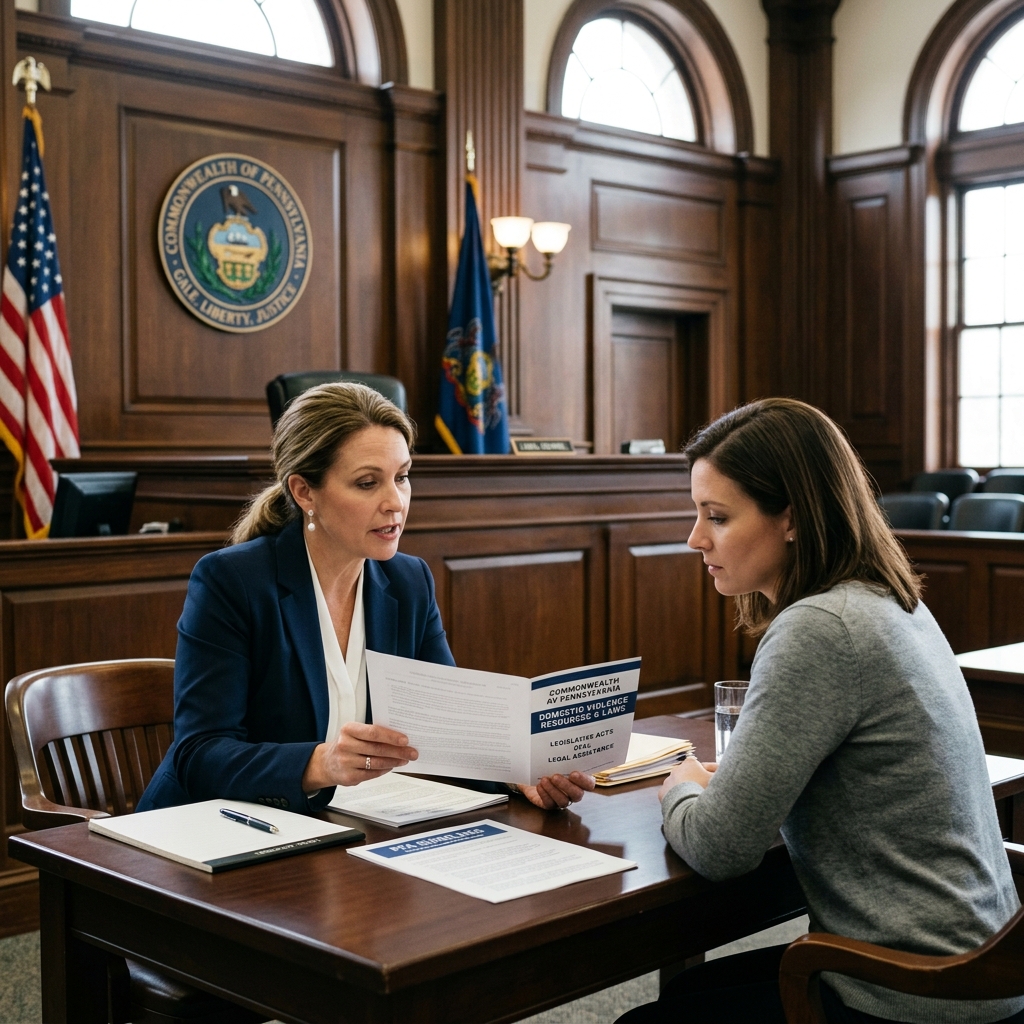
Pennsylvania treats domestic violence primarily through existing criminal offenses and civil protective orders rather than as a separate crime called “domestic violence.” Instead, acts of abuse between family or intimate partners are prosecuted under statutes like assault, stalking, false imprisonment, and child abuse, and addressed through Protection From Abuse (PFA) orders.
This guide explains how Pennsylvania defines domestic abuse, when police must make an arrest, how PFA orders operate, how firearms are handled in these cases, and what victims and accused persons can expect in terms of penalties and legal process.
Core Legal Framework: No Separate Crime Called “Domestic Violence”
Under Pennsylvania law, there is no standalone criminal charge titled “domestic violence.” Instead, conduct that would commonly be described as domestic violence is charged under general criminal statutes—such as simple or aggravated assault, harassment, strangulation, stalking, sexual assault, rape, and child abuse—when those acts occur between people in a qualifying relationship.
On the civil side, the state uses Protection From Abuse (PFA) orders to address ongoing risk and to provide safety-focused remedies such as stay-away orders, eviction from the shared home, and firearm restrictions.
Legal Definition of Domestic Abuse
For purposes of PFA proceedings, Pennsylvania uses a statutory definition of “abuse” found in Title 23 of the Pennsylvania Consolidated Statutes. This definition determines who can seek a PFA and what behavior qualifies as domestic abuse, but it does not control how criminal charges are filed under Title 18.
Who Must Be Involved for Conduct to Count as Domestic Abuse?
The legal definition focuses on certain relationships rather than just the behavior itself. Abuse must occur between:
- Family members or household members (including people related by blood or marriage, or who live together).
- Sexual or intimate partners (current or former).
- Individuals who share biological parenthood (for example, parents of the same child).
If similar conduct occurs between neighbors, coworkers, or strangers, it may still be criminal, but it is not considered “domestic abuse” for PFA purposes and different protective mechanisms may apply.
Types of Behavior That Qualify as Abuse
The statute lists several categories of conduct that constitute abuse when they occur in the relationships described above. These are summarized as follows:
- Bodily injury and serious bodily injury — purposely, knowingly, or recklessly causing or attempting to cause harm, including serious physical injury, with or without a weapon.
- Sexual offenses — conduct such as rape, involuntary deviate sexual intercourse, sexual assault, statutory sexual assault, aggravated indecent assault, indecent assault, or incest.
- Fear of imminent serious bodily injury — placing another person in reasonable fear that serious harm is about to occur.
- False imprisonment — unlawfully restraining someone or keeping them somewhere against their will, as defined in the criminal code.
- Physical or sexual abuse of minor children — including abuse covered by the child protective services provisions.
- Course of conduct causing fear — repeatedly committing acts or following someone under circumstances that place them in reasonable fear of bodily injury.
Importantly, emotional, verbal, or economic abuse alone may not satisfy the statutory definition for a PFA, even though these behaviors can be highly harmful. However, they are frequently part of the broader pattern of control that domestic violence represents.
Arrest Rules in Pennsylvania Domestic Violence Cases
Pennsylvania law includes a specific probable-cause arrest provision that applies in certain domestic violence situations, found in Title 18, section 2711. This statute governs when police officers must arrest and when they may arrest without a warrant.
Mandatory Arrest When a Domestic Incident Is Reported
When police respond to a domestic disturbance and have probable cause to believe that a qualifying offense has been committed against a family or household member, they are generally required to make an arrest, even if the alleged victim does not want the person arrested.
Qualifying offenses under the arrest statute include certain assaults and related crimes specified in the law. The probable cause requirement can be satisfied by physical evidence, witness statements, or an officer’s observations at the scene.
Arrest Without a Warrant
Section 2711 allows officers to arrest without a warrant if they have probable cause to believe domestic violence occurred, even if they did not personally witness the offense. This is an important departure from general arrest rules and is intended to prevent further harm by allowing immediate intervention.
Implications for Victims and Accused Persons
- Victims may not need to sign a complaint at the scene for an arrest to occur; the officer’s judgment based on probable cause controls.
- Accused individuals can be arrested quickly and held for arraignment, which may lead to bail conditions or temporary no-contact orders.
- Recanting by a victim does not automatically stop a case once the police and prosecutors have evidence to proceed.
Protection From Abuse (PFA) Orders
A central civil remedy in Pennsylvania domestic violence cases is the Protection From Abuse (PFA) order, available to victims in qualifying relationships who meet the statutory definition of abuse. PFAs are similar to restraining orders but governed by their own statute and procedures.
Who Can Request a PFA?
A person who has experienced abuse from a family member, household member, intimate partner, or co-parent may petition the court for a PFA. Parents can typically seek protection on behalf of their minor children if they have been abused or are at risk.
Types of PFA Orders
PFAs can be issued on two main timelines:
- Emergency or ex parte (temporary) orders — granted quickly, sometimes the same day, based on the victim’s sworn statement and without the defendant present if there is immediate danger.
- Final orders — issued after notice to the defendant and a court hearing where both sides can present evidence and arguments.
What a PFA Can Do
Depending on the facts, a PFA order can impose a variety of restrictions and protections. Common provisions include:
- Prohibiting the defendant from contacting, harassing, or stalking the victim.
- Ordering the defendant to stay away from the victim’s home, workplace, school, or other specified locations.
- Granting temporary possession of the residence to the victim and removing the defendant from the home.
- Addressing temporary custody and visitation concerning minor children, when appropriate.
- Restricting the defendant’s access to firearms and requiring firearms to be relinquished.
Firearm Restrictions Linked to PFA Orders
Pennsylvania law draws a clear line between temporary and final PFAs when it comes to firearms.
| Type of order | Firearm restrictions |
|---|---|
| Temporary PFA | The court may restrict firearm access and require temporary relinquishment if the petition shows abuse involving a weapon or an immediate and present danger of abuse. |
| Final PFA | The court must prohibit possession and acquisition of firearms for the duration of the order, and must require the defendant to relinquish firearms and related licenses to law enforcement. |
These firearm provisions are designed to reduce the risk of lethal violence in domestic abuse situations and are mandatory for final orders issued after a hearing.
Domestic Violence and Firearms Beyond PFAs
Firearms are also regulated in relation to certain domestic violence–related criminal convictions. Under legislative changes effective in 2019, individuals convicted of specific domestic violence misdemeanors must surrender their firearms within a short timeframe after conviction.
- Firearms must generally be relinquished to law enforcement or a licensed dealer within 24 hours of conviction, unless the court sets a different deadline.
- The person must also surrender any firearm-related licenses or permits to the sheriff of their county.
These rules are part of Pennsylvania’s approach to preventing future harm in households where violence has already occurred.
Potential Criminal Charges and Penalties
Because there is no separate domestic violence crime, penalties depend on the underlying offenses charged—such as assault, stalking, harassment, or sexual assault—and on the defendant’s prior record and pattern of behavior.
Outcomes in domestic violence prosecutions can range widely:
- Non-incarceration outcomes — such as probation, mandatory counseling, anger management programs, or batterer intervention programs, particularly for less severe incidents or first offenses.
- Misdemeanor convictions — which may carry fines, probation, and up to several years in jail, depending on the grading of the offense.
- Felony convictions — for serious assaults, certain sexual offenses, child abuse, or crimes involving weapons, which can result in substantial prison sentences and long-term consequences, including loss of firearm rights and difficulty finding employment.
Judges typically consider the severity of the harm, use of weapons, evidence of ongoing patterns of abuse, prior criminal history, and whether children were involved when imposing sentences.
Civil and Collateral Consequences
Domestic abuse cases can affect more than just criminal liability. Civil and collateral consequences may include:
- Custody and visitation changes — courts may modify custody arrangements or restrict visitation to protect children from exposure to violence.
- Housing and employment effects — eviction from the shared home through PFAs, difficulty maintaining or obtaining employment, or professional licensing issues.
- Immigration implications — for non-citizens, certain domestic violence–related convictions or findings can affect immigration status under federal law.
- Loss of firearm rights — both state-level restrictions under PFA and domestic violence statutes, and potential federal prohibitions under 18 U.S.C. § 922(g).
Support, Reporting, and Confidentiality
Survivors of domestic abuse often interact with multiple systems: criminal justice, civil courts, health care, and social services. Pennsylvania law also touches on mandatory reporting and confidentiality in this context.
Mandatory Reporting in Certain Contexts
Pennsylvania statutes identify specific categories of professionals—such as health care providers and those working with children or vulnerable adults—who must report suspected abuse or injury to appropriate agencies. Whether a particular professional is required to report domestic violence depends on the population involved (for example, children or elders) and the professional’s role.
Confidential Communications and Victim Advocacy
State law protects certain communications between victims and domestic violence counselors, creating a privilege in many circumstances. This can encourage survivors to seek help without fear that everything they disclose will automatically be shared in court or with law enforcement.
Recognizing Domestic Violence Beyond the Statutes
While the legal definition of abuse focuses on specific acts, domestic violence in real life often appears as a pattern of coercive control rather than isolated incidents. The Commonwealth of Pennsylvania highlights warning signs such as extreme jealousy, isolating a partner from friends or family, controlling finances, threatening children or pets, and using intimidation or threats of harm.
Even when particular behaviors do not fit neatly into statutory categories, they may signal escalating danger and justify seeking help from advocates, hotlines, or law enforcement.
Frequently Asked Questions About Pennsylvania Domestic Violence Law
Is domestic violence a separate crime in Pennsylvania?
No. Pennsylvania does not have a criminal charge titled “domestic violence.” Instead, acts of abuse are prosecuted under general crimes such as assault, stalking, strangulation, harassment, and sexual offenses. The “domestic” aspect is often reflected in how the case is handled, not in the name of the charge.
What makes a crime “domestic” rather than just assault or harassment?
A crime is considered domestic when it involves family or household members, intimate partners, or people who share a child in common. This relationship status can trigger special arrest rules, eligibility for PFAs, and enhanced penalties or firearm restrictions.
Do police have to arrest someone when they respond to a domestic dispute?
If officers have probable cause to believe that a qualifying domestic offense has occurred, Pennsylvania’s domestic violence arrest statute requires them to make an arrest, even if the alleged victim does not request one. The decision is based on evidence and statutory criteria.
How long does a Protection From Abuse order last?
Temporary PFAs last only until a full hearing can be held, typically within days or weeks. Final PFAs can remain in effect for up to several years, depending on what the court orders, and may be extended in some circumstances.
Will a PFA automatically take away the defendant’s firearms?
For final PFAs issued after notice and hearing, the court must prohibit firearm possession and require relinquishment of firearms and related licenses. For temporary PFAs, the judge has discretion to order firearm restrictions when the petition shows weapons-related abuse or an immediate and present danger.
What should a victim do to seek legal protection?
Survivors can contact local law enforcement if they are in immediate danger and can also file a PFA petition in the Court of Common Pleas in their county. Domestic violence programs and legal aid organizations can help with safety planning and navigating the filing process.
What if someone is falsely accused of domestic abuse?
An accused person has the right to challenge allegations in both criminal court and PFA hearings. They may present evidence, call witnesses, and be represented by counsel. Because PFAs and domestic violence charges can carry serious consequences, legal advice is particularly important.
References
- Pennsylvania Domestic Violence Laws — FindLaw. 2024-01-10. https://www.findlaw.com/state/pennsylvania-law/pennsylvania-domestic-violence-laws.html
- Section 6102 – Definitions — Pennsylvania Consolidated Statutes, Title 23 Domestic Relations. 2023-05-01. https://www.legis.state.pa.us/WU01/LI/LI/CT/HTM/23/00.061.002.000..HTM
- Domestic Violence Gun Laws in Pennsylvania — Giffords Law Center. 2023-09-15. https://giffords.org/lawcenter/state-laws/domestic-violence-and-firearms-in-pennsylvania/
- What is the legal definition of domestic abuse in Pennsylvania? — WomensLaw.org. 2022-11-30. https://www.womenslaw.org/laws/pa/restraining-orders/protection-abuse-orders-pfa/basic-information/what-legal-definition
- Pennsylvania Laws — Pennsylvania Coalition Against Domestic Violence (PCADV). 2023-03-20. https://www.pcadv.org/policy-center/pennsylvania-laws/
- Domestic Violence — Commonwealth of Pennsylvania, Office of Victim Services. 2022-08-01. https://www.pa.gov/agencies/pcv/resources/types-of-crime/domestic-violence
- Pennsylvania — Victim Rights Law Center. 2018-10-01. https://victimrights.org/wp-content/uploads/2021/01/Pennsylvania_upd-2018.pdf
Similar Articles








Read full bio of medha deb


