
Understanding Payday and Car Title Loans
Learn how payday and car title loans work, why they are so expensive, and what safer options you can consider instead.
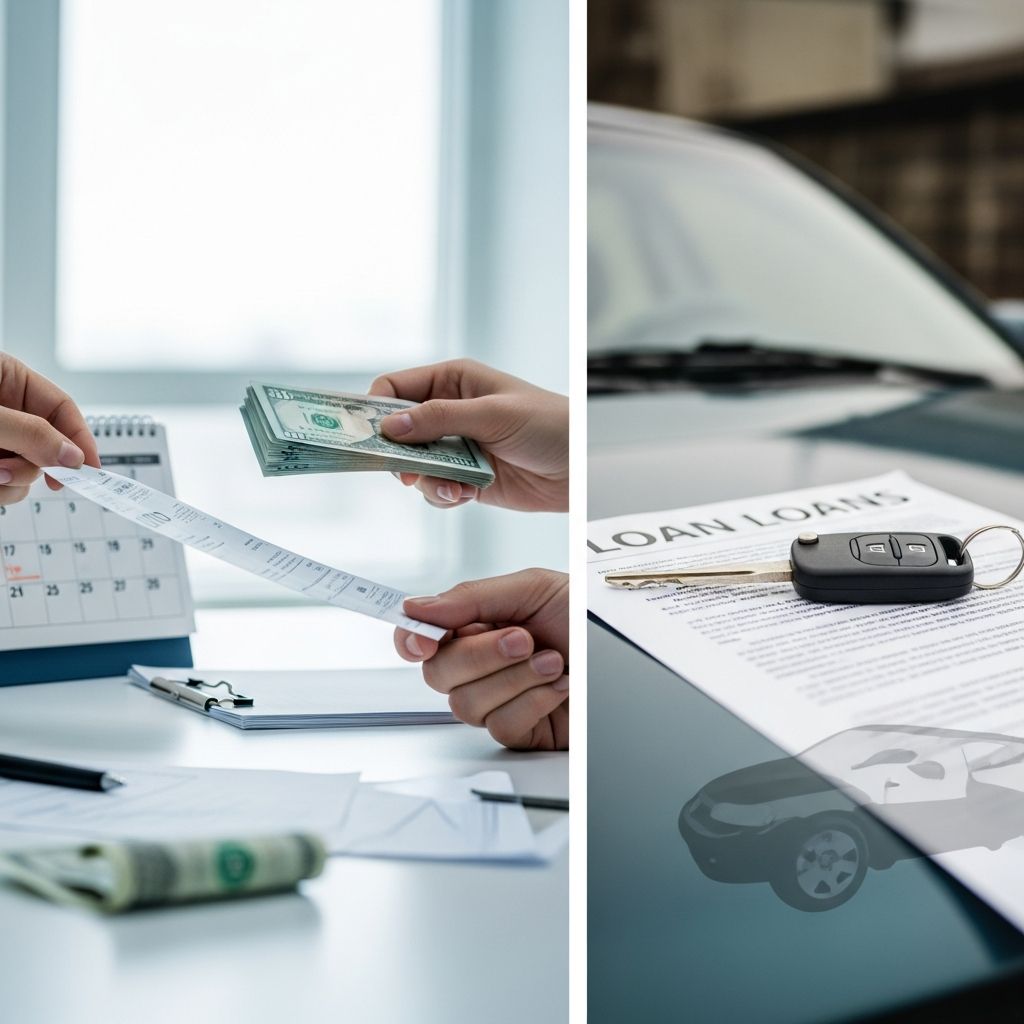
When money is tight and bills are due, payday loans and car title loans can look like quick solutions. But these forms of credit are among the most expensive ways to borrow and can trap you in long-lasting debt. This guide explains how they work, what they really cost, the risks you face, and better options to consider before you sign any contract.
1. What Are Payday and Car Title Loans?
Payday and car title loans are both short-term, high-cost loans marketed to people who need fast cash and may not qualify for traditional credit from banks or credit unions.
1.1 Payday loans in plain language
A payday loan is typically a small loan, often a few hundred dollars, that is supposed to be repaid by your next payday, usually within two to four weeks. Lenders may:
- Ask for a post-dated check for the amount you borrow plus their fees
- Or require electronic access to your bank account for automatic repayment
- Charge a fee for every $100 borrowed, commonly in the range of $10–$30 per $100
Although the fee may sound small, when converted to an annual percentage rate (APR), it often equals triple-digit interest, far above typical credit card or personal loan rates.
1.2 Car title loans explained
A car title loan is a short-term loan where you use your vehicle title as collateral. To qualify, you generally must:
- Own your vehicle outright or have significant equity in it
- Hand over the vehicle title to the lender during the loan term
- Agree that the lender may repossess (take) and sell your vehicle if you do not repay
Car title loans often last about 30 days, are usually for smaller amounts than the vehicle’s value, and come with very high APRs that can reach or exceed 300%.
2. How These Loans Really Work: An Inside Look
On the surface, both products look simple: you borrow a small amount and repay it soon. The trouble is in the details—especially the costs and what happens if you cannot pay on time.
2.1 Typical payday loan process
While exact terms vary by lender and state law, a common payday loan sequence looks like this:
- Step 1 – Application: You show ID, proof of income, and a bank account.
- Step 2 – Agreement: You sign a contract, give the lender a check or authorization to debit your account, and receive cash or a deposit.
- Step 3 – Due date: On your next payday, the lender cashes your check or pulls the money from your account, including fees and interest.
- Step 4 – Trouble paying: If you can’t afford repayment, you may be offered a “rollover” or renewal by paying an additional fee, leaving the original amount still owed.
This rollover structure is what often creates a cycle of debt: borrowers repeatedly pay fees without meaningfully reducing the principal.
2.2 How car title loans are structured
Car title loans are similarly marketed as simple and fast. A common pattern is:
- Loan size: Based on a fraction of your vehicle’s market value (often 25–50%).
- Loan term: Frequently around 30 days, with a single balloon payment due at the end.
- Fees: Monthly finance charges can be as high as 25% of the amount borrowed, translating to about 300% APR.
- Collateral: You keep driving your car, but the lender holds the title and may install tracking or starter-interrupt devices to aid repossession.
If you miss payments or cannot pay in full, the lender may repossess your vehicle and sell it to recover the balance due.
3. The True Cost: Why These Loans Are So Expensive
The key danger of payday and car title loans is not just that they are short-term, but that they are extremely high-cost and often designed in ways that make it hard to get out of debt.
3.1 Understanding APR and fees
Both loan types often advertise fees rather than stating a clear APR. For example, a title loan might charge a 25% monthly fee on the amount borrowed. On a 30-day loan, that can translate to about a 300% APR once expressed on an annual basis. Similarly, payday loans commonly have triple-digit APRs according to federal consumer protection agencies.
| Credit Type | Typical APR Range | Secured by Vehicle? | Usual Repayment Term |
|---|---|---|---|
| Payday loan | Often 200%–400% or more | No | About 2–4 weeks |
| Car title loan | Often around 300% APR or higher | Yes | Around 30 days |
| Credit card | About 15%–30% (varies widely) | No | Revolving, no fixed date |
| Personal loan (bank or credit union) | Roughly 6%–36%, depending on credit | Usually no | Months to years |
3.2 The rollover trap
Government and research reports show that many borrowers cannot pay off these loans on the first due date. Instead, they:
- Renew or “roll over” the loan for another fee
- Take out a new loan the same day or shortly after repaying the old one
- Pay multiples of the original amount borrowed in interest and fees over time
For car title loans in particular, federal research on single-payment vehicle title lending found that most loans are not paid in full when due, but are renewed or followed quickly by another loan. This pattern drives up total cost and heightens the risk of default and repossession.
4. Specific Risks of Payday and Car Title Loans
Beyond high prices, these loans come with several serious risks that can affect your ability to meet basic needs like housing, transportation, and food.
4.1 Risk of losing your vehicle
For car title loans, your vehicle is the collateral. If you cannot repay as agreed, the lender can seize and sell your car, sometimes even if you have made partial payments. Some lenders use GPS tracking and starter-interrupt devices to quickly locate and disable vehicles when borrowers fall behind, making repossession easier.
Losing a vehicle can mean losing reliable transportation to work, school, childcare, or medical appointments, which can further damage your financial stability.
4.2 Bank account stress and overdraft fees
Payday lenders typically require access to your checking account or a post-dated check. If the lender attempts to withdraw funds and the money is not there, you may incur:
- Overdraft fees from your bank
- Returned payment or insufficient funds (NSF) fees
- Additional charges from the lender
This can lead to a negative account balance and more difficulty paying other bills.
4.3 Debt cycle and financial instability
Consumer protection organizations and research groups have documented that repeated borrowing, rollovers, and renewals are common for both payday and title loans. This pattern can lead to:
- Paying many times the original loan amount in fees and interest
- Falling behind on rent, utilities, or other essential expenses
- Increased risk of default, repossession, or collections
4.4 Limited benefit to borrowers
Research on car title lending has found that loans are often made for far less than the vehicle’s value, while borrowers face triple-digit APRs and substantial risk of losing a vital asset. This imbalance between the value pledged and the credit received is one reason many consumer advocates describe these products as predatory or harmful to household financial health.
5. Legal Protections and Variations by State
Rules for payday and car title loans differ significantly depending on where you live. Some states have tight interest rate caps or ban certain types of high-cost loans entirely, while others allow these products with few restrictions.
5.1 State laws and rate caps
- Some states cap interest rates and fees on small-dollar loans, making traditional payday or title loans unprofitable or illegal for lenders.
- Other states allow very high interest rates, with car title loan APRs reported in the 70%–100%+ range or more in some markets.
- A few states prohibit car title lending or strictly limit it to protect consumers from vehicle loss and debt traps.
Because laws are state-specific, it is important to check your state attorney general or financial regulator’s website for current rules in your area.
5.2 Disclosure requirements
Even in states where these loans are allowed, lenders are usually required to:
- Disclose the APR, total finance charge, and total of payments
- Provide a written contract describing fees, due dates, and collection practices
- Follow rules on how and when they can attempt to collect from your bank account
Always read these disclosures closely. If something is unclear, ask questions—or walk away.
6. Safer Alternatives When You Need Money Fast
Before turning to a payday or car title lender, consider options that are usually less costly and less risky. Many consumers find that combining several strategies covers the immediate need without exposing them to triple-digit APRs.
6.1 Options from banks and credit unions
- Credit union small-dollar loans: Many credit unions offer small, short-term loans at much lower interest rates than payday lenders. Some offer “payday alternative loans” designed to help members avoid predatory products.
- Personal loans: Even if your credit is not perfect, a small personal loan from a bank or credit union may be more affordable than a payday or title loan.
- Overdraft lines of credit: Though still costly, regulated bank overdraft lines often have lower APRs than payday loans and may come with consumer protections.
6.2 Negotiating with creditors and billers
Sometimes the best solution is to reduce or delay the bill that is causing the emergency. Many providers will work with you if you ask early.
- Ask your landlord if you can pay part of the rent now and the rest later.
- Request a payment plan or hardship program from utility, phone, or internet companies.
- Talk to medical providers about financial assistance policies or no-interest payment plans.
6.3 Community and nonprofit help
Nonprofit credit counseling agencies, religious organizations, and community groups may offer:
- Emergency grants or no-interest loans
- Help negotiating with creditors
- Budget counseling and debt management plans
Reputable nonprofit credit counseling organizations are often certified and may be listed by national foundations or government consumer protection agencies.
6.4 Building a small emergency cushion
In the long term, the best protection against high-cost credit is savings. Even a small emergency fund can keep you from needing a payday or title loan when a surprise bill hits.
- Start with a modest target, such as $100–$500 set aside for urgent expenses.
- Automate small transfers into savings each paycheck if possible.
- Use windfalls (tax refunds, bonuses, gifts) to boost your cushion.
7. How to Protect Yourself If You Already Have One of These Loans
If you already took out a payday or car title loan, there are still steps you can take to reduce harm and get out of debt more safely.
7.1 Review your contract carefully
- Confirm the total amount you owe, including fees and interest.
- Note the exact due date and any grace period.
- Look for terms about rollovers, renewals, and additional fees.
- For title loans, check repossession rules and whether devices have been installed in your car.
7.2 Avoid repeated rollovers
Each renewal or rollover usually comes with new fees. To limit total cost:
- Pay more than the minimum when possible to reduce principal.
- Explore refinancing the balance with a lower-cost loan from a bank, credit union, or family member.
- Consider credit counseling if you are juggling multiple high-cost debts.
7.3 Know your rights
Depending on your state and the type of loan, you may have rights related to:
- How and when a lender can access your bank account
- Limits on collection calls or harassment
- Procedures lenders must follow before repossession or legal action
>
You can often learn more from your state attorney general, state financial regulator, or federal consumer protection agencies.
8. Frequently Asked Questions (FAQs)
Q1: Are payday and car title loans ever a good idea?
They may provide short-term cash when you have no other options, but because of their very high costs and the risk of a debt cycle or vehicle loss, consumer protection agencies generally recommend considering safer alternatives first.
Q2: Can a car title lender take my vehicle if I am making partial payments?
Yes, in many cases the lender can repossess your vehicle if you do not repay the full amount as required by your contract, even if you have made partial payments. The exact process depends on your state’s laws and the loan agreement.
Q3: Do payday or title loans help build my credit score?
Generally, no. Many payday and car title lenders do not report on-time payments to major credit bureaus. However, if your account goes to collections or you default and are sued, that negative information may appear on your credit reports.
Q4: What happens if I can’t pay my payday loan on time?
If you cannot pay on time, the lender may attempt to withdraw funds from your bank account or cash your post-dated check. If the payment fails, you may owe additional fees and could be offered a costly rollover. Over time, this increases the total you pay and can create a debt spiral.
Q5: Where can I get trustworthy help with debt problems?
Look for nonprofit credit counseling organizations, legal aid groups, or government consumer protection offices. Reputable agencies are often accredited or recognized by national foundations and will provide clear information about fees and services.
References
- What To Know About Payday and Car Title Loans — Federal Trade Commission (FTC). 2023-10-05. https://consumer.ftc.gov/node/77512
- State Alerts Consumers About Dangers of Loans that Require Car Title as Collateral — California Department of Financial Protection and Innovation. 2014-12-12. https://dfpi.ca.gov/press_release/state-alerts-consumers-about-dangers-of-loans-that-require-car-title-as-collateral/
- The Consumer Perils of a Car Title Loan — Debt Management Credit Counseling Corp. 2014-07-30. https://www.dmcccorp.org/edu/the-consumer-perils-of-a-car-title-loan/
- Car Title Lending: Driving Borrowers to Financial Ruin — Center for Responsible Lending. 2013-02-01. https://www.responsiblelending.org/research-publication/car-title-lending-driving-borrowers-financial-ruin
- How Do Title Loans Work, And Are They Worth The Risk? — Bankrate. 2023-06-28. https://www.bankrate.com/loans/auto-loans/car-title-loans/
- Single-Payment Vehicle Title Lending — Consumer Financial Protection Bureau. 2016-05-01. https://files.consumerfinance.gov/f/documents/201605_cfpb_single-payment-vehicle-title-lending.pdf
- How Do Title Loans Work? — Experian. 2022-04-06. https://www.experian.com/blogs/ask-experian/how-do-title-loans-work/
Similar Articles








Read full bio of Sneha Tete


