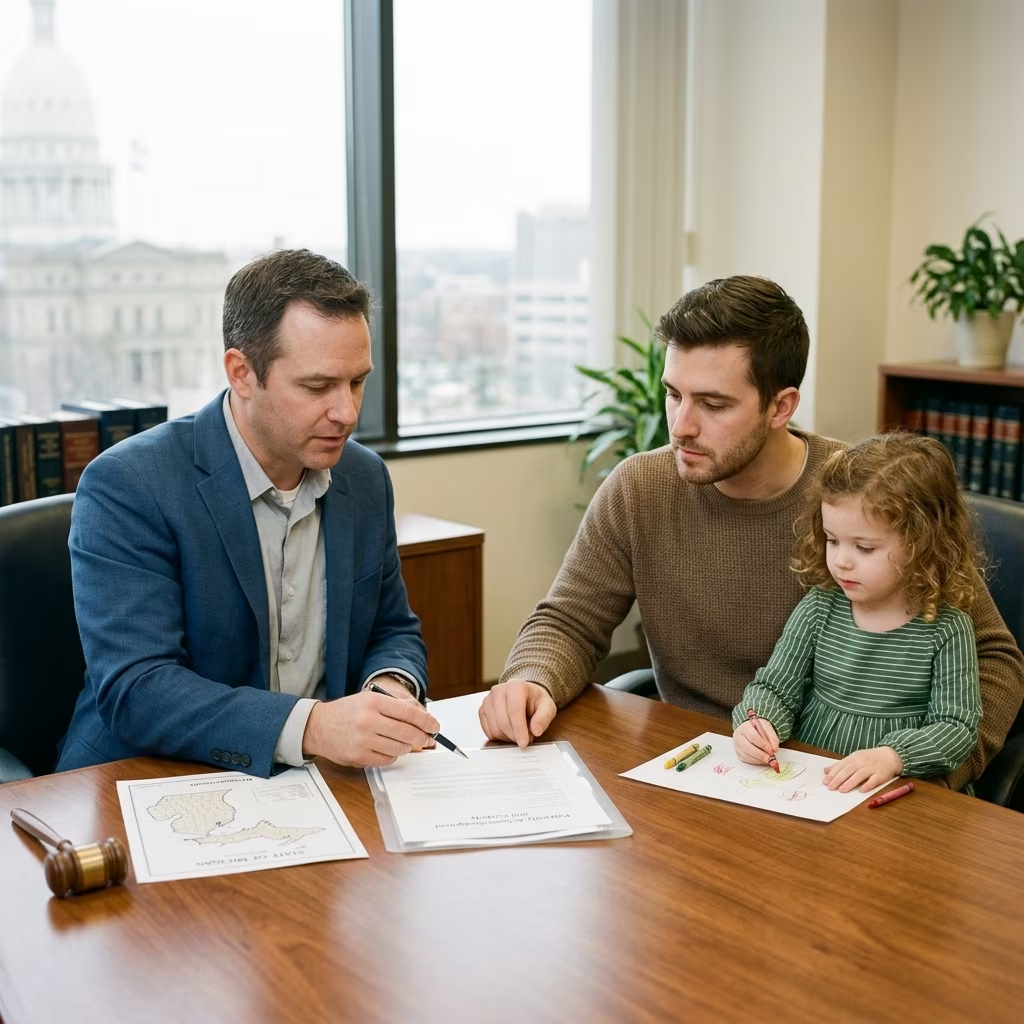
Paternity law in Michigan shapes the legal relationship between a child and their parents. Once paternity is legally established, it affects who may seek custody and parenting time, who must pay child support, and what rights the child has to financial support and benefits. This guide explains how Michigan law treats married and unmarried parents, the main ways paternity can be established, and the legal consequences that follow.
Why Legal Paternity Matters
In Michigan, there is an important distinction between being a biological parent and being a legal parent. Legal paternity is what courts and state agencies use to determine rights and obligations, regardless of genetics. Once legal parentage is established, a child gains access to crucial protections and benefits.
Key reasons to establish paternity
- Child support: Ensures a legal mechanism for obtaining financial support from both parents.
- Custody and parenting time: Allows a legal father to seek custody or visitation orders from the court.
- Inheritance and benefits: May provide access to inheritance, Social Security survivor benefits, and health insurance through the legal parent.
- Medical history: Helps the child and health providers understand relevant family medical information.
- Identity and stability: Clarifies parentage and can contribute to a sense of identity and security for the child.
Because of these consequences, Michigan law has detailed rules governing how paternity is presumed, acknowledged, and challenged.
Legal Presumptions: Married vs. Unmarried Parents
Michigan law treats children born to married parents differently from children born to unmarried parents when deciding who the legal father is.
| Family Situation | Who is the Legal Parent at Birth? | Initial Steps Required |
|---|---|---|
| Mother married at conception or birth | Mother’s spouse is the child’s legal parent by law. | No immediate action needed to establish parentage; spouse is listed on the birth certificate. |
| Mother unmarried at conception and birth | Only the mother is a legal parent until parentage is established by affidavit or court order. | Parents must sign an Affidavit of Parentage or seek a court order to establish paternity. |
| Married mother, non‑spouse biological father | Spouse is still the legal parent until parentage is revoked and new paternity is established. | Revocation of the spouse’s parentage and court proceedings are required to recognize the biological father. |
These presumptions are important because they determine who starts out with legal rights and who may need to take extra steps to be recognized as a parent.
Establishing Paternity for Unmarried Parents
When parents are not married, Michigan law does not automatically treat the father as a legal parent. Parentage must be established through either a voluntary process or a court case.
Option 1: Affidavit of Parentage (Voluntary Acknowledgment)
The most common way for unmarried parents to establish the legal father is by signing an Affidavit of Parentage. This is a standardized form recognized under Michigan law that, once properly completed and filed, creates a legal parent‑child relationship.
Core features of the Affidavit of Parentage include:
- It is signed by both parents under oath.
- Signatures must be witnessed by a qualified witness or notarized by a Notary Public.
- The form must be filed with the State Vital Records office to be effective.
- Once filed, the father becomes the child’s legal parent, and his name can be added to the birth certificate.
Parents can obtain the affidavit:
- At the hospital when the child is born.
- At a local Michigan Department of Health and Human Services (MDHHS) office.
- At the county registrar or clerk’s office.
- By printing the form from the Michigan state website.
Signing this document is a serious legal step. It generally has the same effect as a court order establishing paternity, and rescinding it later typically requires a court process.
Option 2: Court‑Ordered Paternity
If parents do not agree to sign an Affidavit of Parentage, or if there is a dispute about who the father is, paternity may be established through the courts. Michigan’s Paternity Act, codified at MCL 722.711 et seq., authorizes court actions to determine paternity for children born out of wedlock.
A court‑based paternity case usually involves the following steps:
- A case is filed by the mother, the alleged father, or a government agency such as MDHHS.
- The alleged father has the right to request genetic (DNA) testing to confirm or rule out biological paternity.
- If DNA testing confirms paternity or the alleged father admits paternity, the court may issue an Order of Filiation establishing legal fatherhood.
- The order often addresses child support and may set the stage for later custody and parenting time decisions.
Paternity actions can generally be brought anytime before the child reaches adulthood, although specific deadlines may apply for related issues such as challenging existing presumptions or revoking prior acknowledgments.
Paternity When the Mother Is Married
Michigan law contains specific rules for situations in which a mother is married but someone other than her spouse is the child’s biological father. In these cases, the law begins by recognizing the spouse as the child’s legal parent.
Presumed parentage of the spouse
When a mother is married at the time of conception or birth, her spouse is treated as the child’s legal parent, and is generally listed on the child’s birth certificate. This presumption also applies for a period of time following divorce or widowhood if the pregnancy occurred during the marriage.
If the mother’s spouse is not the biological father, that spouse still retains legal parentage unless and until a court enters an order revoking it under Michigan’s Revocation of Paternity Act.
Revoking the spouse’s legal parentage
A biological father who wishes to be recognized in place of the spouse, or a mother who wants the law to reflect the biological realities, typically must use one of the procedures available in Michigan’s Revocation of Paternity Act. That statute allows actions to:
- Determine that the child is “born out of wedlock” for legal purposes.
- Revoke the spouse’s legal status as parent.
- Establish paternity in favor of the biological father once the prior parentage is revoked.
Certain time limits apply. For example, actions by the mother or alleged father are often required before the child turns three years old, or may depend on facts such as whether the presumed father failed to support the child for a defined period. Court orders revoking parentage do not automatically change the birth certificate; additional paperwork and fees with the state vital records office are typically required to update the record.
Rights and Responsibilities After Paternity Is Established
Once a man is legally recognized as a child’s father—whether by Affidavit of Parentage or court order—Michigan law grants him rights but also imposes obligations.
Parental rights
- Custody: A legal father may seek joint or sole legal custody, meaning authority over major decisions such as education, healthcare, and religious upbringing.
- Parenting time: The father may request parenting time (visitation), and courts generally aim to promote a continuing relationship between the child and both parents, where appropriate.
- Participation in decisions: Legal parentage allows the father to be involved in key choices regarding the child’s well‑being, consistent with any court orders in place.
Financial and legal obligations
- Child support: The father may be ordered to pay support based on his income, the needs of the child, and Michigan’s child support guidelines.
- Medical coverage: Courts may require that one or both parents provide health insurance or contribute to medical costs.
- Compliance with court orders: The father must follow custody and parenting time orders, child support orders, and other directives issued by the court.
These rights and duties are linked: a father who gains legal recognition also becomes responsible for contributing to the child’s upbringing, even if he does not live with the child full‑time.
Practical Steps for Parents in Michigan
Parents often want to know what to do in specific situations—either to become a legal parent, to resolve disputes, or to correct records. The appropriate steps depend on the family structure and whether there is disagreement about paternity.
For unmarried parents who agree on paternity
- Obtain the Affidavit of Parentage at the hospital, MDHHS office, county registrar, or online.
- Verify that both parents have valid photo identification.
- Sign the affidavit under oath in front of a qualified witness or notary.
- Ensure the completed form is mailed or delivered to Michigan Vital Records as directed on the form.
- Confirm that the father’s name is added to the birth certificate, understanding there may be a fee if done after initial filing.
For alleged fathers facing a dispute
- Consider requesting genetic testing to establish or rule out biological paternity.
- Consult with legal counsel about filing a paternity action under the Paternity Act.
- Respond promptly to court notices—for example, by admitting paternity or requesting testing within the time allowed.
- Prepare for accompanying issues such as child support, custody, and parenting time to be addressed once paternity is established.
For biological fathers of children born during the mother’s marriage
- Review whether an existing case (such as divorce or child support) is already in court; if so, parentage issues may be raised there.
- Explore options under the Revocation of Paternity Act to challenge the spouse’s legal parent status.
- Pay careful attention to deadlines, including three‑year filing windows and exceptions.
- Understand that even after a court revokes the spouse’s parentage, separate steps are needed to correct the birth certificate.
Frequently Asked Questions About Michigan Paternity
Does signing an Affidavit of Parentage automatically give the father custody?
No. Signing an Affidavit of Parentage makes the man the child’s legal father, but it does not itself spell out custody or parenting time arrangements. Those issues are typically determined later through agreement or court order, based on the child’s best interests.
Can paternity be established after the child is older?
Yes. Unmarried parents can sign an Affidavit of Parentage after birth, or a paternity case can be filed in court before the child reaches adulthood. However, some related actions—such as revoking existing parentage in married‑mother cases—have specific time limits.
Is genetic testing required in every paternity case?
No. Genetic testing is common when there is a dispute or uncertainty about who the biological father is, but it is not mandatory if the alleged father admits paternity or the parties sign an Affidavit of Parentage voluntarily.
Can a child have more than one legal father in Michigan?
Generally, no. Michigan law contemplates that a child has only one legal father at a time. When parentage is revoked for one man and established for another, the court’s orders and vital records update are meant to reflect a single legal father.
What if the presumed father has not supported the child?
Lack of support by a presumed father can be relevant in actions under the Revocation of Paternity Act. For example, some provisions allow challenges where the presumed father has failed to support the child for a specified period. The exact impact depends on the facts and the statutory requirements.
When to Seek Legal Advice
Michigan paternity law combines statutory rules, court procedures, and strict deadlines. While many parents can navigate simple situations—such as signing an Affidavit of Parentage at the hospital—others face complex questions about marriage, existing child support orders, or competing claims of parentage.
In any of the following circumstances, consulting a family law attorney or using reputable legal self‑help resources is especially important:
- There is disagreement over who the father is.
- The child was born while the mother was married to someone other than the biological father.
- Existing court orders address custody or support, and you wish to change or challenge them.
- You are unsure how deadlines under the Revocation of Paternity Act apply to your situation.
Accurate legal advice can help parents protect both their own rights and the long‑term interests of their children.
References
- Establish Parentage — Michigan Department of Health and Human Services. 2024-01-10. https://www.michigan.gov/mdhhs/adult-child-serv/child-sup/how-do-i/establish-paternity
- Michigan Paternity Law and Administrative Relief — Michigan Immigrant Rights Center. 2015-06-01. https://michiganimmigrant.org/sites/default/files/Michigan%20Paternity%20Law%20and%20Admin%20Relief.pdf
- 4.05 Paternity Establishment Policy — Michigan Department of Health and Human Services IV-D Program. 2023-03-01. https://mdhhs-pres-prod.michigan.gov/ChildSupport/policy/Documents/4.05.pdf
- Establishing Paternity — Eaton County, Michigan. 2022-08-15. https://www.eatoncounty.org/683/Establishing-Paternity
- I Want to Become the Legal Father of a Child Born During a Marriage — Michigan Legal Help. 2023-09-12. https://michiganlegalhelp.org/resources/family/i-want-become-legal-father-of-child-born-during-marriage
- Rights and Obligations Under Michigan Paternity Laws — Confidant Counsel Blog. 2021-05-20. https://www.confidantconsult.com/resources/blog/rights-and-obligations-under-michigan-paternity-laws/
- Paternity — Nichols & Eberth, P.C. 2020-11-01. https://www.michiganattorney.com/paternity/