
Paternity Law In Colorado: Essential Parentage Guide In 2025
A practical guide to how Colorado determines legal parentage, fathers’ rights, and child support in paternity cases.
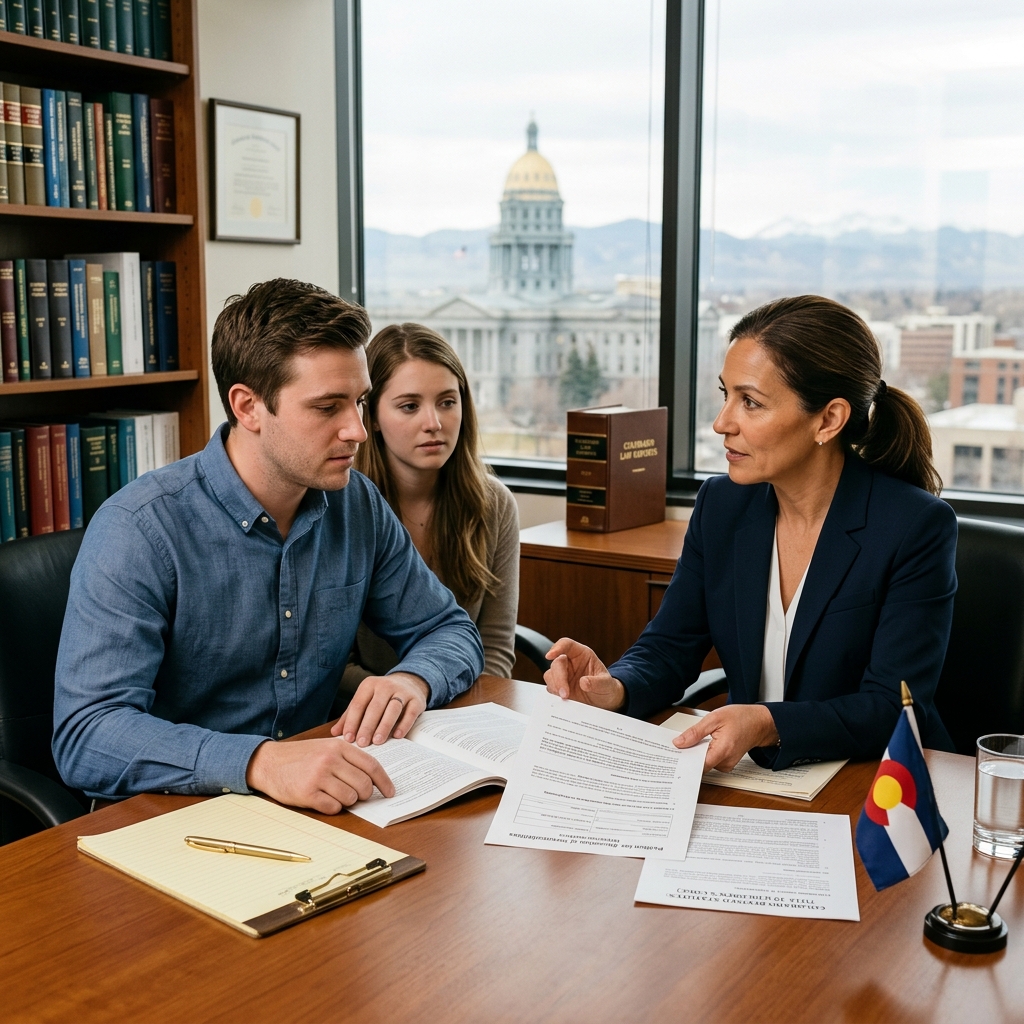
Paternity law in Colorado governs who is legally recognized as a parent and what rights and responsibilities follow that legal status. Although many families never encounter a formal paternity dispute, questions about parentage often arise when parents are unmarried, separated, or disagree about who a child’s father is. Colorado has detailed rules for determining parentage, and these rules affect custody, parenting time, child support, and even the child’s birth certificate.
This guide explains how paternity works in Colorado, when the law presumes someone is a parent, how to establish or challenge paternity, and what legal consequences follow once parentage is confirmed or disproved.
Why Paternity Matters in Colorado
In Colorado, the term often used in official materials is parentage or parental responsibilities, but paternity remains the common way people describe legal fatherhood. Once a person is legally recognized as a parent, courts can make orders about:
- Parental responsibilities (decision-making authority about major issues in the child’s life)
- Parenting time (the schedule for when the child spends time with each parent)
- Child support and sometimes medical and birth-related expenses
- Changes to the child’s birth certificate, including adding or removing a parent’s name
Without legal paternity, a person typically has no enforceable right to see the child, make decisions, or be considered in court orders. At the same time, without a legal father, the child may miss out on financial support and other legal benefits, such as inheritance rights and access to health insurance coverage.
Who Is Presumed to Be a Parent in Colorado?
Colorado law creates presumptions of parentage, which are legal shortcuts that treat someone as the likely parent unless evidence shows otherwise. These presumptions are central in cases involving married or civil union couples, and situations where an adult has acted as a parent over time.
Under Colorado statutes, a person is commonly presumed to be a parent if any of the following apply:
- The person and the child’s birth parent are married or in a civil union when the child is born.
- The child is born within 300 days after the marriage or civil union ends by divorce, legal separation, or death.
- The person and the birth parent tried to marry or enter into a civil union in apparent compliance with the law, even if the union could later be declared invalid, and the child is born during that period or within 300 days after it ends.
- After the child’s birth, the person marries or enters a civil union with the birth parent and does one of the following:
- Signs a written acknowledgment of parentage filed with a court or vital records office.
- Consents to being named on the child’s birth certificate as a parent.
- While the child is still a minor, the person receives the child into their home and openly holds the child out as their own.
- Genetic testing shows a high probability of parentage (usually at least 97%) and does not exclude the alleged parent.
These presumptions are not final proof, but they strongly influence how courts approach paternity disputes. If more than one person fits a presumption, a judge must weigh the evidence and decide what outcome best serves the child’s interests.
Voluntary Establishment of Paternity
Many cases do not involve conflict. When parents agree about who the child’s father is, Colorado law allows them to establish paternity voluntarily, often without a full trial. This approach is common when parents are unmarried but cooperative.
Voluntary Acknowledgment of Parentage
Colorado uses a process known as a Voluntary Acknowledgment of Paternity or Parentage (VAP). When the birth parent and the other parent both sign this acknowledgment, it has the legal effect of establishing parentage similar to a court order, as long as the form meets statutory requirements.
Key features of a voluntary acknowledgment include:
- It is signed by the birth parent and the person who claims to be the other parent.
- Once properly executed and filed, the acknowledgment creates a legal parent-child relationship.
- It can be used to update the child’s birth certificate to add the parent’s name.
- After certain time limits, challenging the acknowledgment may require going to court and presenting evidence such as DNA tests.
Voluntary establishment is often quicker, less adversarial, and less costly than contested litigation. However, because it carries long-term consequences, both parties should understand that they are creating legal obligations, including potential child support duties.
Court Actions to Establish Parentage
When parents do not agree, or when public assistance is involved, paternity may need to be established through a formal court process. In Colorado, parentage actions can be filed by different parties, including a birth parent, a presumed or alleged parent, or a government child support agency.
Where to File and Who Can File
According to the Colorado Judicial Branch, a case to establish someone as a parent can be filed:
- In the district court of the county where the child or alleged parent lives or is found.
- In a county that has paid or is paying public assistance for the child.
- In Denver, in the Denver Juvenile Court for parentage matters.
- In a county where a probate case could be filed if the alleged parent is deceased.
An action is often initiated by filing a petition and paying a filing fee, after which the petitioner must properly serve the other parties. Service ensures that alleged and presumed parents receive notice and an opportunity to respond.
Use of Genetic Testing
In contested cases, genetic testing (commonly DNA tests) is often used to provide strong evidence of biological parentage. Colorado law allows courts to order genetic testing and to rely on test results that show a high probability of parentage.
The Colorado Judicial Branch provides official forms such as:
- Agreement for Genetic Testing (JDF 1506) for parties who mutually agree to tests.
- Motion for Genetic Testing (JDF 1505) to ask the court to order testing when parties do not agree.
After testing is completed:
- If results show a high probability (often above 97%) and do not exclude the alleged parent, the court may rely on this as strong evidence of parentage.
- If results exclude the alleged parent, the court may rule that the person is not the legal parent, which can end potential obligations and rights tied to parentage.
Rights and Responsibilities After Paternity Is Established
Once paternity or parentage is legally established—either by statute, voluntary acknowledgment, or court order—the person is placed on equal legal footing with other parents. Colorado law does not treat mothers and fathers differently when deciding issues like parenting time and decision-making authority. The guiding standard is the best interests of the child.
Parental Responsibilities and Parenting Time
Colorado uses the term parental responsibilities rather than custody. A legally recognized parent can ask the court for orders related to:
- Decision-making authority for major issues such as education, healthcare, and religious upbringing.
- Parenting time, including schedules during the week, weekends, holidays, and vacations.
Judges must consider statutory factors to determine what arrangements best serve the child. Gender cannot be used as a factor, and fathers stand on equal legal footing with mothers once parentage is confirmed.
Child Support and Financial Obligations
Colorado Child Support Services and the courts can order a legal parent to pay child support after paternity is established, regardless of whether the parent requested the establishment or it was pursued by someone else.
Child support typically depends on:
- Parents’ incomes and financial resources.
- The parenting time schedule.
- Childcare, health insurance, and medical costs.
In some cases, courts may also address birth-related costs, especially where the state has paid expenses or where a parent seeks reimbursement for uninsured medical care connected to childbirth.
Special Issues for Unmarried Parents
Unmarried parents face some unique considerations in Colorado paternity law, particularly around birth certificates and the absence of automatic presumptions that apply in marriage or civil union situations.
When the Father Is Not on the Birth Certificate
If an unmarried father’s name does not appear on the child’s birth certificate, he generally has no automatic legal rights under Colorado law until paternity is established.
This means that, until parentage is legally recognized:
- He does not have enforceable rights to parenting time or decision-making authority.
- He cannot rely on the law to protect his relationship with the child if conflicts arise.
- Courts and agencies may treat him as a non-parent in formal proceedings.
However, a birth parent’s refusal to list the father does not erase the father’s potential rights. It simply requires the father to use legal processes—such as filing a petition or signing a voluntary acknowledgment—to secure recognition as a parent.
Government Involvement and Public Assistance
When a child receives public assistance, Colorado Child Support Services or county officials may initiate parentage proceedings to identify a legal father and seek support contributions.
In such cases:
- A government agency may become a party to the case.
- The agency can ask the court to order genetic testing and child support.
- Orders may cover ongoing support and, in some instances, past support or birthing costs, depending on the circumstances and statutes.
Disputing or Disproving Paternity
Colorado law allows not only the establishment but also the disproving of paternity when evidence shows that a presumed parent is not biologically related to the child or when legal presumptions conflict.
Common scenarios include:
- A person presumed to be a parent because of marriage or civil union learns later that they may not be the biological parent.
- Another individual claims to be the biological parent and seeks to establish their own rights.
- Genetic tests reveal that a previously acknowledged parent is not biologically related.
Courts can weigh evidence such as DNA results, the child’s relationship with each adult, and statutory presumptions to determine whether to maintain, change, or terminate a legal parent-child relationship. Because outcomes affect children deeply, judges must consider the child’s best interests even when genetic evidence appears clear.
Common Paths to Establishing Parentage: A Comparison
| Method | When Used | Key Features |
|---|---|---|
| Presumption by Marriage or Civil Union | Parents are married or in a civil union at child’s birth, or within 300 days of the union ending. | Parentage presumed by statute; can be challenged or reinforced with genetic testing. |
| Voluntary Acknowledgment of Parentage | Parents agree on parentage, often when unmarried. | Signed by both parents; functions like a court order for parentage; can modify birth certificate. |
| Court Petition with Genetic Testing | Parentage is disputed or public assistance involved. | Filed in court; parties served; judge may order DNA tests; leads to formal parentage order. |
Frequently Asked Questions About Paternity in Colorado
1. Can paternity be established if one parent lives outside Colorado?
Yes. Colorado Child Support Services notes that a legal action to establish parentage may be initiated even if one parent lives in another state, as long as jurisdictional rules are satisfied. Interstate procedures and cooperation between agencies may be needed.
2. Is genetic testing always required to establish paternity?
No. When parents sign a valid voluntary acknowledgment or when statutory presumptions apply without dispute, courts may recognize parentage without ordering genetic testing. Testing is more common in cases where parties disagree or where there is doubt about biological parentage.
3. Does establishing paternity automatically grant custody to the father?
Establishing paternity gives the father legal status as a parent, but it does not automatically determine parenting time or decision-making arrangements. Those issues are decided separately according to the child’s best interests, and both parents begin on equal legal footing.
4. Can a voluntary acknowledgment of parentage be changed or revoked?
Voluntary acknowledgments can be challenged under certain conditions and within specific time frames, often requiring a court action. After those windows close, it becomes more difficult to overturn an acknowledgment, and courts may require strong evidence, such as genetic tests, coupled with consideration of the child’s stability and well-being.
5. What if the alleged parent has passed away?
If the alleged parent is deceased, Colorado allows parentage actions to be filed in a county where a probate case has been or could be opened. Evidence might include genetic material preserved during life, family medical records, or other proof recognized by the court.
References
- Colorado Revised Statutes § 19-4-105 – Presumption of paternity — Colorado General Assembly. 2022-01-01. https://law.justia.com/codes/colorado/2022/title-19/article-4/section-19-4-105/
- § 19-4-105. Presumption of parentage — WomensLaw.org / National Network to End Domestic Violence. 2022-06-01. https://www.womenslaw.org/laws/co/statutes/ss-19-4-105-presumption-paternity
- Establish Someone as a Parent — Colorado Judicial Branch. 2023-05-01. https://www.coloradojudicial.gov/self-help/determine-parentage/establish-someone-parent
- Parentage — Colorado Child Support Services, Colorado Department of Human Services. 2023-04-01. https://childsupport.colorado.gov/parentage
- Father Not on Birth Certificate in Colorado: Know Your Rights — J. Baker Law Group. 2023-02-01. https://jbakerlawgroup.com/what-rights-do-fathers-have-if-they-are-not-on-the-birth-certificate/
- Fathers’ Child Custody Rights in Colorado: What To Know — Ascent Legal Group. 2022-09-01. https://ascentlegalgroup.com/colorado-fathers-rights/
- Paternity & Unmarried Parents — Colorado Family Law Guide. 2022-08-01. https://www.colorado-family-law.com/parenting-custody/paternity-unmarried-parents
Similar Articles








Read full bio of Sneha Tete


