
Oklahoma Adoption Laws: 5 Key Types And Consent Rules Explained
A plain-language guide to eligibility, consent, procedures, and legal effects of adoption under Oklahoma law.
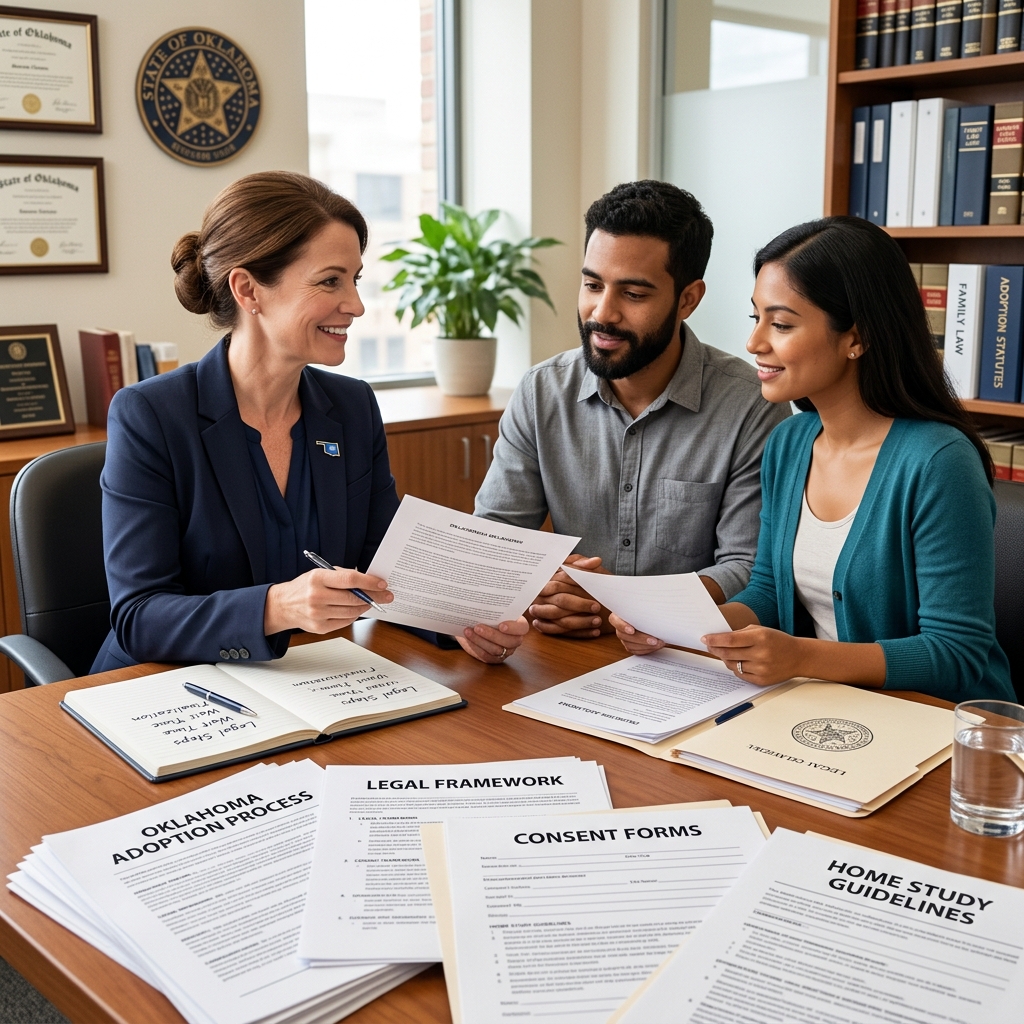
Adoption in Oklahoma is a formal legal process that permanently creates a parent–child relationship between the adoptive family and the child, and usually ends the legal rights of one or both biological parents. Because adoption changes family relationships for life, Oklahoma law sets specific rules about who may adopt, whose consent is required, and how courts review each case.
This guide explains the major features of Oklahoma adoption laws in clear, practical terms. It is for general information only and is not a substitute for legal advice from an attorney.
Main Types of Adoption Recognized in Oklahoma
Oklahoma law allows several different adoption arrangements, depending on the needs of the child and the family situation.
- Agency adoptions – A public or private child-placing agency matches children with adoptive families, often after a period in foster care.
- Private or independent adoptions – Birth parents and adoptive parents work with attorneys or licensed professionals to arrange placement without an agency.
- Relative and stepparent adoptions – Grandparents, other relatives, or a stepparent adopt a child with whom they already have a family connection.
- International adoptions – Families adopt a child from another country, following both the foreign country’s laws and U.S. immigration rules.
- Adult adoptions – One adult adopts another adult, with the court’s approval and the consent of the person being adopted.
While each type of adoption has unique steps, all of them ultimately seek a legally permanent, stable family for the person being adopted.
Who Is Allowed to Adopt in Oklahoma?
Oklahoma sets basic eligibility requirements for anyone who wants to become an adoptive parent, whether they adopt through an agency or privately.
Minimum Age and Family Status
- Age requirement: Prospective adoptive parents must be at least 21 years old.
- Marital status: Single people and married couples, including same-sex married couples, may adopt.
- Stepparent adoption: A stepparent may adopt their spouse’s child if legal requirements are met, including residency and consent rules.
These rules are designed to ensure that adoptive parents have reached adulthood and can provide long-term care for the child.
Home Study and Background Checks
Before a child is placed, the law generally requires a home study performed by a licensed professional to evaluate the family and living situation.
- Home studies typically review the family’s health, finances, living space, and ability to meet a child’s needs.
- Prospective parents usually must complete fingerprinting and criminal background checks, including checks of child abuse and neglect registries.
- Training or orientation is commonly required for families adopting through the public system or agencies.
These safeguards help courts and agencies determine whether the proposed adoption is safe and in the child’s best interests.
Consent to Adoption: Whose Permission Is Needed?
Consent is one of the most critical legal requirements in an adoption case. Oklahoma law spells out exactly whose consent must be obtained, and in what circumstances it may be waived.
Consent from Biological Parents
In most situations, the consent of both biological parents is required before an adoption can proceed.
- Written consent must be given by both parents, unless one parent is deceased or has had parental rights terminated by a court.
- If both parents are deceased or have had their rights terminated, consent may be given by a guardian, a child-placing agency, or another person with legal custody.
- For children born in wedlock, the father generally must consent after the child’s birth; for putative fathers, consent can sometimes be given before or after birth.
A parent who consents typically does so in writing and may be required to appear before a judge to confirm that the consent is informed and voluntary.
When Parental Consent Is Not Required
Oklahoma law allows courts to proceed with adoption without a parent’s consent in specific, limited situations.
- If the parent’s rights have already been legally terminated in a separate proceeding.
- If a putative father fails to prove paternity or does not exercise parental rights and duties within a set time period after the child’s birth.
- If a parent has willfully failed to support the child or maintain a relationship for a substantial period, such as 12 of the 14 months before the adoption petition is filed.
- If the parent is deceased.
In every case where consent is questioned, the court focuses on the child’s best interests and the evidence presented.
Consent from the Child Being Adopted
Children and adults being adopted also play a role in the consent process.
- A minor who is 12 years of age or older must normally consent to their own adoption before a court may grant the decree.
- The judge can waive a minor’s consent if requiring it would not be in the minor’s best interests.
- For adult adoptions, the adult being adopted must consent, and the court must approve the arrangement.
Consent is usually given in court in a form prescribed by the judge to ensure that the person understands the consequences.
Adult Adoption Under Oklahoma Law
Oklahoma statutes allow one adult to adopt another adult when all legal requirements are satisfied.
- An adult may be adopted by another adult if the person being adopted consents, or if their guardian consents when appropriate.
- The spouse of the adopting adult, if any, must also provide written consent filed with the court.
- Adult adoption petitions are filed in the district court of the county where the adoptive parent resides.
- The usual adoption procedures that apply to minor children do not fully apply to competent adult adoptions.
Adult adoptions are often used to formalize long-standing parent–child relationships, clarify inheritance rights, or recognize a family bond that developed later in life.
How Courts Review Oklahoma Adoption Cases
Whether an adoption is arranged privately or through an agency, a judge must review the case to ensure the adoption complies with Oklahoma law and serves the child’s best interests.
| Step | Typical Purpose |
|---|---|
| Filing the petition | Formally asks the court to approve the adoption and sets out basic facts about the child and prospective parents. |
| Home study and investigation | Collects information about the adoptive family and verifies that placement appears safe and suitable. |
| Verification of consent | Ensures required consents from parents, guardians, agencies, and the child (if old enough) are valid and voluntary. |
| Hearing before the judge | Allows the court to question parties, review reports, and decide whether the adoption is in the child’s best interests. |
| Final decree of adoption | Creates the new legal parent–child relationship and completes the adoption process. |
Legal Effects of Adoption in Oklahoma
Once a court issues a final decree, adoption has extensive legal consequences for the child, the biological parents, and the adoptive parents.
- Termination of prior parental rights: Adoption generally ends all legal rights and duties between the child and their biological parents, except in stepparent adoptions where one biological parent remains.
- New parent–child relationship: The adopted child is legally treated as the child of the adoptive parents for most purposes, including custody, support, and decision-making.
- Inheritance rights: The adopted child usually gains the right to inherit from adoptive parents and may retain certain rights to inherit from biological family, depending on the circumstances.
- Ongoing responsibilities: Adoptive parents must provide a permanent home and care for the child’s emotional, physical, social, and cultural needs.
- Visitation orders: In some cases, existing court orders for grandparent visitation may continue after the adoption.
Eligible children in the public system may also have access to subsidies or support services when adopted, especially if they have special needs.
Financial and Practical Aspects of Adoption
While the law focuses on rights and responsibilities, families also need to consider the practical realities of adoption, including costs and available assistance.
- Agency fees: Private agency adoptions can be costly, sometimes ranging from many thousands of dollars, depending on services provided.
- Medical and living expenses: In certain open adoptions, adoptive parents may lawfully pay limited expenses such as prenatal and delivery costs for the birth parent.
- Public system adoptions: Adopting from foster care is typically much less expensive, and in many cases there is little or no fee to adopt through the state.
- Subsidies for special needs adoptions: Families who adopt children with special needs may qualify for financial assistance or services through state programs.
These practical factors can influence which type of adoption a family pursues, but they do not change the fundamental legal rights created once an adoption is finalized.
Open vs. Closed Adoption Arrangements
Oklahoma law permits both open and closed adoption arrangements, often governed by agreements between birth and adoptive parents.
- Open adoption: Birth parents and adoptive parents may know each other and, by written agreement, allow updates or limited contact, such as photographs or supervised visits.
- Closed adoption: Identifying information is limited, and there is generally no ongoing contact between the birth family and adoptive family.
- Contractual nature: Any ongoing contact or information sharing is based on specific terms agreed to by the parties and does not alter the legal status of the adoptive parents.
Regardless of whether an adoption is open or closed, the adoptive parents become the child’s legal parents once the court issues the final decree.
Frequently Asked Questions About Oklahoma Adoption Laws
Do I have to be married to adopt in Oklahoma?
No. Single adults and married couples may adopt as long as they meet age, home study, and other legal requirements.
At what age can a child refuse to be adopted?
In most cases, a child who is 12 or older must consent to the adoption, which effectively gives them the ability to refuse, unless the court finds that requiring consent is not in the child’s best interests.
Can a biological parent change their mind after consenting?
Under Oklahoma law, consent to adoption is generally irrevocable except in limited circumstances set out in statute, such as fraud or duress, and subject to strict time limits.
What happens to child support after adoption?
Once adoption is finalized, the adoptive parents assume legal responsibility for supporting the child, and the obligations of biological parents typically end, except in special situations like stepparent adoptions.
Is it possible to adopt an adult in Oklahoma?
Yes. Oklahoma statutes allow one adult to adopt another adult with the consent of the person being adopted and, if applicable, the adoptive parent’s spouse, subject to court approval.
Where can families get more information or start the process?
Families interested in adopting through the public system can contact the Oklahoma Department of Human Services for guidance on foster care and adoption procedures. Private attorneys and licensed agencies also assist with independent and international adoptions.
References
- Consent to Adoption – Oklahoma — Child Welfare Information Gateway. 2021-08-01. https://www.childwelfare.gov/resources/consent-adoption-oklahoma/
- Frequently Asked Questions About Adoptions in Oklahoma — Zuhdi Flynn & Co. 2023-05-10. https://www.zuhdiflynn.com/practice-areas/family-law/adoption-faqs/
- 5 Important Adoption Laws in Oklahoma — Brown Gould Law, PLLC. 2022-04-15. https://www.browngouldlaw.com/5-important-adoption-laws-in-oklahoma/
- Oklahoma Statutes §10-7507-1.1 – Adult adoptions — Justia / State of Oklahoma. 2025-01-01. https://law.justia.com/codes/oklahoma/title-10/section-10-7507-1-1/
- Oklahoma foster care and adoption guidelines — AdoptUSKids / U.S. Department of Health and Human Services. 2024-03-20. https://adoptuskids.org/adoption-and-foster-care/how-to-adopt-and-foster/state-information/oklahoma
- Adoption In Oklahoma — Legal Aid Services of Oklahoma (OKLaw.org). 2020-09-30. https://oklaw.org/resource/adoption-facts
- Adopt a Child — Oklahoma Department of Human Services. 2023-11-02. https://oklahoma.gov/okdhs/services/adoption.html
Similar Articles








Read full bio of medha deb


