
Understanding Ohio Traffic Laws for Everyday Drivers
A practical, plain‑language guide to Ohio traffic rules, driver responsibilities, penalties, and safety requirements for motorists and visitors alike.
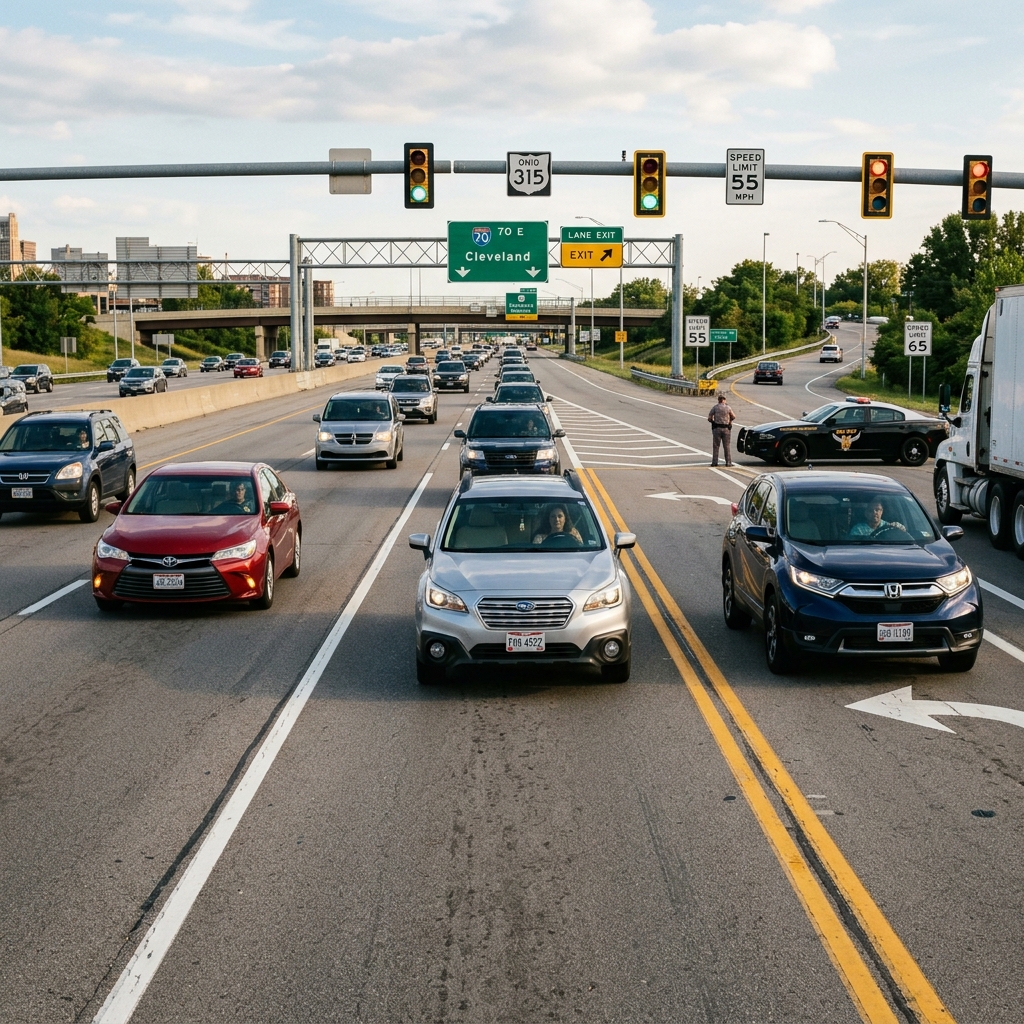
Ohio’s traffic laws are designed to keep roads safe, reduce crashes, and clearly define the responsibilities of drivers, passengers, cyclists, and pedestrians. Whether you live in Ohio or are just passing through, knowing the rules of the road can help you avoid fines, points on your license, and more serious criminal penalties.
This guide explains the core areas of Ohio traffic regulation in plain language, drawing on the Ohio Revised Code and official driver manuals. It is an informational overview, not legal advice, but it will give you a strong foundation for safe and lawful driving.
1. Legal Foundations of Ohio Traffic Rules
Ohio’s traffic laws come primarily from the Ohio Revised Code and from administrative rules adopted by state agencies. The key chapter governing traffic operation is Chapter 4511 of the Ohio Revised Code, which defines what a vehicle is, how it may be operated, and the meaning of traffic control devices.
- Statutory rules: Chapter 4511 covers topics such as obedience to traffic signals, speed limits, right-of-way, and rules for specific vehicle types (including bicycles and electric bicycles).
- Administrative rules: The Ohio Department of Transportation is required to adopt a manual for a uniform system of traffic control devices. That manual governs signs, signals, lane markings, and other roadway indicators used throughout the state.
- Digest and guidance: The Ohio Bureau of Motor Vehicles publishes a Digest of Motor Vehicle Laws that summarizes many rules for drivers preparing for licensing exams and for general reference.
Together, these sources form the legal backbone for daily driving in Ohio.
2. Driver Licensing and Teens on the Road
Ohio uses a graduated system for driver licensing, especially for younger drivers. Licensing rules are primarily located in Chapter 4507 of the Revised Code and explained in the state’s driver manuals.[10]
2.1 Basic Licensing Principles
No person may operate a motor vehicle on a public road in Ohio without a valid license, unless a specific legal exemption applies. Licenses specify the class of vehicle that may be operated, and violations can lead to suspension or revocation.
- Knowledge and skills tests: Drivers must pass both written and road tests, plus vision screening, before obtaining a full license.
- Medical and safety requirements: The state can impose restrictions (such as corrective lenses) when necessary for safe operation.
2.2 Graduated Driver Licensing for Teens
Ohio’s graduated driver licensing (GDL) laws recognize that teen drivers have higher crash risks and therefore impose special limits on nighttime driving and passengers.[10]
- Nighttime driving restrictions: Probationary license holders under 17 generally cannot drive between midnight and 6 a.m. unless accompanied by a parent, guardian, or in limited situations such as work, school activities, or emergencies.[10]
- Passenger limits: Drivers under 17 with a probationary license may not carry more than one non-family passenger without an adult in the vehicle.[10]
- Consequences of violations: A teen who commits a moving violation in the first six months of licensing may be required to drive only when accompanied by a parent or guardian for an additional six-month period or until turning 17.[10]
In addition, drivers under 18 are prohibited from using any electronic device while driving, even in hands-free mode or when stopped at a traffic light.
3. Speed Limits and Safe Operation
Speed regulation is one of the most visible aspects of Ohio traffic law. The state sets default limits based on road type and vehicle weight, while allowing local authorities to post different limits with proper signage.
3.1 Typical Ohio Speed Limits
The Ohio Digest of Motor Vehicle Laws provides detailed default speed limits that apply when no different speed is posted.
| Road Type / Situation | Default Speed Limit |
|---|---|
| Alleys within a municipality | 15 mph |
| School zones (during recess or when children are present) | 20 mph |
| Residential areas in municipalities (except certain state routes) | 25 mph |
| State routes / through highways outside business districts | 35–55 mph, depending on location and vehicle type |
| Designated highways for lighter vehicles and buses | 60–65 mph |
| Rural and urban freeways | Up to 65 mph in many areas, with variations for heavy vehicles |
Always obey posted limits, as they may differ from these defaults due to local conditions, construction, or safety concerns.
3.2 Minimum Speeds and Work Zones
Ohio law does not only regulate excessive speed; it also prohibits driving so slowly that you block the normal movement of traffic, unless reduced speed is necessary for safety or legal compliance.
- Minimum speed limits: On controlled-access highways, minimum speed limits may be posted. Driving below those minimums can itself be a violation.
- Work zone enforcement: In designated work zones, fines for speeding can be doubled and may include jail time because of the heightened risk to road workers.
Safe operation also includes maintaining adequate following distance, avoiding tailgating, and adjusting speed for weather and lighting conditions.
4. Right-of-Way, Lane Use, and Parking Rules
Right-of-way and lane use rules are crucial to preventing collisions. Ohio law specifies when drivers must stop, yield, and which lane to use in common situations.
4.1 Keeping Right and Passing Safely
Drivers in Ohio are generally required to drive on the right half of the roadway, with specific exceptions.
- Passing a slower vehicle traveling in the same direction.
- Driving left-of-center when an obstruction makes it necessary and it is safe.
- Using lanes near the center of multi-lane roads primarily for passing and left turns, while cruising in the rightmost lane.
When you are being passed, you must maintain a constant speed and stay to the right until the other vehicle has safely completed the pass.
4.2 Basic Right-of-Way Situations
Ohio’s rules on right-of-way cover intersections, crosswalks, and emergency or maintenance vehicles. Some essentials include:
- Pedestrians: Drivers must yield to pedestrians in crosswalks and maintain a safe space cushion around workers or equipment on the roadway.
- Uncontrolled intersections: When there are no signals or signs, you must yield whenever required to avoid a collision and follow standard right-of-way conventions (such as yielding to traffic already in the intersection).
- Emergency and service vehicles: When emergency, road service, or maintenance vehicles approach with lights and sirens, drivers must move right and stop if safe. For stationary vehicles with flashing lights, drivers must move over to an adjacent lane and/or slow down significantly.
4.3 Parking and Stopping Restrictions
Ohio law identifies many locations where stopping, parking, or standing a vehicle is prohibited unless you must do so to avoid conflict with traffic or obey a law enforcement officer or control device.
- On sidewalks.
- In front of driveways and certain designated zones.
- Too close to fire hydrants, intersections, and crosswalks, as specified by state and local rules.
Parking rules can vary by city, so always check local postings in addition to state law.
5. Phones, Devices, and Distracted Driving
Distracted driving is a major safety concern. Ohio has tightened rules on electronic devices, with especially strict provisions for young drivers.
5.1 General Device Restrictions
Ohio law prohibits operating a vehicle in an unsafe condition and emphasizes maintaining attention to the road. While the full text of the hands-free law is not in the cited digest, updated state guidance explains that using, holding, or physically supporting a phone or electronic device while driving can lead to enforcement action.
- Under 18: Drivers under age 18 may not use any electronic device while driving, even hands-free, or while stopped in traffic at lights or in congestion.
- All drivers: The state considers distracted driving a contributing factor in many crashes, and may impose enhanced penalties when device use is involved.
6. Impaired Driving (OVI) and Related Offenses
Ohio’s impaired driving laws use the term OVI, or operating a vehicle under the influence of alcohol or drugs. These laws set clear blood alcohol concentration (BAC) limits and impose serious penalties for violations.
6.1 BAC Thresholds and OVI Definition
Ohio treats driving with a certain level of alcohol in the system as per se evidence of impairment.
- 0.08% BAC or higher for drivers age 21 and over.
- 0.04% BAC or higher for commercial drivers.
- 0.02% BAC or higher for drivers under 21.
Even below these thresholds, drivers can be charged if officers and evidence show impairment. Penalties include fines, license suspension, possible jail time, and mandatory education or treatment programs.
6.2 Hit-and-Run and Leaving the Scene
Leaving the scene of a crash without providing information or aid is a crime in Ohio, even in parking lots or on private property.
- Drivers must stop at crash scenes and provide their name, address, and vehicle registration information.
- When injuries occur, they must also render reasonable aid or call emergency services.
Hit-and-run offenses can carry severe penalties, especially where injuries or fatalities are involved.
7. Vehicle Condition, Seat Belts, and Passenger Safety
Ohio traffic law addresses not only how drivers behave, but also how vehicles are equipped and maintained. Unsafe vehicles and failure to use safety restraints can both lead to violations.
7.1 Safe Vehicle Condition
State law prohibits driving any vehicle that is in such an unsafe condition that it endangers any person.
- Vehicles must not have protruding objects or broken, sharp parts that could cause injury.
- Lighting, brakes, tires, and other safety-critical systems must be properly maintained.
Routine maintenance and inspections are essential to staying in compliance and reducing crash risks.
7.2 Seat Belts and Passenger Rules
Ohio requires drivers and passengers to wear seat belts in most situations. The number of occupants may not exceed the number of belts originally installed in the vehicle.
- Mandatory restraints: The driver and all passengers must use available safety belts, subject to limited exceptions under state law.
- Riding on exterior: No person may hang onto or ride on the outside of a moving motor vehicle, and truck drivers may not permit children under 16 to ride in unenclosed areas.
Proper use of seat belts and child restraints is both a legal obligation and a critical safety measure.
8. Insurance, Points, and Penalties
Ohio ties traffic enforcement to both financial responsibility and a point system for recording violations.
8.1 Minimum Insurance Requirements
Drivers in Ohio must carry proof of financial responsibility, typically through minimum liability insurance coverage.
- $25,000 bodily injury liability per person.
- $50,000 bodily injury liability per accident.
- $25,000 property damage liability per accident.
Driving without insurance can lead to license and registration suspensions, reinstatement fees, and additional penalties.
8.2 Points on Your Driving Record
Traffic convictions add points to your Ohio driving record. Accumulating too many points within a set period can lead to license suspensions and mandatory remedial courses.
- Minor speed violations: Often carry two points, depending on how far above the limit you were driving.
- Serious offenses: Such as reckless operation or OVI can carry higher point values and more severe consequences.
Maintaining a clean record helps keep insurance rates down and preserves your driving privileges.
9. Practical Tips to Stay Compliant in Ohio
While the law can be technical, a few everyday habits make compliance much easier.
- Always drive on the right side of the road except when passing or when an obstruction makes it unsafe.
- Observe posted speed limits, and reduce speed further in bad weather, at night, and in work zones.
- Keep at least a 3–4 second following distance and avoid tailgating.
- Yield to pedestrians, emergency vehicles, and maintenance or tow trucks with flashing lights, moving over or slowing as required.
- Ensure your vehicle is mechanically sound, with no dangerous protrusions, and that everyone inside wears a seat belt.
10. Frequently Asked Questions About Ohio Traffic Laws
10.1 Do I have to move over for stopped police or tow trucks?
Yes. Ohio law requires drivers to move to an adjacent lane and/or slow down when approaching stopped police vehicles, emergency vehicles, road service, tow trucks, highway maintenance, or certain public utility vehicles with flashing lights. If changing lanes is unsafe, you must significantly reduce your speed.
10.2 Are school zone speed limits always 20 mph?
In Ohio, the 20 mph limit applies when children are going to or leaving school, during recess, and when school speed limit signs are erected and in effect. Outside those times or where different limits are posted, other speeds may apply.
10.3 Can teens use hands-free devices while driving?
No. Drivers under age 18 are prohibited from using any electronic device while driving, including hands-free use, and even when temporarily stopped at lights or in traffic jams.
10.4 What happens if I drive too slowly on a freeway?
If you drive so slowly that you block the normal and reasonable movement of traffic, and your slow speed is not required for safety or legal reasons, you may violate Ohio’s minimum speed rules. Controlled-access highways often post minimum speeds that must be observed.
10.5 Is this guide a substitute for legal advice?
No. This article is for general information based on official Ohio sources. For advice about a specific ticket or situation, you should consult a qualified attorney.
References
- Chapter 4511, Ohio Revised Code — Ohio Laws. 2024-01-01. https://codes.ohio.gov/ohio-revised-code/chapter-4511
- Ohio Digest of Motor Vehicle Laws (HSY 7607) — Ohio Department of Public Safety. 2023-01-01. https://dam.assets.ohio.gov/image/upload/publicsafety.ohio.gov/hsy7607.pdf
- Ohio Driver Licensing and Traffic Rules Digest — Ohio Bureau of Motor Vehicles / Hiram College republication. 2022-08-01. https://www.hiram.edu/wp-content/uploads/2022/08/ohio-digest-motor-vehicle-laws.pdf
- Driving Laws in Ohio Every Out-of-State Driver Should Know — Law-Ohio.com. 2023-04-10. https://law-ohio.com/ohio-driving-laws-everything-locals-and-out-of-state-drivers-needs-to-know/
- Ohio GDL Laws Overview — Ohio Chapter, American Academy of Pediatrics. 2018-06-01. https://oldsite.ohioaap.org/TeenDriving/OhioGDLLaws/
- Ohio Traffic Violation Points Chart — Law Office of Mark Gardner. 2021-01-01. https://www.ohiojustice.com/criminal-defense-overview/ohio-traffic-point-chart/
Similar Articles








Read full bio of medha deb


