
Understanding Ohio Spousal Support (Alimony) Rules
Learn how Ohio courts decide spousal support, what factors matter most, and how awards can be changed or ended after divorce.
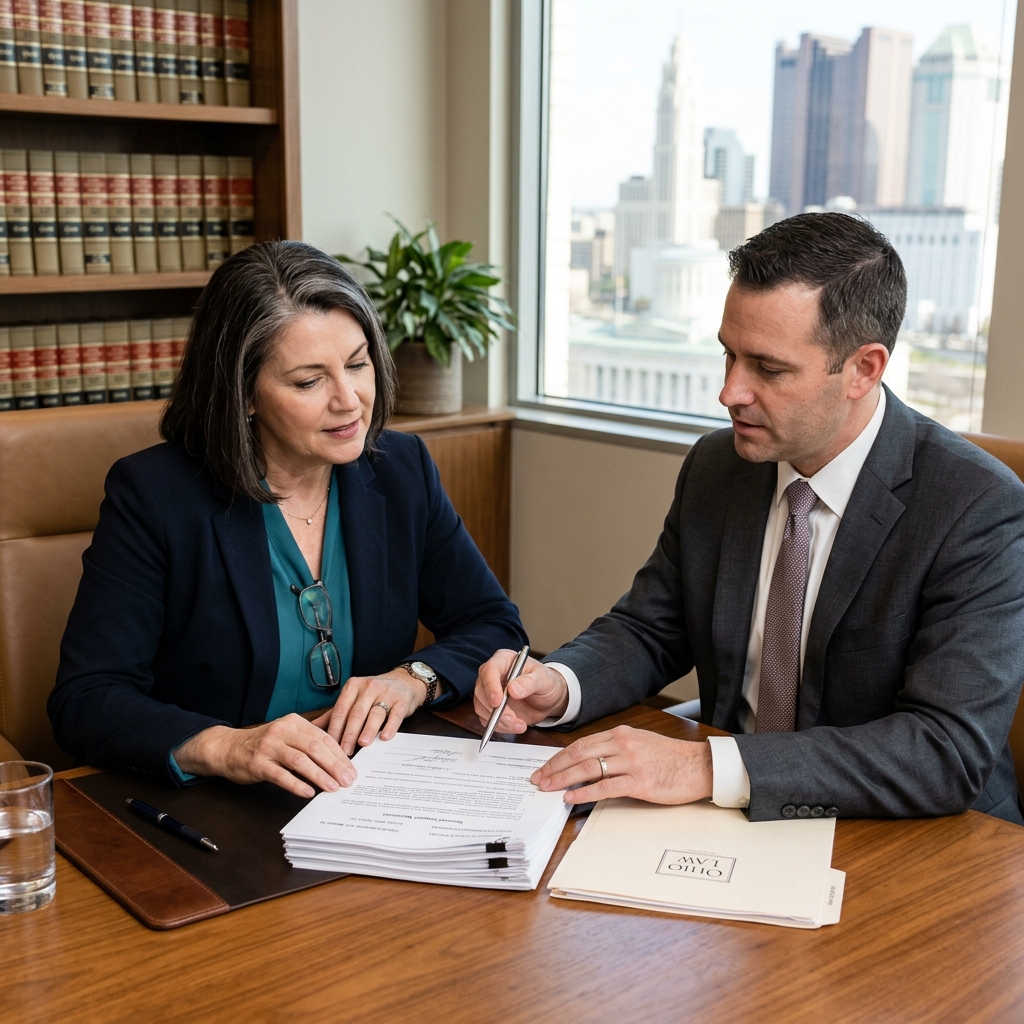
Spousal support, sometimes called alimony, is one of the most misunderstood parts of divorce in Ohio. Many people expect a fixed formula or automatic payments, but Ohio law treats spousal support as a highly individualized decision that depends on each couple’s unique circumstances. This guide explains how courts approach spousal support, what factors matter most, and how awards can change over time.
What Spousal Support Means Under Ohio Law
Ohio law uses the term spousal support instead of alimony. It refers to payments made to a current or former spouse (or to a third party for their benefit) that are intended both for the spouse’s sustenance and support. These payments are separate from property division and are focused on ongoing financial needs, not on splitting assets.
Spousal support can take different forms, including:
- Regular cash payments (monthly or another set schedule)
- Lump-sum payments ordered as support rather than property
- Payments made directly to third parties for the spouse’s benefit (such as mortgage or insurance premiums)
Either spouse may be ordered to pay support, and the decision is based on financial resources and statutory factors—not gender or traditional assumptions.
When Ohio Courts Consider Spousal Support
Spousal support may be awarded in a variety of family law proceedings, including:
- Divorce, when the marriage is ending through the court process
- Legal separation, when spouses live apart but remain legally married
- Dissolution of marriage, when spouses jointly request to end the marriage with a separation agreement
Support can be ordered on a temporary basis while a case is pending or as part of the final decree once the marriage is terminated or dissolved. Temporary support is typically meant to maintain stability during the case, while long-term support addresses financial needs after the divorce.
How Courts Decide Whether Spousal Support Is Appropriate
There is no automatic right to alimony in Ohio, and no statewide formula guarantees that support will be awarded. Instead, courts begin by deciding whether support is appropriate and reasonable under the circumstances, both for the spouse who might receive it and the spouse who might pay it.
To make this decision, judges look at the overall financial picture of both parties, including:
- Whether one spouse has a significant financial need
- Whether the other spouse has the ability to pay support
- How the marriage and family responsibilities affected each spouse’s earning capacity
If the court finds that support is appropriate and reasonable, it then turns to assessing the amount, duration, and type of payments based on statutory factors.
Key Statutory Factors Courts Must Consider
Ohio Revised Code Section 3105.18(C) requires courts to consider numerous factors when determining spousal support. While judges may weigh some factors more than others depending on the case, they must consider all of them before making an award.
Core Financial and Personal Factors
Important considerations include:
- Income from all sources, including wages, business income, investments, and income from property divided in the divorce
- Relative earning abilities of each spouse, not just current income but future earning potential
- Ages and physical, mental, and emotional conditions, which may affect the ability to work or retrain
- Retirement benefits available to each spouse, including pensions and retirement accounts
- Length of the marriage, with longer marriages often supporting longer or more substantial awards
Family Roles and Lifestyle
Courts also look at how the marriage functioned and how that affects financial outcomes today:
- Whether caring for minor children makes it inappropriate or difficult for a spouse to work outside the home
- The standard of living the couple established during the marriage
- The education level of each spouse and any need for further training to become self-supporting
- Each spouse’s assets and liabilities, including debts and court-ordered payments
- Lost income or earning capacity due to marital responsibilities, such as stepping away from a career to raise children
Tax and Other Equitable Factors
Additional factors may include:
- Tax consequences of the support award for each party, especially under current federal tax rules that typically make spousal support non-deductible to the payer and non-taxable to the recipient
- Any other factor the court finds relevant and equitable, giving judges flexibility to address unusual circumstances
There is a statutory presumption that both spouses contributed equally to the production of marital income, whether through paid work, caregiving, or supporting the other spouse’s career. This means courts do not assume one spouse is more responsible than the other for the family’s financial success.
Understanding Amount, Duration, and Form of Support
Once the court decides that support is appropriate, it must determine the specific terms. Because there is no fixed formula, amounts vary widely depending on income levels, lifestyle, and the factors described above.
Common Considerations for Amount
Judges often analyze:
- The receiving spouse’s reasonable monthly budget, including housing, utilities, insurance, and other essential expenses
- The paying spouse’s ability to pay after their own necessary expenses, including income from all sources and potential bonuses
- Whether the award helps maintain a lifestyle reasonably close to that enjoyed during the marriage, when realistic
How Long Spousal Support May Last
Ohio courts may order support for a specific period of time or as an indefinite, long-term award. The length of the marriage is often influential:
- Shorter marriages may lead to shorter-term support focused on transition
- Longer marriages—especially those lasting 10 years or more—are more likely to result in substantial or extended support
Some practitioners mention rules of thumb (such as one year of support for every several years of marriage), but these are not legal standards and are not binding on courts. Judges decide duration case by case.
Termination Events and Lifetime Awards
In most cases, spousal support ends when:
- Either spouse dies, unless the order specifically states otherwise
- The recipient remarries or sometimes begins cohabitating with a new partner, if the court or statute provides for termination in such circumstances
Ohio law also allows for lifetime or indefinite support in appropriate cases, often involving long marriages or serious health limitations. When an order has no set termination date, the court must retain jurisdiction over support to manage future changes.
Property Division vs. Spousal Support
It is important to distinguish property division from spousal support. Ohio courts divide marital property—including real estate, retirement accounts, and other assets—under separate provisions of the law. Spousal support is not a substitute for property division; it is an additional tool focused on ongoing financial support.
| Property Division | Spousal Support (Alimony) |
|---|---|
| Splits marital assets and debts between spouses | Provides ongoing payments for a spouse’s sustenance and support |
| Usually final, with limited ability to change | May be modifiable if the court reserves jurisdiction and circumstances change |
| Based largely on what was accumulated during marriage | Based on financial needs, earning capacity, and statutory factors |
| Addressed under property division statutes | Addressed under Ohio Revised Code § 3105.18 |
Modification of Spousal Support Orders
Not all spousal support orders can be changed. Ohio law only allows modification when:
- The original decree or dissolution agreement specifically authorizes the court to modify support, reserving jurisdiction; and
- There is a substantial change in circumstances that makes the existing award no longer reasonable and appropriate, and that change was not contemplated at the time of the original order.
Examples of potential changes in circumstances might include major job loss, serious illness, or significant increases or decreases in income. Minor fluctuations or expected changes are less likely to justify modification.
Tax Treatment and Financial Planning Considerations
Tax consequences are one of the statutory factors courts must consider when making a spousal support award. Although federal tax law has changed in recent years—generally making spousal support non-deductible for the payer and non-taxable as income to the recipient—specific tax outcomes can vary based on timing and structure.
Because of these complexities, many parties benefit from:
- Consulting a tax professional to understand how support will affect their overall tax picture
- Coordinating spousal support decisions with property division and retirement planning
- Ensuring the court’s order clearly states whether payments are intended as support or property distribution
Practical Tips for Spouses Facing Spousal Support Issues
If you expect spousal support to be an issue in your case, consider these practical steps:
- Gather complete financial data: pay stubs, tax returns, retirement statements, budgets, and documentation of household expenses.
- Document marital roles: evidence of time spent caring for children, supporting a spouse’s education or career, and any periods spent out of the workforce.
- Evaluate future earning potential: consider education, training needs, health issues, and realistic job opportunities.
- Seek legal advice: because spousal support is discretionary and fact-specific, guidance from an attorney familiar with Ohio law can be critical.
Frequently Asked Questions About Ohio Spousal Support
Is there a minimum length of marriage to receive spousal support?
Ohio law does not set a minimum marriage length for spousal support. However, in practice, longer marriages—especially those over 10 years—are more likely to result in support awards, and those awards may last longer.
Does misconduct, like adultery, affect spousal support?
Ohio is generally considered a no-fault state for spousal support purposes, meaning issues like infidelity or marital misconduct are usually not central factors in deciding whether support should be awarded. Courts focus on financial need, ability to pay, and the statutory factors instead.
Can spousal support be ordered during the divorce process?
Yes. Courts may order temporary spousal support while a divorce or legal separation is pending to help maintain financial stability until a final decree is issued.
Who can request spousal support?
Either spouse may request support in divorce or legal separation proceedings, regardless of gender or which spouse initiated the case. The decision depends on income, resources, and statutory factors—not on who filed first.
What happens to spousal support if one spouse dies?
Under Ohio law, spousal support typically terminates upon the death of either party, unless the order explicitly provides otherwise. Because of this, life insurance or other financial planning tools may be considered as part of settlement discussions.
References
- Ohio Revised Code § 3105.18 – Awarding spousal support — Ohio Legislature. 2024-01-01. https://codes.ohio.gov/ohio-revised-code/section-3105.18
- Spousal Support — Supreme Court of Ohio, Domestic Relations Resource Guide. 2023-06-15. https://www.supremecourt.ohio.gov/courts/services-to-courts/domestic-relations-resource-guide/spousal-support/
- Divorce: Alimony and Property (Ohio) — WomensLaw.org. 2022-10-10. https://www.womenslaw.org/laws/oh/divorce/alimony-and-property
- How Is Spousal Support Calculated? — Rittgers Rittgers & Nakajima (Ohio Family Law). 2023-11-01. https://www.rkpt.com/litigation/divorce/2023/11/01/how-is-spousal-support-alimony-calculated/
- Spousal Support Determined Case by Case — Ohio State Bar Association. 2021-09-01. https://www.ohiobar.org/public-resources/commonly-asked-law-questions-results/family-relations/spousal-support-determined-case-by-case/
- Can I Get Spousal Support? How Do I Calculate It? — N.P. Weiss Law. 2023-05-20. https://www.npweisslaw.com/blog/can-i-get-spousal-support-and-how-do-i-calculate-it
Similar Articles








Read full bio of medha deb


