
Understanding Odometer Fraud and How to Protect Yourself
Learn how odometer fraud works, how to spot warning signs, and what legal options you have if you bought a vehicle with rolled-back mileage.
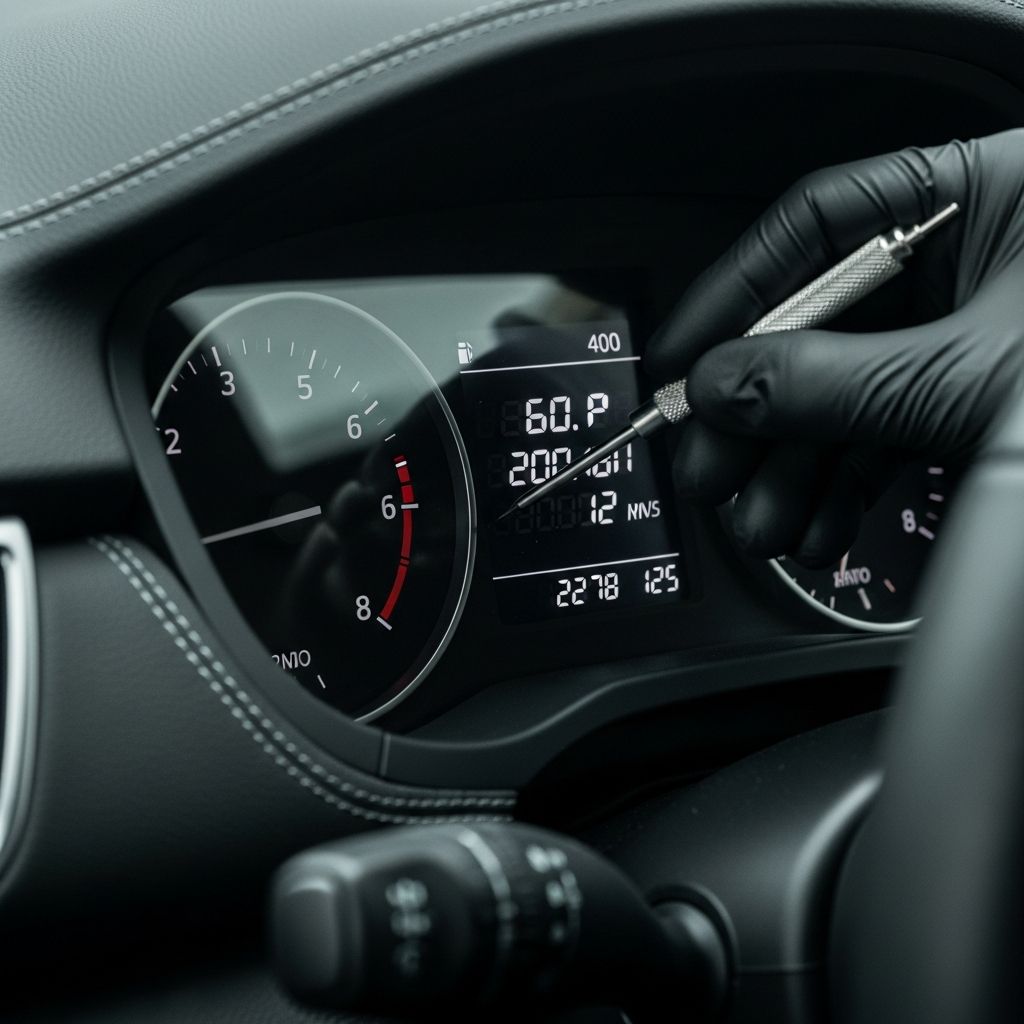
Odometer fraud, sometimes called a mileage rollback, occurs when a seller alters a vehicle’s mileage reading to make it appear less used and more valuable than it really is. In the United States this conduct is illegal under federal law and in every state, because it deceives buyers about a vehicle’s value, safety, and remaining useful life.
This guide explains how odometer fraud works, common warning signs, the laws that prohibit it, and what you can do if you believe you were misled about a vehicle’s mileage.
What Is Odometer Fraud?
An odometer is the instrument that records how many miles or kilometers a vehicle has traveled. When someone intentionally changes, disconnects, or misrepresents that reading in connection with a sale, that is odometer fraud.
Fraud can involve more than just the dashboard number. It often includes falsified titles, service records, or inspection documents designed to match the altered mileage.
Why Odometer Readings Matter
- Vehicle value: Price guides and dealers rely heavily on mileage when determining a car’s worth.
- Safety and reliability: High-mileage vehicles typically have more wear on brakes, suspension, steering components, and other safety-related parts.
- Maintenance planning: Service schedules are usually tied to mileage; false readings can lead to skipped critical maintenance.
- Warranty coverage: Many warranties and service contracts expire at a specific mileage, not just age.
How Odometer Fraud Is Commonly Committed
Techniques vary with the age and type of vehicle, but the goal is always the same: make the car appear to have traveled fewer miles.
Typical Methods of Mileage Manipulation
| Vehicle Type | Common Fraud Techniques | Typical Clues |
|---|---|---|
| Older mechanical odometers | Manual rolling back of number wheels by removing the instrument cluster or partially disassembling the dashboard. | Misaligned digits, gaps between numbers, loose or scratched screws around the cluster, and inconsistent appearance of gauge faces. |
| Modern digital odometers | Reprogramming through the OBD-II diagnostic port; swapping circuit boards or memory chips with lower-mileage components; replacing the entire cluster. | Dash or cluster looks newer than the rest of the interior, unusual electronic behavior, or mileage mismatches with electronic control modules. |
Paperwork and Documentation Schemes
- Title laundering: Obtaining a new title in another state or after a claimed error so that old higher-mileage records are less obvious or harder to trace.
- Altered records: Changing or omitting mileage entries on sales contracts, inspection reports, or maintenance logs.
- Missing history: Failing to provide service records or offering only partial documentation when more should exist for the vehicle’s age.
Key Warning Signs of Odometer Tampering
No single clue proves fraud, but several red flags together should prompt you to walk away or investigate further.
1. Physical Clues on the Vehicle
- Dashboard and cluster condition: Look for loose screws, damaged plastic, or misaligned panels around the instrument cluster, which can signal removal or tampering.
- Digit alignment: On mechanical odometers, numbers should line up cleanly; crooked or uneven spacing can indicate manual rollback.
- Unusual wear patterns: Excessive wear on the steering wheel, brake and gas pedals, driver’s seat, floor mats, and door handles is suspicious on a supposedly low-mileage vehicle.
- Recently replaced interior trim: New pedals, mats, or steering wheel covers in an older car can sometimes be an attempt to hide mileage-related wear.
2. Mismatched Maintenance and Inspection Records
- Service stickers: Oil change or service stickers on doors, windows, or under the hood may list a mileage higher than the dash reading.
- Owner’s manual entries: Handwritten maintenance logs or dealer stamps that show higher or inconsistent mileage may reveal rollbacks. Missing pages where mileage should appear is also concerning.
- Inspection and smog certificates: State inspection reports often record mileage; compare these numbers to the current odometer reading.
3. Vehicle History Report Discrepancies
Reputable vehicle history services collect mileage data from title transfers, inspections, insurance claims, and repair facilities. A report that shows mileage decreasing at any point is a serious warning sign.
- Look for non-sequential mileage entries, where a recent event has a lower reading than an older one.
- Note any duplicate titles or title changes with no clear explanation.
- Be cautious if the vehicle has frequent state-to-state transfers, which can sometimes be used to obscure past mileage information.
4. Electronic Control Module Readings
In many modern vehicles, mileage or related data is stored in multiple control units, not just the dashboard. Specialized scan tools can read these stored values and compare them.
- If the engine, transmission, or other modules show significantly higher mileage than the dash, tampering is likely.
- A consistent pattern of module readings that all match each other but not the cluster suggests the cluster may have been replaced or altered.
Legal Framework: Federal and State Protections
Odometer fraud is treated as a serious offense because it affects safety, finances, and market integrity.
Federal Odometer Law
The primary federal law addressing odometer fraud is the Motor Vehicle Information and Cost Savings Act, as amended, and related regulations enforced by the National Highway Traffic Safety Administration (NHTSA).
- It is unlawful to disconnect, reset, or alter an odometer intending to change the vehicle’s mileage.
- It is also illegal to make or use false statements in odometer disclosure documents required at the time of sale or transfer.
- Dealers and certain other sellers must provide a written odometer disclosure statement at transfer, certifying the mileage and whether it is actual, exceeds mechanical limits, or is unknown.
Violations can lead to criminal prosecution, fines, and imprisonment, as well as civil liability to injured buyers.
State Law and Lemon Law Overlap
All states have laws prohibiting odometer tampering and deceptive trade practices. Many also allow private lawsuits for fraud, misrepresentation, or violation of consumer protection statutes.
- State consumer protection acts: Typically allow buyers to seek damages and sometimes attorney’s fees for unfair or deceptive practices.
- Lemon laws: Primarily address serious defects in new (and in some states, certain used) vehicles, but odometer fraud can interact with these remedies if the mileage affects warranty or defect coverage.
- Dealer licensing laws: State motor vehicle agencies may suspend or revoke a dealer’s license for odometer fraud and related misconduct.
Your Rights as a Victim of Odometer Fraud
If you unknowingly purchase a vehicle with rolled-back mileage, you may have several legal options depending on your jurisdiction and the facts of the sale.
Potential Civil Remedies
- Rescission of the sale: In some cases, you may be able to unwind the transaction and return the vehicle for a refund.
- Monetary damages: Federal law allows recovery of either three times your actual damages or a specified statutory amount (whichever is greater), plus reasonable attorney’s fees, for proven odometer fraud.
- Additional state-law damages: State consumer statutes may provide separate penalties, including statutory damages, treble damages, or punitive damages in egregious cases.
Who Can Be Held Responsible?
- Dealers: New and used car dealers who commit or knowingly pass on odometer fraud can be liable under federal and state law.
- Prior owners: Private sellers who actively participated in or knew about a mileage rollback may also be sued.
- Title or document preparers: Individuals or businesses that assist in creating false paperwork can face both civil and criminal exposure.
Steps to Take If You Suspect Odometer Fraud
Swift action can preserve evidence and strengthen your legal position.
1. Stop Driving the Vehicle If Possible
Further use increases mileage and may complicate proof of the original reading at the time of purchase. Take clear photographs of the current odometer reading and any suspicious stickers or documents.
2. Gather and Secure All Documents
- Bill of sale and purchase contract
- Odometer disclosure statement or mileage certification
- Financing or lease documents
- Title and registration records
- Any service records, inspection reports, and printed vehicle history reports
3. Obtain an Independent Inspection
Have a trusted mechanic or inspection service assess the vehicle. Ask them to:
- Check for physical signs of tampering around the dashboard and cluster.
- Evaluate whether the wear on components is consistent with the reported mileage.
- Use scan tools to compare module-stored mileage with the dash reading on modern vehicles.
4. Request Official Records and Reports
- Order a vehicle history report from a reputable provider to identify mileage inconsistencies or title anomalies.
- Contact your state motor vehicle agency for prior title and mileage records, if available.
5. Consult a Consumer Law or Lemon Law Attorney
An attorney experienced in auto fraud can help you interpret the evidence, calculate damages, and decide whether to pursue negotiation, arbitration, or a lawsuit. Many such attorneys offer free initial consultations.
6. Report the Fraud to Authorities
- State motor vehicle agency: Report suspected odometer tampering to the department or bureau that regulates titles and dealers.
- State attorney general or consumer protection office: These agencies often accept complaints about deceptive auto sales.
- National Highway Traffic Safety Administration (NHTSA): NHTSA will sometimes refer odometer fraud complaints for investigation and enforcement.
How to Reduce Your Risk Before You Buy
Thorough research and inspection before purchase are the best defenses against odometer fraud.
Pre-Purchase Checklist
- Compare mileage sources: Verify that the odometer reading matches the title, service records, and any inspection or emissions reports.
- Order a vehicle history report: Look for decreasing mileage entries, unexplained gaps, or numerous title changes.
- Inspect physical condition: Evaluate interior and exterior wear relative to the claimed mileage; heavy wear on pedals, seats, and steering wheel is suspect on a low-mileage car.
- Use a trusted mechanic: Have the vehicle independently inspected, including a scan of onboard modules where possible.
- Be cautious about incomplete paperwork: If the seller refuses to show prior records, offers only photocopies, or cannot explain title irregularities, consider walking away.
Frequently Asked Questions About Odometer Fraud
Q: Is odometer fraud a crime or just a civil matter?
A: It is both. Federal law and most state laws make intentional odometer tampering and false mileage disclosures criminal offenses that can result in fines and imprisonment. Victims may also bring civil actions to recover financial losses and, in some cases, additional statutory damages.
Q: Can a seller avoid liability by saying they “didn’t know” the mileage was wrong?
A: Liability depends on the facts and the specific law. A seller who knowingly participates in or ignores obvious signs of tampering may be held responsible. In some states and under some federal provisions, making false mileage statements with “reckless disregard” for the truth can be enough for liability.
Q: What if the odometer was legitimately replaced?
A: Legitimate odometer replacement is allowed, but the law usually requires that the replacement be set to the same mileage or that a permanent notice (for example, a door sticker) clearly states the prior reading and the mileage at replacement. Failure to provide accurate disclosure can turn a legitimate repair into a legal violation.
Q: Do digital odometers eliminate the risk of fraud?
A: No. Digital systems are harder to alter physically, but specialized tools can reprogram stored mileage through diagnostic ports or by swapping electronic components. Because of this, electronic cross-checks with control modules and history reports are especially important for modern vehicles.
Q: How long do I have to bring a claim for odometer fraud?
A: Time limits, known as statutes of limitation, vary by jurisdiction and by the specific legal claim. Some federal odometer claims must be filed within a set period after the violation is discovered or reasonably should have been discovered. State fraud and consumer protection claims may have different deadlines, so prompt legal advice is important.
References
- Suggested Methods to Guard Against Odometer Tampering — United States Attorney’s Office, Eastern District of Pennsylvania / U.S. Department of Justice. 2007-02-01. https://www.justice.gov/archive/usao/pae/News/2007/feb/gokhmanSuggestedMethods.pdf
- Odometer rollback: How to avoid fraud — OBDeleven. 2022-09-09. https://obdeleven.com/odometer-rollback
- Tools and Techniques for Detecting Odometer Fraud — Allen Stewart P.C. 2023-05-10. https://allenstewart.com/tools-and-techniques-for-detecting-odometer-fraud/
- How to Detect and Avoid Odometer Fraud — CarParts.com. 2023-01-26. https://www.carparts.com/blog/how-to-detect-and-avoid-odometer-fraud/
- Suggested Methods to Guard Against Odometer Tampering (federal enforcement and legal context) — U.S. Department of Justice. 2007-02-01. https://www.justice.gov/archive/usao/pae/News/2007/feb/gokhmanSuggestedMethods.pdf
- Odometer Fraud Is a Widespread Problem on Used Car Lots — The Consumer Law Group, P.C. 2019-06-12. https://www.theconsumerlawgroup.com/blog/odometer-fraud-is-a-widespread-problem-on-used-car-lots.cfm
Similar Articles








Read full bio of Sneha Tete




