
Understanding North Carolina Will Requirements
A practical guide to creating, formalizing, and safeguarding a valid last will and testament under North Carolina law.
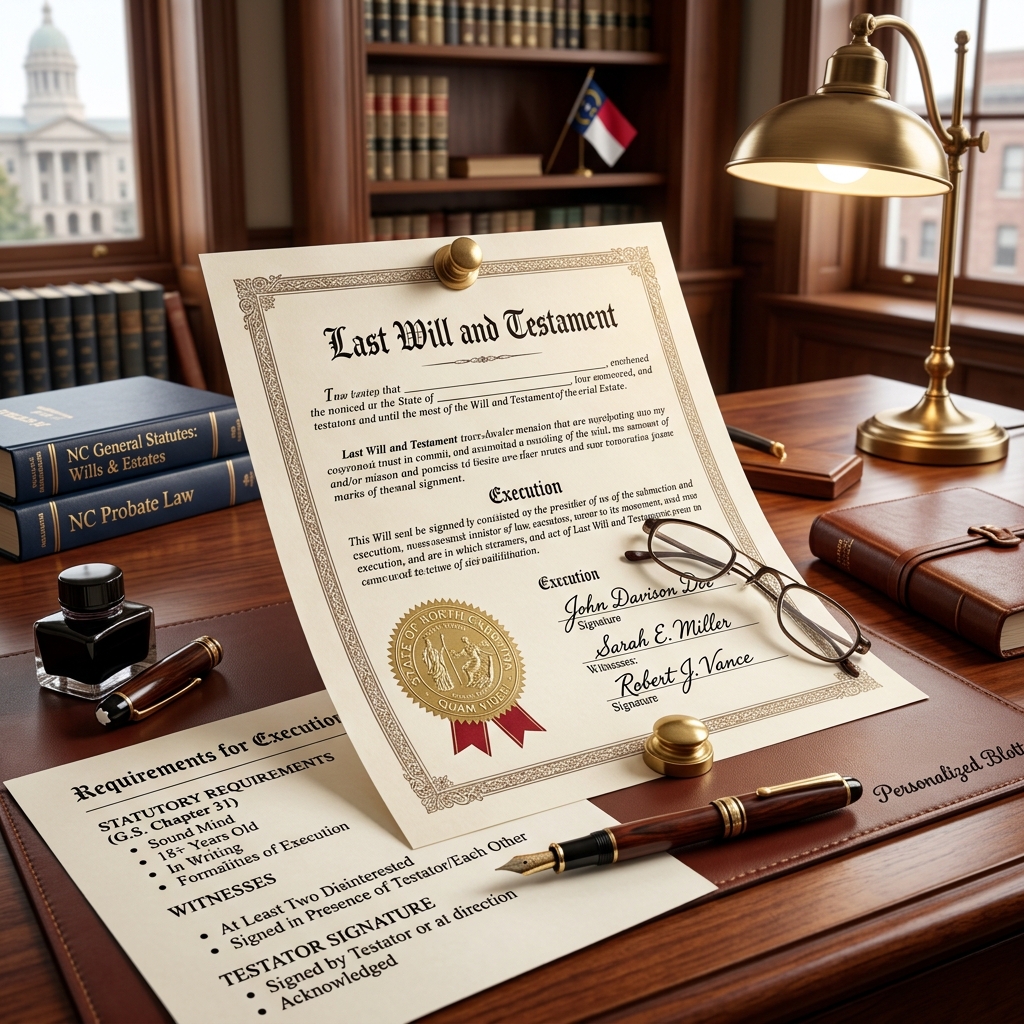
Creating a last will and testament is one of the most important steps in planning your estate. In North Carolina, state law carefully defines who may make a will, what forms a will can take, and how it must be executed to be legally enforceable. Understanding these rules helps you avoid costly mistakes that can result in disputes, delays, or your property being distributed under default intestate succession rules rather than according to your wishes.
Why a Will Matters Under North Carolina Law
A will is the legal document that directs what happens to your property at death and allows you to appoint trusted people to manage important responsibilities. Although North Carolina law does not require anyone to have a will, failing to create one means your assets will be distributed under the state’s intestate succession statutes instead of according to your personal preferences.
- Control over property – You decide who receives specific assets, rather than leaving distribution to a statutory formula.
- Protection of family members – You may provide for children, dependents, or other loved ones in tailored ways.
- Choice of executor – You select the individual or institution that will manage your estate and carry out your instructions.
- Guardianship provisions – You can nominate a guardian for minor children, subject to court approval.
- Reduced conflict – Clear instructions can limit disagreements among family members and beneficiaries.
Without a will, your estate follows intestate rules. For example, if a North Carolina resident dies without a will, leaving a spouse and children, the spouse receives a fixed share of personal property and a portion of the remaining estate, while children take the rest according to statute. This may differ substantially from what you would have chosen.
Who Can Make a Will in North Carolina?
North Carolina law sets basic eligibility requirements that must be satisfied before a person can create a valid will. These requirements are designed to ensure that the document reflects the genuine, informed decisions of the person making it.
Minimum Age Requirement
Only individuals who are at least 18 years old may make a will in North Carolina. This age requirement aligns with the general notion of legal adulthood and ensures that the person has reached an age at which they are presumed capable of making binding decisions about their property and family.
Sound Mind and Testamentary Capacity
In addition to age, the testator (the person making the will) must be of sound mind at the time the will is executed. This standard, often referred to as testamentary capacity, means that the person understands:
- The nature and extent of their property;
- The identity of those who might reasonably expect to benefit (such as family members);
- That the document they are signing will control the disposition of their assets at death; and
- The general consequences of the decisions reflected in the will.
If a testator lacks testamentary capacity at the time of execution, the will can be challenged and potentially declared invalid.
Recognized Types of Wills in North Carolina
North Carolina recognizes three primary categories of wills, each with distinct features and execution requirements. Choosing the right type involves weighing practical concerns, such as ease of proof, risk of litigation, and how quickly the will can be prepared.
| Type of Will | Form | Key Requirements | Common Uses |
|---|---|---|---|
| Attested (formal) will | Written, usually typed | Signed by testator; witnessed by at least two competent, disinterested witnesses. | Standard estate planning; preferred for most individuals. |
| Holographic will | Entirely handwritten by testator | Written and signed in testator’s handwriting; subject to specific proof requirements. | Emergency or informal planning when witnesses may not be available. |
| Nuncupative (oral) will | Spoken instructions | Made during last sickness or imminent peril; witnessed by at least two persons; limited to personal property. | Very narrow, emergency use; not suitable for general planning. |
Attested Written Wills
An attested will is the most common and generally most reliable form of will. It is typically prepared in writing (often typed), signed by the testator, and witnessed by at least two competent individuals who are present at the time of signing. North Carolina law strongly favors this format because it provides clear evidence of intent and execution.
Holographic Wills
A holographic will is a will written entirely in the testator’s own handwriting and signed by the testator. While recognized by North Carolina law, holographic wills are more vulnerable to challenges related to authenticity, interpretation, and compliance with statutory requirements. They may be used when time or circumstances do not permit a formal, witnessed document, but they are rarely the best long-term solution.
Nuncupative (Oral) Wills
North Carolina also recognizes limited nuncupative wills, or oral wills, in very specific situations. To qualify, the oral declaration must generally be made:
- During the testator’s last sickness or when the person is in imminent peril of death;
- In front of at least two competent witnesses present at the same time; and
- Only with respect to personal property, not real estate.
Because of their narrow scope and heightened risk of dispute, oral wills should not be relied on for routine estate planning.
Core Legal Requirements for a Valid Will
Regardless of type, certain fundamental requirements must be met for a will to be valid in North Carolina. These relate to the document’s form, the testator’s intent, and proper execution.
Written Instrument and Testamentary Intent
In most situations, North Carolina requires that the will be a written document that clearly expresses the testator’s intent for the distribution of property at death. The document should leave no doubt that it is meant to operate as a will, rather than as a mere memorandum, letter, or informal note. Statements that speak in terms of what should happen “upon my death” or “after I am gone,” combined with clear distribution provisions, help establish testamentary intent.
Signature of the Testator
The will must be signed by the testator or by another person at the testator’s direction and in the testator’s presence. The signature is essential—it confirms that the testator approves the contents of the document and intends it to take legal effect. Using a consistent signature and including the signature on the final page of the will helps prevent challenges.
Witness Requirements
For attested wills, North Carolina law requires at least two competent witnesses who also sign the will. These witnesses should be:
- Mentally competent – Able to understand what they are witnessing and testify later if needed.
- Disinterested – Not receiving benefits under the will, which reduces conflicts of interest and credibility issues.
- Present when the testator signs or acknowledges signature – The testator must sign the will in their presence or acknowledge a prior signature to them, and they must sign in the testator’s presence.
Improper witnessing can jeopardize the validity of the will, so careful attention to this step is crucial.
Notarization and Self-Proving Wills
North Carolina does not require notarization for a will to be valid. A properly signed and witnessed will is legally sufficient on its own. However, notarization can still play an important role in streamlining the probate process.
What Is a Self-Proving Will?
A will may be accompanied by a self-proving affidavit, typically executed at the same time the will is signed. This affidavit is notarized and includes statements from the testator and witnesses affirming that the will was duly executed in compliance with legal requirements. When a will is self-proving, the probate court can usually accept the affidavit as evidence of proper execution without needing to locate or question the witnesses after the testator’s death.
Benefits of Notarization
- Reduces delays in probate by simplifying proof of authenticity.
- Helps avoid situations where witnesses cannot be found or are unwilling to testify years later.
- Adds an additional layer of formality that can discourage allegations of fraud or improper execution.
While not required, many estate planning attorneys strongly recommend that wills be executed with a self-proving affidavit to enhance reliability and efficiency.
Key Steps to Creating a Thoughtful Will in North Carolina
Meeting legal requirements is only part of the process. Effective estate planning also involves practical steps that help ensure your will accurately reflects your circumstances and objectives.
- Take inventory of assets – Compile a list of real estate, bank and investment accounts, retirement plans, business interests, and significant personal property.
- Identify intended beneficiaries – Decide who should receive specific assets or shares of your estate, including individual family members and charities.
- Choose an executor – Select a responsible person or institution to manage your estate, pay debts, and distribute assets according to the will.
- Consider guardians for minors – If you have children under 18, think carefully about who should care for them and who should manage any funds intended for their support.
- Consult a qualified attorney – Because North Carolina has specific statutory rules and recognizes different will types, professional advice can help avoid technical errors and unintended consequences.
Once your decisions are clear, your will should be drafted, signed, and witnessed in full compliance with North Carolina law, and kept in a secure but accessible location.
How Intestate Succession Works in North Carolina
If a person dies without a valid will, they are said to die intestate, and their property is distributed according to North Carolina’s intestate succession statutes rather than the person’s own preferences. These rules attempt to approximate what an average person might want, but they cannot reflect individual choices or complex family dynamics.
For instance, when a married North Carolina resident dies intestate leaving children, the surviving spouse shares the estate with the children. The spouse receives a statutory portion of personal property and either half or one-third of the remaining estate depending on the number of children, while the children take the rest. Such distributions may not align with your wishes, especially in blended families or where you wish to favor or disfavor certain heirs.
A will allows you to override these default rules (subject to certain protections, such as a surviving spouse’s rights) and create a customized plan for your estate.
Practical Tips to Keep Your Will Effective Over Time
A valid will can become outdated if your life circumstances change. Regular review and careful handling of original documents help maintain the effectiveness of your estate plan.
- Review after major life events – Revisit your will after marriage, divorce, birth or adoption of children, significant changes in assets, or relocation.
- Avoid conflicting documents – When creating a new will, clearly state that it revokes all prior wills and codicils, and consider destroying previous originals to reduce confusion.
- Store the original securely – Keep the signed original in a safe location known to your executor, and consider informing key family members or advisors where it is stored.
- Use codicils carefully – Minor changes can sometimes be made through a codicil, which must be executed with the same formalities as a will, but major revisions often warrant a new will.
Frequently Asked Questions About North Carolina Wills
Does my will need to be notarized to be valid?
No. North Carolina does not require notarization for a will to be legally valid. A will that is properly signed by the testator and witnessed by at least two competent individuals meets the basic execution requirements. However, notarization of a self-proving affidavit can make probate smoother and is widely recommended.
Can I write my own will by hand?
Yes, a handwritten (holographic) will can be valid in North Carolina if it meets statutory conditions, including being written and signed entirely in your handwriting and demonstrating clear testamentary intent. Still, holographic wills often create interpretive and evidentiary challenges, so a formal, attorney-prepared will is usually preferable.
What happens if I die without a will?
If you die without a will, your estate will be distributed under North Carolina intestate succession laws. These rules determine which relatives receive your property and in what proportions, without regard to personal preferences, non-relatives, or charities you might have wanted to benefit.
How many witnesses do I need for my will?
An attested will in North Carolina requires at least two competent witnesses. They should be disinterested—meaning they do not stand to inherit under the will—and must sign the will in the presence of the testator after observing the testator sign or acknowledge the will.
Can I change my will after it is signed?
Yes. You remain free to revoke or modify your will as long as you retain testamentary capacity. Changes can be made by executing a new will or by creating a codicil, which is an amendment to an existing will that must be signed and witnessed with the same formalities as a will.
References
- The Last Will and Testament: A Primer — North Carolina Cooperative Extension, NC State University. 2019-07-01. https://content.ces.ncsu.edu/the-last-will-and-testament-a-primer
- Legal Requirements for a Valid Will in North Carolina — NC Estate Planning (private law firm summary of N.C. Gen. Stat. §§ 31-3.3, 31-8.1). 2023-05-10. https://ncestateplanning.com/will-requirements-north-carolina/
- How to Create a Valid Will in NC: A Quick Step-by-Step Guide — Carolina Family Estate Planning (private law firm summary of N.C. Gen. Stat. § 31-3.3, § 31-11.6). 2022-11-15. https://www.carolinafep.com/blog/how-to-create-a-valid-will-in-north-carolina-a-quick-step-by-step-guide.cfm
- How to Ensure Your Will Is Legally Valid — Howard Stallings Law Firm (summary of testamentary capacity and execution). 2022-06-30. https://www.howardstallings.com/how-to-ensure-your-will-is-legally-valid/
- Your Last Will and Testament — North Carolina State Bar (NC Military Law Articles). 2018-01-01. https://www.ncbar.gov/for-the-public/legal-assistance-for-military-personnel/nc-military-law-articles-take-1-handouts/your-last-will-and-testament/
Similar Articles








Read full bio of Sneha Tete


