North Carolina treats criminal trespass as a serious offense that can range from a minor misdemeanor to a felony carrying significant prison time. Even conduct that feels harmless, such as walking across someone’s yard or returning to a former partner’s home, can lead to arrest under the state’s trespass statutes.
This guide explains how trespass is defined, the different degrees and special forms of trespass, typical penalties, and key rights and defenses recognized by North Carolina law. It is designed to provide practical, plain-language information, but it is not a substitute for legal advice from a licensed attorney.
What Counts as Criminal Trespass in North Carolina?
At its core, criminal trespass in North Carolina involves entering or remaining on another person’s property without authorization. Authorization can come from an owner, a lawful occupant, or someone otherwise in charge of the premises.
Under the state’s criminal code, trespass focuses on three main ideas:
- Lack of permission — being on property without consent or legal authority.
- Notice — having been told not to enter, seeing posted signs, or encountering barriers showing the owner wants to keep intruders out.
- Remaining after being told to leave — staying on the property once you have been ordered to go, even if you originally entered lawfully.
These concepts appear throughout North Carolina’s trespass statutes, especially in the laws governing first-degree, second-degree, and domestic criminal trespass.
Overview of Trespass Offense Levels
North Carolina does not treat all trespass behavior the same. Different statutes define separate types of trespass with distinct penalties.
| Type of Trespass | Typical Classification | Basic Conduct |
|---|---|---|
| Second-degree trespass | Usually Class 3 misdemeanor; some cases Class 2 misdemeanor | Entering or staying on posted premises or after being told not to enter or remain |
| First-degree trespass | Generally Class 2 misdemeanor | Entering or staying in a building or on premises clearly enclosed or secured to keep out intruders |
| Domestic criminal trespass | Class 1 misdemeanor; in certain safe house cases, Class G felony | Entering or remaining on premises occupied by a current or former spouse or partner while the parties live apart |
| Special felony trespass situations | Felony (for example, certain utility or safe house trespasses) | Trespass that involves heightened risks, such as interfering with critical infrastructure or armed entry into a domestic violence safe house |
Because the level of the offense affects potential jail exposure and fines, it is important to understand how the law distinguishes between these categories.
Second-Degree Trespass: When Notice Matters
Second-degree trespass is often the starting point for more routine trespass cases in North Carolina. It focuses heavily on whether the person had notice that they were not allowed on the property.
Legal Definition
Under North Carolina General Statutes section 14-159.13, a person commits second-degree trespass if, without authorization, they enter or remain on any of the following:
- Premises of another after being notified not to enter or remain by the owner, a person in charge, a lawful occupant, or another authorized person.
- Premises that are posted with notice not to enter, in a way reasonably likely to be seen by intruders.
- The curtilage of a dwelling (the area immediately surrounding a home) between midnight and 6:00 a.m.
The curtilage provision is designed to protect residential privacy and security at night, even if the property is not fully fenced or locked.
Penalty Range
- Violations involving posted signs or direct notice are typically charged as a Class 3 misdemeanor.
- Trespass on the curtilage of a dwelling at night may be treated more seriously as a Class 2 misdemeanor.
While these are lower-level offenses, they can still carry jail time, fines, and a criminal record that may affect employment, housing, or professional licensing.
First-Degree Trespass: Entering Buildings and Secured Areas
First-degree trespass usually applies when someone enters a more protected area, such as an enclosed yard or building.
Key Elements
Under Article 22B, a person commits first-degree trespass if, without authorization, they enter or remain:
- On premises of another that are enclosed or secured in a way that clearly shows an intent to keep out intruders; or
- In the building of another.
Common examples include walking inside a locked or clearly fenced area, entering a business after hours through a closed entrance, or going into a private building without invitation.
Typical Penalties
First-degree trespass is generally a Class 2 misdemeanor, which can carry up to 60 days of imprisonment and a fine, depending on the person’s criminal history and other factors.
In some specific circumstances, such as trespass involving critical infrastructure or conduct that creates a risk of serious harm, related statutes may elevate the offense to a higher-level misdemeanor or felony.
Domestic Criminal Trespass: Trespass in Family and Relationship Settings
Domestic criminal trespass addresses situations where someone enters or stays on premises occupied by a current or former spouse or intimate partner while the parties are living apart.
Core Requirements
North Carolina General Statutes section 14-134.3 sets out domestic criminal trespass. A person may be guilty if they:
- Enter premises occupied by a present or former spouse, or by a person with whom they previously lived as if married.
- Have been forbidden to enter or ordered to leave by the lawful occupant.
- The parties are living apart, which can be shown by a separation order, a stay-away order, a separation agreement, or evidence of separate residences.
The statute aims to protect individuals during separation or after breakups, particularly in situations linked to domestic violence or harassment.
Domestic Trespass Penalties
- In most cases, domestic criminal trespass is a Class 1 misdemeanor.
- If the trespass occurs at a property operated as a safe house or haven for victims of domestic violence and the person is armed with a deadly weapon, the offense becomes a Class G felony.
The felony classification reflects the heightened danger to survivors and the need to secure safe spaces from intrusion.
Special Rules and Exceptions
Although the trespass statutes are broad, North Carolina law recognizes specific situations where entering another’s property does not amount to criminal trespass.
Professional Land Surveyors
State law gives licensed professional land surveyors the right to enter the lands of others when necessary to perform legally authorized surveying work, including locating boundaries, rights-of-way, and easements.
- Surveyors may carry customary equipment and vehicles onto the property.
- This entry is explicitly stated not to constitute trespass and does not subject the surveyor to arrest or civil action under the trespass statutes.
This exception ensures land can be accurately measured and mapped without constant litigation or criminal exposure.
Other Common Exceptions and Defenses
Although not all defenses are listed in the statutes, several general legal principles can apply in trespass cases:
- Consent or permission — having actual authorization from the owner or lawful occupant to enter or stay on the property.
- Legal authority — entry by law enforcement with a warrant, utility workers performing necessary repairs, or others exercising legal rights.
- Emergency or necessity — entering property to escape immediate danger, seek urgent help, or prevent serious harm may be considered a defense under broader criminal law doctrines.
- Lack of notice — in second-degree cases, the absence of posted signs or prior warnings can be relevant, especially when the statute requires notice.
The viability of these defenses depends on the facts of the case and how courts interpret the law, so they should always be discussed with an attorney.
Consequences of Trespass Convictions
Beyond the immediate sentence, a criminal trespass conviction in North Carolina can have lasting effects.
Criminal Penalties
- Jail or prison time — misdemeanors can carry days to months in jail, while felony trespass in domestic safe house situations can lead to much longer periods of incarceration.
- Fines and court costs — monetary penalties can be imposed along with fees and surcharges.
- Probation conditions — courts may order supervised or unsupervised probation, including requirements to stay away from certain locations or individuals.
Long-Term Impacts
- Criminal record — trespass convictions appear on background checks, which may affect job prospects or housing applications.
- Protective orders and restrictions — in domestic cases, courts may issue or extend orders limiting contact or access to certain properties.
- Immigration or licensing issues — non-citizens or professionals subject to licensing boards may face additional consequences.
Because each case is different, the specific outcome depends on the person’s prior record, the nature of the conduct, and the sentencing judge’s decisions.
Practical Tips If You Face a Trespass Charge
If you have been cited or arrested for trespass in North Carolina, how you respond can affect both the outcome of your case and your personal safety.
- Leave the property immediately if you are told to go. Remaining after a clear order to leave can strengthen the case for trespass and may lead to additional charges.
- Do not resist arrest. Physical resistance can result in separate criminal charges and increased penalties.
- Limit your statements. You have the right to remain silent. Providing detailed explanations or arguments to police can unintentionally harm your defense later.
- Contact a criminal defense attorney promptly. A lawyer can explain how the statutes apply to your situation, identify possible defenses, and negotiate with prosecutors.
- Preserve evidence. Save texts, emails, or written agreements that show permission, separation terms, or other facts relevant to domestic or property disputes.
Legal representation is particularly important in domestic and felony-level trespass cases, where the stakes are higher and the law more complex.
Frequently Asked Questions About North Carolina Trespass Laws
Is accidentally walking onto someone’s land trespass?
Criminal trespass typically requires that the entry or remaining be without authorization, and many second-degree provisions rely on some form of notice, such as posted signs or prior warnings. Someone who inadvertently crosses a boundary without any signs or instructions may have stronger arguments against criminal liability, although civil disputes over property boundaries can still arise.
Can I be charged if I once had permission to be there?
Yes. If the owner, lawful occupant, or person in charge later revokes permission and tells you not to enter or stay, coming onto the property again or remaining after that point can support a second-degree or domestic trespass charge.
Does posting a “No Trespassing” sign matter?
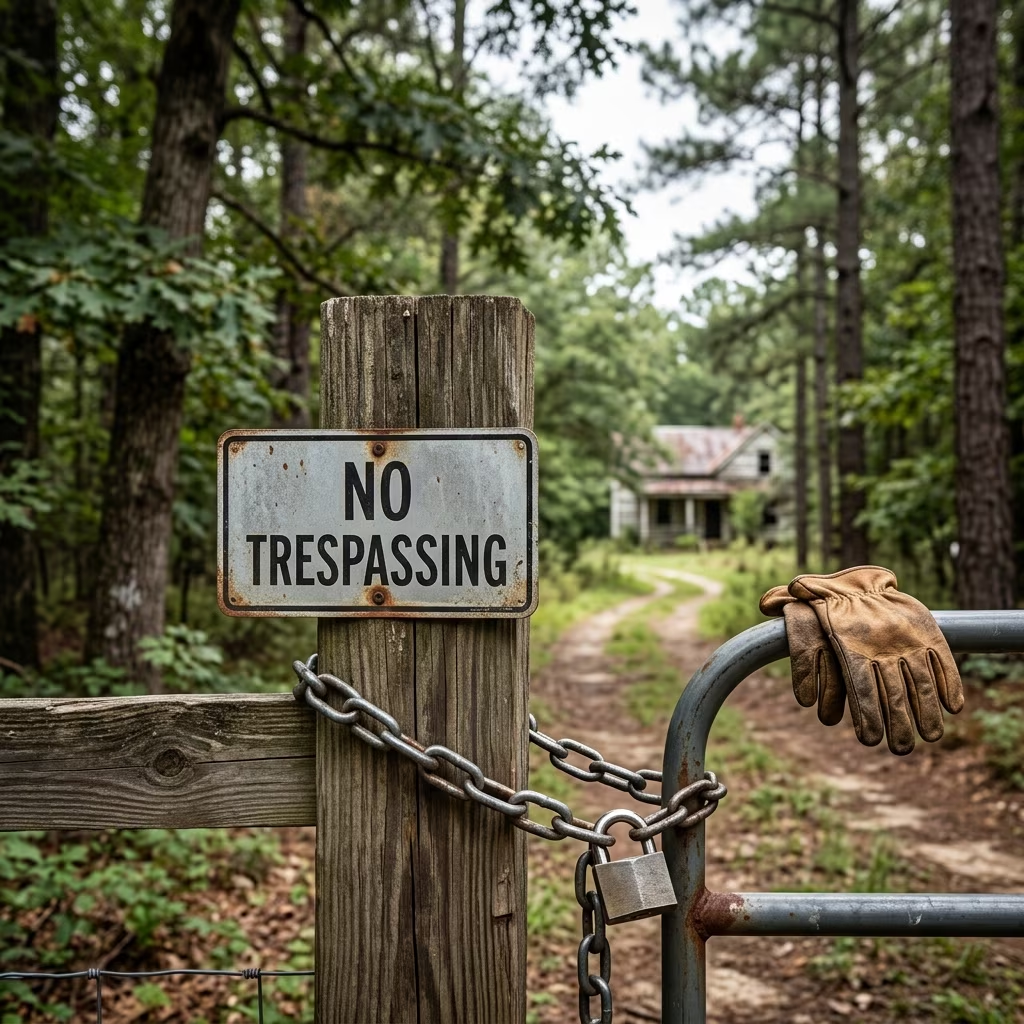
Posting signs is one of the key ways owners give legal notice that entry is forbidden. Under second-degree trespass law, being on premises that are posted “in a manner reasonably likely to come to the attention of intruders” can be enough to establish the offense, even without direct verbal warnings.
How is domestic trespass different from regular trespass?
Domestic criminal trespass applies only in relationship contexts involving current or former spouses or partners with whom the person lived as if married. It is tied to situations where the parties are living apart and a lawful occupant forbids entry or orders the person to leave. Penalties can be higher, particularly when domestic violence concerns and safe houses are involved.
Do land surveyors need permission every time they enter property?
Professional land surveyors have a statutory right to enter land when necessary to perform authorized surveying tasks and may carry customary equipment and vehicles. The law specifies that this type of entry does not constitute trespass under the criminal trespass article, which means surveyors generally do not face criminal liability simply for conducting legitimate survey work.
Should I call the police every time someone steps on my property?
Not every unwanted presence will lead to a charge, and whether to involve law enforcement is a judgment call. Posting clear signs, communicating boundaries, and documenting repeated or threatening behavior can help protect your rights. For ongoing disputes or safety concerns, speaking with an attorney about both criminal and civil options may be appropriate.
References
- Article 22B, First and Second Degree Trespass (PDF) — North Carolina General Assembly. 1987-01-01 (as enacted; later amendments incorporated). https://www.ncleg.net/EnactedLegislation/Statutes/PDF/ByArticle/Chapter_14/Article_22B.pdf
- G.S. 14-159.13. Second degree trespass (PDF) — North Carolina General Assembly. 1987-01-01 (as enacted; later amendments incorporated). https://www.ncleg.gov/EnactedLegislation/Statutes/PDF/BySection/Chapter_14/GS_14-159.13.pdf
- G.S. 14-134.3. Domestic criminal trespass — North Carolina General Assembly. 1998-01-01 (latest cited amendment). https://www.ncleg.net/enactedlegislation/statutes/html/bysection/chapter_14/gs_14-134.3.html
- Criminal Trespass in NC: What To Know — The Stowe Law Firm, PLLC. 2023-01-01 (approximate; page last updated date not displayed). https://www.stowelawfirmnc.com/what-to-know-about-criminal-trespass-in-nc/
- What Is Considered Trespassing in North Carolina? — Kirk, Kirk, Howell, Cutler & Thomas, LLP. 2022-01-01 (approximate; page last updated date not displayed). https://www.kirkkirklaw.com/legal-resources/what-is-considered-tresspasing-in-north-carolina/
- How Is Trespassing Defined As A Crime In Shelby, North Carolina? — Teddy, Meekins & Talbert, P.L.L.C. 2020-04-01. https://www.teddyandmeekins.com/blog/2020/april/how-is-trespassing-defined-as-a-crime-in-shelby-/