
Understanding ‘No-Cost’ and ‘No-Closing-Cost’ Loans
What 'no-cost' really means in mortgages and refinancing—and how to avoid hidden expenses.
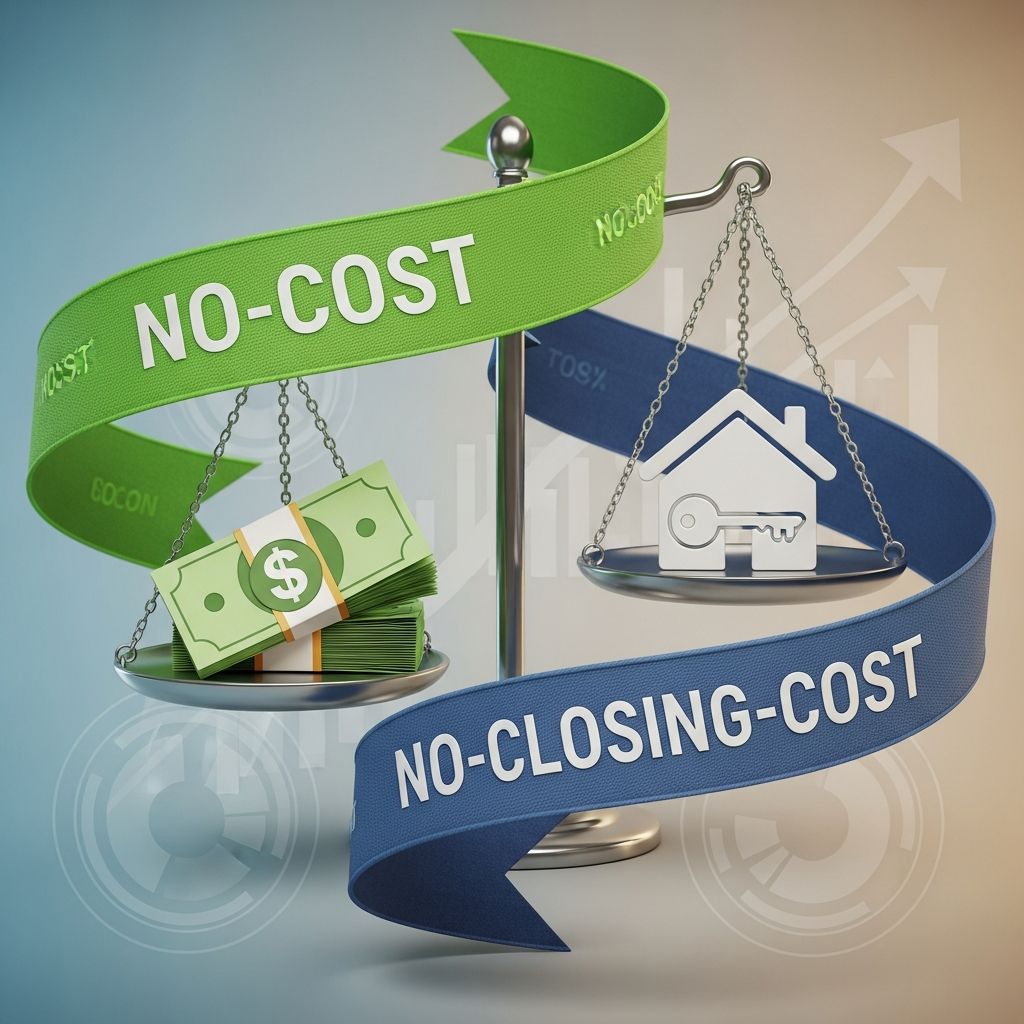
What Does ‘No-Cost’ or ‘No-Closing-Cost’ Really Mean?
When shopping for a mortgage or a refinance, you may come across offers labeled as ‘no-cost’ or ‘no-closing-cost’ loans. These phrases sound appealing, especially if you’re trying to minimize upfront expenses. But in reality, there’s no such thing as a truly free mortgage or refinance. Every loan has associated costs, and understanding how lenders structure these deals is essential to avoid surprises and make a smart financial decision.
So what do these terms actually mean? A ‘no-cost’ or ‘no-closing-cost’ loan doesn’t mean the lender is absorbing all fees out of generosity. Instead, it usually means that the borrower isn’t paying those fees directly at closing. The costs are still there—they’re just being paid in a different way, often by accepting a higher interest rate or by rolling the fees into the loan balance.
Where Do Closing Costs Come From?
Before diving into how ‘no-cost’ loans work, it helps to understand what closing costs are and why they exist. Closing costs are the fees and charges associated with originating and finalizing a mortgage or refinance. These typically include:
- Loan origination fees
- Appraisal fees
- Title search and title insurance
- Credit report fees
- Attorney or notary fees (in some states)
- Recording and transfer taxes
- Prepaid items like property taxes and homeowners insurance (often held in escrow)
For a typical refinance, closing costs can range from 2% to 5% of the loan amount. On a $300,000 mortgage, that’s $6,000 to $15,000 in fees. These costs are separate from the interest rate and principal balance, and they must be paid one way or another.
How ‘No-Cost’ Loans Actually Work
A ‘no-cost’ loan is a marketing term, not a literal description. In practice, it means the lender is offering to cover or waive certain fees in exchange for a trade-off, usually a higher interest rate. Here’s how it typically plays out:
- The lender agrees not to charge you certain upfront fees at closing.
- In return, they offer you a slightly higher interest rate than they would on a traditional loan with the same terms.
- The extra interest you pay over the life of the loan effectively ‘pays’ for the closing costs.
For example, a lender might offer:
- Option A: 6.0% interest rate with $8,000 in closing costs
- Option B: 6.3% interest rate with no closing costs
In this case, Option B is the ‘no-cost’ loan. You avoid paying $8,000 out of pocket, but you’ll pay more in interest each month and over the life of the loan.
How ‘No-Closing-Cost’ Refinancing Is Structured
Refinancing with ‘no closing costs’ follows a similar pattern. The lender may:
- Waive or reduce origination and processing fees
- Offer lender credits to offset third-party fees (appraisal, title, etc.)
- Require a higher interest rate to make up for the waived fees
Some lenders may also allow you to roll certain fees into the new loan balance, increasing the amount you owe. This is especially common in cash-out refinances, where the new loan is larger than the existing balance. However, not all loan types allow this. For example, VA streamline refinances (IRRRLs) generally do not permit borrowers to roll most closing costs into the loan, except for the VA funding fee.
Common Ways Lenders Make ‘No-Cost’ Possible
Lenders have several tools to create ‘no-cost’ or ‘no-closing-cost’ offers. These include:
- Lender credits: The lender provides a credit toward closing costs, often in exchange for a higher interest rate.
- Higher interest rate: The borrower accepts a slightly higher rate, and the extra interest income compensates the lender for the waived fees.
- Rolling fees into the loan: In some cases, certain fees can be added to the loan balance, increasing the total amount borrowed.
- Waiving certain fees: The lender may simply choose not to charge certain fees, such as application or processing fees, as a promotional offer.
It’s important to note that these strategies don’t eliminate costs—they shift them from upfront payments to long-term interest or a larger loan balance.
When a ‘No-Cost’ Loan Might Make Sense
A ‘no-cost’ or ‘no-closing-cost’ loan isn’t inherently bad. In fact, it can be a smart choice in certain situations. Consider this option if:
- You don’t have enough cash on hand to cover closing costs.
- You plan to keep the loan for a relatively short period (e.g., 3–5 years).
- The higher interest rate still results in a lower monthly payment that fits your budget.
- You’re refinancing to a significantly lower rate, and the small increase in rate is outweighed by the monthly savings.
For example, if you’re refinancing a $300,000 mortgage and can reduce your rate from 7.0% to 6.3% with a ‘no-cost’ option, the monthly savings might be worth the slightly higher rate, even if you pay more in interest over time.
When to Be Cautious About ‘No-Cost’ Offers
While ‘no-cost’ loans can be helpful, they’re not always the best choice. Be cautious if:
- You plan to keep the loan for many years (e.g., 10+ years). Over time, the higher interest rate can cost significantly more than paying closing costs upfront.
- The ‘no-cost’ offer comes with a much higher rate than comparable traditional loans.
- The lender is vague about what fees are included or excluded from the ‘no-cost’ deal.
- You’re being pressured to refinance repeatedly, which can erode equity and increase total interest paid.
Repeated refinancing, sometimes called ‘loan flipping’ or ‘equity stripping,’ is a red flag. Each refinance adds new fees and may extend your loan term, leaving you with more debt and less equity over time.
How to Compare ‘No-Cost’ vs. Traditional Loans
To decide whether a ‘no-cost’ loan is right for you, compare it carefully to a traditional loan with closing costs. Here’s how:
- Get Loan Estimates for both options. Ask the lender to provide a Loan Estimate for the ‘no-cost’ loan and for a comparable traditional loan with closing costs.
- Compare the interest rates and monthly payments. Note the difference in rate and how it affects your monthly payment.
- Calculate the break-even point. Divide the closing costs by the monthly savings to find out how many months it will take to recoup the upfront costs. If you plan to keep the loan longer than the break-even point, the traditional loan may save you money.
- Review the total projected payments. Look at the total interest and principal you’ll pay over the life of the loan under each option.
For example:
| Loan Type | Interest Rate | Closing Costs | Monthly Payment |
|---|---|---|---|
| Traditional Loan | 6.0% | $8,000 | $1,799 |
| No-Cost Loan | 6.3% | $0 | $1,857 |
In this example, the ‘no-cost’ loan has a higher monthly payment but avoids $8,000 in upfront costs. The break-even point is about 138 months (about 11.5 years). If you plan to keep the loan longer than that, the traditional loan is cheaper overall.
Red Flags to Watch For
Not all ‘no-cost’ or ‘no-closing-cost’ offers are created equal. Be alert for these warning signs:
- Unrealistically low rates with no details: If a lender advertises an ultra-low rate but avoids discussing terms, it may be a bait-and-switch tactic.
- Hidden fees or last-minute changes: Watch for unexpected charges at closing or last-minute rate increases.
- Pressure to refinance repeatedly: A lender who keeps encouraging you to refinance, especially with little financial benefit, may be engaging in loan flipping.
- Requests for upfront payments in unusual forms: Legitimate lenders don’t require large upfront fees paid in gift cards, wire transfers, or cryptocurrency before closing.
- Offers that seem too good to be true: Extremely low rates with no closing costs and no trade-offs are often misleading or come with hidden costs.
Questions to Ask Your Lender
When evaluating a ‘no-cost’ or ‘no-closing-cost’ loan, ask these key questions:
- Exactly which fees are being waived or covered?
- What is the interest rate on the ‘no-cost’ option compared to the standard option?
- How much higher will my monthly payment be with the ‘no-cost’ loan?
- What is the estimated break-even point for the closing costs?
- Are any fees being rolled into the loan balance?
- How long do you expect me to keep this loan to make the ‘no-cost’ option worthwhile?
Make sure the lender provides clear, written answers and includes all costs in the Loan Estimate.
Protecting Yourself When Refinancing
To avoid scams and poor deals when refinancing, follow these best practices:
- Shop around with multiple lenders and compare Loan Estimates.
- Read all documents carefully before signing.
- Never sign blank documents or documents you don’t understand.
- Be wary of lenders who pressure you to act quickly or threaten negative consequences if you don’t refinance.
- Consult a trusted financial advisor or housing counselor if you’re unsure.
Frequently Asked Questions
Is a ‘no-cost’ loan really free?
No. A ‘no-cost’ loan still has costs; they’re just paid differently, usually through a higher interest rate or by rolling fees into the loan balance. There is no such thing as a completely free mortgage or refinance.
Can I roll all closing costs into my refinance?
It depends on the loan type and lender. Some loans, like cash-out refinances, allow certain fees to be rolled into the loan. Others, like VA streamline refinances, have strict limits on what can be included. Always confirm with your lender what fees can be financed.
Is a ‘no-closing-cost’ refinance worth it?
It can be, especially if you lack cash for closing costs or plan to keep the loan for a short time. However, if you plan to keep the loan for many years, paying closing costs upfront with a lower rate may save you more in the long run.
What’s the difference between ‘no-cost’ and ‘no-closing-cost’?
These terms are often used interchangeably, but they can vary by lender. In general, both mean the borrower isn’t paying certain fees at closing. Always ask for a detailed breakdown of what’s included and what’s not.
How can I avoid refinancing scams?
Shop with reputable lenders, compare Loan Estimates, avoid lenders who pressure you or ask for unusual upfront payments, and never stop making your current mortgage payments unless your new loan has officially closed.
References
- What is a no-cost or no-closing-cost loan or refinancing? — Consumer Financial Protection Bureau. Accessed 2025. https://www.consumerfinance.gov/ask-cfpb/is-there-such-a-thing-as-a-no-cost-or-no-closing-loan-or-refinancing-en-141/
- Understanding Mortgage Closing Costs — U.S. Department of Housing and Urban Development (HUD). https://www.hud.gov/buying/closingcosts
- Home Loan Scams: Borrower Beware — Louisiana Department of Justice. https://goea.louisiana.gov/media/yntnt3bx/homeloanscambook.pdf
- Avoid Home Refinancing Scams — California Department of Financial Protection and Innovation (DFPI). https://dfpi.ca.gov/news/insights/avoid-home-refinancing-scams/
Similar Articles








Read full bio of Sneha Tete


