
New York Adoption Laws: 6 Steps To Adopt, Timeline, Home Study
A practical, plain-language guide to who may adopt, who must consent, and how the adoption process works under New York law.
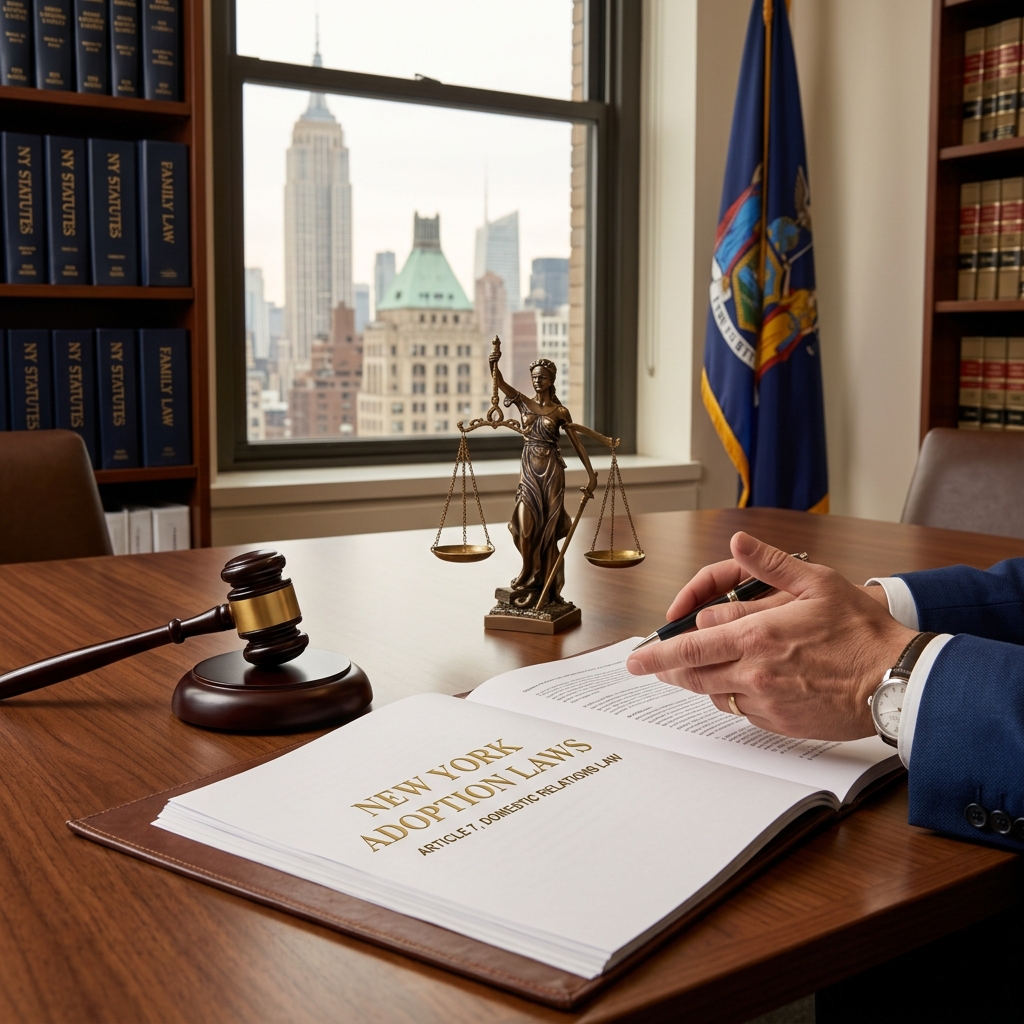
New York has detailed adoption laws that define who may adopt, who may be adopted, what consents are required, and how the court process works from start to finish. This guide explains those rules in accessible terms so prospective parents and families can better understand what to expect when pursuing adoption in New York.
Big Picture: How Adoption Works in New York
Adoption in New York is a legal process that permanently transfers parental rights and responsibilities from a child’s birth or legal parents to adoptive parents. Once an adoption is finalized, the adopted child is treated in law as if they were the biological child of the adoptive parent, including rights to support and inheritance.
- Adoptions are always approved by a court (Family Court or Surrogate’s Court) in the county where the adoptive parent lives.
- Consent and termination of parental rights are central issues in every case.
- Home studies and supervisory periods help ensure that the placement is safe and in the child’s best interests.
Who May Adopt a Child in New York?
New York law broadly authorizes adults to adopt, subject to specific eligibility rules and background checks. The statute and court practice focus on adult status, family situation, and suitability to parent.
Basic Legal Eligibility
Under New York’s Domestic Relations Law, the following people may adopt:
- Any adult unmarried person may adopt.
- An adult married couple together may jointly adopt.
- Two unmarried adult intimate partners together may adopt, reflecting New York’s recognition of diverse families.
- A legally separated married adult may adopt alone.
In practice, New York requires that adoptive parents in private placements be certified by the court as qualified to adopt, which involves reviewing their background, health, and ability to care for a child.
Age and Other Suitability Requirements
While the law does not set a detailed age range in the statute, adoption practice is clear that only adults 18 and older may adopt. Agencies and courts then look closely at whether the person can provide a safe, stable home.
New York agencies and courts typically consider:
- Criminal history, especially offenses involving violence, domestic abuse, or crimes against children.
- Child abuse or neglect history, including records in the Statewide Central Register of Child Abuse and Maltreatment.
- Physical and mental health, to ensure the parent can meet a child’s needs.
- Financial stability, such as income, housing, and ability to provide long-term care.
- Immigration or legal status, where it may affect the ability to remain in the United States and care for the child.
Certain serious convictions, such as felony child abuse, severe domestic violence, or violent crimes against children, can permanently bar someone from adopting. These safeguards reflect a strong policy that the child’s safety is paramount.
Who May Be Adopted?
New York law allows any person to be adopted. That includes infants, older children, and adults, although the procedures and typical circumstances differ by age.
Minors
Children are most commonly adopted through agency, foster care, private, kinship, or stepparent adoptions. When minors are involved, the law pays particular attention to parental consent, termination of rights, and the child’s own wishes if they are old enough to express them.
Adult Adoptions
Adult adoptions are allowed and often used to formalize long-standing parent-child relationships, such as kinship care or step-relationships that began when the child was younger. Consent rules are more limited because the adoptee is an adult and can directly consent to the adoption.
Consent: Whose Permission Is Needed?
Consent is one of the most complex parts of New York adoption law. The statute specifies when consent is required, and also when a court can proceed without it, such as after termination of parental rights or abandonment.
Child’s Consent
New York requires the consent of the adoptive child if the child is 14 years or older, unless the judge decides to waive that requirement in the child’s best interests. This gives older children a formal voice in the decision to be adopted.
Parents and Legal Custodians
For minor children, consent to adoption generally must be obtained from specific parties, unless the court excuses or terminates their rights.
- Parents of a child born in wedlock: Both parents, or the surviving parent, must consent.
- Mother of a child born out of wedlock: The mother’s consent is required.
- Father of a child born out of wedlock when placed after birth: The father’s consent is required if he meets statutory criteria for involvement (for example, maintaining substantial and continuous contact with the child).
- Authorized agencies or individuals with lawful custody: If an agency or other person has legal custody, their consent may be required.
When Consent Is Not Required
New York law also identifies circumstances where a parent’s or custodian’s consent is not required, allowing the adoption to proceed without it.
- A parent has failed for at least six months to visit and communicate with the child, despite being able to do so, which may demonstrate an intent to surrender parental rights.
- The parent has surrendered the child to an authorized agency.
- A guardian has been appointed for the child.
- The parent is unable, due to mental illness or intellectual disability, to provide proper care now and for the foreseeable future.
- The parent has executed an irrevocable affidavit denying paternity.
In practice, adoption often follows either a voluntary consent by birth parents or formal termination of parental rights through a separate court process.
Types of Adoption Commonly Used in New York
While the underlying legal effect of adoption is the same, New York families use several different pathways depending on their situation and the child’s circumstances.
Agency and Foster Care Adoptions
Many children are adopted through agencies or directly from foster care. In these cases, a licensed agency works with the prospective parents, conducts the home study, and supervises the placement before finalization.
- Parents must choose an agency and submit an application.
- An agency-conducted home study evaluates readiness to adopt.
- The agency typically supervises the family for at least three months after placement before the case is finalized in court.
Private-Placement Adoptions
Private adoptions often involve infants placed directly with adoptive parents by birth parents or intermediaries, rather than through a public agency.
- Prospective parents must be certified as qualified adoptive parents by the court before taking custody in many private cases.
- Birth parents usually sign written consents, subject to specific rules about timing and revocability.
- A supervised placement period of at least three months is required before finalization.
Kinship and Stepparent Adoptions
Kinship adoptions involve relatives, such as grandparents, aunts, uncles, or older siblings, adopting a child. Stepparent adoptions occur when a stepparent becomes the child’s legal parent.
- Kinship adoptions generally require a home study and background checks similar to other adoptions.
- To adopt a stepchild, the stepparent must be the spouse of the legal parent, and that spouse must consent to the adoption.
- Courts must address the rights of the non-custodial parent, often through consent or termination of parental rights.
The New York Adoption Process Step by Step
Specific steps vary by type of adoption, but most New York adoptions follow a similar sequence.
| Stage | Key Activities | Who Is Involved |
|---|---|---|
| Preparation | Choosing agency or attorney, gathering documents, understanding legal requirements. | Prospective parents, agencies, attorneys. |
| Application & Home Study | Submitting an adoption application and undergoing a home study, including background checks. | Agencies, social workers, court (for certification). |
| Certification/Approval | Court or agency certifies or approves the family as suitable adoptive parents. | Family Court or Surrogate’s Court; agencies. |
| Placement & Supervisory Period | Child moves into the adoptive home; supervision and follow-up visits occur. | Adoptive parents, child, agencies or caseworkers. |
| Consent & Rights | Birth parent consents or parental rights are legally terminated. | Birth parents, court, attorneys. |
| Finalization | Petition for adoption filed; court hearing; order of adoption issued. | Judge, adoptive family, attorneys. |
Home Study and Certification
The home study is a detailed review of the prospective parents’ home, background, and readiness to adopt. Agencies typically must complete the home study within several months of receiving an application.
Common elements of a New York home study include:
- Criminal record checks and fingerprinting.
- Child abuse registry checks.
- Interviews with household members.
- Review of medical and financial information.
- Assessment of the physical condition and safety of the home.
For many private placements, prospective parents must receive court certification as qualified adoptive parents before they can take custody of a child. This certification usually has a limited duration and may need renewal if an adoption is not completed within that period.
Supervisory Period
After a child is placed in the adoptive home, New York generally requires a supervisory period of at least three months before the adoption becomes final.
- During this time, the child lives with the adoptive family but is not yet legally adopted.
- Caseworkers or agencies conduct visits and prepare reports for the court about how the placement is working.
- The goal is to confirm that the placement is in the child’s best interests and that the family can meet the child’s needs.
Court Petition and Finalization
Once the supervisory period and consent/rights issues are complete, the adoptive parents (usually through an attorney) file a petition for adoption in Family Court or Surrogate’s Court.
At the finalization hearing:
- The judge reviews the case file, including the home study, supervisory reports, and signed consents.
- If everything satisfies legal requirements and serves the child’s best interests, the judge signs an order of adoption.
- A new birth certificate is issued, listing the adoptive parents as the child’s legal parents.
Frequently Asked Questions About New York Adoption Laws
Do I have to be married to adopt in New York?
No. An adult unmarried person, a married couple, or two unmarried adult intimate partners may adopt in New York. The law focuses on adult status and suitability, not marital status alone.
Can same-sex couples adopt?
Yes. New York law is written to be inclusive: any adult married couple or two unmarried adult intimate partners may adopt, which includes same-sex couples.
Does my child need to consent to being adopted?
If the adoptive child is 14 or older, New York generally requires the child’s consent, unless the judge formally decides that consent is not necessary in the circumstances.
What happens to the birth parents’ rights?
Adoption either follows voluntary consent by birth parents or legal termination of their parental rights due to abandonment, abuse, neglect, or other grounds. After finalization, birth parents are no longer the child’s legal parents.
How long does the adoption process take?
Timeframes vary, but New York regulations require agencies to complete a home study within a few months. There is usually at least a three-month supervisory period after placement before finalization, and private placements must also comply with consent and certification timelines.
References
- New York Adoption Laws — FindLaw. 2024-01-10. https://www.findlaw.com/state/new-york-law/new-york-adoption-laws.html
- Domestic Relations Law § 110: Who May Adopt; Effect of Article — New York State Senate. 2023-06-01. https://www.nysenate.gov/legislation/laws/DOM/110
- The Adoption Process — New York State Office of Children and Family Services. 2022-09-15. https://ocfs.ny.gov/programs/adoption/process.php
- LEGALease: Adoption in New York — New York State Bar Association. 2021-05-01. https://nysba.org/legalease-adoption-in-new-york/
- Consent to Adoption – New York — Child Welfare Information Gateway. 2021-08-30. https://www.childwelfare.gov/resources/consent-adoption-new-york/
- New York Adoption Requirements — Duke Law Firm, P.C. 2025-01-10. https://dukelawfirm.net/blog/2025/january/new-york-adoption-requirements/
- The Adoption Process in New York State — Tiveron Law PLLC. 2023-03-20. https://www.tiveronlaw.com/6-steps-to-adopting-a-child-in-new-york-state/
Similar Articles








Read full bio of Sneha Tete


