
Understanding New Mexico Will Requirements
Learn how wills work in New Mexico, including legal requirements, probate, and what happens if you die without an estate plan.
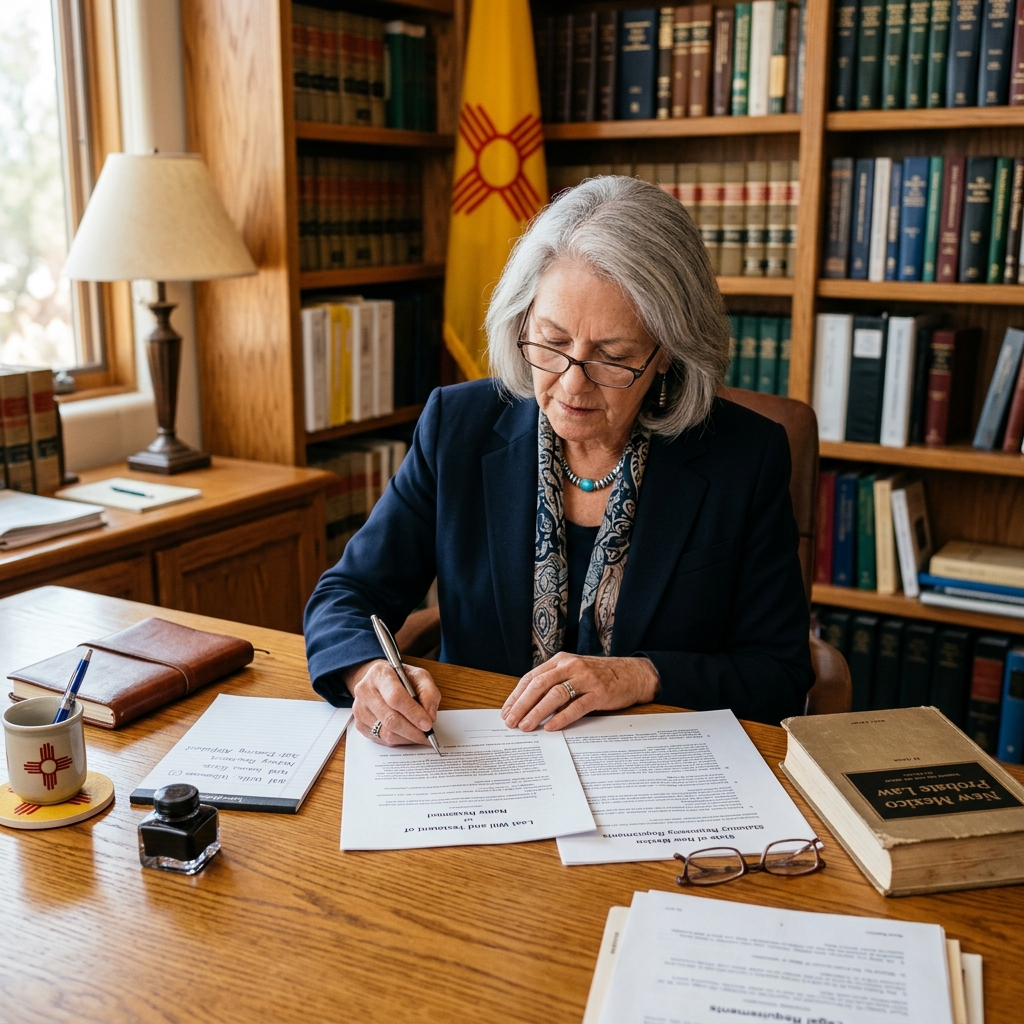
Planning for the future of your property and the care of your loved ones is especially important in a state like New Mexico, where community property rules and specific probate procedures can significantly affect how assets are divided after death. This guide explains how wills work under New Mexico law, the formal steps needed to create a valid will, what happens during probate, and how property is distributed if you die without a will.
While this article is informative, it is not legal advice. Complex estates, blended families, and business interests often warrant talking with a qualified New Mexico attorney.
Key Features of New Mexico Will Law
New Mexico follows a version of the Uniform Probate Code, which establishes standard rules for making and enforcing wills across the state. Understanding these rules helps you avoid mistakes that could invalidate your will or lead to unintended distributions of your property.
- Who may make a will: Adults 18 and older or emancipated minors of sound mind can make a will in New Mexico.
- Formality requirements: Wills must generally be in writing, signed by the person making the will (the testator), and signed by at least two witnesses in the testator’s presence.
- Community property considerations: For married people, the distinction between community and separate property can affect how assets pass at death.
- Probate: Most estates go through a court process called probate, though small estates may use simplified procedures.
- Intestacy rules: If you die without a valid will, state law determines who inherits, based on family relationships and marital status.
Who Can Make a Will in New Mexico?
Not everyone can legally create a will. New Mexico law imposes basic capacity and age requirements to ensure that testamentary decisions are made knowingly and voluntarily.
Age and Emancipation Requirements
To make a will in New Mexico, a person must be at least 18 years old or a minor who has been lawfully married or otherwise emancipated under state law. These rules reflect the general principle that only individuals with legal capacity to manage their own affairs may plan the disposition of property at death.
Mental Capacity and “Sound Mind”
New Mexico requires a testator to be of sound mind at the time they sign the will. Being of sound mind typically means:
- Understanding the general nature and extent of your property.
- Recognizing who your natural heirs are (for example, spouse, children, or other close family).
- Comprehending that you are making a document that will distribute your property at death.
- Being able to make decisions free from coercion or undue influence.
Questions about capacity can arise if someone signs a will during a period of serious cognitive impairment or under intense pressure. In those situations, a court may later review whether the will truly reflects the testator’s wishes.
Formal Requirements for a Valid New Mexico Will
Even if you meet age and capacity standards, a will is only valid if it complies with New Mexico’s statutory execution requirements. These formalities are designed to prevent fraud and ensure that courts have reliable evidence of a decedent’s wishes.
Written Document
New Mexico generally requires the will to be in writing. This usually means a typed or printed document. Oral statements, promises, or handwritten notes that do not satisfy statutory requirements may not be recognized as a valid will.
Signature of the Testator
The will must be signed by the testator or by another person signing the testator’s name in the testator’s conscious presence and at the testator’s direction. This provision allows flexibility for individuals who cannot physically sign, such as someone with severe mobility limitations, so long as they are aware of and direct the signing.
Witness Requirements
New Mexico law requires at least two witnesses who sign the will in the presence of the testator and each other, after seeing or otherwise witnessing the testator sign or acknowledge the will. This creates a clear record that the will was voluntarily executed.
- Witnesses must generally be competent adults able to understand what they are witnessing.
- It is strongly recommended that witnesses be “disinterested”—that is, not beneficiaries named in the will—to reduce the chance of later conflicts.
Self-Proving Wills
New Mexico recognizes self-proving wills, which include an attached affidavit signed by the testator and witnesses before a notary public. The affidavit states that the will was executed in accordance with legal formalities and can streamline probate:
- Court may accept the will as authentic without requiring witnesses to testify.
- Probate can be faster and less costly.
- The affidavit is usually attached to the original will and stored with it.
Core Elements to Include in Your Will
Beyond the formal requirements, a well-drafted will addresses the practical details of your estate. Clear instructions reduce disputes among family members and simplify the work of the personal representative.
Identifying Personal Representative
Most wills name a personal representative (sometimes called an executor) to manage the estate. This person is responsible for gathering assets, paying debts, and distributing property according to the will.
- Select someone you trust, who is organized and willing to handle paperwork.
- Consider naming an alternate in case your first choice cannot serve.
Beneficiaries and Asset Distribution
Your will should clearly describe who receives your property and on what terms. New Mexico law does not require you to list every single item, but the document should provide for the disposition of your entire estate.
- Identify beneficiaries by full name and relationship to you.
- Specify major gifts (such as real estate, business interests, or significant bank accounts).
- Include a “residuary” clause stating who receives property that is not specifically listed.
Guardianship of Minor Children
If you have children under 18, your will can nominate a guardian to care for them if both parents die before the children reach adulthood. While the court ultimately appoints the guardian, your nomination is a strong indication of your wishes.
New Mexico Probate: What Happens After Death?
When a person dies owning property in New Mexico, their estate commonly goes through a process called probate. Probate is overseen by the court and serves to transfer legal title from the deceased to beneficiaries or heirs.
Basic Probate Process
Probate typically involves:
- Filing the original will and a certified death certificate with the probate court, if the decedent left a valid will.
- Appointing a personal representative (or administrator, if there is no will) to manage the estate.
- Identifying and notifying heirs and beneficiaries.
- Collecting and valuing assets.
- Paying valid debts, taxes, and expenses.
- Distributing remaining property according to the will or intestacy law.
In New Mexico, probate may be initiated within a specific time frame. The state’s self-help probate guide notes that probate can generally be filed between five days and three years after death, assuming other requirements are met.
Small Estate Alternatives
New Mexico offers simplified procedures for certain small estates to avoid full probate. For example, an Affidavit of Successor in Interest can be used to transfer property when an estate meets specific criteria, such as time elapsed since death and absence of other probate filings.
Similarly, special affidavits may be available for a surviving spouse to transfer a primary residence under certain value limits and ownership conditions. These approaches can significantly reduce cost and complexity when the estate is modest.
Intestacy: When Someone Dies Without a Will
If a New Mexico resident dies without a valid will, they are said to die intestate. In that situation, state law—not personal preference—controls how property is divided among relatives.
General Intestacy Principles
Under New Mexico intestacy law, property is distributed according to a priority scheme that considers whether the decedent had a spouse, children, parents, siblings, or other relatives. The rules differ depending on marital status and whether the decedent left descendants.
| Family Situation | Likely Distribution Under Intestacy |
|---|---|
| Unmarried, with children or descendants | Children share the estate in equal portions or by representation. |
| Unmarried, no descendants, but surviving parent | Property passes to surviving parent or parents. |
| Unmarried, no descendants or parents, but siblings | Siblings share equally; deceased siblings’ descendants may inherit by representation. |
| Married, no children | In many situations, spouse inherits all or most of the estate, particularly community property. |
| Married, with children | Community property typically goes to the spouse; separate property is divided between spouse and children. |
| No close relatives | Estate may ultimately pass to more distant relatives or, if none, to the state. |
These rules illustrate why relying solely on intestacy may produce outcomes that do not match personal expectations, especially in blended families or where certain relatives should receive more (or less) than others.
Community Property Considerations
New Mexico is a community property state, which means most property acquired during marriage by either spouse is generally owned jointly. Community property rules interact with intestacy in important ways, particularly when one spouse dies without a will.
- Community property may go entirely to the surviving spouse in many cases.
- Separate property (for example, property owned before marriage or received as a gift or inheritance) may be divided between the surviving spouse and children.
Intestacy also includes timing rules; for example, if an heir or spouse dies within 120 hours of the decedent, New Mexico may treat them as having died simultaneously, which can affect community property and distribution questions.
Updating or Changing a New Mexico Will
Life events such as marriage, divorce, the birth of children, or the purchase of major assets often require revisiting your estate plan. In New Mexico, changes are usually made either by executing a new will or by signing a formal amendment called a codicil.
- A codicil must meet the same execution requirements as a will (writing, signature, witnesses).
- Major changes, such as altering beneficiaries or replacing your personal representative, are often best handled by creating a new will.
- Destroying old versions and clearly identifying the most recent document can minimize confusion.
Regular review—every few years, or after significant life changes—helps ensure that your will continues to reflect your wishes and complies with current law.
Practical Tips for New Mexico Residents Drafting a Will
While New Mexico law does not require an attorney to draft a valid will, professional guidance can be especially valuable for complex estates. For residents handling simpler situations, the following tips can help make your estate plan more effective:
- Be precise in naming people: Use full legal names and clarify relationships.
- Address digital assets: Consider what should happen to online accounts, digital photos, and cryptocurrency.
- Coordinate beneficiary designations: Retirement accounts, life insurance, and payable-on-death accounts pass according to their own beneficiary forms; ensure they align with your will.
- Store the original safely: Keep the signed will and any self-proving affidavit in a secure location known to your personal representative.
- Communicate your plan: Making your intentions clear to family and the named representative can reduce surprise and conflict later.
Frequently Asked Questions About New Mexico Wills
Do I need a lawyer to make a valid will in New Mexico?
No. New Mexico law does not require you to use an attorney to create a valid will. However, because the document must comply with specific statutory requirements and interact with probate and community property rules, many people benefit from legal advice, especially if they have significant assets, business interests, or complex family situations.
Can I handwrite my will?
New Mexico emphasizes written, signed, and properly witnessed wills. Handwritten wills may raise additional legal questions and can be more vulnerable to challenges. To reduce risk, most individuals use a typed document that clearly follows statutory formalities, including witness signatures.
What happens if my will is not properly witnessed?
If a document does not meet witness and execution requirements, a court might decide it is not a valid will. In that case, some or all of your property could be distributed as if you had no will at all, under New Mexico intestacy law.
How long does probate take in New Mexico?
There is no single timeline, since probate depends on factors such as estate size, disputes among beneficiaries, and court workload. The state’s materials note that probate can be opened after a short waiting period and within several years, but the duration of administration varies widely.
What if I own property in more than one state?
Owning real estate or other assets outside New Mexico can complicate probate. Your New Mexico will may still control your property, but additional proceedings (often called ancillary probate) may be needed in other states. This is a situation where professional estate planning advice is strongly recommended.
References
- New Mexico Statutes Section 45-2-502: Execution of Wills — New Mexico Legislature. 2025-01-01. https://law.justia.com/codes/new-mexico/chapter-45/article-2/part-5/section-45-2-502/
- Basic Requirements for a Last Will and Testament in New Mexico — LawInfo. 2024-01-01. https://www.lawinfo.com/resources/wills/new-mexico/
- Guide G-255: Do You Need a Will? — New Mexico State University Cooperative Extension Service. 2015-06-01. https://pubs.nmsu.edu/_g/G255/index.html
- Wills in New Mexico — New Mexico Legal Group. 2023-05-01. https://www.newmexicolegalgroup.com/estate-planning/wills-in-new-mexico/
- Inheritance & Property Law in New Mexico — New Mexico Legal Aid. 2022-03-01. https://newmexicolegalaid.org/what-we-do/programs-services/disaster-legal-services/inheritance-and-property.html
- Probate: New Mexico District Court Self Help Guide — New Mexico Courts. 2024-01-01. https://nmcourts.gov/wp-content/uploads/2024/01/SRL_Probate.pdf
Similar Articles








Read full bio of Sneha Tete


