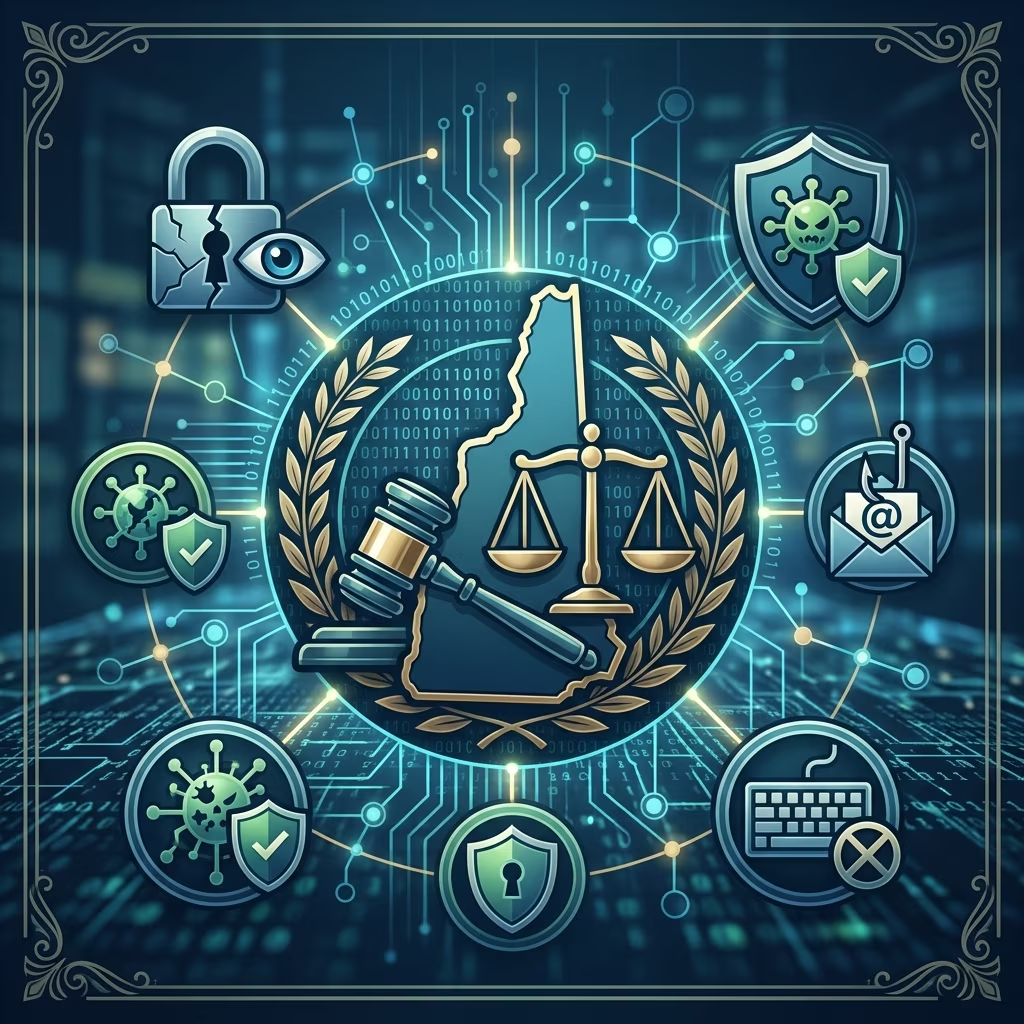
New Hampshire has enacted specific criminal laws to address wrongdoing involving computers, networks, and internet-based services. These rules apply to everyone who uses digital devices in the state, from casual users to large organizations, and they govern conduct ranging from hacking to online sexual exploitation of minors.
Because technology is embedded in everyday life, it is important for residents, businesses, parents, and professionals to understand how the state defines computer crime, what behavior is prohibited, and what penalties may apply when those laws are violated.
Overview of Computer Crime Under New Hampshire Law
New Hampshire’s criminal code includes a set of statutes that treat certain kinds of digital misconduct as computer crimes. These provisions appear primarily in the fraud chapter of the criminal code, addressing unauthorized access, interference with services, misuse of information, and damage or contamination of computer systems.
In basic terms, the law focuses on situations where a person:
- Uses a computer or network without authorization or beyond the permission granted.
- Obtains or steals computer services they are not entitled to use.
- Disrupts or interrupts computer or network operations.
- Misuses, copies, or alters computer data or network information.
- Damages hardware, software, or data, including through viruses or other contaminants.
Separate state provisions also address certain sexual exploitation and solicitation of minors conducted through computers or internet services, treating those behaviors as serious felonies.
Key Statutes and Legal Framework
New Hampshire computer crime law is organized around several key statutes within Title LXII (Criminal Code). The most important for general computer crime conduct are the provisions commonly cited as RSA 638:17 (defining offenses) and RSA 638:18 (penalties).
| Legal Reference (RSA) | Primary Focus | Examples of Conduct |
|---|---|---|
| RSA 638:17 | Defines main categories of computer crimes. | Unauthorized access, theft of services, service interruption, misuse of data, damage to equipment, computer contamination. |
| RSA 638:18 | Sets penalty levels based on damage or value. | Class A felony, Class B felony, misdemeanor thresholds tied to financial loss or risk of injury. |
| Certain Uses of Computer Services Prohibited | Online sexual exploitation and solicitation of minors. | Using computers to lure or entice a child into sexual acts or exposure; sharing minors’ identifying information for sexual purposes. |
While federal law such as the Computer Fraud and Abuse Act (CFAA) also applies in some cases, New Hampshire’s statutes are designed to address digital offenses within the state’s own criminal justice system.
Types of Computer Crimes Recognized in New Hampshire
The main categories of computer crimes under New Hampshire law can be grouped into several broad types, each targeting different forms of digital misconduct.
Unauthorized Access to Computers or Networks
Unauthorized access involves using or entering a computer or network when a person knows they are not permitted to do so. This covers both breaking into someone else’s system and accessing a network beyond the access rights a user has been given.
- Logging into another person’s account without consent.
- Bypassing passwords or security controls to reach protected data.
- Extending authorized access to systems that the person has not been allowed to use.
The law emphasizes that accidental access—for example, unintentionally connecting to a secured network without realizing it—is not treated as a crime when there is no knowing intent to bypass security.
Theft and Misuse of Computer Services
Theft of computer services occurs when someone uses a computer or network to obtain services they have not paid for or do not have permission to use. This may involve:
- Using another person’s paid online service without authorization.
- Bypassing billing or subscription systems to access content or software.
- Routing data or traffic in a way that avoids usage charges.
Misuse of computer or network information, by contrast, deals with how data is handled. This category includes unauthorized copying, alteration, or disclosure of computer-stored information in ways that violate the rights of the owner or authorized user.
Interruption of Computer Services
Interruption of services refers to conduct that disrupts the normal functioning of computers or networks. New Hampshire law covers intentional interference that results in loss of service or prevents legitimate users from accessing resources.
- Flooding a network to prevent legitimate traffic (akin to denial-of-service behavior).
- Physically disconnecting hardware needed to maintain internet access.
- Tampering with system settings to block or corrupt essential services.
Destruction of Equipment and Computer Contamination
Destruction of computer equipment includes damaging or destroying hardware, infrastructure, or storage devices used to deliver computer services.
Computer contamination focuses on harmful software or code. A person may commit this offense by knowingly introducing a computer contaminant—such as a virus, worm, or other malicious program—into a system, network, or program that results in loss of property or services.
- Installing malware that encrypts files and demands payment (ransomware).
- Sending infected attachments that corrupt or delete important data.
- Deploying code designed to damage or disable systems over time.
Sexual Exploitation and Certain Uses of Computer Services
Separate New Hampshire provisions criminalize using computers and online services to engage in sexual exploitation or solicitation of minors. Under these rules, it is illegal to use internet or computer services to:
- Seduce, lure, solicit, or entice a child into sexual activity or indecent exposure.
- Engage in sexual communication or activity with someone known or believed to be underage.
- Publish or share a minor’s identifying information for purposes of sexual exploitation.
These offenses are treated as serious felonies and, in many cases, require the person convicted to register as a sex offender.
Mental State: “Knowingly” as a Core Requirement
Most computer crimes in New Hampshire require a particular mental state: the person must act knowingly. This means they are aware of their conduct and that they are not authorized to do what they are doing.
- Recognizing that one does not have login rights but accessing the system anyway.
- Consciously using someone else’s credentials without consent.
- Deliberately introducing malware or harmful code into another system.
This mental-state requirement is important because it helps distinguish criminal actions from innocent mistakes, such as clicking the wrong network or mis-typing a web address that leads to a secured page.
Penalties and Damage Thresholds
New Hampshire uses a value-based approach to determine the severity of computer crime penalties. The classification of an offense—misdemeanor or felony—depends largely on the financial harm caused or the value of property or services affected.
Misdemeanor Computer Crimes
Computer crime is treated as a misdemeanor when the damage or value of services involved is relatively low. Under current statute, a computer crime is a misdemeanor if the damage or the value of property or computer services is $1,000 or less.
Even at the misdemeanor level, a conviction can still result in fines, probation, and potential jail time, as well as a criminal record that may affect employment and future opportunities.
Felony Computer Crimes
Felony classifications apply when the harm or risk is greater. New Hampshire law distinguishes between Class A and Class B felonies using specific monetary thresholds and risk factors.
| Classification | General Criteria | Examples |
|---|---|---|
| Class B Felony | Damage or value exceeds $1,000 but is not more than $1,500; or reckless conduct creates risk of serious physical injury; or certain repeated offenses. | Causing significant data loss to a business; disrupting systems in a way that could affect public safety. |
| Class A Felony | Damage or value exceeds $1,500; or prior conviction for specified computer crimes. | Major data breaches or system destruction; repeated unauthorized access causing large financial losses. |
For online sexual exploitation and solicitation of minors, the felony level depends both on the nature of the conduct and the age of the child involved. Conduct involving a child believed to be under 13 is typically treated as a Class A felony; other covered conduct may be Class B felonies.
Valuation Rules and Financial Consequences
New Hampshire’s penalty statute provides specific guidance for calculating the value of property or services involved in computer crimes. If property or services are damaged, unrecoverable, or destroyed, the value is determined by the cost of reproducing or replacing them at the time of the violation.
When it is not possible to satisfactorily determine the exact value or damage, the law presumes a value of $500, which can affect whether the case is treated as a misdemeanor or felony.
The statute also allows courts to order a defendant to pay an amount up to double the financial gain obtained through the offense, instead of imposing a traditional fine. This is meant to ensure that the person does not profit from unlawful use of computers or digital services.
Relationship Between State and Federal Law
Although this guide focuses on New Hampshire statutes, some computer crimes may also trigger federal charges under laws like the Computer Fraud and Abuse Act (CFAA), particularly when interstate communications, national security, or large-scale hacking are involved.
Federal CFAA provisions cover offenses such as:
- Obtaining national security information through unauthorized access to federal systems.
- Accessing computers to defraud and obtain value across state lines.
- Trafficking in passwords and certain types of extortion using computers.
In more serious cases, a defendant may face both state and federal charges, depending on the nature of the conduct and the systems affected.
Practical Implications for Residents and Organizations
Understanding New Hampshire computer crime laws is important not only for avoiding criminal liability but also for maintaining secure and responsible digital practices. Public agencies such as the Computer Crimes Unit in Concord focus on investigating these offenses and protecting the community from digital threats.
For Individual Users
Residents using computers or mobile devices should be aware that:
- Using someone else’s account or device without clear permission can be treated as unauthorized access.
- Sharing or downloading data from secure systems without consent may constitute misuse of computer information.
- Engaging in sexual conversations or sharing explicit materials with minors online is strictly prohibited and can lead to felony charges.
For Businesses and Institutions
Organizations that handle sensitive data or offer computer services should consider:
- Implementing strong access controls and logging to detect unauthorized access.
- Maintaining clear policies on acceptable use of company systems and handling of data.
- Providing regular training on recognizing phishing, malware, and social engineering related to computer contamination.
- Working with law enforcement promptly if there is evidence of digital intrusion or exploitation of minors using their systems.
Frequently Asked Questions About New Hampshire Computer Crime Laws
Is accidentally connecting to a secure network a crime?
Accidental access without any intent to bypass security is generally not treated as a crime. New Hampshire’s framework focuses on knowing unauthorized access, where a person is aware they lack permission but proceeds anyway.
Can an attempt at a computer crime be prosecuted?
For many traditional computer crimes defined in the fraud chapter, the focus is on completed offenses and demonstrable damage or loss. However, in practice, conduct that clearly shows a person knowingly tried to bypass security or cause harm may still lead to charges under related statutes, and federal law expressly covers attempts for certain offenses.
How is “damage” measured in computer crime cases?
Damage typically refers to the financial cost of repairing, reproducing, or replacing affected data, systems, or services. If exact valuation is not possible, New Hampshire law presumes a value of $500 for penalty classification purposes.
Are minors treated differently under computer crime laws?
Minors may face charges if they engage in computer crimes, but courts often consider age and circumstances. At the same time, laws relating to online sexual exploitation of minors are stricter, and adults who exploit children online face severe felony penalties and sex offender registration requirements.
When should I contact a lawyer about a potential computer crime issue?
If you believe you are under investigation, have been contacted by law enforcement, or suspect that your behavior could be interpreted as unauthorized access, misuse of data, or online exploitation, it is advisable to speak with a qualified criminal defense attorney familiar with New Hampshire’s computer crime statutes.
References
- New Hampshire Computer Crimes Laws — FindLaw. 2024-01-01. https://www.findlaw.com/state/new-hampshire-law/new-hampshire-computer-crimes-laws.html
- New Hampshire Revised Statutes Annotated, RSA 638:18 – Computer Crime Penalties — State of New Hampshire / Justia summary. 2025-01-01. https://law.justia.com/codes/new-hampshire/title-lxii/chapter-638/section-638-18/
- New Hampshire Internet Crimes Lawyer – Overview of Computer Crime Offenses — Nashua Criminal Attorney. 2023-06-01. https://www.nh-criminalattorney.com/criminal-law/computer-internet-crimes/
- Computer Fraud and Abuse Act (CFAA) — National Association of Criminal Defense Lawyers (NACDL). 2022-09-01. https://www.nacdl.org/Landing/ComputerFraudandAbuseAct
- Computer Crimes Unit — City of Concord, New Hampshire (Official Website). 2023-03-01. https://www.concordnh.gov/1939/Computer-Crimes-Unit
- Certain Uses of Computer Services Prohibited – Computer Crimes — Anzalone Law Firm. 2023-05-01. https://www.anzalonelegal.com/computer-crimes.html
- New Hampshire Computer Crimes Lawyer – Child Solicitation — WBDK Law Firm. 2023-04-01. https://www.wbdklaw.com/criminal-defense/computer-crimes/