
Understanding New FTC Protections for Debt Settlement
A clear guide to the FTC’s debt relief rules, how they protect consumers, and what to watch for before signing up for any settlement program.
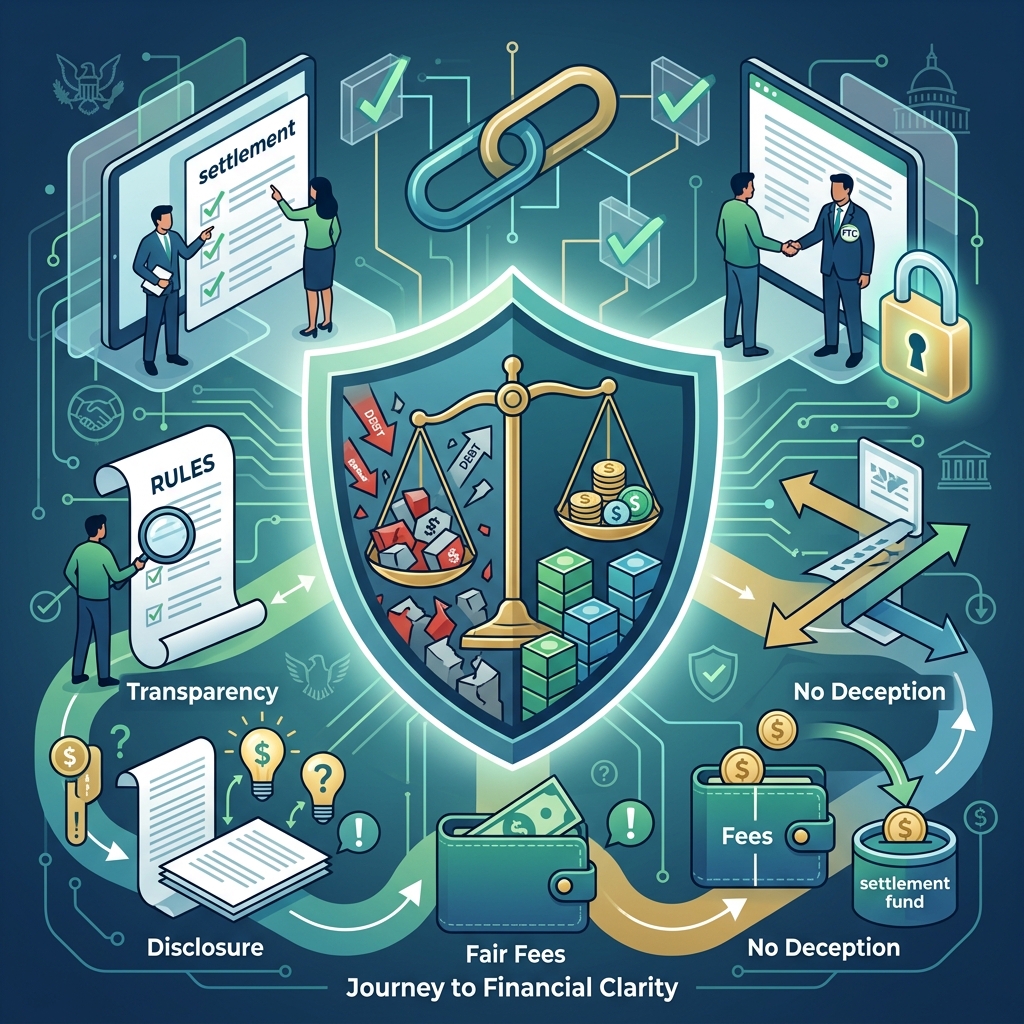
The Federal Trade Commission (FTC) has strengthened protections for people who turn to debt settlement and debt relief services, especially when those services are sold over the phone. These rules are designed to tackle deceptive marketing, abusive fee practices, and risky account arrangements that have harmed financially stressed consumers.
This article explains what the rules do, how they affect debt settlement companies, and what practical safeguards they provide for you when you are weighing a debt relief program.
Why Debt Settlement Needed Stronger Rules
Debt settlement services promise to negotiate with your creditors so you pay less than the full amount you owe. But for years, some for‑profit companies used aggressive sales tactics and collected large upfront fees even when they delivered little or no relief.
Reports to regulators and consumer advocates documented common problems:
- Consumers paying substantial fees before any debts were successfully reduced.
- Marketing claims suggesting dramatic reductions in debt that rarely materialized.
- Little or no explanation of risks, such as damaged credit or potential lawsuits.
- Use of dedicated accounts that gave companies effective control over consumers’ money.
To address these concerns, the FTC amended the Telemarketing Sales Rule (TSR) to create a special Debt Relief Rule for for‑profit companies selling debt relief services over the telephone.
Scope: Who and What the Debt Relief Rule Covers
The FTC’s debt relief protections apply to for‑profit companies that market programs claiming they can renegotiate, settle, or otherwise change the terms of a consumer’s unsecured debts, such as credit card or medical bills.
| Covered Services | Examples |
|---|---|
| Debt settlement and negotiation | Programs promising to settle credit card balances for less than you owe. |
| Debt management plans (when sold for profit by phone) | Consolidated payment plans offered via telemarketing for unsecured debts. |
| Telemarketed debt relief | Outbound calls by companies and inbound calls made in response to advertising. |
The Rule focuses on telemarketing, so in‑person sales or purely online sales may fall outside its direct scope, although other laws can still apply.
The Core Protection: Ban on Advance Fees
One of the most important safeguards is a clear ban on upfront fees. Under the FTC rule, a for‑profit debt relief company selling its services over the phone generally cannot collect any fee until all of the following conditions are met:
- At least one debt is successfully resolved – The company must renegotiate, settle, reduce, or otherwise change the terms of a consumer’s debt.
- Written agreement with the creditor – There must be a written settlement agreement, debt management plan, or similar arrangement that the consumer agrees to.
- Payment under the new agreement – The consumer must make at least one payment to the creditor or debt collector based on that negotiated agreement.
Only when all three requirements are satisfied can the company collect a fee for that particular debt. If several debts are handled one by one, a fee can be charged for each settled debt—but not loaded up front before any results occur.
What This Means for Consumers
- You should not be asked to pay large fees simply to enroll in a telemarketed debt settlement program.
- Fees must be tied to actual, documented results on your debts, rather than promises.
- If no debt is successfully settled and documented, no fee is permitted under the Rule.
Consumer advocates have highlighted this advance‑fee ban as a key step in curbing abusive practices, because it shifts payment timing from the beginning of a program to when measurable progress has been achieved.
Required Pre‑Contract Disclosures
Another pillar of the FTC’s approach is better disclosure. Before you sign up, debt relief companies must provide specific information that helps you understand what you are agreeing to and what it may cost.
Required disclosures include:
- Timeframe for expected results – An estimate of how long it will take to obtain debt relief.
- Total cost of services – Information on the total fees and other costs you will pay.
- Potential negative consequences – Clear notice that stopping payments to creditors or settling debts may hurt your credit score, lead to collection efforts, or trigger lawsuits.
These disclosures must be given before a contract is finalized, so you can compare options and make an informed choice.
Limits on Misrepresentations and Telemarketing Conduct
The Debt Relief Rule strengthens the general telemarketing standards by explicitly prohibiting deceptive claims in marketing debt relief services.
Telemarketers may not misrepresent, for example:
- How much a consumer’s debt will be reduced or how quickly results will occur.
- The extent to which the program is approved or endorsed by creditors or government agencies.
- The overall benefits or guarantees of the service.
The Rule also clarifies that it applies not only to outgoing telemarketing calls but also to calls that consumers make to debt relief providers in response to advertising, closing a loophole that previously left some inbound calls less regulated.
Dedicated Accounts: Extra Safeguards for Your Money
Many debt settlement programs ask consumers to deposit money into a dedicated account. Funds in this account are then used to pay negotiated settlements and sometimes to cover fees. Under the FTC rule, companies may require such accounts only if certain conditions are met to protect consumers.
Key safeguards for dedicated accounts include:
- Independent financial institution – The account must be maintained at an insured financial institution that is not affiliated with the debt relief provider.
- Consumer control – The consumer must own the account, earn any interest on funds deposited, and be able to withdraw money at any time without penalty.
- No improper referral fees – The debt relief company cannot receive kickbacks or referral fees from the company that administers the account.
- Return of unearned fees – If a consumer cancels before debts are settled, unearned fees held in the account must be returned.
These protections reduce the risk that dedicated accounts become tools for controlling consumers’ money or extracting fees before any real progress is made on their debts.
How These Rules Fit with Other Consumer Protection Laws
The debt relief provisions build on the broader framework of U.S. consumer protection law. The Telemarketing Sales Rule has long governed how companies can sell goods and services by phone. The Debt Relief Rule adds special conditions for debt settlement because of the high stakes for consumers facing financial hardship.
Other laws, such as the Fair Debt Collection Practices Act (FDCPA), address abusive behavior by third‑party debt collectors, including harassing calls and misleading statements. While the FDCPA focuses on collection practices, the Debt Relief Rule targets companies that offer to negotiate or settle those debts.
Practical Tips Before Entering a Debt Settlement Program
If you are considering a debt settlement or other debt relief service, the FTC’s rules provide a baseline of protection—but it is still important to be cautious and proactive.
Checklist for Evaluating a Debt Relief Offer
- Ask about fees and timing: Confirm that you will not be charged before at least one debt is settled, documented in writing, and paid under the new agreement.
- Request written disclosures: Get written information on the expected timeline, total cost, and risks, and keep a copy for your records.
- Clarify who controls any dedicated account: Ensure the account is at an independent financial institution and that you can withdraw funds freely.
- Check for unrealistic promises: Be wary of claims that all your debts will be reduced by a specific large percentage or that results are guaranteed.
- Verify the company’s history: Look for enforcement actions or bans related to debt relief on official sites and review complaints from other consumers.
Many consumers also find it useful to compare telemarketed debt relief programs with nonprofit credit counseling, direct negotiation with creditors, or legal advice, depending on the complexity of their situation.
Common Consumer Questions (FAQs)
1. Can a debt settlement company still charge enrollment or setup fees?
For telemarketed, for‑profit debt relief services, the FTC’s advance‑fee ban means companies generally cannot collect any fee before they have achieved a documented result on at least one of your debts and you have made a payment under that agreement.
2. Do the protections apply if I call the company after seeing an advertisement?
Yes. The Debt Relief Rule extends the Telemarketing Sales Rule to cover calls that consumers make in response to debt relief advertising, not just outbound telemarketing calls initiated by the company.
3. What if my debt relief provider requires a special account for my payments?
The provider may require a dedicated account only if it meets strict conditions: the account must be at an independent, insured financial institution; you must control withdrawals; and the company cannot receive referral fees from the account administrator.
4. Are all types of debt covered by these rules?
The Debt Relief Rule focuses on unsecured debts, such as credit card debt, medical bills, and certain personal loans, because these are common targets of settlement programs marketed by phone.
5. Where can I report suspected debt relief fraud or abusive practices?
You can submit complaints directly to the FTC through its consumer response channels, including its dedicated online reporting tools for fraud and deceptive debt relief schemes.
References
- FTC issues new debt settlement protections — Consumers Union. 2010-07-29. https://advocacy.consumerreports.org/press_release/ftc-issues-new-debt-settlement-protections/
- State of Lending: Debt Settlement — Center for Responsible Lending. 2013-01-01. https://www.responsiblelending.org/sites/default/files/uploads/12-debt-settlement.pdf
- Debt Relief Services & The Telemarketing Sales Rule — Federal Trade Commission. 2010-08-01. https://www.ftc.gov/system/files/documents/plain-language/bus72-debt-relief-services-telemarketing-sales-rule-guide-business.pdf
- The Telemarketing Sales Rule Debt Relief Rule at 10 — Venable LLP. 2020-07-22. https://www.venable.com/insights/publications/2020/07/the-telemarketing-sales-rule-debt-relief-rule-at
- Fair Debt Collection Practices Act (FDCPA) Text — Federal Trade Commission. 2012-11-28. https://www.ftc.gov/legal-library/browse/rules/fair-debt-collection-practices-act-text
- FTC Halts Illegal Debt-Relief Operation Falsely Impersonated Businesses and Government, Harming Consumers — Federal Trade Commission. 2025-07-02. https://www.ftc.gov/news-events/news/press-releases/2025/07/ftc-halts-illegal-debt-relief-operation-falsely-impersonated-businesses-government-harming-consumers
- Debt Relief — Federal Trade Commission. 2024-07-09. https://www.ftc.gov/debt-relief
Similar Articles








Read full bio of medha deb




