
Nebraska Traffic Laws: 12-Point Suspension, Fines, And Top Tips
A practical, plain‑language guide to Nebraska traffic rules, tickets, points, and penalties for everyday drivers.
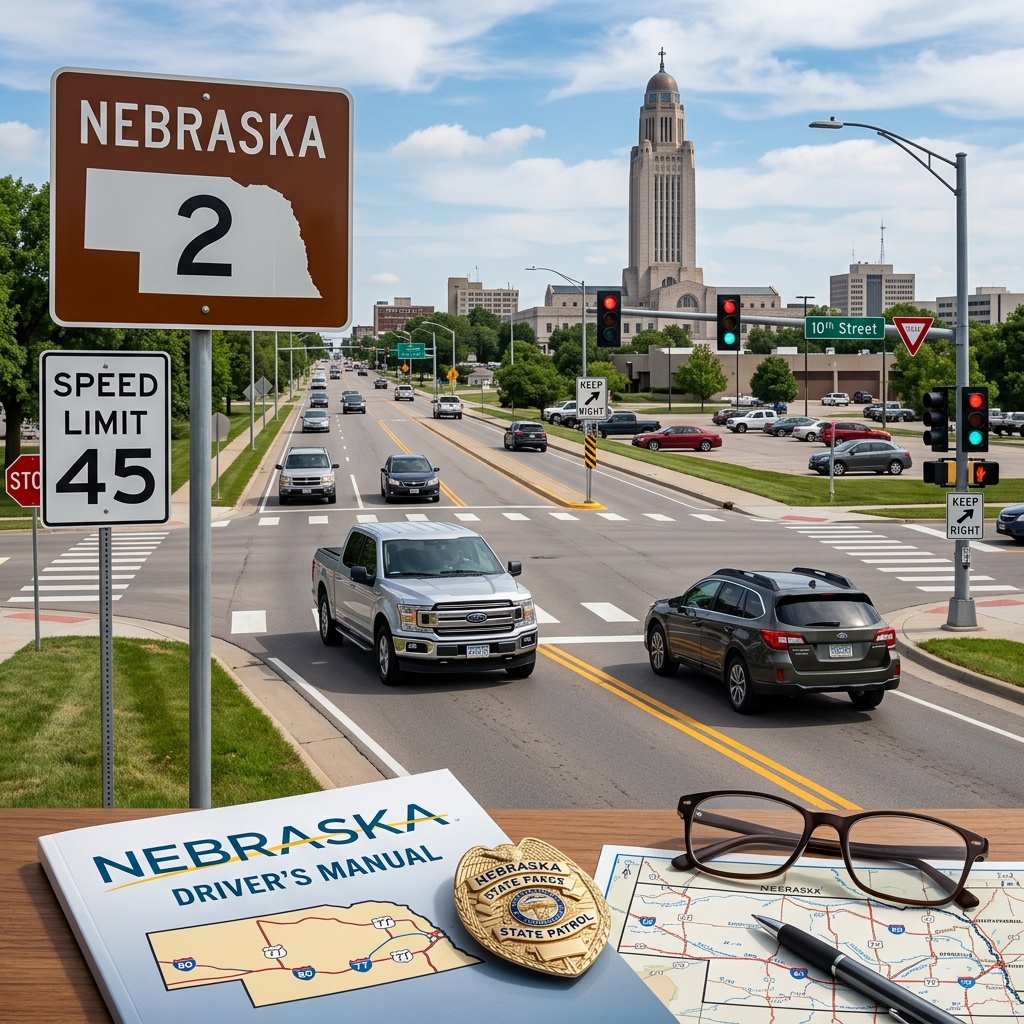
Nebraska traffic laws govern everything from how fast you can drive to what happens when you receive a ticket. These rules are largely found in Chapter 60 of the Nebraska Revised Statutes, commonly known as the state’s motor vehicle and traffic code. Understanding them can help you avoid tickets, protect your driving record, and stay safe on the road.
This guide explains the most important Nebraska traffic rules in clear, practical terms, including how violations are penalized, how the license point system works, and what to expect if you’re cited for speeding, careless driving, or driving under the influence.
How Nebraska Organizes Its Traffic Rules
Nebraska’s traffic laws are part of the Nebraska Rules of the Road, which apply uniformly across the state. Local governments cannot adopt rules that directly conflict with these statewide standards unless the Legislature explicitly allows it.
Key features of this framework include:
- Statewide coverage: Rules apply on public highways and, for certain offenses, anywhere in the state except private property not open to public access.
- Uniform rules: Cities and counties must follow the Nebraska Rules of the Road and may only supplement them where authorized.
- Central code location: Most traffic and motor vehicle laws are codified in Chapter 60 of the Nebraska Revised Statutes.
The License Point System in Nebraska
In addition to fines, Nebraska uses a driver license point system to track traffic violations. Points serve as a warning signal that a driver may present a higher risk on the road. Accumulating too many points can lead to a loss of driving privileges.
How Points Are Assessed
When you are convicted of a qualifying traffic offense, the Nebraska Department of Motor Vehicles (DMV) adds points to your driving record. Many violations remain on your record and count toward your total for five years.
Important aspects of point assessment include:
- Duration: Most points stay on your record for five years from the date of the offense.
- Automatic review: The DMV monitors your total points and may take action if you hit key thresholds.
- Serious violations: Offenses like DUI and reckless or careless driving typically carry higher point values than minor speeding tickets.
Suspension Thresholds
The most critical number for Nebraska drivers is 12 points within a two‑year period. If you reach or exceed that number, the DMV can automatically suspend your driving privileges.
| Points in 2 Years | Potential Outcome |
|---|---|
| 0–5 points | Low risk; typically no DMV action |
| 6–11 points | Moderate risk; may lead to warnings, higher insurance premiums |
| 12+ points | Possible automatic license suspension by DMV |
Because points accumulate over time, even several small violations can eventually trigger a suspension. Monitoring your record and addressing tickets promptly is essential.
Speeding Laws and Fines
Nebraska law requires drivers to travel at speeds that are reasonable and safe given road, traffic, and weather conditions, and never to exceed posted limits. Speeding remains one of the most common traffic violations and can result in both fines and points against your license.
Basic Speed Rules and Limits
The Nebraska Driver’s Manual outlines typical maximum speed limits when no other sign is posted:
- 20 mph in business districts.
- 25 mph in residential districts.
- 50 mph on gravel or non‑dustless roadways.
- 55 mph on paved roadways not part of the state highway system.
- 65 mph on four‑lane divided highways that are not part of the state highway system.
On state highways and freeways, higher limits are often posted, but drivers must still adjust speed for conditions and avoid driving so slowly that they block the normal flow of traffic.
Speeding Fines and Point Consequences
Nebraska speeding penalties depend on how fast you were going and where the violation occurred. Generally:
- Base fines: Often range from about $10 to $300 for standard locations like state highways or residential areas.
- Enhanced zones: Speeding in construction, maintenance, or school zones can cause fines to be doubled.
- Point range: Speeding violations can add between 0 and 4 points to your license.
- Minor excess speed: Driving up to five miles per hour over the limit typically does not result in license points, though a citation may still be issued.
Even lower‑end speed tickets can increase insurance costs. Multiple higher‑speed violations may push you close to the 12‑point suspension threshold.
Careless and Unsafe Driving
Nebraska has specific offenses that target careless or unsafe driving behaviors that may not fit a more serious category like reckless driving or DUI. These laws are intended to address dangerous conduct before it results in a crash.
Careless Driving
Careless driving involves operating a vehicle in a manner that shows a lack of proper attention to safety, but falls short of the more severe standard for reckless driving. Penalties for careless driving include escalating fines and license points.
Maximum base fines for careless driving are:
- Up to $100 for a first offense.
- Up to $200 for a second offense within one year.
- Up to $300 for a third and subsequent offenses within one year.
Although careless driving does not typically carry jail time, it can add four points to your license. That makes it a serious violation from a point‑system perspective, especially if combined with speeding or other infractions.
Common Unsafe Behaviors
Unsafe driving can show up in many ways on Nebraska roads. Common examples include:
- Following other vehicles more closely than is reasonable and prudent, especially in heavy traffic or poor weather.
- Failing to yield the right‑of‑way when turning left or when arriving at an intersection at the same time as another vehicle.
- Ignoring no‑passing zones or passing too close to intersections.
- Driving significantly below the normal speed of traffic in a travel lane instead of keeping right.
While each situation has its own legal definition and potential charges, all of these behaviors can lead to citations, points, and liability if a crash occurs.
Driving Under the Influence (DUI) in Nebraska
DUI laws in Nebraska are among the most serious traffic regulations. They aim to prevent injuries and deaths caused by impaired driving and carry significant criminal and administrative penalties.
Blood Alcohol Concentration (BAC) Limits
Nebraska law sets different BAC thresholds depending on a driver’s age and level of impairment:
- Under 21: Nebraska has a zero tolerance rule for drivers under age 21, making it illegal to operate a vehicle with a BAC of 0.02% or higher.
- Age 21 and older: The standard legal limit for DUI is a BAC of 0.08% or higher.
- Aggravated DUI: For drivers with a BAC of 0.15% or higher, the offense can be classified as an aggravated DUI, which carries more severe penalties.
DUI Penalties and Consequences
Penalties for DUI in Nebraska are complex and depend on factors such as prior offenses and BAC level. They can include:
- Jail time: Many DUI convictions require mandatory or potential incarceration, especially for repeat offenses.
- Fines: Monetary penalties can range from about $500 up to $10,000, depending on the severity and number of prior convictions.
- License suspension or revocation: The DMV may suspend or revoke driving privileges for varying periods.
- Vehicle impoundment costs: Drivers may need to pay towing and storage fees to retrieve an impounded vehicle.
- Ignition interlock devices: Courts may require installation of a device that prevents a vehicle from starting if the driver has alcohol on their breath.
- Education and treatment programs: Completion of driver’s education or sobriety programs is often required before full driving privileges are restored.
A DUI conviction also typically results in substantial license points and long‑term insurance consequences. Because the law is detailed and penalties escalate, legal advice is often necessary for anyone facing a DUI charge.
Other Important Nebraska Driving Rules
Traffic laws in Nebraska cover many additional situations beyond speeding, careless driving, and DUI. Some commonly encountered rules include:
Texting and Mobile Device Use
Nebraska restricts the use of handheld wireless devices while driving. For most drivers, it is illegal to use such devices to read, write, or send messages while operating a vehicle. Drivers under 18 with learner’s permits, provisional operator’s permits, or school permits are prohibited from using handheld wireless devices in any manner while driving.
School Bus and Pedestrian Protections
State law requires drivers to stop for school buses displaying flashing red lights and an extended stop arm, and to remain stopped until the arm is retracted and the lights are turned off. Vehicles traveling in the opposite direction on a divided roadway with a median are generally not required to stop.
Failure to stop as required for a school bus can be treated as a Class IV misdemeanor, with fines between $100 and $500 and three points added to the driver’s record. Pedestrian right‑of‑way rules also require drivers to yield at crosswalks and avoid blocking curb cuts or wheelchair ramps, with fines for violations.
Passing and Lane Use
Nebraska law regulates how and where drivers may pass other vehicles and requires proper lane use.
- No‑passing zones: It is unlawful to pass in marked no‑passing zones or within 100 feet of intersections.
- Left‑side passing: Drivers must generally pass on the left and return to the right only after safely clearing the other vehicle.
- Yielding when being passed: When another vehicle is passing, you must yield the right‑of‑way and refrain from increasing speed until the pass is complete.
- Slow‑moving traffic: Drivers traveling below the normal speed of traffic must use the right lane or move as far right as practical when a right lane is unavailable.
Practical Tips to Avoid Nebraska Traffic Violations
While statutes and rules can be complex, staying in compliance often comes down to a few consistent habits. Consider the following practical tips:
- Monitor your speed: Use cruise control when appropriate, and slow down in school, construction, and maintenance zones where fines may double.
- Leave space: Maintain a reasonable and prudent following distance, increasing space in rain, snow, or heavy traffic.
- Plan for intersections: Yield correctly when turning left and when arriving at an intersection simultaneously with another driver.
- Avoid distractions: Put your phone away or use hands‑free options to comply with texting and handheld device restrictions.
- Never drive impaired: Arrange alternate transportation if you have consumed alcohol or drugs, bearing in mind the strict BAC limits and penalties.
Frequently Asked Questions About Nebraska Traffic Laws
1. Where can I find the official text of Nebraska traffic laws?
The official text of Nebraska traffic and motor vehicle laws is located in Chapter 60 of the Nebraska Revised Statutes, available through the Nebraska Legislature’s website. The Nebraska Rules of the Road provisions can also be accessed section by section through the same legislative resource.
2. How many points will suspend my Nebraska driver’s license?
If you accumulate 12 or more points within a two‑year period, the Nebraska DMV can automatically suspend your driving privileges. Individual violations carry different point values, and many remain on your record for five years.
3. Do small speeding tickets always add points to my record?
Not necessarily. In Nebraska, you typically will not receive license points for speeds up to five miles per hour over the posted limit, although you may still be cited and fined. Higher speeds or repeated offenses can result in points.
4. What is the legal BAC limit for drivers in Nebraska?
For drivers 21 and older, the legal limit is a BAC of 0.08%. For drivers under 21, Nebraska’s zero tolerance law makes it illegal to drive with a BAC of 0.02% or higher. A BAC of 0.15% or higher can lead to an aggravated DUI charge.
5. Are texting and handheld cell phone use banned while driving?
Yes. Nebraska prohibits drivers from using handheld wireless devices to read, write, or send messages while driving. Drivers under 18 with certain permits are not allowed to use handheld devices at all while operating a vehicle.
References
- Nebraska Driving Laws — Nebraska Department of Transportation. 2023-04-01. https://dot.nebraska.gov/safety/nebraska-driving-laws/
- Nebraska Driver’s Manual — Nebraska Department of Motor Vehicles. 2022-01-01. https://dmv.nebraska.gov/sites/default/files/engdrivermanual.pdf
- Nebraska Traffic Laws — FindLaw. 2024-01-15. https://www.findlaw.com/state/nebraska-law/nebraska-traffic-laws.html
- Nebraska Rules of the Road, 60-6,108 — Nebraska Legislature. 2021-08-01. https://nebraskalegislature.gov/laws/statutes.php?statute=60-6,108
- Revised Statutes Chapter 60 – Motor Vehicles — Nebraska Legislature. 2021-08-01. https://nebraskalegislature.gov/laws/browse-chapters.php?chapter=60
- 7 Nebraska Traffic Laws Drivers Commonly Ignore — Injury Claim Coach. 2023-02-10. https://www.injuryclaimcoach.com/nebraska/traffic-laws.html
Similar Articles








Read full bio of Sneha Tete


