
Understanding Naturalization: A Practical Guide to U.S. Citizenship
Learn who can apply, how the process works, and what to expect on the path from permanent resident to U.S. citizen.
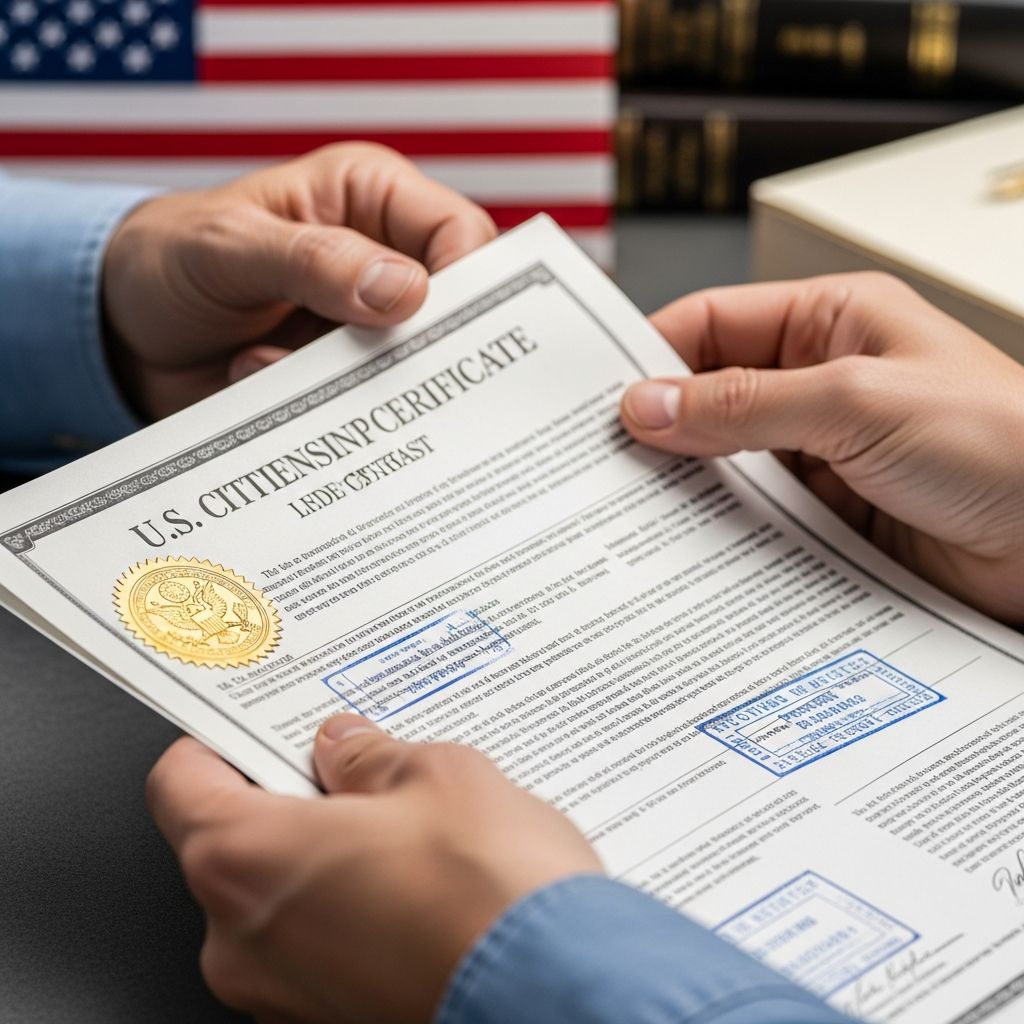
Naturalization is the legal process that allows a noncitizen to become a U.S. citizen after meeting specific requirements set by federal law. It is handled by U.S. Citizenship and Immigration Services (USCIS), a component of the Department of Homeland Security.
For many permanent residents, citizenship is the final step in their immigration journey. This guide breaks down who can apply, how the process works, and what to expect at each stage.
1. What Is Naturalization and Why It Matters
Naturalization is the procedure through which eligible lawful permanent residents (green card holders) and certain other noncitizens obtain U.S. citizenship by application and approval.
1.1 Key benefits of becoming a U.S. citizen
- Right to vote in federal, state, and local elections (subject to state rules).
- Access to certain federal jobs and security clearances available only to citizens.
- Expanded ability to petition relatives for immigration benefits, often with shorter wait times.
- Protection from removal (citizens generally cannot be deported for later criminal conduct; very limited exceptions involve fraud in obtaining citizenship).
- Eligibility for a U.S. passport and consular protection abroad.
1.2 Who administers naturalization?
USCIS oversees naturalization, including receiving applications, conducting background checks, scheduling interviews, administering tests, and arranging oath ceremonies. Federal courts may also conduct ceremonies or review denied cases in certain situations.
2. Basic Eligibility Paths to Naturalization
Most applicants must be at least 18 and fit into one of several main categories before applying for naturalization.
2.1 Main categories of applicants
| Category | Typical Residency Requirement | Key Features |
|---|---|---|
| Five-year permanent resident | 5 years as a green card holder | Standard path for most applicants. |
| Spouse of U.S. citizen | 3 years as a permanent resident while married to and living with the U.S. citizen spouse | Shortened residency if all conditions are met. |
| Qualifying U.S. military service | Special rules; may allow shorter or no specific residency period | Different standards in wartime and peacetime for service members and some veterans. |
| Child of U.S. citizen | Varies; some children automatically acquire or derive citizenship | Some children may not need naturalization at all, depending on how they obtained citizenship. |
2.2 Core legal requirements
Beyond being in the correct category, applicants must generally meet several substantive requirements:
- Minimum age: usually at least 18 years old to file for naturalization (exceptions exist for certain children who obtain citizenship automatically).
- Continuous residence: maintaining residence in the United States as a permanent resident for a required period (five years in the standard case or three years through a U.S. citizen spouse).
- Physical presence: being physically present in the United States for at least half of the required residency period.
- Residence in a USCIS state or district: living for a minimum period (commonly 3 months) in the state or USCIS district where the application is filed.
- Good moral character during the statutory period, and in some situations for a longer look-back, especially for serious conduct.
- Attachment to the principles of the U.S. Constitution and willingness to take the Oath of Allegiance.
- English language ability and civics knowledge, unless an exemption or accommodation applies.
3. Continuous Residence, Physical Presence, and Travel
Two concepts often confuse applicants: continuous residence and physical presence. Both are important for timing a naturalization application correctly.
3.1 Continuous residence
Continuous residence means you have maintained your primary home in the United States for the required period as a lawful permanent resident. Long trips abroad may interrupt this requirement.
- Absences under six months usually do not disrupt continuous residence.
- Absences between six months and one year may raise a presumption that continuous residence was broken, which you may need to overcome with evidence (such as job, home, or family ties in the United States).
- Absences of one year or more often break continuous residence for naturalization purposes, subject to specific exceptions.
3.2 Physical presence
Physical presence refers to the actual number of days you were inside the United States during the required period. In most cases, you must have been present for at least half of the statutory period (for example, at least 30 months out of the five years for the regular route).
3.3 Planning international travel
Extended stays abroad can delay or jeopardize an application:
- Keep detailed records of all trips outside the United States, including entry and exit dates.
- Seek qualified legal advice before taking long trips if you are close to filing for naturalization.
- In some immigration contexts, separate travel documents (such as a reentry permit) may help preserve permanent resident status, though they do not automatically protect naturalization eligibility requirements.
4. Good Moral Character and Background Review
USCIS must find that you have demonstrated good moral character during the required period before granting citizenship. This is more than just a criminal background check: it encompasses your overall behavior and compliance with the law.
4.1 Conduct that may affect eligibility
- Certain serious crimes (such as murder or aggravated felonies after specific dates) permanently bar naturalization.
- Other offenses, including some alcohol-related or theft offenses, may create a temporary bar for the statutory period or longer, depending on the facts.
- Failure to file or pay taxes, providing false information to the government, or immigration fraud can weigh heavily against a good moral character finding.
- Civil issues such as unpaid child support or failure to meet court-ordered obligations may be considered.
4.2 Positive factors
Recent policy discussions emphasize that officers may also account for positive behavior, such as consistent employment, community service, and compliance with financial and legal duties, when assessing good moral character.
5. The Naturalization Application Process Step by Step
The journey from permanent resident to citizen typically follows a structured set of steps.
5.1 Confirming eligibility and timing
- Review the basic requirements related to age, permanent residence, continuous residence, physical presence, and good moral character.
- Check whether you may file up to 90 days before meeting the full continuous residence period, if USCIS rules allow at the time you apply (always confirm current guidance).
- Consider consulting an experienced immigration attorney if you have any criminal history, extensive travel, or prior immigration problems.
5.2 Filing the naturalization application (Form N-400)
Most applicants must submit Form N-400, Application for Naturalization, to USCIS.
- USCIS allows online filing for many applicants or paper submission by mail.
- Government filing fees are required, though fee waivers or reductions may be available in some circumstances based on income or public benefits.
- You must provide detailed personal history, including addresses, jobs, trips abroad, and information about your spouse and children.
5.3 Biometrics appointment
After USCIS receives the application and accepts it for processing, most applicants are scheduled for a biometrics appointment at an Application Support Center.
- You will typically provide fingerprints, a photograph, and a signature.
- Biometrics are used for FBI and other background checks.
- Failure to attend may delay or lead to denial unless you timely reschedule with good cause.
5.4 The interview, English test, and civics test
USCIS will schedule a naturalization interview at a field office. During this appointment, an officer reviews your application, asks questions, and, for most applicants, administers the language and civics tests.
5.4.1 English language portion
The English test typically includes three components, often integrated into the interview:
- Speaking: The officer evaluates your ability to understand and answer questions in English during the interview.
- Reading: You must correctly read aloud one or more simple sentences in English.
- Writing: You must correctly write one or more simple sentences in English dictated by the officer.
5.4.2 Civics test and recent updates
The civics test measures knowledge of U.S. history and government. USCIS periodically updates its format and question bank.
- The test typically consists of oral questions asked by the officer.
- Candidates must correctly answer a required number of questions from a standardized list published by USCIS.
- As of recent changes, USCIS has implemented updated civics test versions designed to focus more on understanding rather than memorization, with new and reworded questions.
USCIS posts study materials, including official questions, on its website, and community organizations often offer preparation classes.
5.5 Exemptions, accommodations, and retesting
- Certain older applicants who have lived in the United States as permanent residents for many years may qualify for modified or language-exempt civics tests.
- Applicants with specific physical, developmental, or mental impairments may be eligible for disability accommodations or waivers of the English and civics requirements when supported by medical certification.
- If you fail one or both parts of the test on the first attempt, USCIS generally allows one retest on the failed portion, usually within a few months.
5.6 Decision on the application
After the interview and completion of background checks, USCIS will issue a decision:
- Approval: You have met the requirements and will be scheduled for an oath ceremony.
- Continuation: USCIS requests more evidence or reschedules parts of the process (for example, if tests must be retaken or additional documents are needed).
- Denial: USCIS concludes you do not meet one or more requirements. Written notice explains the reasons and options for review.
6. The Oath of Allegiance and Becoming a Citizen
You are not a U.S. citizen until you take the Oath of Allegiance. This is the final legal step in the naturalization process.
6.1 Scheduling and attending the ceremony
- Oath ceremonies may take place at a USCIS facility or a federal, state, or local court.
- Some applicants take the oath the same day their application is approved; others receive a later date.
- At the ceremony, you generally return your permanent resident card and receive a Certificate of Naturalization as proof of citizenship.
6.2 After the oath: next steps
- Apply for a U.S. passport through the Department of State using your Certificate of Naturalization as evidence of citizenship.
- Update your status with the Social Security Administration and, when appropriate, your employer.
- Register to vote according to your state’s procedures.
- Review whether and how to update immigration filings for family members who may benefit from your new status.
7. When Legal Advice Is Especially Important
Naturalization is not simply a formality. In some cases, filing without guidance can lead to serious immigration consequences. Consulting a qualified immigration attorney or accredited representative may be especially important when:
- You have been arrested, charged, or convicted of any offense, including those you believe were minor, expunged, or dismissed.
- You have spent long periods outside the United States or frequently travel abroad.
- You ever lied to an immigration officer, used false documents, or voted or registered to vote before becoming a citizen.
- You obtained permanent residence through asylum, refugee status, or other complex immigration categories.
- USCIS has previously denied a benefit or placed you in removal (deportation) proceedings.
Because naturalization triggers a full review of your immigration history, potential problems are often discovered during this process. Addressing issues with professional assistance before filing can reduce the risk of denial or other adverse actions.
8. Frequently Asked Questions About Naturalization
Q1: How long does the naturalization process usually take?
Processing times vary by USCIS office and change over time. The full process—from filing Form N-400 to taking the oath—often takes many months or longer, depending on local backlogs, background checks, and test scheduling.
Q2: Do I need a lawyer to apply for naturalization?
There is no requirement to hire a lawyer. Many people apply on their own or with help from reputable nonprofit organizations. However, professional legal advice is strongly recommended if you have criminal history, long absences from the United States, past immigration violations, or other complications.
Q3: What happens if I fail the English or civics test?
If you do not pass one or both parts of the test at the initial interview, USCIS usually schedules a second chance to retake only the failed portion. If you fail again, your application may be denied, but you can often reapply later if you still qualify.
Q4: Can naturalization be revoked later?
In rare cases, naturalization can be revoked if it was obtained illegally or by willfully hiding or misrepresenting important facts during the process (for example, undisclosed serious criminal conduct or fraud). Such actions generally require court proceedings and are not taken lightly.
Q5: I think my child is already a citizen. Do they need to apply?
Some children automatically acquire or derive U.S. citizenship through a U.S. citizen parent and may not need to file for naturalization. Because the rules are technical and depend on dates, custody, and residence, it is wise to review official guidance or consult an immigration professional before filing any application.
References
- Become a U.S. citizen through naturalization — USAGov (U.S. General Services Administration). 2025-10-20. https://www.usa.gov/naturalization
- What Are the U.S. Citizenship Requirements for Naturalization? — Boundless Immigration (summary based on USCIS policy). 2025-08-01. https://www.boundless.com/immigration-resources/u-s-citizenship-requirements
- Notice of Implementation of 2025 Naturalization Civics Test — Federal Register / U.S. Department of Homeland Security, USCIS. 2025-09-18. https://www.federalregister.gov/documents/2025/09/18/2025-18050/notice-of-implementation-of-2025-naturalization-civics-test
- Preparing Your Clients for the 2025 Naturalization Civics Test — Catholic Legal Immigration Network, Inc. (CLINIC). 2025-10-01. https://www.cliniclegal.org/resources/citizenship-and-naturalization/preparing-your-clients-2025-naturalization-civics-test
Similar Articles








Read full bio of Sneha Tete


