
Understanding Mugshots in Criminal Justice
Comprehensive guide to mugshot procedures, policies, and your legal rights.
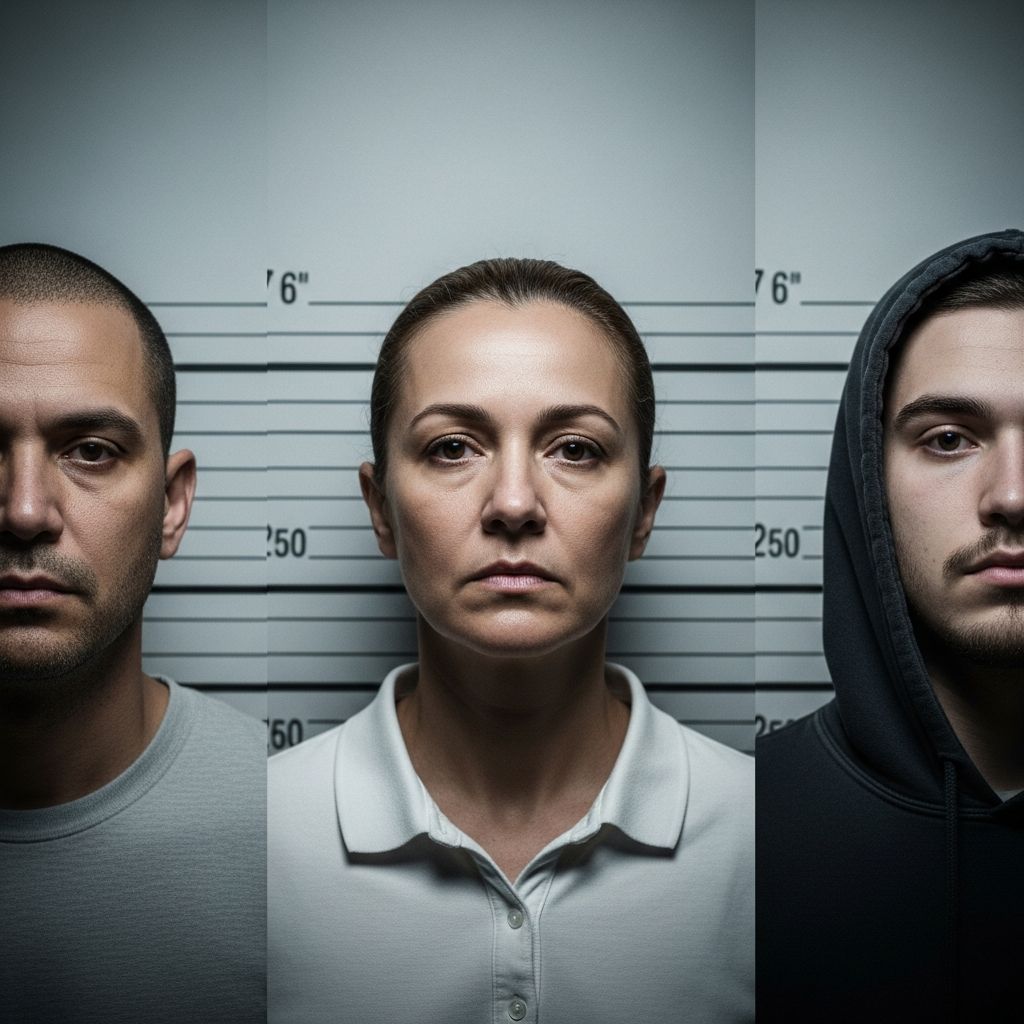
When someone is arrested, one of the first procedures they encounter is the booking process, which typically includes the taking of a mugshot or booking photograph. Despite their common appearance in media and public records, many people have significant gaps in their understanding of what mugshots are, how they are captured, when they can be released, and what rights individuals have concerning these photographs. This guide addresses fundamental questions about mugshots to provide clarity on this critical aspect of the criminal justice system.
What Exactly Is a Mugshot?
A mugshot, also known as a booking photograph or police photograph, is a photographic portrait of a person taken from the shoulders up, typically captured after an individual is placed under arrest. The primary purpose of these photographs is to create an official photographic record that law enforcement can use for identification purposes, allowing victims, the public, and investigators to recognize and identify arrested individuals.
The term “mug” itself originates from 18th-century English slang for “face,” which is why these photographs are colloquially referred to as mugshots. In contemporary usage, mugshots are recognized public records in most jurisdictions, though they serve specific law enforcement functions beyond mere documentation. These images become part of an individual’s arrest record and can be included in mug books—compilations of criminal photographs used by eyewitnesses and law enforcement to identify perpetrators of crimes.
Professional Standards for Mugshot Photography
Law enforcement agencies have developed specific technical and procedural standards for capturing mugshots to ensure consistency, reliability, and quality. These standards address multiple dimensions of the photography process, from subject positioning to equipment specifications and file compression methods.
Subject Positioning and Poses
Professional mugshot photography requires capturing the subject in multiple poses to provide comprehensive visual documentation. The standard protocol includes:
- Frontal or full-face pose: This is the most commonly used pose for photo lineups and facial recognition systems. The subject faces directly toward the camera with their head level, no noticeable tilt, and eyes open. Full facial visibility is required, though head coverings may be permitted for religious reasons.
- Profile poses: Additional photographs are captured at 45-degree and 90-degree angles from the frontal position. When capturing 90-degree profile images, the entire body is turned to the side, while 45-degree angles require a partial body turn. If only one profile photograph is captured, standard practice dictates it should be the left profile.
- Special considerations: During profile photography, hair should be pulled back to allow clear visibility of the ears, as these features contribute to accurate identification. The composition ensures that scars, marks, and tattoos can be documented for identification purposes.
Camera Equipment and Image Quality
To meet professional standards, mugshot photography requires specific equipment capabilities. Best practice protocols recommend using off-the-shelf digital cameras with at least 15 megapixels to capture minimum image dimensions of 3,300 pixels horizontally by 4,400 pixels vertically. Alternatively, agencies may allocate 70 percent of the image width for head-only facial capture, requiring approximately 2,400 pixels for the facial area.
Autofocus settings should be configured to focus on the central part of the subject’s face, and depth-of-field adjustments may result in background blur, which does not compromise image quality.
Lighting Requirements
Proper lighting is essential for producing mugshots that meet identification standards. Professional guidelines specify that lighting must clearly illuminate the forehead, brow ridge, iris, and pupil of the subject. Adequate illumination ensures that facial features are sufficiently distinct for reliable identification by victims, witnesses, and automated facial recognition systems.
Background Specifications
The background behind the subject must be uniform, plain, smooth, flat, and 18% gray. This neutral background ensures that the subject’s facial features and upper body remain the focal point without distraction. Photographers should avoid creating visible shadows in the background when possible, maintaining a clean visual context for the photograph.
File Format and Compression Standards
Digital storage of mugshots involves specific compression protocols to maintain image quality. The maximum compression ratio for both JPEG and JPEG 2000 formats of the facial region—from crown to chin and ear to ear—shall not exceed 15:1. This restriction ensures that facial details remain clear and recognizable. Non-facial portions of the mugshot, however, can accommodate compression ratios up to 120:1.
Multiple compression stages can degrade photographic data quality, so agencies must account for automatic compression performed by camera hardware to avoid cumulative quality loss.
Federal Policy on Mugshot Disclosure
The release and availability of mugshots varies significantly between federal and state jurisdictions. At the federal level, the Department of Justice has implemented a clear policy regarding mugshot disclosure: the Department of Justice prohibits the release of mugshots for all defendants charged with federal crimes.
However, this policy includes a significant exception: mugshots may be released if the defendant is a fugitive and the release of their photograph would serve a legitimate law enforcement function. This exception recognizes that public assistance in locating dangerous or elusive fugitives may outweigh privacy considerations in specific circumstances.
State and Local Mugshot Policies
Unlike the federal government’s uniform prohibition, state and local jurisdictions maintain varying approaches to mugshot accessibility. Many states treat mugshots as public records available through official channels, though the ease and processes for obtaining these records differ considerably. Some jurisdictions provide online access through criminal history databases, while others require formal requests or in-person visits to law enforcement agencies or court offices.
New York, for example, maintains mechanisms for individuals to obtain criminal history information through designated offices and processes, though mugshot availability may be subject to specific requests and procedures. Pennsylvania operates a statewide criminal history access system through which authorized individuals can obtain relevant records.
The Mugshot Publishing Industry
In recent years, a commercial industry has emerged that monetizes mugshots and other public criminal records. Mugshot publishing websites obtain photographs from public records, compile them in searchable databases, and charge individuals substantial fees to remove or suppress their images from these sites. This practice has raised significant privacy concerns and prompted legislative discussion at state and federal levels regarding the appropriate use and commercialization of booking photographs.
Common Questions About Mugshots
Q: Can mugshots be used to identify individuals in criminal investigations?
A: Yes, mugshots serve as critical identification tools. They are compiled into mug books for eyewitnesses and investigators to review. Research has demonstrated that grouped photograph presentations in mug books result in fewer false-positive identifications compared to viewing individual photographs.
Q: Are mugshots automatically public records?
A: While many jurisdictions treat mugshots as public records, federal policy prohibits release of mugshots for federal defendants except when the subject is a fugitive and the release serves law enforcement purposes. State and local policies vary significantly, with some jurisdictions maintaining more restrictive access policies than others.
Q: What information must be visible in a professional mugshot?
A: Professional standards require clear visibility of the subject’s face, ears, scars, marks, and tattoos. The frontal pose must show the subject facing the camera with level head, open eyes, and no significant head tilt. Ears must be visible, and the full face should be displayed.
Q: What is the purpose of capturing multiple poses in mugshot photography?
A: Multiple poses provide comprehensive visual documentation from different angles. The frontal pose is primarily used for facial recognition and photo lineups, while profile poses at 45 and 90 degrees allow for additional identifying characteristics, such as ear shape, profile features, scars, and distinctive marks, to be documented.
Q: How do compression standards affect mugshot image quality?
A: Compression ratios must not exceed 15:1 for the facial region to ensure that identifying details remain clear and recognizable. Excessive compression could obscure critical features needed for accurate identification, which is why strict standards are maintained for this portion of the image.
Q: What role do mugshots play in criminal identification beyond initial booking?
A: Mugshots are used in multiple contexts throughout criminal investigations and legal proceedings, including facial recognition databases, eyewitness identification procedures, mug books for case-specific investigations, and historical record-keeping for law enforcement agencies.
Understanding Your Rights Regarding Mugshots
Individuals arrested and subjected to mugshot photography should be aware of their rights and potential options. In federal cases, policy protections exist that prevent automatic public release of booking photographs except in fugitive circumstances. In state and local cases, individuals may have options to challenge the use or public distribution of their mugshots, particularly if photographs were obtained improperly or if jurisdictions have specific protections in place.
Legal counsel familiar with local and state privacy laws and record access statutes can provide guidance on options available to individuals concerned about their mugshots being published or used inappropriately. Some jurisdictions have enacted specific legislation addressing the commercial mugshot publishing industry, potentially providing remedies or processes for individuals to address unauthorized use of their photographs.
Conclusion
Mugshots represent a foundational element of modern criminal justice procedures, serving essential identification and investigative functions while raising important privacy considerations. Understanding what mugshots are, how they are professionally captured according to technical standards, which policies govern their release, and what rights individuals possess regarding their images provides important context for anyone navigating the criminal justice system or concerned about their photographic records. Whether working with legal counsel or seeking information about personal records, awareness of these fundamental aspects of mugshot practices contributes to better-informed decision-making and appropriate advocacy for individual rights.
References
- Capturing Mug Shots Procedure Manual — Michigan State Police. 2024-10-29. https://public.powerdms.com/MSP1917/documents/2706153
- Mug shot — Wikipedia. https://en.wikipedia.org/wiki/Mug_shot
- Frequently Asked Questions (FAQs) — U.S. Department of Justice, United States Attorneys’ Office for the Western District of Virginia. https://www.justice.gov/usao-wdva/media/faq
- Frequently Asked Questions — New York State Unified Court System. https://ww2.nycourts.gov/COURTS/nyc/criminal/faqs.shtml
- Pennsylvania Access To Criminal History — Commonwealth of Pennsylvania. https://epatch.pa.gov
Similar Articles








Read full bio of Sneha Tete




