
Short Sales In Real Estate: Guide For Homeowners And Buyers
Learn how mortgage short sales work, when they are used, and what they mean for struggling homeowners and potential buyers.
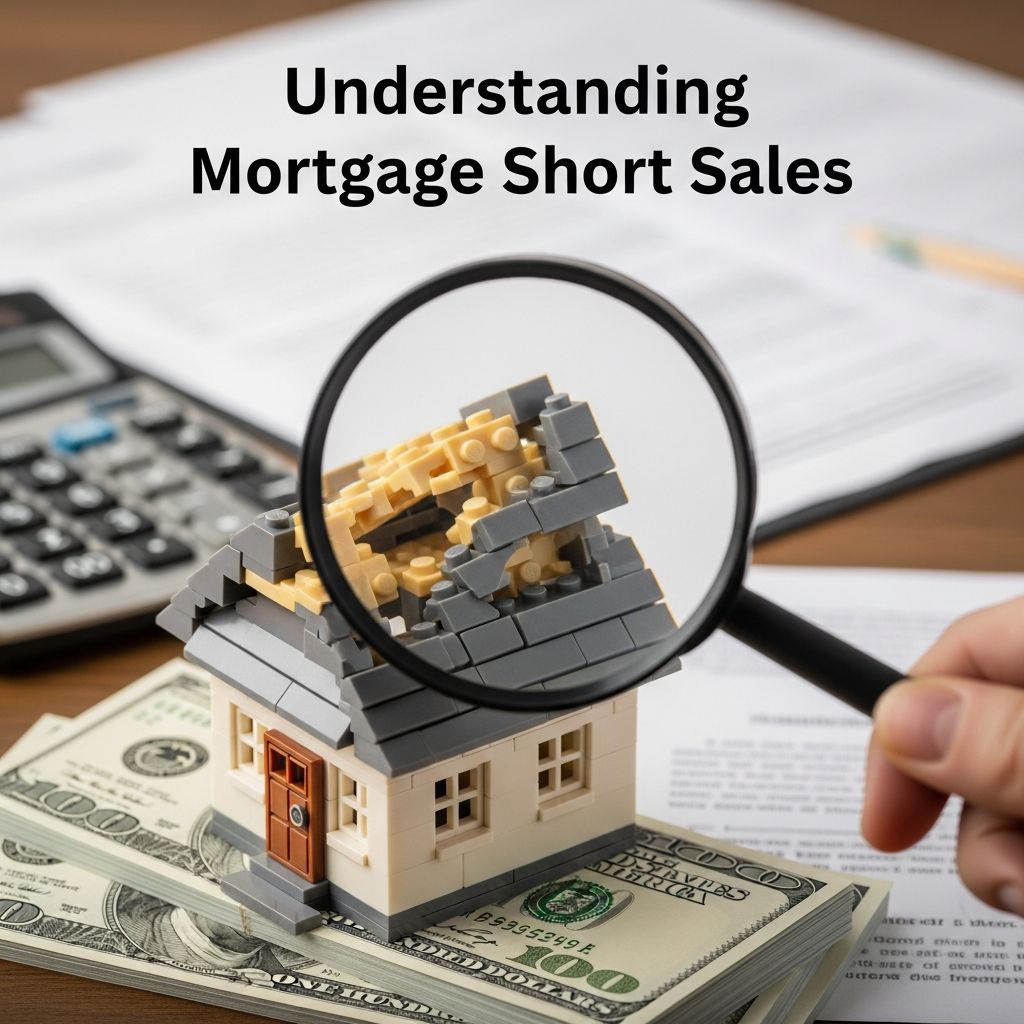
A short sale is a type of real estate transaction where a home is sold for less than the amount owed on the mortgage, with the lender’s consent. It is typically used when a homeowner cannot keep up with mortgage payments and the property is worth less than the outstanding loan balance. This guide explains how short sales work, when they are used, and what to consider if you are a homeowner or buyer involved in one.
What Is a Short Sale?
In a short sale, the home is sold and the title transfers to a buyer, but the sale price is not enough to pay off the full mortgage and closing costs. The mortgage lender (or lenders) agrees to accept the sale proceeds as payment up to a negotiated amount and releases its lien on the property so the sale can close.
Key features of a short sale include:
- The property’s market value is lower than the total debt secured by the home.
- The homeowner is facing a financial hardship and cannot keep making payments.
- The lender must approve the sale terms before the transaction can close.
- The homeowner generally does not receive sale proceeds; funds go to the lender and closing costs.
Short Sale vs. Foreclosure: How They Differ
Both short sales and foreclosures involve homeowners who cannot afford their mortgage, but they are very different processes.
| Aspect | Short Sale | Foreclosure |
|---|---|---|
| Who initiates the process? | Homeowner requests approval from lender. | Lender takes legal action after default. |
| Control over sale | Homeowner lists the property and finds a buyer; lender approves payoff. | Lender or court manages disposition of the property. |
| Occupancy | Homeowner generally stays until the sale closes. | Homeowner is eventually required to vacate. |
| Credit impact | Serious negative impact but often less severe than foreclosure; exact effect varies by lender and credit history. | Typically a major derogatory event that can remain on a credit report for years. |
| Lender’s loss | Loss is negotiated and realized through the sale. | Loss may be larger due to legal costs, time, and property deterioration risk. |
When Might a Short Sale Be Considered?
Lenders usually look at two major conditions before approving a short sale.
- Negative equity: The home’s market value is less than the total mortgage payoff and other liens.
- Documented financial hardship: The borrower cannot continue payments due to circumstances such as job loss, medical expenses, divorce, or reduced income.
The homeowner typically needs to show that:
- They cannot afford the current payments and cannot reasonably modify or reinstate the loan.
- They do not have sufficient assets to pay the shortfall in full.
- The proposed sale price is consistent with current market values (often supported by a broker price opinion or appraisal).
How a Short Sale Works: Step-by-Step
While each lender has its own procedures, the short sale process generally follows several stages.
1. Homeowner Recognizes Financial Distress
The process usually begins when the homeowner realizes they cannot sustain the mortgage payments or they must move and owe more than the home is worth. At this point, they may explore alternatives such as:
- Loan modification
- Repayment or forbearance plans
- Deed-in-lieu of foreclosure
- Short sale
2. Contacting the Lender or Servicer
The homeowner (or their housing counselor or attorney) contacts the mortgage servicer to ask whether a short sale is an option. The servicer may provide:
- Short sale application forms
- A list of required financial documents
- Deadlines and program guidelines, including any investor rules (for example, Fannie Mae or Freddie Mac policies)
3. Preparing the Short Sale Package
Lenders often require a detailed short sale package from the homeowner, which can include:
- Recent pay stubs or proof of income
- Bank statements and other asset documentation
- Recent tax returns
- A hardship letter explaining why the loan cannot be repaid according to the current terms
- A preliminary settlement estimate showing how sale proceeds would be distributed at closing
4. Listing the Property for Sale
The homeowner typically works with a licensed real estate agent experienced in short sales. The agent:
- Researches comparable sales to determine a realistic listing price
- Includes language in the listing indicating that the sale is subject to lender approval
- Markets the property and schedules showings
5. Receiving and Accepting an Offer
Once a buyer submits an offer, the homeowner can accept it, but the contract is usually contingent on lender approval. A strong short sale offer often has:
- Preapproval or proof of funds from the buyer
- Few contingencies
- Flexibility on the closing timeline to accommodate lender review
6. Lender Review and Decision
After an offer is accepted by the seller, the complete package is sent to the lender for review. The lender may:
- Obtain its own property valuation (appraisal or broker price opinion)
- Verify the borrower’s hardship and financial information
- Negotiate terms such as sale price, closing cost credits, or relocation assistance
This review can take several weeks or months, depending on the lender’s workload and the complexity of the file.
7. Closing the Short Sale
If the lender approves the short sale, it issues a written approval letter outlining the conditions, including minimum proceeds the lender must receive and any required contributions from the borrower. The transaction then proceeds to closing similar to a standard sale:
- Buyer finalizes financing and closing details
- Title company or closing agent prepares final settlement documents
- Lender receives agreed-upon net proceeds
- Property title transfers to the buyer
What Happens to the Remaining Debt?
The core issue in a short sale is how the remaining unpaid mortgage balance is treated after the sale.
- In some cases, the lender forgives the deficiency and does not pursue the borrower for the remaining balance.
- In other situations, the lender may require a repayment agreement or reserve the right to pursue a deficiency judgment (where allowed by state law).
How a deficiency is handled depends on:
- State law regarding deficiency judgments
- The terms in the loan documents
- Any settlement or waiver negotiated as part of the short sale approval
Homeowners should consult qualified legal or tax professionals because forgiven mortgage debt can have legal and tax consequences, although federal or state rules may exclude certain forgiven mortgage debt from taxable income in some circumstances.
Pros and Cons for Homeowners
Potential Advantages
- Avoiding foreclosure: A successful short sale may help a homeowner avoid the formal foreclosure process, which can be lengthy and stressful.
- More controlled exit: The owner typically has more time to plan a move and participate in the sale.
- Possible credit recovery: While damaging to credit, a short sale may allow some borrowers to qualify for a new mortgage sooner than if they had gone through foreclosure, depending on the new lender’s guidelines.
- Negotiated resolution: There may be opportunities to negotiate relocation assistance or specific deficiency terms as part of the approval.
Potential Drawbacks
- Credit impact: Late payments and the short payoff itself can significantly reduce a credit score.
- Uncertain outcome: There is no guarantee the lender will approve a short sale, even if an offer is in place.
- Time-consuming process: Short sales can take months to finalize, and buyers may withdraw if delays are too long.
- Residual debt risk: If the lender does not fully forgive the remaining balance, the borrower may still owe money after the sale.
Pros and Cons for Buyers
Benefits for Buyers
- Potential price discount: Short-sale properties may be priced below comparable homes to encourage offers and satisfy lender requirements.
- Opportunity in tight markets: In areas with low inventory, short sales can provide additional options for buyers.
Challenges for Buyers
- Longer timelines: Lender review often extends the closing process significantly.
- Less flexibility: Lenders may be less willing to agree to extensive repairs, credits, or concessions.
- Uncertainty: Offers can be rejected or countered after lengthy review, and multiple lienholders (such as second mortgages or homeowners’ associations) can complicate approval.
Working With Professionals
Because short sales involve legal, financial, and tax issues, most consumers benefit from professional guidance:
- HUD-approved housing counselors can help evaluate options, including short sales and other foreclosure alternatives.
- Real estate agents experienced with short sales understand lender processes, documentation, and negotiation approaches.
- Attorneys can advise on legal rights, state deficiency rules, and how approval letters should be worded.
- Tax professionals can explain potential tax treatment of forgiven mortgage debt and reporting requirements.
Practical Tips for Homeowners Considering a Short Sale
- Communicate early: Contact your lender as soon as you foresee payment trouble; more options are usually available before you fall far behind.
- Be honest and thorough: Submit complete and accurate financial information in your short sale package; missing documents can cause long delays.
- Keep records: Maintain copies of all correspondence with your lender, real estate agent, and any other parties.
- Review approval letters carefully: Understand whether the lender is waiving the deficiency or reserving collection rights before you sign.
- Seek independent advice: Lenders and servicers do not provide legal or tax advice; independent counsel can help protect your interests.
Frequently Asked Questions (FAQs)
Q1: Does a short sale always remove all my mortgage debt?
Not necessarily. In some cases, the lender accepts the sale proceeds as full satisfaction of the loan, but in others it may require a repayment agreement or reserve the right to pursue the remaining balance, subject to state law and the terms of the short sale approval.
Q2: How long does a short sale usually take?
Short sales commonly take several months from offer to closing because the lender must review the borrower’s financial information and the proposed sale terms. Time frames vary widely by servicer and by how quickly complete documents are provided.
Q3: Can I stay in my home during the short sale?
In many cases, homeowners remain in the property until the short sale closes, unlike foreclosure where they may be required to leave earlier. Exact timing depends on the purchase contract and applicable state law.
Q4: Is a short sale better for my credit than foreclosure?
Both options seriously affect credit, but some mortgage programs allow borrowers who completed a short sale to qualify for new financing sooner than if they had gone through foreclosure, provided they meet other underwriting requirements. The precise impact depends on your credit history and future lender policies.
Q5: Can any homeowner request a short sale?
Lenders generally require that the home be worth less than the mortgage payoff and that the borrower demonstrate a genuine financial hardship. If you have significant equity or sufficient assets to cover the balance, a short sale is unlikely to be approved.
References
- Short Sales & Foreclosures — National Association of REALTORS®. 2022-03-01. https://www.nar.realtor/short-sales-foreclosures
- What Is a Short Sale and How Does It Work? — Freddie Mac. 2023-08-08. https://myhome.freddiemac.com/blog/selling/what-is-a-short-sale-and-how-does-it-work
- Short Sale Transactions — Texas National Title. 2021-06-15. https://www.texasnationaltitle.com/short-sale-transactions/short-sale-transactions/
- Real Estate Short Sale Process — Kaplan Real Estate Education. 2022-10-10. https://www.kapre.com/resources/real-estate/short-sales
- The Short Sale Workflow — National Association of REALTORS®. 2010-11-30. https://www.nar.realtor/legal/risk-management/the-short-sale-workflow
- What Is a Short Sale in Real Estate? — Rocket Mortgage. 2023-05-12. https://www.rocketmortgage.com/learn/what-is-a-short-sale
- What Is a Short Sale? The Benefits for Buyers and Sellers — Realtor.com. 2022-09-20. https://www.realtor.com/advice/sell/what-is-a-short-sale/
Similar Articles








Read full bio of Sneha Tete




