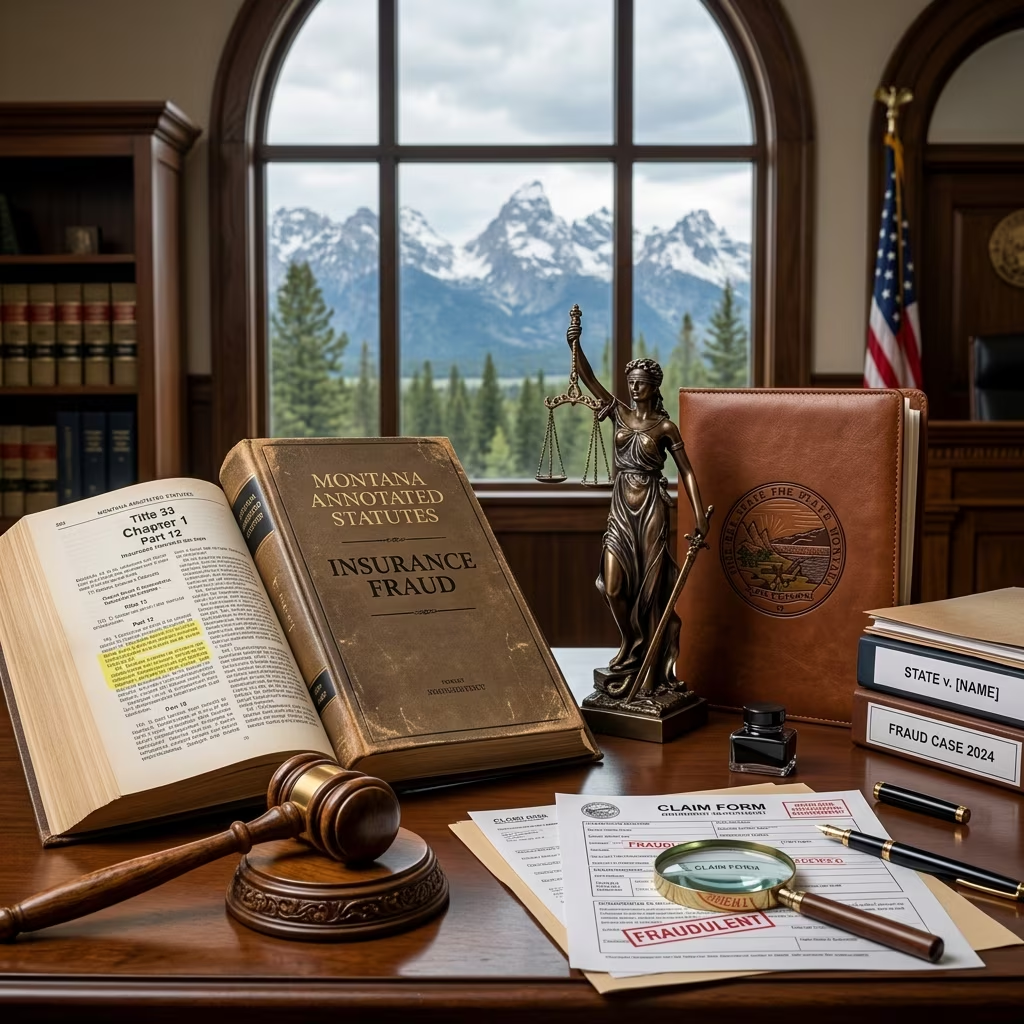
Insurance fraud affects not only insurance companies but also honest policyholders, who may ultimately pay higher premiums when fraudulent claims go unchecked. Montana has enacted detailed statutes to define insurance fraud, create civil and administrative remedies, impose criminal penalties, and require certain parties to report suspected fraud to regulators. This article explains how Montana law approaches insurance fraud, what conduct is prohibited, the consequences of violations, and the obligations of insurers, insurance professionals, and consumers.
What Counts as Insurance Fraud Under Montana Law?
Montana treats insurance fraud as a distinct category of wrongful conduct governed primarily by Title 33 of the Montana Code Annotated, which regulates insurance and insurance companies. The law recognizes both administrative or civil insurance fraud and criminal insurance fraud, and many common schemes can fall into either or both categories, depending on the facts and the prosecutor’s choice of charges.
Key Elements of Administrative or Civil Insurance Fraud
Under Montana law, a person commits administrative or civil insurance fraud by engaging in any of several specific acts that involve false, incomplete, or misleading information provided to an insurer or related entity in connection with insurance coverage or claims. The focus is on misrepresentations that are material to obtaining money, benefits, or coverage.
Common forms of administrative or civil insurance fraud include:
- False statements to support a claim for payment or benefits under an insurance policy.
- Assisting or conspiring with another person to submit false or misleading information to an insurer.
- Submitting a materially false or altered application for insurance coverage.
- Accepting premium payments while knowing that no coverage will be provided.
- Submitting false or altered bills or medical reports as a health care provider to an insurer.
- Offering or accepting inducements to file fraudulent claims.
- Presenting counterfeit insurance documents to any person.
These acts can trigger administrative or civil proceedings, such as regulatory enforcement by the Montana Commissioner of Securities and Insurance or civil lawsuits for damages. They may also serve as the basis for criminal charges if prosecutors determine that the conduct meets the elements of a crime.
Criminal Insurance Fraud and Related Offenses
Criminal insurance fraud involves knowingly providing false, incomplete, or misleading information to an insurance company for the purpose of defrauding the insurer, and can lead to imprisonment, fines, and denial of insurance benefits. While specific criminal provisions are contained in Title 33 and other parts of the Montana Code, they generally require intent to deceive and a purpose of obtaining money or benefits not legitimately owed.
Examples of criminal conduct can include:
- Deliberately staging an accident or loss and submitting a claim as if it were genuine.
- Inflating the value of damaged property far beyond its actual worth.
- Submitting fake medical treatments or procedures to increase claim payments.
- Selling bogus insurance policies or collecting premiums without providing coverage.
Depending on the circumstances, offenders may face additional charges such as theft, forgery, falsification of records, or obstruction of justice under Montana’s criminal code. The exact penalties depend on the statutes charged, the amount of money involved, and whether the conduct was part of an ongoing scheme.
Who Can Be Liable for Insurance Fraud?
Insurance fraud is not limited to policyholders. Montana law applies broadly to anyone who interacts with insurance claims, including insurers, producers (agents), adjusters, health care providers, and third-party administrators.
Consumers and Policyholders
Individual consumers can commit insurance fraud when they submit false or misleading information in applications or claims, exaggerate losses, conceal prior claims or health conditions, or cooperate in staged accidents. Policyholders can also face civil consequences, such as denial of benefits, restitution, or administrative penalties, in addition to criminal charges.
Insurance Professionals and Health Care Providers
Montana law specifically addresses conduct by licensed insurance professionals and health care providers. For example:
- A producer or agent may be liable for submitting materially false applications, accepting premiums knowing no coverage will be provided, or participating in schemes to inflate claims.
- Adjusters and administrators can be implicated if they knowingly assist in processing fraudulent claims or knowingly rely on false documentation.
- Health care providers may commit insurance fraud by submitting false or altered bills, misrepresenting the nature or necessity of services, or exaggerating injuries to increase claim value.
These violations can lead to professional discipline, license revocation, civil penalties, and criminal prosecution, depending on the severity and intent.
Mandatory Reporting of Suspected Insurance Fraud
Montana law places special obligations on insurers and other insurance professionals to report suspected fraud to the state’s insurance regulator. The goal is to ensure that potential fraud is promptly investigated and addressed, rather than ignored or handled informally.
Reporting Duties for Insurers and Insurance Professionals
Under Montana’s mandatory reporting provisions, an insurer, insurance producer, or other person who has reason to believe that insurance fraud has occurred must report the suspected fraud within specified time limits.
| Party | Initial Reporting Duty | Time Frame | Further Action |
|---|---|---|---|
| Insurer, producer, or other person | Report suspected fraud to the Commissioner or, in some cases, to the insurer | Generally within 60 days of discovering the alleged fraud | Insurer must review the report and forward it to the Commissioner if there is a reasonable likelihood that fraud occurred |
| Insurer | Review reports received from producers or others | Upon receipt | Forward report to Commissioner within 30 days if a reasonable likelihood of fraud is found |
More specifically, Montana law provides that:
- Insurers, officers or employees, independent adjusters, administrators, consultants, and producers who have reason to believe fraud has been or is being committed must notify the Commissioner within 60 days.
- Producers who suspect fraud must report it to the insurer within 60 days of discovery.
- The insurer must review these reports, and if it determines there is a reasonable likelihood of fraud, it must forward the report to the Commissioner within 30 days.
Failure to comply with these reporting obligations can itself result in regulatory action and penalties under Montana insurance law.
Reporting Suspected Insurance Fraud as a Consumer
Consumers who suspect that an insurance company, agent, or other professional is engaging in fraudulent practices can report their concerns to the Montana Commissioner of Securities and Insurance via complaint mechanisms provided by the office. The Commissioner’s website describes how to file a complaint regarding consumer fraud and how insurance professionals can report fraud through the National Association of Insurance Commissioners’ online reporting system.
While consumers are not generally subject to mandatory reporting statutes like insurers and producers, reporting suspected fraud can help regulators investigate and prevent further harm to other policyholders.
Penalties and Consequences for Insurance Fraud
Montana’s insurance fraud laws provide for a mix of administrative, civil, and criminal penalties. The exact outcome depends on the nature of the violation, the amount involved, and whether the case is pursued by regulators, private parties, or prosecutors.
Administrative and Civil Penalties
Administrative or civil insurance fraud may lead to enforcement actions by the Commissioner of Securities and Insurance, including:
- Administrative fines and civil penalties.
- Orders to cease and desist from unlawful practices.
- Restitution or disgorgement of improperly obtained benefits.
- Suspension or revocation of insurance licenses or certifications.
Individuals or businesses harmed by fraud, such as insurers or other policyholders, may also pursue civil claims for damages under general fraud, misrepresentation, or contract theories. Montana law recognizes causes of action for actual or constructive fraud and negligent misrepresentation, each with specific elements that must be proven.
Criminal Penalties
Criminal penalties for insurance fraud can include imprisonment, fines, and denial of insurance benefits derived from fraudulent claims. Because insurance fraud may intersect with other criminal statutes, offenders can face additional exposure for related offenses such as obstruction of justice, especially when they attempt to hide evidence or mislead investigators.
Key potential consequences include:
- Criminal convictions carrying jail or prison terms, particularly in large or repeated fraud schemes.
- Substantial fines imposed by the court.
- Denial of insurance benefits connected to the fraudulent conduct.
- Long-term impact on professional licenses and eligibility to work in insurance or related fields.
In some cases, courts or disciplinary bodies may also impose conditions such as restitution, supervised probation, or temporary suspension from professional practice.
How Montana Law Interacts With Insurance Claim Practices
Insurance fraud does not exist in isolation. It is closely connected to how insurers handle claims, how they investigate suspicious activity, and how they respond to policyholders. Montana law also regulates claim handling practices under the Montana Unfair Trade Practices Act and related statutes.
Claim Investigation and Fair Treatment
Montana’s claim handling rules require insurers to promptly acknowledge and act upon communications regarding claims, and to promptly investigate them. Once proof of loss is provided, coverage must be affirmed or denied within a reasonable time. These obligations exist alongside the duty to identify and report potential fraud.
Insurers must balance:
- Thorough investigation of suspicious claims, consistent with fraud reporting duties.
- Fair and timely treatment of legitimate policyholders, avoiding unnecessary delays or unfair denials.
Montana also allows private actions against insurers for certain unfair practices and violations of the Unfair Trade Practices Act, although common-law bad faith claims are restricted by statute. This framework encourages insurers to investigate fraud responsibly while honoring contractual obligations.
Practical Tips for Avoiding Insurance Fraud Problems
Whether you are a consumer, an agent, or an insurer, understanding how to avoid conduct that could be considered fraudulent is critical. Insurance fraud laws apply even when a person does not think of themselves as committing fraud; material misstatements or omissions can still trigger serious consequences.
Guidance for Policyholders
Consumers can reduce risk of involvement in insurance fraud by following these practices:
- Provide accurate information on applications and claims, including prior losses and health conditions.
- Keep documentation of property value, medical treatments, and repairs to support claims.
- Refuse to participate in staged accidents or schemes that promise quick money.
- Review policy documents for authenticity; be cautious of counterfeit or unofficial-looking materials.
- Report suspected fraud to the Commissioner’s office if an agent or company appears to be acting dishonestly.
Compliance Considerations for Insurers and Professionals
Insurers and insurance professionals should maintain robust compliance systems to meet Montana’s reporting obligations and reduce the risk of violating fraud statutes.
Helpful steps include:
- Implementing written policies for identifying and investigating suspicious claims.
- Training staff to recognize red flags, such as inconsistent statements or altered documents.
- Ensuring timely reporting to the Commissioner when there is reason to believe fraud has occurred, in line with statutory deadlines.
- Documenting review and decision-making processes when determining whether to forward reports to regulators.
- Maintaining accurate records for licensing, marketing, and claims to avoid inadvertent misrepresentations.
Frequently Asked Questions About Montana Insurance Fraud Laws
1. What is the basic definition of insurance fraud in Montana?
Insurance fraud in Montana broadly means using false, incomplete, or misleading information in connection with an insurance claim, benefit, or application to obtain money or coverage that would not otherwise be owed. This includes both civil/administrative fraud and criminal fraud.
2. Is exaggerating a claim amount considered insurance fraud?
Yes. Inflating the value of a claim by misrepresenting the extent of damage, loss, or injury can be considered providing false or misleading information to obtain greater benefits and may constitute insurance fraud under Montana law.
3. Who must report suspected insurance fraud in Montana?
Insurers, producers, adjusters, administrators, and certain other insurance professionals who have reason to believe fraud has been or is being committed must report suspected fraud to the Commissioner or to the insurer, typically within 60 days of discovery. The insurer then reviews the report and forwards it to the Commissioner within 30 days if it concludes there is a reasonable likelihood of fraud.
4. Can consumers be penalized for insurance fraud?
Yes. Consumers who knowingly submit false or misleading information in applications or claims may face denial of benefits, civil liability, administrative penalties, and criminal prosecution, depending on the conduct and the statutes invoked.
5. What should I do if I suspect my agent or insurer is committing fraud?
You can file a complaint with the Montana Commissioner of Securities and Insurance, who has authority to investigate alleged fraud and take enforcement action. Providing detailed information and documentation can help regulators evaluate your concerns.
References
- 2025 Montana Code Annotated Title 33, Chapter 1, Part 15 — State of Montana. 2025-01-01. https://law.justia.com/codes/montana/title-33/chapter-1/part-15/
- 33-1-1202. Administrative or civil insurance fraud, MCA — Montana Legislature. 2024-01-01. https://archive.legmt.gov/bills/mca/title_0330/chapter_0010/part_0120/section_0020/0330-0010-0120-0020.html
- Montana Insurance Fraud Penalties and Reporting — FindLaw / Montana Code §33-1-1303. 2023-06-01. https://codes.findlaw.com/mt/title-33-insurance-and-insurance-companies/mt-st-33-1-1303/
- Montana Mandatory Reporting 33-2-2303; 33-1-1205 — Coalition Against Insurance Fraud. 2022-05-01. https://insurancefraud.org/regulations/montana-mandatory-reporting-33-2-2303-1-33-1-1205/
- Insurance Fraud — Montana Commissioner of Securities and Insurance. 2023-08-15. https://csimt.gov/insurance-fraud/
- Claims State-by-State Fraud Language — Chubb. 2021-01-01. https://www.chubb.com/content/dam/chubb-sites/external/us/en/claims/digitalcxp/claims-state-by-state-fraud-language.pdf
- Montana Insurance Law Overview — ALFA International. 2020-09-01. https://www.alfainternational.com/compendium/insurance-law/montana/