
Understanding Mobile Home Park Tenant Rights
A practical legal guide to your rights and obligations when renting a lot or home in a mobile home park community.
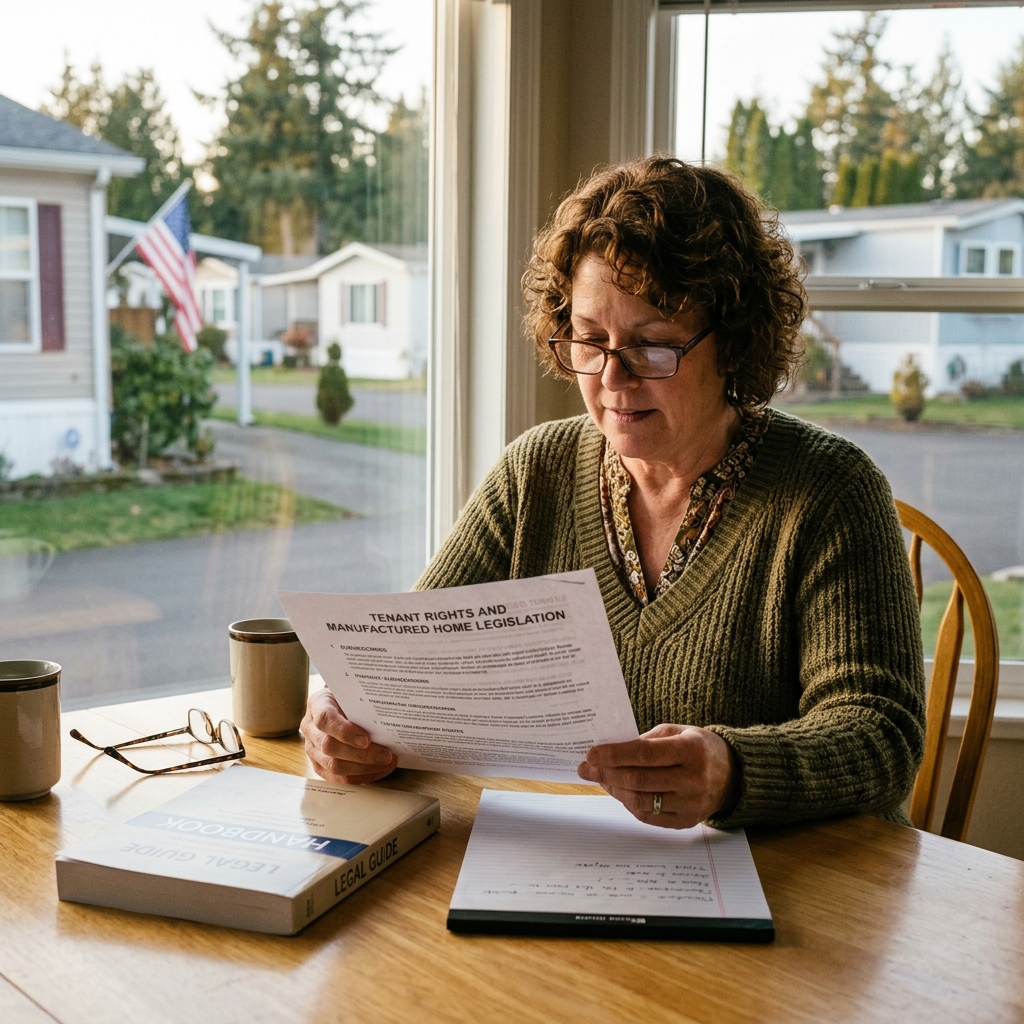
Living in a mobile or manufactured home community is different from renting a traditional apartment. Many residents own their home but rent the lot beneath it, while others rent both the home and the lot. These arrangements create unique legal issues, and most states have special laws to protect mobile home park tenants.
This guide explains the core rights and obligations of mobile home park tenants, how park owners are regulated, and what steps you can take if problems arise. Although details vary by state, the topics below reflect common legal protections found in mobile home and manufactured housing statutes across the United States.
1. How Mobile Home Park Tenancy Differs from Ordinary Renting
Mobile home park residency often involves a mix of property interests that do not exist in typical apartment leases. Understanding this structure is essential for knowing which laws apply and how to enforce your rights.
1.1 Lot rental versus home rental
Tenants in mobile home parks generally fall into two main categories:
- Homeowner–lot tenant: You own the mobile or manufactured home but rent the lot space from the park owner. State mobile home park acts usually apply directly to this situation and provide special protections.[10]
- Home renter: You rent both the home and the lot from the park or another landlord. In many states, both general landlord–tenant law and the manufactured/mobile home statutes apply to your tenancy.[10]
Because you may own a valuable home that is difficult and costly to move, legislatures often limit how and when park owners can terminate your tenancy or change rules, acknowledging that tenants are partially tied to the land.
1.2 Written agreements and disclosures
Most states require a written rental agreement for lot rentals and often for rent-to-own arrangements. These laws typically mandate that the agreement describe the rent amount, duration of tenancy, park rules, utilities, and fees in clear terms.
Common disclosure requirements include:
- The full list of park rules and regulations.
- Any additional fees for utilities, services, or common-area use.
- Information about security deposits and refundable charges.
- Notice of special rights, such as a right to cure violations or limits on rent increases.
2. Basic Habitability and Park Condition Standards
Even when you own your mobile home, the park owner has legal duties related to the land and shared areas. Habitability rules aim to ensure that the park is safe, sanitary, and reasonably maintained.
2.1 Park owner responsibilities
State laws commonly require park owners to maintain the property so that tenants can use their homes safely. Typical obligations include:
- Keeping roadways and common areas—such as lawns, community buildings, and playgrounds—in good repair.
- Ensuring safe and functional utility connections, including water, sewer, electricity, and gas, where provided.
- Providing adequate garbage collection and ensuring dumpsters or collection points are not health hazards.
- Maintaining compliance with building, health, and safety codes for common facilities and infrastructure.
If the park owner fails to meet these duties, tenants may be able to contact local health departments, code enforcement, or state manufactured housing authorities for inspections and enforcement.
2.2 Tenant responsibilities for their home and lot
While park owners must care for the common property, tenants are usually required to keep their own home and lot in good condition.
- Maintaining the exterior of the home in compliance with park rules.
- Keeping the lot free of rubbish and excess debris.
- Properly disposing of garbage on the schedule and in the manner the park specifies.
- Following local health and safety laws, including rules about pets, noise, and sanitation.
Failure to meet these obligations can lead to warnings, notices to cure, or eventually eviction if the problems are serious and persistent.
3. Rent, Fees, and Security Deposit Protections
Because mobile home owners are heavily invested in their homes, sudden rent hikes or unfair fees can be particularly harmful. Many states therefore regulate rent increases, deposits, and other charges.
3.1 Limits on rent increases
Some states cap annual rent increases for mobile home park tenants or require additional justification for larger increases. For example, New York limits standard rent increases and allows higher adjustments only for specific, documented reasons such as major improvements or increased operating costs.
Common rent protections include:
- Advance written notice before any rent increase takes effect.
- Procedures to challenge excessive increases in court or before an administrative agency.
- Requirements that rent increases be applied fairly and not used to target individual tenants.
3.2 Regulation of security deposits and upfront charges
State laws often limit how much a park owner may collect as a security deposit or initial occupancy charge. For instance, in Maryland a park owner generally may not require more than two months’ rent or $50, whichever is greater, as a deposit.
| Issue | Typical Legal Protection |
|---|---|
| Maximum deposit amount | Often capped at one or two months’ rent; higher amounts may be unlawful. |
| Deposit handling | Landlord may need to hold deposits in a separate account and provide receipts. |
| Return of deposit | Must be refunded or accounted for within a set period after tenancy ends, with itemized deductions. |
| Remedies for violations | Tenants can often sue for multiple times the unlawful portion plus attorney fees. |
3.3 Rent-to-own and installment purchase protections
In some parks, tenants enter rent-to-own agreements for their mobile homes. These arrangements blend renting and purchasing and can be heavily regulated to prevent abuse.
Consumer protection rules may require that rent-to-own contracts:
- Clearly itemize all charges, including lot rent, home rent, and any fees.
- State the fair market value of the home and the terms under which title will transfer.
- Explain who is responsible for major repairs while the tenant is still technically a renter.
- Provide annual statements summarizing all payments made under the agreement.
In some jurisdictions, if the park owner ends a rent-to-own tenancy improperly, they must refund rent-to-own payments and possibly other charges, giving tenants a financial remedy for unlawful termination.
4. Park Rules, Reasonableness, and Fair Enforcement
Mobile home parks often operate more like small communities than individual apartment buildings, with detailed rulebooks covering aesthetics, parking, noise, and use of shared facilities. However, those rules must normally be reasonable, lawful, and applied consistently.
4.1 Requirements for park rules
States commonly require that park rules:
- Be reasonably related to health, safety, or proper park management.
- Comply with state and local law, including fair housing and consumer protection statutes.[10]
- Be given to tenants in writing, usually before or at the start of the tenancy.
- Not unfairly restrict where tenants can purchase goods or services such as fuel or insurance.
For example, Massachusetts law prohibits park owners from requiring tenants to buy fuel or furnishings exclusively from the park, as long as alternative suppliers comply with applicable rules.
4.2 Changing rules during a tenancy
Park owners may update rules over time, but they typically must provide advance written notice and may need to ensure changes are not unconscionable or discriminatory. Some states provide extra protection through longer-term leases (such as a five-year lease option) that stabilize both rent and rules for the duration.
5. Eviction, Termination, and the Right to Cure
Because moving a mobile home is expensive and sometimes impractical, states often limit the grounds on which a park can evict a tenant and provide clear procedures that owners must follow.
5.1 Lawful grounds for eviction
Mobile home park laws commonly restrict evictions to specific causes, such as:
- Non-payment of rent.
- Substantial violation of enforceable park rules or health and safety laws.
- Material breach of the rental agreement.
- Serious criminal conduct threatening the health or safety of other residents.
Park owners generally must use formal court procedures—often called unlawful detainer or similar actions—to remove tenants, rather than self-help measures like changing locks or shutting off utilities.
5.2 Notice and opportunity to cure
Many states require that tenants receive a written notice describing the violation and giving them an opportunity to fix it before the park may proceed with eviction.
- For non-payment of rent, tenants may have a set number of days after the notice to pay and avoid eviction.
- For rule violations, tenants often have a cure period (for example, 15 days from the mailing of the notice in some states) to correct the problem.
- If the notice fails to include information about the right to cure, it may be legally defective and subject to challenge in court.
Some states also require mediation or other dispute resolution steps before the landlord can complete an eviction based on rule violations.
5.3 Rights after eviction judgment
Even after an eviction judgment, mobile home owners may retain limited rights related to their home. For example, Virginia law allows an evicted tenant 90 days to sell or remove the manufactured home from the park, provided they pay continuing lot rent and maintain the space during that period.
In some cases, tenants may also rent the home to a subtenant within a specific period, if the park owner approves the subtenant.
6. Discrimination and Fair Housing in Mobile Home Communities
Mobile home park tenants are protected by federal and state fair housing laws, which prohibit discrimination in rental, sales, and related housing services based on protected characteristics.
6.1 Protected characteristics
Under the federal Fair Housing Act, it is unlawful for park owners or managers to discriminate on the basis of:
- Race or color.
- National origin.
- Religion.
- Sex (including gender-related protections under recent interpretations).
- Familial status (having children under 18 in the household).
- Disability.[10]
Many states add further protections, such as sexual orientation, gender identity, or source of income. These rules apply to mobile home parks just as they do to other rental housing.
6.2 Examples of potential fair housing violations
- Denying tenancy or refusing to renew a lease because a tenant has children.
- Charging higher rent or deposits to tenants of a particular race.
- Refusing to allow reasonable modifications or accommodations for a tenant with a disability, such as a ramp or service animal, when legally required.
- Targeting rule enforcement or eviction threats at certain groups while ignoring similar violations by others.
7. Practical Tips for Protecting Your Rights
Legal protections are most effective when tenants document their situation and act promptly. Many housing advocacy organizations recommend keeping thorough records of your tenancy and communications with the park.
7.1 Documenting conditions and communications
To safeguard your rights, consider the following practical steps, which are widely recommended for manufactured home park residents:[10]
- Photograph and video record: Take pictures and videos of your lot, home, and common areas at move-in, move-out, and whenever maintenance problems occur.
- Save your lease and rules: Keep copies of your rental agreement, park rules, and any updates in a safe place.
- Use written communication: Whenever possible, communicate with park management via email, text, or letters and save copies of all messages.
- Confirm verbal agreements: After important phone conversations, send a follow-up message summarizing what was agreed, such as repair schedules or rent adjustments.[10]
- Record online portals: Take screenshots of any park management web portals showing balances, notices, or rule changes.[10]
7.2 Staying current on rent and obligations
In some states, tenants must be current on rent to exercise certain rights under mobile home landlord–tenant laws, such as demanding repairs or challenging rule enforcement. Even where this is not strictly required, being up-to-date on rent strengthens your position if disputes arise.
Key practices include:
- Pay rent on time and obtain receipts or confirmations.
- Keep a personal record of all payments, including rent-to-own installments.
- Promptly address any notices regarding rule violations to avoid escalation.
7.3 Seeking legal or advocacy help
If you face eviction, major rent increases, or serious habitability issues, consulting an attorney or legal aid organization can be crucial. Many states have specialized programs or nonprofit clinics that handle manufactured housing and mobile home park cases.
8. Frequently Asked Questions (FAQs)
8.1 Do mobile home park tenants have different rights than apartment renters?
Yes. While general landlord–tenant law applies, many states have extra statutes specifically for mobile home or manufactured housing communities. These laws often provide additional eviction protections, regulate park rules, and address lot rental issues not present in typical apartment leases.
8.2 Can my park owner evict me without going to court?
In most jurisdictions, park owners must use formal court eviction procedures and cannot legally force you out by changing locks, shutting off utilities, or removing your home without a judgment. These unlawful “self-help” tactics may give tenants grounds to seek damages or injunctions.
8.3 What can I do if the park is in poor condition?
If roadways, utilities, or common areas are unsafe or unsanitary, you can typically report the issues to local health or code officials and, in some cases, to state manufactured housing agencies. Document the problems with photos and written complaints, and seek legal advice if conditions remain uncorrected.
8.4 Are rent increases in mobile home parks limited?
Some states limit rent increases or require special justification and notice. For example, laws may cap ordinary increases and allow larger ones only for documented reasons, with procedures for tenants to challenge excessive changes. You should review your state’s mobile home or manufactured housing act to see what rules apply where you live.
8.5 How can I protect myself in a rent-to-own arrangement?
Insist on a clear written contract that spells out all charges, repair responsibilities, and when ownership transfers. Keep copies of every payment record, verify that the total price is reasonable compared to market value, and seek legal advice before signing if terms are complex or one-sided.
References
- What are my rights as a tenant in a mobile home park? — LawHelpNY. 2023-05-01. https://www.lawhelpny.org/resource/what-are-my-rights-tenant-mobile-home-park
- Chapter 16 Mobile Homes (Tenant Rights in MA) — Massachusetts Legal Assistance Corporation / Oak Point HOA. 2018-01-01. https://oakpointhoa.org/docs/TenantRightsInMA.pdf
- Manufactured/Mobile Home Landlord-Tenant Act (RCW 59.20) — Washington State Office of the Attorney General. 2022-06-01. https://www.atg.wa.gov/manufactured-mobile-home-landlord-tenant-act
- Mobile Home Law — Maryland People’s Law Library. 2021-09-15. https://www.peoples-law.org/mobile-home-law
- Your Rights as a Mobilehome Park Resident — California Department of Housing and Community Development (HCD). 2020-03-01. https://www.hcd.ca.gov/mmh/mac/your-rights-mobilehome-park-resident
- Becoming a Mobile Home Park Tenant — Massachusetts Legal Help. 2019-07-01. https://www.masslegalhelp.org/housing-apartments-shelter/rooming-houses-mobile-homes-condos/becoming-mobile-home-park-tenant
- Manufactured (Mobile) Home Park Residents — Coalition on Homelessness and Housing in Ohio (COHHIO). 2022-04-01. https://cohhio.org/support/tenant-rights/manufactured-mobile-home-parks/
Similar Articles








Read full bio of medha deb


