
Understanding Mississippi Will Requirements
A practical guide to Mississippi will laws, from basic validity rules to special oral and handwritten wills and revocation steps.
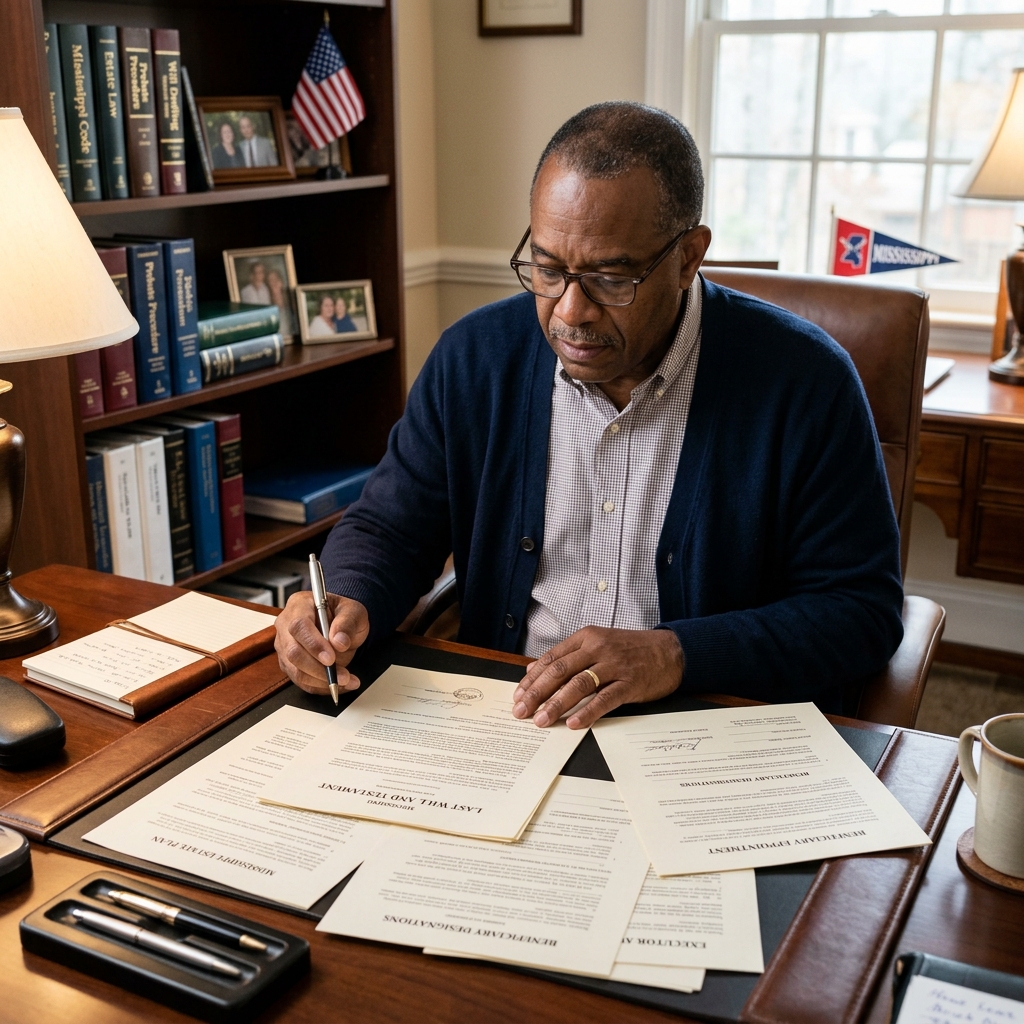
Creating a last will and testament in Mississippi is one of the most important steps you can take to protect your family and control what happens to your property after death. Mississippi law sets out specific rules for who can make a will, how it must be signed and witnessed, and even recognizes certain oral and handwritten wills in limited situations. This guide explains those rules in plain language and highlights practical points to consider as you plan your estate.
Why Having a Will Matters in Mississippi
Without a valid will, your assets are distributed according to Mississippi’s intestacy laws, which follow a default formula based on family relationships rather than your personal wishes. While this framework protects surviving spouses and close relatives, it does not account for individual priorities such as charitable gifts, stepchildren, or friends.
Having a valid will allows you to:
- Choose beneficiaries instead of relying on automatic statutory rules.
- Appoint an executor you trust to manage your estate.
- Provide for minor children through guardianship and financial planning.
- Clarify your intentions and reduce the risk of disputes among family members.
Who Can Make a Will in Mississippi?
Mississippi law sets basic eligibility criteria for anyone who wishes to make a will. These rules address both age and mental capacity to ensure that the document reflects a deliberate and informed decision.
Age Requirement
Under Mississippi statutes, any person who is at least 18 years old may make a will. This threshold ensures that only legal adults can dispose of their property through a testamentary document.
Mental Capacity (“Sound Mind”)
In addition to age, the testator—the person making the will—must be of sound mind. While the term is not defined by a single checklist, courts generally look for the ability to:
- Understand that the document is a will and will govern the distribution of property after death.
- Know the general nature and extent of one’s property (for example, owning a house, bank accounts, or vehicles).
- Recognize the natural objects of one’s bounty, meaning close relatives and usual beneficiaries.
- Form a rational plan for distributing assets without severe confusion or delusion.
Questions about capacity often arise in later will contests. If someone challenges a will, they may argue the testator lacked capacity at the time of signing or was subject to undue influence, fraud, or duress.
Core Formal Requirements for a Written Will
Most Mississippi wills are standard written documents that are typed or printed. To be valid, they must comply with certain formalities drawn from state statutes and court decisions.
Basic Elements of a Typical Written Will
A conventional Mississippi will generally needs the following elements:
- Written document: The will is usually in written form (typed or printed), expressing how the testator wants property distributed.
- Signature of the testator: The testator must sign the will, or direct another person to sign on their behalf in the testator’s presence and at their express direction.
- Two credible witnesses: At least two witnesses must sign the will, typically in the presence of the testator and of each other.
- Testamentary intent: The document must be intended as a will, not merely notes or an informal letter.
Role and Qualifications of Witnesses
Mississippi law places particular emphasis on the credibility and independence of witnesses in order to prevent conflicts of interest and fraud.
Key points about witnesses include:
- Number of witnesses: At least two witnesses are required for most written wills.
- Presence: Witnesses should sign in the testator’s presence and observe the testator acknowledge or sign the will.
- Credibility: Witnesses must be legally competent and trustworthy. Beneficiaries should generally not serve as witnesses.
- Effect on gifts: If an interested witness is necessary to prove the will, the gift to that witness may be void to protect against self-serving testimony.
| Requirement | Summary |
|---|---|
| Minimum number | At least two credible witnesses. |
| Role | Observe testator sign or acknowledge the will, then sign themselves. |
| Beneficiaries as witnesses | Discouraged; gifts to essential witnesses may be void. |
Special Types of Wills Recognized in Mississippi
Mississippi is distinctive because it recognizes certain nontraditional forms of wills under strict conditions. These include nuncupative (oral) wills and holographic (handwritten) wills.
Oral or Nuncupative Wills
A nuncupative will is an oral declaration of testamentary intent, typically made during the testator’s final illness. Mississippi is one of the few states that allow such wills in narrow circumstances.
Conditions for a valid oral will include:
- The statement must be made during the testator’s last illness.
- The declaration must occur at the testator’s home, or where they resided for at least ten days before death, with limited exceptions if illness prevents return home.
- The maximum value that can be transferred is typically modest (often around $100), unless two witnesses can clearly testify that the testator called on them to bear witness to the will.
- The oral will cannot be presented for probate immediately; a waiting period of at least 14 days is required to allow notice to the surviving spouse or next of kin, who may contest the will.
- The will must be submitted to probate within a specific time, generally within six months, or sooner if the words are committed to writing.
Due to these strict limits and evidentiary challenges, oral wills are rare and are often used only in emergency situations where written documentation is not possible.
Holographic (Handwritten) Wills
A holographic will is a document written entirely in the testator’s own handwriting. Mississippi law recognizes such wills if they meet certain criteria.
To be valid, a holographic will must:
- Be wholly written by the testator, rather than partially typed or completed by another person.
- Be dated and signed by the testator, typically at the end of the document.
- Show clear testamentary character, meaning it is intended to serve as a will, not just a letter or notes.
Unlike attested wills, holographic wills may not require the same formal witnessing process, but they can be more vulnerable to challenge, particularly if handwriting or intent is disputed.
Changing or Revoking a Will in Mississippi
Mississippi law allows testators to revise or revoke their wills as circumstances change. This flexibility is important when major life events occur, such as marriage, divorce, births, deaths, or significant financial changes.
Methods of Revocation
Common ways to revoke a will in Mississippi include:
- Physical destruction: The testator may tear, burn, or otherwise destroy the will, or direct someone else to do so in their presence.
- Cancellation or obliteration: Marking out or canceling the document with clear intent to revoke may be sufficient under certain circumstances.
- Subsequent will or codicil: Creating a new will that expressly revokes the prior will, or executing a codicil that modifies specific provisions.
Because informal attempts at revocation can lead to confusion, many practitioners recommend executing a new, clearly worded will that explicitly replaces earlier documents.
Estate Planning and Regular Review
Academic and extension sources emphasize reviewing estate plans regularly, especially when family or asset structures change. A periodic review can help ensure that:
- Beneficiary designations remain accurate.
- Executors and alternate executors are still appropriate and willing to serve.
- New property acquisitions or business interests are properly addressed.
- Legal developments in Mississippi probate or tax law are considered.
Disputes and Will Contests
Even when formal requirements are followed, wills can be challenged in court. Mississippi law provides procedural rules and timelines for bringing such contests.
Common Grounds for Contesting a Will
According to legal analyses of Mississippi probate practice, typical grounds for challenging a will include:
- Lack of testamentary capacity: Allegations that the testator did not understand the nature of the act of making a will or the extent of their property at the time of execution.
- Undue influence: Claims that another person exerted control over the testator’s decision-making, such that the will reflects the influencer’s wishes rather than the testator’s independent intent.
- Improper execution: Failure to comply with statutory requirements for signing and witnesses.
- Fraud or duress: Situations where the testator was deceived or coerced into signing.
Undue influence must generally be shown to have operated at the time the will was executed and is often proven through circumstantial evidence, such as isolation of the testator or sudden, unexplained changes in beneficiaries.
Practical Tips for Drafting a Mississippi Will
While do-it-yourself forms are available, professional guidance is frequently recommended to avoid costly mistakes and litigation. When planning your will in Mississippi, consider the following practical steps:
- Clarify family relationships: Clearly describe spouses, children (including those from prior relationships), and other key relatives to avoid ambiguity.
- Make specific gifts: Identify important items and amounts and name specific recipients for each to reduce confusion.
- Include a residuary clause: Provide instructions for any property not specifically mentioned so that it is still covered by the will.
- Address debts and expenses: Direct your executor to pay valid debts, taxes, and funeral expenses from the estate.
- Coordinate with other estate planning tools: Consider trusts, beneficiary designations on insurance and retirement accounts, and powers of attorney as part of a comprehensive plan.
Frequently Asked Questions (FAQs)
1. Do I need a lawyer to make a will in Mississippi?
Mississippi law does not require a lawyer to draft your will, but using legal counsel can help ensure the document complies with statutory requirements and reduces the risk of later disputes. Complex estates, blended families, and business ownership often benefit from professional advice.
2. Can I leave property to anyone I choose?
In general, you may choose any beneficiaries, including family, friends, or charities, subject to certain protections for spouses and specific statutory rules. However, failing to address close family relationships clearly may invite challenges, so careful drafting is important.
3. Are handwritten wills really valid in Mississippi?
Yes, handwritten (holographic) wills can be valid if they are entirely written, dated, and signed by the testator and intended as a will. Nonetheless, they may be more vulnerable to disputes about handwriting or intent, so many people still prefer typed, witnessed wills.
4. When should I update my will?
Experts recommend reviewing your will at least annually and whenever major life events occur, such as marriage, divorce, birth or adoption of a child, death of a beneficiary, or significant changes in assets. Updates can be made through new wills or codicils that comply with Mississippi law.
5. What happens if I die without a will in Mississippi?
If you die without a valid will, your estate is distributed according to Mississippi intestacy statutes, which follow fixed rules based on marital status and blood relationships. This outcome may differ significantly from your personal wishes, which is why many residents choose to prepare a will and broader estate plan.
References
- Mississippi Wills Laws — FindLaw. 2023-05-01. https://www.findlaw.com/state/mississippi-law/mississippi-wills-laws.html
- Mississippi Code Title 91, Chapter 5: Wills and Testaments — State of Mississippi / Justia. 2024-01-01. https://law.justia.com/codes/mississippi/title-91/chapter-5/
- Basic Requirements for a Last Will and Testament in Mississippi — LawInfo. 2022-06-15. https://www.lawinfo.com/resources/wills/mississippi/
- What Are the Requirements for a Will to be Valid in Mississippi? — Harris Law Firm. 2023-04-10. https://harrislawfirm.com/articles/what-are-the-requirements-for-a-will-to-be-valid-in-mississippi/
- Mississippi Last Will and Testament — MSProbate.com. 2021-09-01. https://www.msprobate.com/wp/mississippi/last-will-and-testament/
- Do I Need an Estate Plan and Will? — Mississippi State University Extension. 2020-08-20. https://extension.msstate.edu/blogs/extension-for-real-life/do-i-need-estate-plan-and-will
- Will Contests in Mississippi — ESA Law. 2024-03-12. https://esapllc.com/will-contests-in-mississippi-2024/
Similar Articles








Read full bio of medha deb


