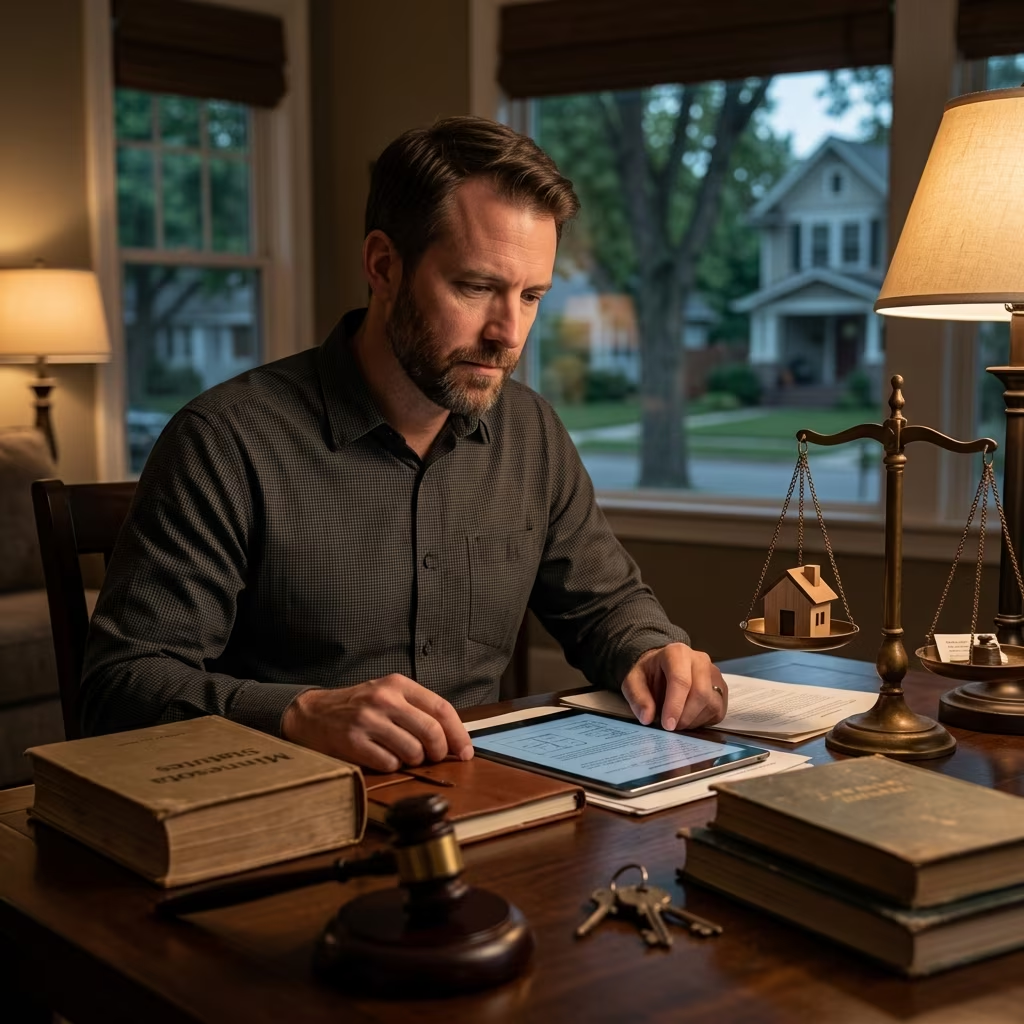
In Minnesota, property owners and landlords can face significant consequences when illegal or nuisance activity repeatedly occurs on their premises. One important, but often overlooked, law is the disorderly house statute, which allows authorities to penalize those who permit certain ongoing unlawful behaviors in buildings and dwelling units. This statute interacts with state criminal law and local nuisance ordinances, and it can directly affect rental housing, commercial properties, and even owner-occupied homes.
What Is a Disorderly House in Minnesota?
Minnesota law uses the term disorderly house to describe a building, dwelling unit, place, establishment, or premises where certain illegal activities occur habitually or repeatedly. Local ordinances in Minnesota cities and townships adopt similar definitions, often tailoring them to address community concerns about crime and disturbance.
Although the exact wording varies by statute or ordinance, a property is generally considered a disorderly house when it is tied to ongoing violations of criminal or public safety laws. Key types of conduct that can trigger this designation include:
- Unlawful sale, use, or possession of alcohol, such as the sale of intoxicating liquor during prohibited hours or without proper licensing.
- Gambling offenses, including the possession or use of illegal gambling devices or unlawful gaming activities.
- Prostitution and related offenses, such as operating illegal escort services or sexually oriented businesses without required licensing.
- Controlled substance violations, including the sale, distribution, or possession of illegal drugs on the premises.
- Repeated unlawful gatherings or public nuisance incidents within a specified period, as defined by local code.
Importantly, the focus is not a single isolated incident. Authorities look for habitual or repeated violations, suggesting a pattern that the owner or person in control has allowed to continue.
How the Disorderly House Statute Fits into Minnesota Criminal Law
The disorderly house concept is related to, but distinct from, Minnesota’s general disorderly conduct statute in Minn. Stat. § 609.72. While disorderly conduct targets individual behavior that alarms, angers, or disturbs others, the disorderly house statute focuses on the property as the site of ongoing unlawful activity.
| Aspect | Disorderly House | Disorderly Conduct |
|---|---|---|
| Main focus | Building or premises where illegal activities habitually occur | Individual’s conduct that alarms or disturbs others |
| Examples of conduct | Ongoing illegal liquor sales, gambling, prostitution, drug activities, repeated nuisance incidents | Fighting, brawling, obscene or abusive language, noisy conduct, disturbing lawful meetings |
| Who is charged | Owner, landlord, or person in control of property who allows a disorderly house | The person engaging in disorderly behavior (tenant, guest, or any individual) |
| Penalty range | Fines and potential jail time, often higher for repeat violations | Usually a misdemeanor: up to 90 days in jail and up to $1,000 fine |
This distinction matters because landlords may assume they are safe as long as they personally do not engage in criminal conduct. Under disorderly house laws, however, the property itself becomes the focal point, and a landlord’s failure to address ongoing illegal activity can lead to penalties.
Key Elements Authorities Look For
Whether under the state statute or local ordinances, authorities typically look for several core elements before labeling a property as a disorderly house:
1. Ongoing or Habitual Illegal Activity
Disorderly house enforcement usually requires evidence of regular illegal acts, not just isolated incidents. For example, some Minnesota ordinances specify thresholds such as three or more verified unlawful gatherings or public nuisance acts within a 365-day period. This demonstrates a pattern that the owner has failed to stop.
2. Connection to the Premises
The statute concerns activities that occur on or closely tied to the property. That can include conduct inside the dwelling, common areas, adjacent yards, and sometimes directly connected nearby spaces if they are part of the same premises definition.
3. Owner or Controller Responsibility
Being an owner, landlord, or other person in control of the property carries legal duties. Local ordinances often explicitly prohibit both:
- Keeping or permitting a disorderly house, and
- Being present in a disorderly house with knowledge of the unlawful condition.
Authorities may argue that an owner had reason to know about the ongoing illegal activity when there are repeated police calls, complaints from neighbors, or prior warnings from city officials.
Penalties and Enforcement Tools
Minnesota’s disorderly house statute provides a framework for fines and possible jail time. In addition, municipal governments use nuisance and disorderly house ordinances as enforcement tools to improve public safety and neighborhood quality of life.
State-Level Penalties
Under Minnesota’s disorderly house law, owning or maintaining such a property can result in:
- Fines for each offense, with amounts that can range from hundreds to thousands of dollars, increasing for repeat violations.
- Potential jail time, particularly for subsequent offenses or where the underlying illegal activity is serious.
These penalties are separate from any charges that may apply to individual actors for specific offenses, such as drug crimes or prostitution-related charges.
Local Ordinance Remedies
Local governments in Minnesota often adopt detailed codes that define disorderly houses and outline enforcement options. For example, a city ordinance may:
- Authorize fines or administrative penalties against landlords for repeated nuisance incidents.
- Permit the city to revoke rental licenses for properties with chronic violations.
- Allow civil actions seeking injunctions or abatement, such as closing the premises for a period.
- Require owners to implement security or management plans to curb illegal activity.
Because these tools are aimed at the property and its management, landlords who ignore warnings or fail to respond effectively risk escalating consequences, including loss of the ability to legally rent the property.
Implications for Landlords and Property Owners
For landlords, disorderly house laws are more than abstract legal concepts—they directly affect risk management, tenant screening, and ongoing operations. Even if tenants are the ones engaging in illegal behavior, the landlord can still face penalties if authorities conclude that they have allowed a disorderly house to exist.
Risk Areas for Rental Properties
Common scenarios that can expose landlords include:
- Units used for drug activity, where tenants or frequent visitors sell or use controlled substances on-site, leading to repeated police calls.
- Unlicensed alcohol sales or parties, such as operating an informal bar after hours or hosting recurring large gatherings that involve unlawful alcohol distribution.
- Sex work or unlicensed adult businesses operating from residential or mixed-use properties without required permits.
- Persistent nuisance gatherings causing noise, traffic, or safety concerns, repeatedly documented by law enforcement.
Each incident may seem manageable on its own, but together they can form the pattern needed to classify the premises as a disorderly house.
Due Diligence and Reasonable Steps
One central question in enforcement is whether the landlord took reasonable steps once they became aware of problems. Although the statute itself does not spell out every expectation, practical measures can include:
- Responding promptly to police notices or city warning letters.
- Issuing lease violation notices and documenting tenant misconduct.
- Beginning lawful eviction proceedings when serious illegal activity is confirmed.
- Improving lighting, security, and access controls to reduce opportunity for criminal conduct.
Courts and enforcement agencies are more likely to view an owner favorably when there is clear evidence they attempted in good faith to remedy the situation.
Interaction with Disorderly Conduct Charges
Individual tenants, guests, or visitors can be charged with disorderly conduct under Minn. Stat. § 609.72 when their behavior in public or private places is likely to alarm, anger, or disturb others or provoke a breach of the peace. This includes fighting, brawling, offensive or obscene language, or noisy conduct that affects neighbors.
While these are typically misdemeanor offenses with up to 90 days in jail and up to a $1,000 fine, repeated disorderly conduct incidents associated with the same property can contribute to a disorderly house designation. Landlords may receive notice each time police respond, creating a record of recurring disturbance.
Practical Strategies to Avoid a Disorderly House Finding
Owners and landlords can take proactive steps to reduce the likelihood that their property will be classified as a disorderly house.
1. Strong Lease Terms
Clear lease provisions give landlords tools to intervene when tenant behavior crosses legal boundaries. Helpful clauses include:
- Explicit prohibitions on illegal activity, nuisance behavior, and unauthorized businesses.
- Requirements that tenants comply with all local laws and ordinances.
- Language allowing termination of tenancy for criminal activity or repeated police calls.
2. Careful Tenant Screening
While screening must follow fair housing and privacy laws, reasonable checks can help reduce risk. Landlords often:
- Review rental history and references for prior nuisance or criminal issues.
- Use legally compliant background checks, where permitted, to identify serious past offenses.
- Set expectations early about behavior and community standards.
3. Ongoing Communication with Neighbors and Authorities
Open lines of communication with nearby residents, neighborhood associations, and local police can alert landlords to problems before they escalate. When owners learn of concerning behavior, they can:
- Document the information in writing.
- Contact tenants to address the issue quickly.
- Consult with counsel about appropriate steps under Minnesota landlord-tenant law.
4. Consistent Enforcement of Rules
Having policies is not enough; they must be consistently applied. Selective or inconsistent enforcement may undermine efforts if authorities view the landlord as indifferent. Owners should aim to:
- Apply lease terms uniformly.
- Keep written records of warnings, notices, and responses.
- Follow statutory eviction procedures when necessary, rather than informal measures that lack legal effect.
Frequently Asked Questions about Disorderly Houses
Can a single incident make my property a disorderly house?
In most cases, authorities look for repeated or habitual activity rather than one isolated event. Many local ordinances specify a minimum number of verified incidents within a certain time frame, such as three or more nuisance events in a year. However, a single serious incident may still prompt close scrutiny.
Is a landlord responsible for all actions of tenants and guests?
Tenants and guests are primarily responsible for their own conduct, and they may face individual charges under criminal statutes such as disorderly conduct. Still, if a landlord knowingly allows ongoing illegal activities or fails to take reasonable steps once notified, they may risk penalties under disorderly house laws.
What kinds of behavior count as disorderly conduct in Minnesota?
Under Minn. Stat. § 609.72, disorderly conduct includes brawling or fighting, disturbing lawful assemblies, and engaging in offensive, obscene, abusive, boisterous, or noisy conduct or language that reasonably tends to alarm, anger, or disturb others. These actions can occur in public or private places.
Can speech alone lead to disorderly conduct charges?
Minnesota courts and guidance emphasize that disorderly conduct charges must respect constitutional free speech protections. Purely verbal conduct, especially if it falls within First Amendment protections, generally cannot be the sole basis for a conviction. However, speech that crosses into threats, incitement, or obscenity may still be prosecutable.
What should a landlord do after receiving a nuisance or disorderly house warning?
Landlords should promptly review the warning, document the issues, and seek legal advice if needed. Practical steps include:
- Contacting tenants to discuss alleged behavior.
- Issuing written lease violation notices, if supported by facts.
- Working with law enforcement and city officials to create a corrective plan.
- Pursuing lawful eviction if serious illegal activity continues.
When to Consult a Lawyer
Because disorderly house enforcement can escalate from fines to license revocation or criminal charges, it is wise for landlords to consult an attorney experienced in Minnesota landlord–tenant and criminal law when problems arise. Legal counsel can:
- Interpret the applicable state statute and local ordinances.
- Review incident reports and correspondence from authorities.
- Advise on appropriate responses that balance tenant rights and public safety.
- Represent the owner in administrative hearings or court proceedings, if necessary.
Early legal intervention can help owners demonstrate proactive compliance and potentially mitigate or avoid severe penalties.
References
- Landlords Beware: Minnesota’s Lesser-Known Disorderly House Statute — Super Lawyers. 2023-08-01. https://www.superlawyers.com/resources/landlord-and-tenant/minnesota/minnesotas-lesser-known-disorderly-house-statute/
- 6-5A-4: Disorderly Houses — City of Elko New Market, Minnesota Code Library. 2022-05-26. https://codelibrary.amlegal.com/codes/elkonewmarketmn/latest/elkonewmarket_mn/0-0-0-2613
- Sec. 609.72 MN Statutes – Disorderly Conduct — Office of the Revisor of Statutes, State of Minnesota. 2023-01-01. https://www.revisor.mn.gov/statutes/cite/609.72
- Minnesota’s Disorderly Conduct Laws and Penalties — Nolo / CriminalDefenseLawyer.com. 2023-06-15. https://www.criminaldefenselawyer.com/resources/disorderly-conduct-minnesota.htm
- Disorderly Conduct in Minnesota — Gallagher Criminal Defense. 2022-09-20. https://gallagherdefense.com/crimes/public-order/disorderly-conduct-mn/