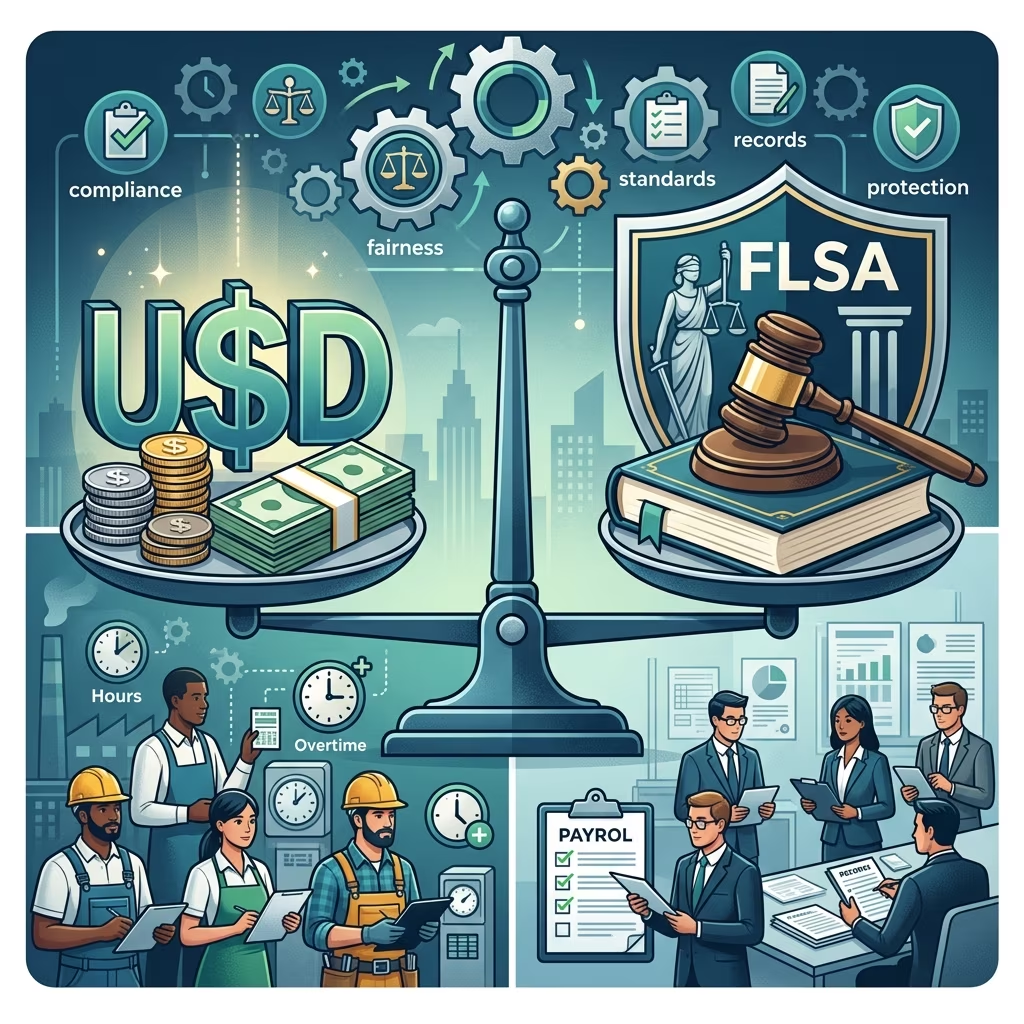
The Fair Labor Standards Act (FLSA) is the cornerstone of federal wage and hour law in the United States. It establishes national rules for minimum wage, overtime pay, child labor, and recordkeeping for most public and private employers. This guide explains how the FLSA works, who it covers, and what both workers and employers need to know to stay compliant.
Core Purpose and Scope of the FLSA
The FLSA was enacted in 1938 to combat abusive labor practices and promote fair compensation for workers. It sets baseline protections that apply across the country, even though states may adopt higher standards.
At its core, the FLSA addresses four major areas:
- Minimum wage – a federal hourly wage floor for covered, nonexempt employees.
- Overtime pay – premium pay for hours worked beyond 40 in a workweek.
- Child labor – restrictions on the employment of minors to prevent unsafe or exploitative work.
- Recordkeeping – requirements for employers to maintain accurate time and pay records.
The law is administered and enforced by the Wage and Hour Division of the U.S. Department of Labor.
Who Is Covered by the FLSA?
Coverage under the FLSA is broad. It applies to employees who are engaged in interstate commerce, involved in producing goods for commerce, or employed by businesses that operate in interstate commerce. In practice, most employers and employees fall under these categories.
Generally, the FLSA applies to:
- Private-sector businesses with at least a certain level of annual gross sales or business volume.
- Federal, state, and local government employers.
- Full-time and part-time workers alike, as long as they are not specifically exempt.
Even when a particular worker or workplace is exempt from some provisions (such as overtime), other FLSA protections may still apply.
Minimum Wage Under Federal Law
The federal minimum wage provisions appear in section 6 of the FLSA and are implemented by the Department of Labor. The federal minimum wage is currently set at $7.25 per hour, effective since July 24, 2009.
Interaction Between Federal and State Minimum Wages
Many states, cities, and counties have adopted their own minimum wage laws, often higher than the federal level. When multiple wage rules apply, employers must follow the standard that provides the greatest protection to the worker.
In practice:
- If a state minimum wage exceeds $7.25 per hour, employers in that state must pay at least the higher state rate.
- If a state minimum wage is lower than the federal level, or there is no state minimum wage, the federal rate of $7.25 per hour still applies to covered workers.
- Special rules may apply to certain local jurisdictions, or to federal contractors under separate executive orders.
Special Minimum Wage Rules and Exceptions
Federal law allows limited exceptions to the standard minimum wage in certain contexts:
- Youth wage – During the first 90 consecutive calendar days of employment, certain young workers may be paid a lower training wage under conditions laid out in federal law.
- Territorial adjustments – Some U.S. territories, such as American Samoa, have phased schedules for minimum wage increases that gradually align with the federal rate.
- Tipped employees – For workers who regularly earn tips, employers may take a “tip credit” toward the minimum wage if specific requirements are met. If wages plus tips do not equal the applicable minimum wage, the employer must make up the difference.
| Category | Key Rule | Source |
|---|---|---|
| Standard federal minimum | $7.25 per hour for covered, nonexempt workers | U.S. Department of Labor |
| State or local minimums | Must comply with whichever rate is higher | NCSL & DOL guidance |
| Tipped employees | Tip credit allowed; employer must ensure total pay meets minimum wage | FLSA framework |
Overtime Rules: Time-and-a-Half After 40 Hours
One of the most important protections in the FLSA is the requirement that covered, nonexempt employees receive overtime pay for hours worked over 40 in a workweek.
Key features of federal overtime rules include:
- Threshold – Overtime applies after 40 hours in a single workweek, defined as any fixed and consistently recurring period of 168 hours (seven consecutive 24-hour periods).
- Overtime rate – At least one and one-half times the employee’s regular rate of pay must be paid for overtime hours.
- No daily limit – There is no federal requirement for overtime based solely on hours in a single day, though some states impose daily overtime rules.
- Weekend and holiday work – The FLSA does not require extra pay for weekends or holidays unless overtime hours are involved.
Employers may provide additional premium pay or benefits by policy or contract, but they cannot disregard the FLSA minimum overtime obligations for nonexempt staff.
Exempt vs. Nonexempt Employees
Not all employees receive overtime under the FLSA. Workers classified as nonexempt are entitled to both minimum wage and overtime protections, while exempt employees are excluded from some of these requirements.
Exempt status commonly applies to certain executive, administrative, and professional employees who meet specific tests regarding job duties, salary level, and salary basis. The details of these tests change over time as regulations are updated.
Nonexempt Employee Rights
For nonexempt workers, core rights under the FLSA include:
- Payment of at least the applicable minimum wage for every hour worked.
- Overtime pay at 1.5 times the regular rate for hours over 40 in a workweek.
- Compensation for all hours “suffered or permitted” to work, including certain off-the-clock or pre- and post-shift activities.
- Protection against unlawful deductions that drive wages below the minimum or reduce overtime pay.
Child Labor Protections
The FLSA includes strong child labor rules to prevent minors from working in unsafe conditions or excessive hours. These provisions vary by age and type of work.
Key elements include:
- Minimum age for employment – Generally, 14 is the minimum age for most non-agricultural work, subject to limits on hours and job types.
- Hours limits for younger minors – Workers under 16 face restrictions on the time of day and total hours they may work.
- Hazardous occupations – Minors are prohibited from jobs federal authorities deem hazardous, such as certain manufacturing, mining, or heavy equipment operations.
States often add additional protections or work-permit requirements, so employers hiring minors should check both federal and state law.
Employer Recordkeeping Duties
Accurate recordkeeping is essential to FLSA compliance. Employers covered by the Act must maintain specific pay and time records for each nonexempt employee.
Typical records include:
- Employee’s full name, address, and identifying information.
- Occupation and sex.
- The time and day of the week when the employee’s workweek begins.
- Hours worked each day and total hours worked each workweek.
- Basis of pay (e.g., hourly, salary, piece rate) and regular hourly pay rate.
- Total daily or weekly straight-time earnings.
- Total overtime earnings for each workweek.
- All additions to or deductions from wages.
- Total wages paid each pay period and the date of payment.
Employers must also display an official FLSA poster summarizing key rights, which is available from the Department of Labor.
Limitations on Wage Deductions
While employers can make certain lawful deductions from pay, the FLSA restricts deductions that would bring an employee’s compensation below the minimum wage or reduce overtime pay due.
As a general rule, employers may not deduct for items such as:
- Cash register or merchandise shortages, when doing so would push wages below the minimum.
- The cost of required uniforms, tools of the trade, or similar business-related expenses if they cause wages or overtime compensation to fall below FLSA thresholds.
Employers may adopt stricter internal policies to avoid questionable deductions and should ensure any pay practices comply with both federal and state law.
Federal Minimum Wage for Government and Contractors
Covered nonexempt workers for federal, state, and local government employers are generally entitled to the same minimum wage of $7.25 per hour under the FLSA. However, additional rules may apply in specific contexts, particularly for federal contractors.
For example, recent executive orders have established higher minimum wages for certain workers performing on or in connection with covered federal contracts. These rules operate alongside the FLSA and may impose obligations beyond the standard federal minimum wage.
Practical Steps for Employers
To stay compliant with the FLSA, employers should adopt a structured approach to wage and hour management.
Best practices include:
- Confirm coverage and classification – Determine which workers are covered by the FLSA and whether they are exempt or nonexempt based on duties and salary tests.
- Monitor minimum wage changes – Track federal, state, and local minimum wage updates and adjust pay accordingly.
- Implement reliable timekeeping – Use systems that accurately capture hours worked and retain records as required by law.
- Train managers – Ensure supervisors understand that they must record and pay for all hours worked, including overtime.
- Review deduction policies – Avoid any deductions that could inadvertently reduce pay below statutory minimums or cut into overtime pay.
Practical Tips for Employees
Employees also benefit from understanding how the FLSA protects them. Workers who know their rights are better positioned to identify issues and seek help when necessary.
Key tips include:
- Keep personal notes of hours worked, particularly overtime.
- Review pay stubs to ensure all hours are properly compensated at the correct rates.
- If under 18, verify that job duties and hours comply with youth employment rules.
- Consult the posted FLSA notice at the workplace to understand basic rights.
- Contact the Department of Labor’s Wage and Hour Division or a qualified legal professional if potential violations arise.
Frequently Asked Questions (FAQs)
1. What is the current federal minimum wage?
The current federal minimum wage for covered, nonexempt employees is $7.25 per hour, a rate that has been in effect since July 24, 2009.
2. Does my employer have to pay overtime for weekend or holiday work?
The FLSA does not require extra pay simply because work is performed on weekends, holidays, or rest days. However, if working on those days causes total hours to exceed 40 in a workweek, overtime pay at time-and-a-half is required for the hours above 40.
3. How do state minimum wage laws affect my pay?
If your state, city, or county has a minimum wage higher than the federal rate, your employer must pay at least the highest applicable rate. Employers must comply with both federal and state wage laws, choosing whichever offers greater protection to employees.
4. Are salaried employees automatically exempt from overtime?
No. Being paid a salary does not automatically make an employee exempt from overtime protections. Exempt status depends on meeting specific criteria related to salary level, salary basis, and job duties under FLSA regulations. Many salaried employees are still entitled to overtime pay.
5. Who enforces the FLSA?
The Wage and Hour Division of the U.S. Department of Labor enforces the FLSA. It investigates complaints, conducts audits, and can pursue back wages and penalties when violations occur.
References
- Minimum Wage — U.S. Department of Labor, Wage and Hour Division. 2023-01-01. https://www.dol.gov/agencies/whd/minimum-wage
- Fair Labor Standard Act (FLSA) – Human Resources — The College of Wooster. 2022-06-01. https://inside.wooster.edu/hr/fair-labor-standard-act-flsa/
- Fair Labor Standards Act & Washington Minimum Wage Act — Washington State Office of Financial Management. 2023-01-15. https://ofm.wa.gov/hr-policies/compensation-job-classes/compensation-administration/fair-labor-standards-minimum-wage/
- Fair Labor Standards Act (FLSA) Minimum Wage Poster — U.S. Department of Labor, Wage and Hour Division. 2022-09-01. https://www.dol.gov/agencies/whd/posters/flsa
- 29 U.S.C. Chapter 8: Fair Labor Standards — United States Code, Office of the Law Revision Counsel. 2022-01-01. https://uscode.house.gov/view.xhtml?path=/prelim@title29/chapter8&edition=prelim
- State Minimum Wages — National Conference of State Legislatures. 2024-01-10. https://www.ncsl.org/labor-and-employment/state-minimum-wages
- Fair Labor Standards Act of 1938 — Background summary based on primary legal sources. 2021-07-01. https://en.wikipedia.org/wiki/Fair_Labor_Standards_Act_of_1938