
Understanding Military Sexual Assault and Justice
An in‑depth, plain‑language guide to how the military defines, prosecutes, and responds to sexual assault, and what rights and options exist.
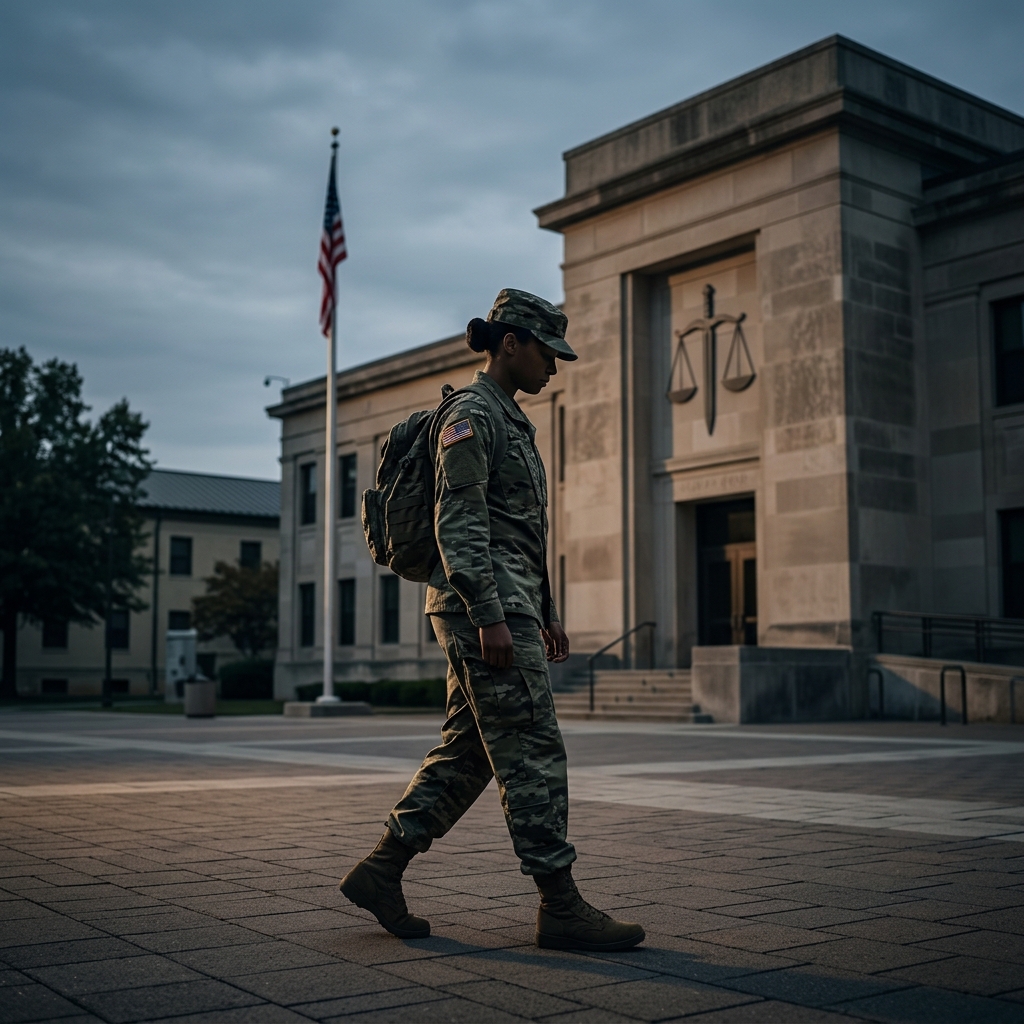
Sexual assault in the military is both a serious crime and a complex legal issue. It is governed by the
Uniform Code of Military Justice (UCMJ)
and by policies unique to the military environment, and it carries long‑term consequences for survivors, accused service members, and entire units.This guide explains how military sexual assault is defined, how cases move through the military justice system, what rights and options survivors have, and how recent reforms are changing the way these offenses are handled.
What Counts as Military Sexual Assault?
In military law, sexual assault is an umbrella term covering a range of non‑consensual sexual offenses, including rape, sexual assault, aggravated sexual contact, and abusive sexual contact. The U.S. Department of Defense defines sexual assault as intentional sexual contact characterized by force, threats, intimidation, abuse of authority, or lack of consent.
- Rape – Sexual acts carried out using force, threats of serious harm or death, or after rendering the victim unconscious or incapable of resisting.
- Sexual assault – Sexual acts without consent, including when the victim is asleep, unconscious, unaware, or unable to consent due to intoxication or disability.
- Aggravated sexual contact – Non‑consensual sexual touching under more serious circumstances, such as involving force or threats.
- Abusive sexual contact – Non‑consensual sexual touching that does not meet the more severe criteria of aggravated contact but is still criminal.
These offenses are generally prosecuted under
Article 120 of the UCMJ
, which prohibits non‑consensual sexual acts and sexual contact.Consent in the Military Context
Consent is central to every military sexual assault case. Under Department of Defense policy, consent means a freely given agreement to the conduct in question; a person cannot consent when asleep, unconscious, or otherwise incapacitated. Silence, previous sexual history, or fear of consequences do not equal consent.
Common situations where consent is legally absent include:
- The victim is intoxicated to the point of being unable to understand or control their actions.
- The victim is coerced by threats, intimidation, or abuse of rank or authority.
- The victim is deceived into believing the act serves a professional or medical purpose.
- The victim is asleep, unconscious, or unaware a sexual act is occurring.
Military Sexual Trauma: Beyond the Legal Definition
The U.S. Department of Veterans Affairs uses the term Military Sexual Trauma (MST) to describe sexual harassment or sexual assault experienced during military service. MST is broader than criminal definitions and includes experiences that may not lead to prosecution but still cause significant harm.
MST can involve:
- Being physically forced into sexual activity or experiencing rape or sexual assault.
- Unwanted sexual touching, groping, or pressure for sexual favors.
- Threatening sexual comments, advances, or repeated sexual harassment.
- Non‑consensual recording, sharing, or stalking related to sexual activity.
These experiences can occur on or off duty, on or off base, and may involve superiors, peers, subordinates, or civilians. MST is strongly linked to
post‑traumatic stress disorder (PTSD), depression, anxiety, substance use disorders, and difficulties with post‑service readjustment
.Prevalence and Impact
Research and official surveys underscore that sexual assault and harassment remain significant problems in the armed forces.
| Measure | Women | Men | Source |
|---|---|---|---|
| Sexual assault in previous year (active duty, 2018) | 6.2% | 0.7% | VA summary of DoD survey |
| Sexual harassment in previous year (active duty, 2018) | 24.2% | 6.3% | VA summary of DoD survey |
| Lifetime MST among veterans (screened) | ≈ 1 in 3 | ≈ 1 in 50 | VA clinical data |
| Unwanted sexual contact in previous year (active duty, 2023) | 6.8% | 1.3% | 2023 WGR survey |
Studies show that experiencing sexual assault in the military is associated with PTSD risk comparable to or greater than severe combat exposure. MST also increases the likelihood of other mental health conditions and can affect physical health and long‑term functioning.
The Legal Framework: UCMJ and Article 120
All service members are subject to the
Uniform Code of Military Justice
, a federal criminal code tailored to the military. Sexual offenses are primarily charged under Article 120, and in some circumstances under related provisions (for example, offenses involving trainees or certain relationships may be charged separately).Key Criminal Offenses
Article 120 and related provisions cover multiple forms of non‑consensual sexual conduct.
- Rape – Sexual acts committed by force, by threats of death or grievous bodily harm, after rendering the victim unconscious, or by administering drugs or intoxicants without consent to substantially impair the victim.
- Sexual assault – Sexual acts done by placing a person in fear, exploiting their incapacity to consent, or proceeding without consent when the victim is asleep, unconscious, intoxicated, or otherwise disabled.
- Aggravated sexual contact – Sexual touching under similarly serious circumstances, without consent.
- Abusive sexual contact – Sexual touching without consent that does not involve the same level of force or aggravation but still violates military law.
Convictions for these offenses carry severe penalties, including lengthy confinement, total forfeiture of pay and allowances, and dishonorable or bad‑conduct discharges, often with mandatory punitive separation for the most serious offenses.
Military Justice vs. Civilian Criminal Systems
Sexual assault can be prosecuted in civilian courts, military courts, or both, depending on jurisdiction and the status of those involved. Key differences between military and civilian systems include:
- Scope of authority – Commanders and designated military prosecutors historically made charging decisions, though this is changing with recent reforms.
- Court‑martial process – Trials are conducted by court‑martial with military judges and panel members (similar to juries), and procedures defined by the UCMJ and Manual for Courts‑Martial.
- Disciplinary focus – In addition to confinement, the military can impose punitive discharges and loss of rank, pay, and benefits.
- Command climate – Units are affected by allegations and outcomes, and the chain of command plays a significant role in the environment that survivors and accused members experience.
Reporting Military Sexual Assault: Options and Obstacles
Reporting sexual assault in the military can be daunting. Survivors often face fears about career impact, retaliation, stigma, and the possibility that their claims will not be believed. The military has created specialized reporting avenues and support programs, but barriers remain.
Restricted vs. Unrestricted Reporting
Since 2005, the military has offered two main forms of reporting for sexual assault: Restricted and Unrestricted.
- Restricted reporting
- Allows survivors to disclose the assault confidentially to certain professionals (such as Sexual Assault Response Coordinators or healthcare providers).
- Provides access to medical care, counseling, and advocacy services.
- Does not trigger an official investigation or notify the chain of command.
- Unrestricted reporting
- Notifies law enforcement and command, triggering a formal investigation.
- Can lead to administrative actions or court‑martial.
- Still provides access to support services and victim advocacy.
Choosing between these options involves balancing privacy, safety, the desire for accountability, and fears about career consequences.
Common Barriers to Reporting
Research on MST and sexual assault in the armed forces highlights recurring obstacles:
- Fear of retaliation or harm to one’s career or reputation.
- Concerns that the perpetrator, especially if a superior, will not be held accountable.
- Lack of trust in the chain of command or investigative process.
- Shame, self‑blame, or desire to avoid reliving the trauma.
- Belief that the incident was not serious enough, or uncertainty about whether it “counts” as assault.
These barriers can delay or prevent reporting, which in turn complicates investigations and can affect access to medical and mental health care.
Rights of Survivors and Accused Service Members
Both survivors and accused service members have important legal rights in the military justice system. Understanding these rights can help individuals navigate a difficult process.
Survivor Protections and Support
Survivors of sexual assault in the military may be entitled to:
- Confidential consultation with victim advocates or healthcare providers.
- Access to medical care, mental health services, and MST‑related treatment through the VA after service.
- Information about the status of investigations and proceedings.
- Opportunities to provide input, such as victim impact statements, at sentencing.
- Protection from retaliation under military whistleblower and anti‑reprisal policies.
Programs such as the Sexual Assault Prevention and Response (SAPR) program are designed to coordinate services, provide advocacy, and improve prevention efforts across the services.
Rights of the Accused
Service members accused of sexual assault are also afforded procedural rights under the UCMJ.
- The absolute right to remain silent and avoid self‑incrimination when questioned about suspected UCMJ violations.
- The right to consult with and be represented by military defense counsel, and in many cases, civilian counsel at their own expense.
- The right to a fair and impartial trial, including the ability to challenge evidence and cross‑examine witnesses.
- Protection against unlawful command influence and coercion in the justice process.
These rights are fundamental to preserving due process and ensuring that serious allegations are evaluated through a structured legal system.
Recent Reforms in Handling Military Sexual Assault
In response to years of criticism and advocacy, the military has begun significant reforms to how sexual assault cases are handled. One major change stems from recent legislation and executive action altering who makes prosecutorial decisions.
Shifting Authority Away from Commanders
An executive order implementing changes directed by the National Defense Authorization Act set an effective date in late 2023 for new procedures in certain serious crimes, including sexual assault. Under these reforms:
- Independent military prosecutors, rather than unit commanders, are increasingly responsible for deciding whether to bring charges in qualifying cases.
- The aim is to reduce perceived bias, improve consistency, and boost confidence in the justice system among survivors and service members.
- These changes fit within broader efforts to professionalize military justice and respond to concerns raised by survivors, advocates, and oversight bodies.
While implementation details vary across services and continue to evolve, the direction of policy is toward greater independence in prosecuting sexual assault and related offenses.
Health, Recovery, and Long‑Term Support
The impact of military sexual assault and MST extends far beyond the courtroom. Survivors may struggle with immediate and long‑term health consequences, and many require ongoing support to rebuild their lives.
Psychological and Physical Effects
Research shows that MST is strongly associated with:
- Post‑traumatic stress disorder (PTSD), often at rates comparable to or exceeding those associated with intense combat exposure.
- Depressive disorders and anxiety disorders.
- Dissociative symptoms, eating disorders, and substance use disorders.
- Chronic pain, sleep disturbances, and other physical health problems.
The military context can compound these effects, particularly when survivors face disbelief, retaliation, or barriers to care, or when they continue serving alongside perpetrators.
Accessing Care and Benefits
The Department of Veterans Affairs recognizes MST as a significant health issue and offers specialized treatment and screening. Survivors can often access care even if they did not report the assault while in service or if the incident was not prosecuted.
Key points include:
- VA health facilities routinely screen for MST among veterans.
- Survivors can receive evidence‑based treatments for PTSD and other MST‑related conditions.
- Care is available regardless of the veteran’s service‑connected disability status, and MST‑related conditions may support disability claims.
Practical Steps for Service Members and Veterans
For those currently serving or who have served, understanding practical steps can make a difficult situation more manageable.
- If you are a survivor currently in service
- Consider speaking confidentially with a victim advocate, healthcare provider, or chaplain.
- Learn the difference between restricted and unrestricted reporting and choose the option that best fits your needs.
- Document events and communications where safe to do so.
- Seek medical and psychological support early; MST‑related care is critical even if you never pursue legal action.
- If you are a veteran
- Ask your local VA about MST screening and available programs.
- Explore disability benefits if MST has affected your health or ability to work.
- Connect with peer support groups and advocacy organizations focused on military survivors.
- If you are accused of an offense
- Exercise your right to remain silent until you have legal counsel, especially in law enforcement interviews.
- Request military defense counsel and consider consulting civilian counsel for additional support.
- Follow legal advice closely; sexual assault cases carry severe penalties and long‑term consequences.
Frequently Asked Questions (FAQs)
Is sexual assault in the military treated differently from civilian cases?
Yes. While the core concept of sexual assault is similar, the military uses the UCMJ and court‑martial system, imposes unique punishments such as punitive discharges, and historically relied heavily on commanders for prosecutorial decisions. Recent reforms are shifting some authority to independent military prosecutors.
Can a sexual assault be both a military and civilian case?
It can. Depending on where the assault occurred and the status of those involved (service members, dependents, civilians), civilian law enforcement may have jurisdiction alongside the military. Sometimes civilian authorities prosecute, sometimes the military, and in some cases they coordinate to determine the most appropriate venue.
Do I need to have reported the assault while on active duty to get VA care for MST?
No. The VA offers MST‑related care regardless of whether the assault was reported at the time or led to a conviction. Survivors can disclose their experiences and receive treatment even years after leaving service.
What if my perpetrator was in my chain of command?
Assaults by superiors can create additional barriers and fears of retaliation. Restricted and unrestricted reporting options, along with anti‑reprisal policies and recent reforms aimed at independence in prosecution, are intended to address these risks, though challenges remain in practice.
Is MST only about assault, or does harassment count?
MST covers both sexual assault and sexual harassment experienced during military service. Many veterans report harassment that, while not prosecuted as a crime, still causes significant psychological and physical harm and qualifies for MST‑related care.
References
- Military Justice – Sexual Assault Prevention and Response (SAPR) — U.S. Department of Defense. 2023-10-01. https://www.sapr.mil/military-justice
- Military Sexual Assault Defense and UCMJ Article 120 — Military Justice Attorneys. 2024-01-15. https://www.militaryjusticeattorneys.com/practice-areas/court-martial/military-sexual-assault-defense/
- Military Sexual Trauma — U.S. Department of Veterans Affairs / National Center for PTSD. 2022-11-30. https://www.ptsd.va.gov/professional/treat/type/sexual_trauma_military.asp
- Military Sexual Trauma Facts and Statistics — Hill & Ponton, P.A. 2023-08-10. https://www.hillandponton.com/facts-on-military-sexual-trauma-and-statistics/
- Prevalence of Sexual Assault in the Military — RAND Corporation. 2020-06-01. https://www.rand.org/pubs/tools/TLA746-2/handbook/resources/data-on-sexual-assault-in-the-military.html
- Military Sexual Trauma: Gender, Military Cultures, and the Medicalization of Suffering — C. A. Brewin et al., Frontiers in Psychiatry (PMC8884252). 2022-03-08. https://pmc.ncbi.nlm.nih.gov/articles/PMC8884252/
- Executive Order Changes How Military Handles Sexual Assaults — U.S. Department of Defense / War.gov news release. 2023-12-27. https://www.war.gov/News/News-Stories/Article/article/3479106/executive-order-changes-how-military-handles-sexual-assaults/
Similar Articles








Read full bio of Sneha Tete




