
Understanding Military Divorce Trends and Challenges
An in-depth look at military divorce rates, the unique pressures on service families, and how law and policy shape these relationships.
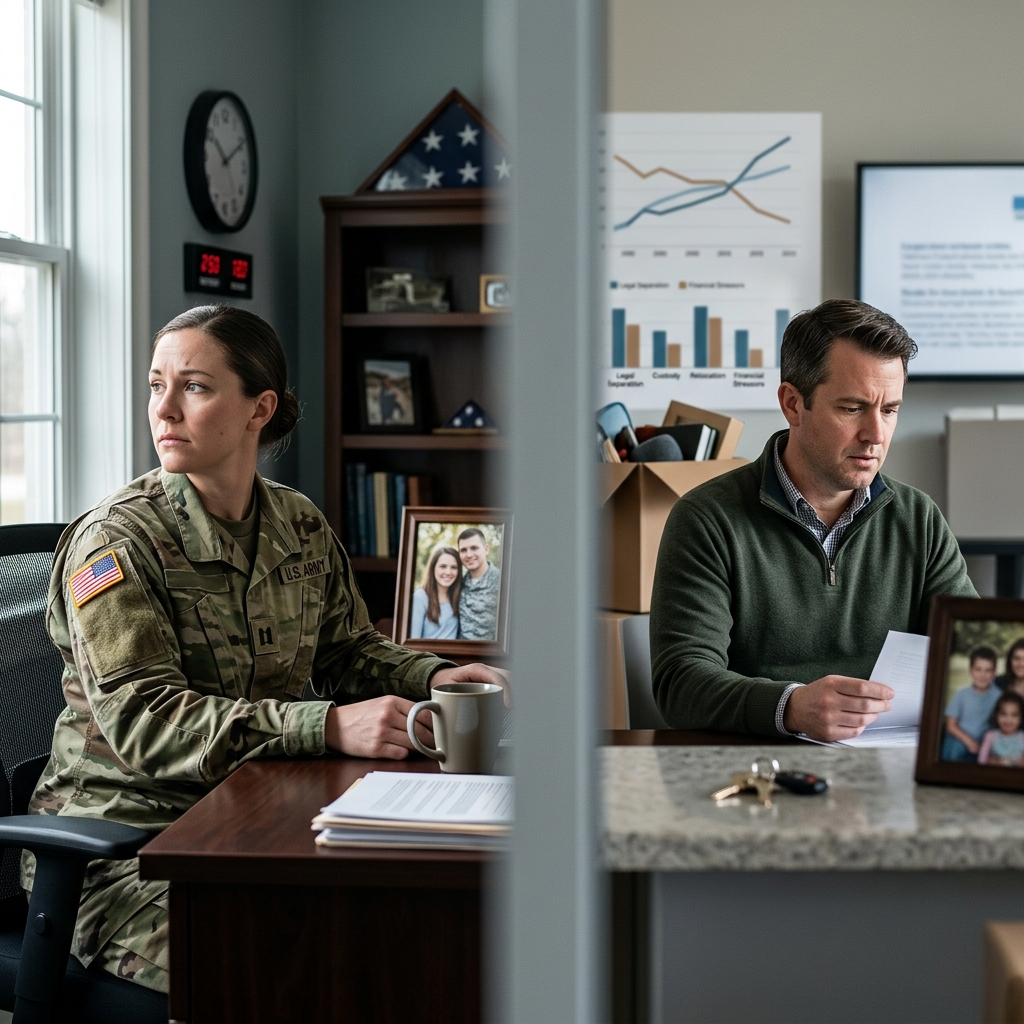
Military marriage combines the usual demands of family life with the distinctive pressures of uniformed service. While public perception often assumes that military couples face dramatically higher divorce rates, the reality is more nuanced, shaped by how divorce is measured, the intensity of deployments, and the legal framework surrounding military families.
This article explains how military divorce trends are tracked, what factors put strain on service marriages, how rates compare to civilian couples, and why the legal process for military divorce can be more complex. It is inspired by discussions of recent military divorce data but is written entirely in original language for informational and educational purposes.
Military Divorce in Context: How Common Is It?
Statistics on divorce in the armed forces must be interpreted carefully, because the methods used to measure military divorce differ from those used for the general population. Military data typically looks at active-duty personnel, while civilian statistics are often based on divorces per 1,000 people or per 1,000 married women.
How the Pentagon Measures Divorce
Data reported by the U.S. Department of Defense generally expresses the divorce rate as the percentage of married active-duty service members who were divorced during a fiscal year, compared with the number who were married at the beginning of that year. This produces a percentage that can be compared across branches and ranks.
- The military divorce rate has hovered around 3% of married service members in recent years, showing relative stability rather than dramatic spikes.
- Rates differ by rank: enlisted personnel tend to have higher divorce rates than commissioned officers.
- Some branches, such as the Marine Corps and Air Force, have tended to report slightly higher divorce rates than others, such as the Navy.
Comparing Military and Civilian Divorce
Civilian divorce is often tracked through national statistics, such as those compiled by the National Center for Health Statistics and the Centers for Disease Control and Prevention (CDC). For example, the U.S. divorce rate in recent years has been around 2–3 divorces per 1,000 people. These metrics are not directly comparable to the Pentagon’s percentages but can offer a rough sense of scale.
| Population | Metric Type | Recent Approximate Rate | Notes |
|---|---|---|---|
| Active-duty service members | % of married personnel divorced in a fiscal year | ~3% of married service members | Tracks only those in service; excludes veterans and spouses. |
| U.S. general population | Divorces per 1,000 total population | ~2.4–2.9 per 1,000 people | Includes civilians, veterans, and non-military households. |
Different measurement methods mean that statements like “military couples divorce more” or “military couples divorce less” can be misleading unless the underlying data and definitions are explained. Some sources also rely on survey-based estimates, such as the General Social Survey or U.S. Census, which may produce different figures for divorce among households with at least one service member.
Factors That Strain Military Marriages
Even when headline divorce rates appear similar to those in the civilian world, military couples often face distinctive challenges. Research and official reporting highlight several recurring stressors that can destabilize service marriages.
Deployment and Separation
Extended and repeated deployments are among the most widely cited pressures on military families. Analysis of survey data indicates that deployment can substantially increase the odds of marital instability and divorce.
- Long physical separation can erode everyday intimacy and communication.
- Spouses at home may shoulder solo parenting and household responsibilities for months or years.
- Reintegration after deployment can be emotionally difficult, especially after combat or high-stress assignments.
Some research suggests that repeated deployments can raise divorce risk by more than one and a half times compared to couples without such disruptions. The strain may be greatest in the early years of marriage, when relationship routines are still forming.
Rank, Income, and Age
Military divorce rates vary significantly between enlisted personnel and officers. Enlisted members typically marry younger, often with fewer financial resources and less stable housing, which can compound stress.
- Enlisted divorce rates have been reported around 3.5%, compared with roughly 1.7% for officers in some recent data.
- Economic pressure, including lower pay and less savings, can magnify the impact of deployments and relocation.
- Younger marriages, whether military or civilian, are generally more vulnerable to separation and divorce.
Gender and Role Expectations
Gender plays a noticeable role in military divorce statistics. In several branches, women service members show higher divorce rates than their male counterparts.
- In the Marine Corps, for example, women have been reported to divorce at rates several times higher than men.
- Women in uniform may face unique role conflicts as both service members and primary caregivers.
- Traditional expectations about which partner should sacrifice career prospects for the family can be reversed or intensified in military households.
Relocation and Social Isolation
Frequent permanent change of station (PCS) moves can disrupt social networks and support systems. Each relocation may require a spouse to find new work, locate child care, and rebuild local friendships.
Key consequences of repeated moves include:
- Spouses may experience career interruptions, weakening long-term earnings and professional identity.
- Children must repeatedly adapt to new schools and communities.
- Couples may struggle to establish long-term ties with extended family or local institutions.
Legal Features That Make Military Divorce Different
Beyond emotional and social pressures, military divorce involves specific legal rules that are not present in purely civilian cases. These rules can affect the timing of a divorce, the division of benefits, and where the case may be filed.
Jurisdiction and Where to File
Because service members can be stationed far from their legal residence, questions of jurisdiction—where a divorce case can be brought—are common. State law generally governs divorce, but federal statutes provide some protections.
- Service members often maintain a legal home state even while living elsewhere for duty.
- Spouses may have moved repeatedly and feel rooted in a different state from the service member.
- Legal residency rules determine which court has authority to grant the divorce and divide property.
These jurisdictional questions can require advice from a lawyer familiar with military family law, especially when spouses live in different states or overseas.
Protection from Default Judgments
U.S. law includes safeguards to prevent service members from being unfairly disadvantaged in civil proceedings, including divorce, when military duties make participation difficult. For example, the Servicemembers Civil Relief Act (SCRA) can allow for delays in court actions if a service member’s duties materially affect the ability to appear.
These protections are not intended to prevent divorce but to ensure that service members have a fair opportunity to respond and participate in proceedings that could significantly affect their rights.
Division of Military Retirement and Benefits
One of the most distinctive legal issues in military divorce is the division of military retired pay and related benefits. While state courts generally handle property division, federal law sets rules on how military retirement can be treated in divorce.
- Military retired pay is often considered marital property subject to division, but the method and share depend on state law.
- The duration of the marriage during service can influence access to certain benefits.
- Health coverage and other support programs may change once a divorce is finalized.
Because these benefits may be a crucial part of a couple’s long-term financial planning, careful legal analysis is needed to avoid unintended consequences.
Support Programs for Military Families
Over the past two decades, the armed services and associated agencies have expanded programs designed to support military families, including counseling, financial planning, and deployment support. However, some research suggests that these initiatives have not dramatically changed overall divorce trends in the forces.
Counseling and Relationship Support
Military installations often provide access to chaplains, therapists, and family support centers. These can help couples manage stress before it leads to separation.
- Pre-deployment briefings may include information on maintaining communication and expectations during separation.
- Marriage enrichment programs offer structured workshops to build skills such as conflict resolution and financial cooperation.
- Confidential counseling can be available to both service members and spouses through military or civilian providers.
Practical and Financial Assistance
Many bases and commands promote practical support for spouses who remain at home during deployments, including information sessions, volunteer networks, and financial education.
- Resources can help spouses manage budgeting, benefits, and access to care while their partner is away.
- Child care, youth activities, and schooling assistance aim to reduce daily stressors.
- Some programs encourage mentorship among more experienced military families.
Even with these resources, divorce rates have not shown large declines, suggesting that broader structural factors—deployment cycles, the nature of military work, and the demands placed on families—continue to exert powerful influences on marital stability.
Planning for a Military Divorce: Practical Considerations
For couples who decide that divorce is the appropriate path, careful planning is essential, particularly when one spouse is in uniform. While each situation is unique and legal advice should be obtained from a qualified professional, several general considerations often arise in military divorces.
Key Issues to Discuss with Counsel
- Jurisdiction and residence: Which state’s law will govern the divorce, and where should the case be filed?
- Deployment schedules: How will current or future deployments affect court timelines, parenting plans, and transitions?
- Property and benefits: How will military retirement, housing allowances, and other benefits be treated under applicable law?
- Parenting arrangements: What parenting plan can realistically accommodate training, temporary duty, and possible overseas assignments?
Emotional and Family Support
Divorce is not solely a legal event; it also involves emotional readjustment and, often, family restructuring. Military families may find it helpful to engage both legal and non-legal support systems.
- Individual or family counseling to manage stress, grief, and change.
- Peer groups for spouses or veterans who have experienced divorce in a military context.
- Careful planning around transitions for children, especially when relocation is involved.
Frequently Asked Questions About Military Divorce
Do military couples divorce more often than civilian couples?
Available data indicates that overall military divorce rates, when measured as the percentage of married active-duty members who divorce each year, have been around 3%, which is broadly comparable to civilian divorce trends when adjusted for different measurement methods. However, some subgroups—such as certain branches, enlisted ranks, or women service members—show higher rates than others.
How does deployment affect the risk of divorce?
Research using survey data suggests that deployment significantly increases the risk of marital instability, and repeated deployments can raise divorce risk by more than one and a half times. The impact depends on factors such as relationship quality before deployment, duration of separation, and available support networks.
Are military benefits automatically lost after divorce?
Military divorce does not automatically strip all benefits from a former spouse, but the outcome depends heavily on factors such as the length of the marriage, overlap with military service, and applicable federal and state laws. Military retired pay, health coverage, and other benefits may be divided or modified through court orders and administrative rules, so professional legal advice is essential.
Why are divorce rates higher for enlisted personnel?
Enlisted service members often marry younger, with less financial stability and fewer resources, and face demanding workloads and deployments. These circumstances, combined with the challenges of relocation and limited control over duty assignments, are believed to contribute to higher divorce rates compared with officers.
Where can military families find help if they are considering divorce?
Families can seek information from base legal offices, family support centers, and civilian attorneys who understand military family law. Counseling services, chaplains, and community organizations also provide support for relationship difficulties and transitions.
References
- FastStats: Marriage and Divorce — National Center for Health Statistics, CDC. 2023-02-28. https://www.cdc.gov/nchs/fastats/marriage-divorce.htm
- Military Divorce Rate Statistics Published by The Pentagon — Jamie Graham & Associates, PLLC. 2020-02-25. https://www.jamiegrahamlaw.com/blog/military-divorce-rate-statistics-published-pentagon/
- Data Shows Stable Military Divorce Rate — RPM Law. 2020-01-22. https://www.rpmlawaz.com/military-divorce/data-shows-stable-military-divorce-rate/
- Military vs Civilian Divorce Trends: What the Data Shows — L. Hudspeth Family Law. 2024-03-15. https://www.lhudspethfamilylaw.com/military-vs-civilian-divorce-trends/
- 20+ Military Marriage Divorce Statistics — WiFiTalents. 2026-01-05. https://wifitalents.com/military-marriage-divorce-statistics/
Similar Articles








Read full bio of Sneha Tete


