Ending a marriage is both an emotional and a legal decision. If you live in Michigan and are considering divorce, it helps to understand the basic requirements, the forms you will need, and the steps the court expects you to follow. This guide walks through the Michigan divorce process in clear language, so you can better prepare for what lies ahead.
Michigan as a No‑Fault Divorce State
Michigan is a no‑fault divorce state. That means you do not have to prove that your spouse did anything wrong—such as adultery or cruelty—to ask the court to end the marriage. Instead, the law focuses on whether the marriage has broken down beyond repair.
Under Michigan law, your divorce paperwork must state that there has been a breakdown of the marriage relationship to the extent that the marriage cannot be preserved and there is no reasonable likelihood of reconciliation. This is often called an “irretrievable breakdown” of the marriage.
Basic Eligibility: Residency and Where to File
Before the court will accept your divorce case, you must meet specific residency requirements and file in the correct court.
Residency Rules
- State residency: Either you or your spouse must have lived in Michigan for at least 180 days (approximately six months) immediately before filing the complaint for divorce.
- County residency: You must have lived in the county where you file for at least 10 days immediately before filing, unless limited exceptions apply.
These rules help the court confirm that Michigan has authority over your case and that you are using the correct county’s circuit court.
Which Court Hears Divorce Cases?
Divorce cases in Michigan are filed in the Family Division of the Circuit Court for the county where you or your spouse lives. The clerk’s office in that court accepts the paperwork, opens your case, and assigns a judge.
| Requirement | What It Means |
|---|---|
| State residency | At least one spouse has lived in Michigan for 180 days before filing. |
| County residency | Filing spouse has lived in the county for at least 10 days before filing. |
| Court | File in the Family Division of the Circuit Court in that county. |
Core Forms Needed to Start a Michigan Divorce
Michigan uses standardized forms to begin a divorce case. While some details change if you have minor children, the basic paperwork is similar in most cases.
Key Documents to Open the Case
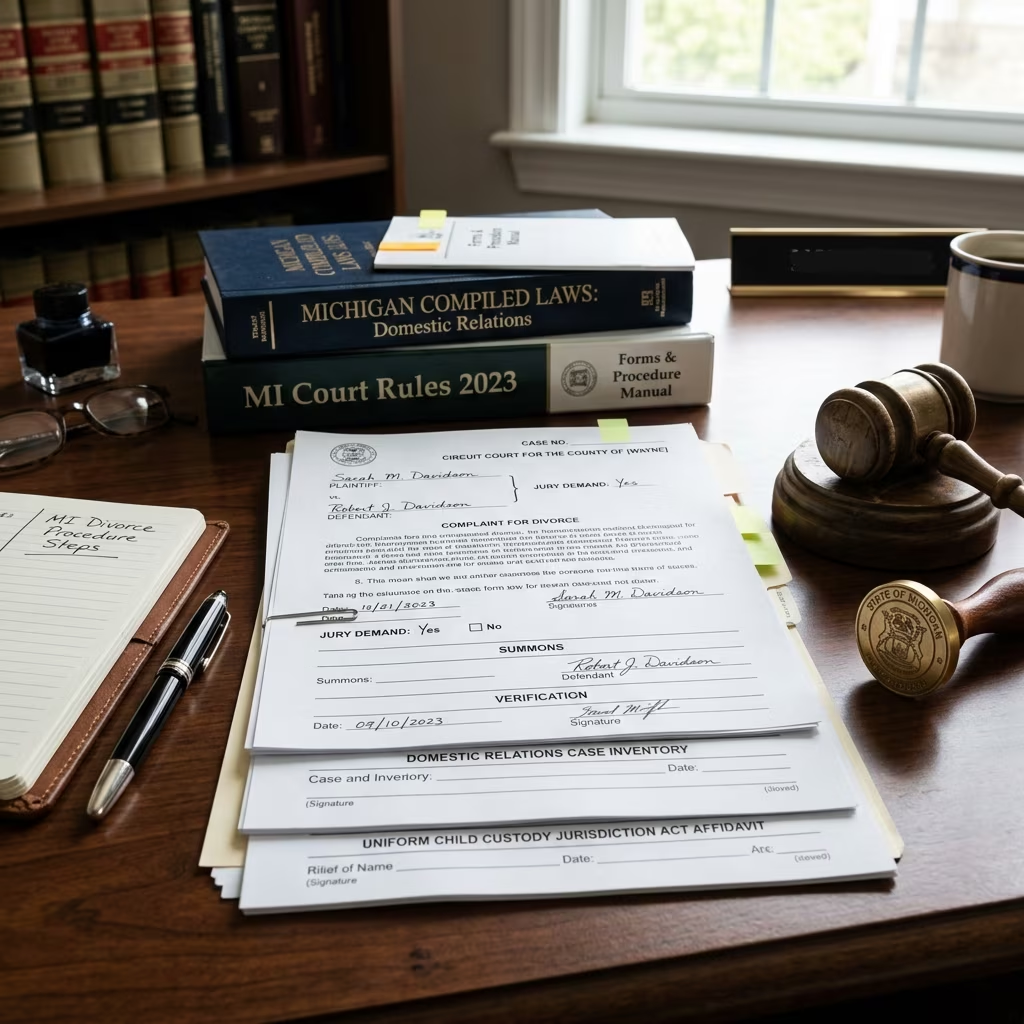
- Complaint for Divorce: The main document that asks the court to dissolve the marriage. It includes basic facts about you, your spouse, any children, and what you are asking for in terms of property division, custody, support, and other relief.
- Summons: An official notice telling your spouse that a lawsuit (the divorce) has been filed and setting deadlines for a response.
- Record of Divorce or Annulment: An information form that allows the state to keep vital records related to divorces.
- Confidential forms for cases with children: When minor children are involved, you may need additional child‑related forms, such as inventories that list prior or ongoing custody matters.
Where to Get Official Forms
Divorce forms can usually be obtained from:
- The clerk’s office at your county courthouse
- Official Michigan court or state websites that provide standardized family law forms
- Legal aid services or attorneys who practice family law in Michigan
Online tools offered by Michigan legal help services can assist you in preparing forms yourself, especially in simpler cases.
Filing the Complaint and Starting the Case
Once you have gathered and completed the forms, the next step is formally filing them with the court.
Submitting Your Documents
- Bring the signed complaint, summons, and any required supporting forms to the circuit court clerk in the county where you qualify to file.
- Pay the filing fee, unless you qualify to have it waived based on your income.
- After your paperwork is accepted, the court assigns a case number and a judge, officially opening the divorce case.
Serving Your Spouse
Filing the complaint is only the first step. You must also give legal notice to your spouse by serving them with copies of the documents.
Service typically means:
- Having an adult who is not a party to the case personally deliver the paperwork to your spouse; or
- Sending the forms by registered or certified mail, sometimes with restricted delivery, depending on court rules.
The person who performs service completes a proof or affidavit of service that is filed with the court to show that proper notice was given.
How Your Spouse Can Respond
After your spouse receives the divorce papers, they have a limited time to respond to the complaint.
Response Deadlines
- If served in person within Michigan, your spouse usually has 21 days to file an answer with the court.
- If served by mail or if your spouse is outside the state, the response period is typically 28 days.
Types of Cases: Contested vs. Uncontested
What happens next depends on whether your spouse files an answer and whether you agree on the main issues.
- Uncontested divorce: Your spouse either does not respond (leading to a potential default judgment) or responds but agrees with most or all of your requests. The case may move more quickly and often involves fewer hearings.
- Contested divorce: Your spouse files an answer that disagrees with parts of your complaint, such as property division, custody, or support. The case will continue through negotiation, discovery, and possibly trial.
Waiting Periods and Case Timelines
Michigan law imposes minimum waiting periods before a divorce can be finalized.
- Cases without minor children: The shortest possible waiting period is 60 days from the date the complaint is filed.
- Cases with minor children: There is generally a waiting period of 180 days. This longer timeline allows time to address parenting plans, custody arrangements, and child support.
The overall length of your case can be longer than these minimums, especially if there are disputes, complex assets, or scheduling issues with hearings and conferences.
Temporary Orders and the Discovery Phase
Many Michigan divorce cases involve temporary orders and a detailed information‑gathering stage called discovery.
Temporary Orders
Early in the case, the court may issue temporary orders that last until the divorce is finalized. These orders can address:
- Where each spouse will live
- Temporary child custody and parenting time
- Interim child support and spousal support
- Who pays certain bills or maintains insurance coverage
In some situations, the court may issue emergency or ex parte orders (orders granted without the other party present) when immediate action is necessary, especially in matters involving children or safety.
The Discovery Process
Discovery is the formal process of exchanging information so that property division, support, and other issues can be decided fairly.
Discovery tools may include:
- Written questions (interrogatories) requiring detailed answers about finances and assets
- Requests for documents, such as bank statements, retirement account records, tax returns, and deeds
- Depositions, where parties or witnesses answer questions under oath
The goal is to identify marital and separate property, understand each spouse’s income and expenses, and gather any information relevant to custody or support.
Mediation, Negotiation, and Settlement
Most divorces are resolved through agreements rather than full trials. Michigan courts often encourage spouses to use mediation and settlement conferences to narrow or resolve disputes.
Mediation
Mediation involves a neutral third party who helps you and your spouse discuss issues such as property division, parenting time, and support.
- Mediation may be ordered by the court, depending on the county and the nature of the disagreements.
- Any agreement reached in mediation must still be reviewed and approved by the judge and included in the final judgment.
Settlement Conferences
Courts commonly schedule formal settlement conferences, requiring both parties to attend.
- Attorneys, if involved, meet with the judge to discuss remaining issues and potential resolutions.
- The conference aims to reduce the number of contested issues before trial or to reach a full settlement.
Court Hearings and Trial
If you and your spouse cannot settle all issues, the court will hold hearings or a trial where the judge makes the final decisions.
At trial, each side can present:
- Testimony from the spouses and relevant witnesses
- Documents and other evidence about finances, parenting, and property
- Legal arguments about how Michigan law should apply to the facts
After considering the evidence, the judge issues orders that ultimately become part of the final judgment of divorce.
The Final Judgment of Divorce
The case ends when the court signs and enters a Judgment of Divorce. This document is the official record that legally dissolves the marriage and outlines each spouse’s rights and responsibilities going forward.
What the Judgment Typically Covers
- Custody and parenting time: Who has legal and physical custody of minor children, and what the parenting schedule looks like.
- Child support: How much support is paid, by whom, and how it will be enforced.
- Spousal support (alimony): Whether one spouse will pay support to the other, and on what terms.
- Property division: How assets and debts are divided between the spouses.
- Other provisions: Insurance coverage, tax considerations, and any other case‑specific agreements.
Both parties usually have the opportunity to review and sign the proposed judgment before it is entered. Once the judgment is filed with the court, the divorce is final.
Common Questions About Michigan Divorce Forms and Process
Do I need a lawyer to file for divorce in Michigan?
No. Many people complete and file divorce forms without an attorney, especially in simpler cases. However, legal advice can be important if you have substantial property, complex financial issues, or disagreements about children. Official self‑help resources can guide you through basic forms and procedures.
What if my spouse refuses to sign the divorce papers?
Your spouse cannot stop the divorce simply by refusing to sign. As long as you meet the residency requirements and properly serve your spouse, the court can move forward, and you may be able to obtain a default judgment if they do not respond.
Can we agree on everything and avoid multiple hearings?
Yes. If you and your spouse reach agreement on all major issues—property, custody, support—the case is generally simpler. The court will still review your settlement to make sure it meets legal standards, but you may have fewer hearings and a shorter overall process, subject to the mandatory waiting periods.
What happens to our property in a Michigan divorce?
Michigan courts divide property based on principles of fairness, considering factors such as the length of the marriage, each spouse’s contributions, and financial circumstances. Discovery and negotiation help identify all assets and debts so they can be fairly allocated.
How is child custody decided?
Custody decisions are guided by the best interests of the child, which can include the child’s relationship with each parent, stability of each household, and ability of each parent to care for the child. The final judgment sets out custody and parenting time arrangements, often reflecting parenting plans developed during the case.
References
- The Need-To-Know Basics Of Divorcing In Michigan — Thacker Sleight. 2020-01-15. https://www.thackersleight.com/blog/the-need-to-know-basics-of-divorcing-in-michigan
- What Is the First Step in Filing for Divorce in Michigan? — RPI Law. 2023-02-10. https://rpi.law/what-is-the-first-step-in-filing-for-divorce-in-michigan/
- Divorce in Michigan: Step by Step – Guide to the Legal Process — The Rubinstein Law Firm. 2022-06-01. https://www.therubinsteinfirm.com/about/blog/divorce-in-michigan-step-by-step-guide-to-the-legal-process_ae194.html
- FAQs About Michigan Divorce Laws — Cordell & Cordell. 2021-09-20. https://cordellcordell.com/resources/michigan/michigan-divorce-questions/
- 10 Steps of the Michigan Divorce Process — Rhoades McKee. 2020-11-05. https://www.rhoadesmckee.com/10-steps-of-the-michigan-divorce-process/
- Michigan Divorce — WomensLaw.org. 2023-05-10. https://www.womenslaw.org/laws/mi/divorce
- Divorce Proceeding Checklist — Michigan Courts. 2019-01-01. https://www.courts.michigan.gov/4ab2c2/siteassets/publications/benchbooks/qrms/family/domestic-relations/divorce-checklist.pdf
- Introduction to Divorce with Minor Children — Michigan Legal Help. 2022-03-01. https://michiganlegalhelp.org/resources/family/introduction-divorce-minor-children
- Do-It-Yourself Divorce — Michigan Legal Help. 2022-03-01. https://michiganlegalhelp.org/resources/family/do-it-yourself-divorce