
Understanding Massachusetts Child Custody Rules
A practical, plain-language guide to how Massachusetts courts handle child custody, parenting time, and the best interests of children in divorce and separation.
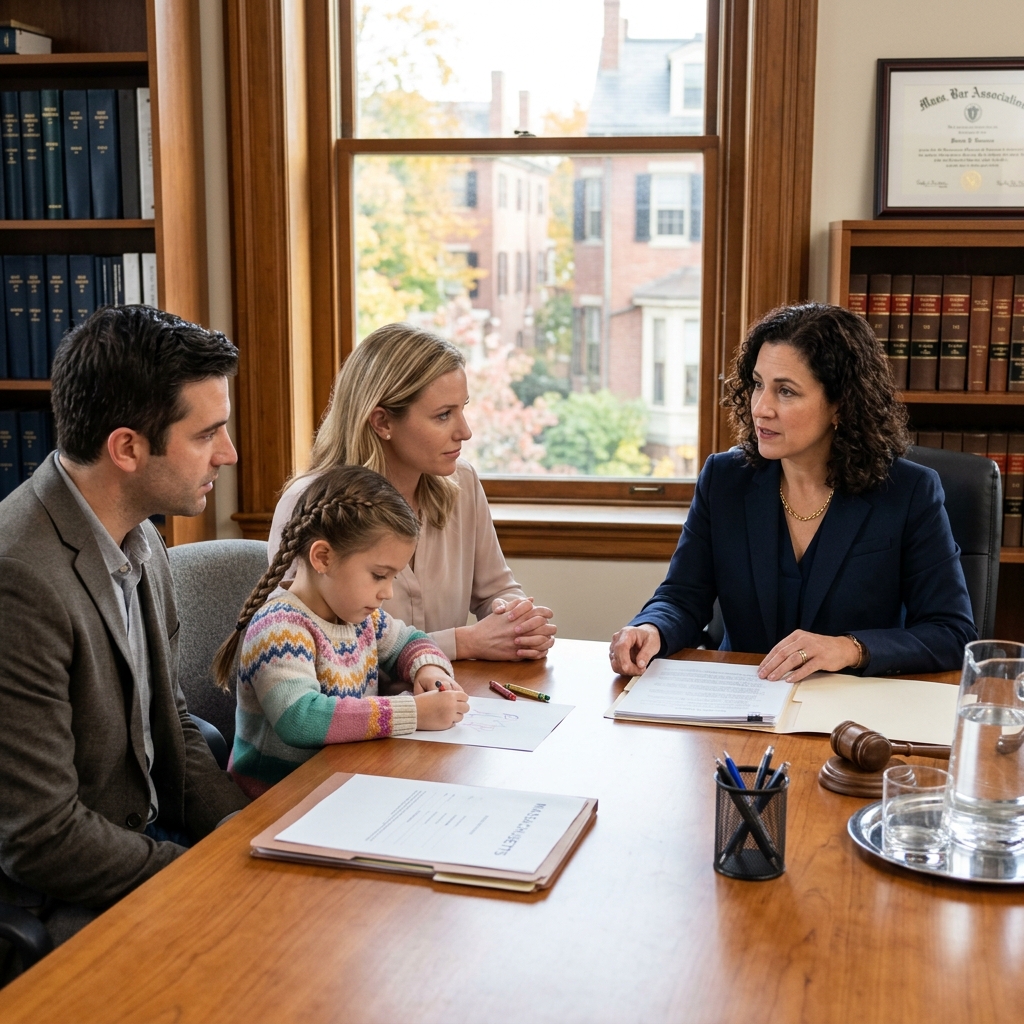
Massachusetts child custody laws are designed to protect children while giving parents clear rules about decision-making and parenting time. In most cases, courts start from the idea that children benefit from strong relationships with both parents, and then tailor custody orders to each family’s circumstances based on the child’s best interests.
Big Picture: How Custody Works in Massachusetts
In Massachusetts, custody is about who makes major decisions for a child and where the child lives on a daily basis. Family courts can divide those responsibilities between parents in different ways, and they use flexible parenting schedules to reflect the realities of work, school, and distance between homes.
At a high level, Massachusetts law:
- Treats married parents as having equal rights to their children unless a court orders otherwise.
- Gives the parent who gave birth automatic custody when parents are unmarried and no court order exists.
- Requires judges to focus on the child’s happiness, welfare, and safety over either parent’s preference.
- Allows custody to be shared, split, or given primarily to one parent, depending on the case.
Legal Custody vs. Physical Custody
Massachusetts courts separate custody into two main categories: legal custody and physical custody.
Legal Custody: Who Makes Big Decisions?
Legal custody is about who has the authority to make major decisions about the child’s upbringing and well-being. This includes choices related to:
- Education (school selection, special education services)
- Medical and mental health care
- Religious training and participation
- Significant extracurricular commitments
Under Massachusetts law:
- Sole legal custody means one parent has the right and responsibility to make these major decisions.
- Shared (joint) legal custody means both parents remain involved and must communicate and collaborate on major decisions.
For married parents without any court order yet, legal custody is automatically shared. When parents separate or divorce, the court can approve continued joint legal custody or grant sole legal custody to one parent if that better serves the child’s interests.
Physical Custody: Where the Child Lives
Physical custody deals with where the child resides from day to day and which parent is responsible for routine care such as meals, bedtime, and getting the child to school.
Massachusetts defines physical custody as:
- Sole physical custody: The child lives with one parent, and that parent supervises day-to-day care. The other parent typically has parenting time or visitation unless contact is unsafe.
- Shared (joint) physical custody: The child spends substantial, structured periods living with each parent. Courts aim for frequent and continued contact with both parents when shared physical custody is ordered.
In practice, shared physical custody does not always mean a perfectly equal 50/50 time split. Schedules often vary based on logistics, distance between homes, and the child’s school and activity schedule.
Custody Rights of Married vs. Unmarried Parents
Massachusetts law treats married and unmarried parents differently before any court order is in place.
| Parent Status | Default Legal Custody | Default Physical Custody |
|---|---|---|
| Married parents, no court order | Shared legal custody by both spouses | Shared physical custody; both have equal rights |
| Unmarried parents, no court order | Sole legal custody to the parent who gave birth | Sole physical custody to the parent who gave birth |
Married Parents
For married parents, the law assumes both have equal custody rights until a judge issues an order that changes those rights. When a divorce or separation case begins, temporary orders may adjust custody and parenting time, followed later by a final judgment that sets long-term arrangements.
Unmarried Parents and Parentage
For unmarried parents, Massachusetts gives the parent who gave birth both legal and physical custody by default until the court orders otherwise. This is true even if the other parent has established parentage.
The non-birth parent usually must:
- Legally establish parentage (for example, through a court finding or a voluntary acknowledgment of parentage), and
- File a custody, parenting time, or support case asking the court to award shared or sole custody rights.
The “Best Interests of the Child” Standard
When making custody and parenting time decisions, Massachusetts judges must prioritize the child’s welfare, happiness, and safety over either parent’s wishes. This is known as the “best interests of the child” standard, and it is central to every custody case.
Factors Courts Commonly Consider
While the law does not list a single closed set of factors, courts typically look at a broad range of considerations. Examples include:
- The child’s emotional bonds with each parent and other household members.
- The history of each parent’s involvement in daily care (meals, homework, medical appointments).
- The stability and safety of each household.
- Any history of domestic violence, abuse, or substance misuse.
- Each parent’s ability to meet the child’s educational, medical, and emotional needs.
- How a proposed arrangement affects continuity in the child’s school and community.
- The child’s own preferences, depending on age and maturity (the judge decides how much weight to give them).
Massachusetts law explicitly emphasizes that parental rights are equal absent misconduct, and that the child’s happiness and welfare should determine custody. Allegations of abuse or threats to safety can strongly influence the outcome and may lead to limits on contact or supervised visitation.
Common Custody and Parenting Time Arrangements
Within the legal framework, parents and courts can craft many different practical arrangements. Some commonly seen patterns include:
- Joint legal custody with primary physical custody to one parent, and regular parenting time for the other (such as alternate weekends, midweek visits, and shared holidays).
- Joint legal custody with shared physical custody on a structured schedule that divides time between households.
- Sole legal and physical custody to one parent where the other parent is unavailable or unsafe, often paired with limited or supervised parenting time.
Courts may approve parenting plans that include detailed calendars, transportation responsibilities, and rules about communication so that expectations are clear and enforceable.
Parenting Plans and Schedules
A parenting plan is the written roadmap for how parents will share time and responsibilities for their children. Massachusetts courts strongly encourage parents to develop their own plan whenever possible, as negotiated agreements often reduce conflict and better fit the family’s routines.
What Parenting Plans Usually Cover
Parenting plans can be very specific. They typically address:
- Regular weekly schedule, including school days and overnights.
- Holidays, school vacations, and special occasions (birthdays, religious events).
- Transportation arrangements and pickup/drop-off locations.
- Communication rules (phone calls, video chats, electronic messages).
- Procedures for dealing with schedule changes or disagreements.
Once a parenting plan is approved by the court, it becomes part of the custody order or divorce judgment and is legally enforceable.
How to Start a Custody Case in Massachusetts
The procedure for seeking a custody order depends on the parents’ relationship and the issues involved, but most cases go through the Probate and Family Court.
Common Ways a Custody Case Begins
- Divorce complaint: Married parents can request custody as part of a divorce case.
- Separate custody or support complaint: Parents may file stand-alone actions focused on custody and parenting time.
- Modification complaint: Parents with an existing order can ask the court to change custody or parenting time if circumstances have significantly changed.
Courts frequently issue temporary orders early in a case to stabilize the situation, and later make final decisions after reviewing evidence, hearing testimony, and considering any agreements reached by the parents.
Changing an Existing Custody Order
Custody arrangements are not fixed forever. If life circumstances change substantially, either parent can ask the court to modify an existing order.
When Modification May Be Considered
Judges usually require a significant change in circumstances and evidence that a different arrangement would better serve the child’s best interests. Examples include:
- Relocation that affects the current parenting schedule.
- New issues with a parent’s fitness (such as serious substance misuse or repeated unsafe behavior).
- Major shifts in the child’s needs, health, or development.
- Consistent failure by one parent to follow the existing parenting plan.
Parents file a complaint for modification, and the court re-examines custody and parenting time using the same best interests standard, informed by the new facts.
Domestic Violence and Protective Orders
When domestic violence is present, Massachusetts law offers additional safeguards that can affect custody outcomes.
A parent experiencing abuse can seek a protective order under Chapter 209A, sometimes called a restraining order. These orders can include provisions related to:
- Temporary custody of the children.
- No-contact or limited-contact rules between the parties.
- Exclusion of the abusive parent from the family home.
Evidence of abuse is highly relevant to the child’s safety and emotional well-being. Courts may restrict or supervise parenting time if necessary to protect the child and the other parent.
Massachusetts Resources for Parents
Parents dealing with custody questions in Massachusetts can turn to a number of official resources for reliable information and forms.
- Mass.gov child custody and parenting time pages provide explanations of custody types, filing procedures, and forms.
- Probate and Family Court offers guidance on court processes, local rules, and available services.
- Legal assistance organizations such as MassLegalServices publish educational materials on custody law and related protections, including domestic violence orders.
While many parents represent themselves, consulting an attorney or legal aid program can help clarify rights and responsibilities, especially in complex or high-conflict cases.
Frequently Asked Questions
Do Massachusetts courts favor mothers or fathers?
Massachusetts law states that the rights of parents are equal in the absence of misconduct, and that custody must be based on the child’s happiness and welfare. Courts do not automatically favor one parent; instead, they examine the facts of each case and apply the best interests standard.
Can parents share custody if they do not get along?
Shared legal or physical custody is possible even when communication is imperfect, but judges will consider whether parents can cooperate enough to make joint decision-making workable. If ongoing conflict or safety issues undermine collaboration, the court may award sole legal custody or structure parenting time to minimize harmful conflict.
Is joint physical custody common in Massachusetts?
Joint or shared physical custody is often achieved when parents agree on a plan and demonstrate that it is in the child’s best interests. Courts focus on frequent and continued contact with both parents where appropriate, but equal time splits are not automatic and depend on the child’s needs and practical constraints.
What happens if a parent ignores the custody order?
If a parent routinely violates a custody or parenting time order, the other parent can ask the court to enforce the order and may file a complaint for contempt. Judges have broad authority to impose remedies, which can include clarifying the schedule, adjusting future parenting arrangements, or, in serious cases, imposing sanctions.
Does child support change when custody is shared?
Massachusetts law states that awarding shared legal or physical custody does not, by itself, change a parent’s responsibility for child support. Child support is calculated under separate guidelines, and any modification usually requires showing a significant economic impact or other basis for revising the order.
References
- Mass. Gen. Laws ch. 208, § 31 (Custody of children) — Massachusetts General Court. 2024-01-02. https://malegislature.gov/Laws/GeneralLaws/PartII/TitleIII/Chapter208/Section31
- Massachusetts law about child custody and parenting time — Mass.gov. 2023-06-15. https://www.mass.gov/info-details/massachusetts-law-about-child-custody-and-parenting-time
- Child Custody and Parenting Time — Mass.gov. 2023-06-15. https://www.mass.gov/child-custody-and-parenting-time
- Massachusetts Custody — WomensLaw.org / National Network to End Domestic Violence. 2022-09-20. https://www.womenslaw.org/laws/ma/custody
- Chapter 9: Child Custody — MassLegalServices. 2021-05-01. https://www.masslegalservices.org/system/files/library/Chapter%209.pdf
Similar Articles








Read full bio of Sneha Tete


