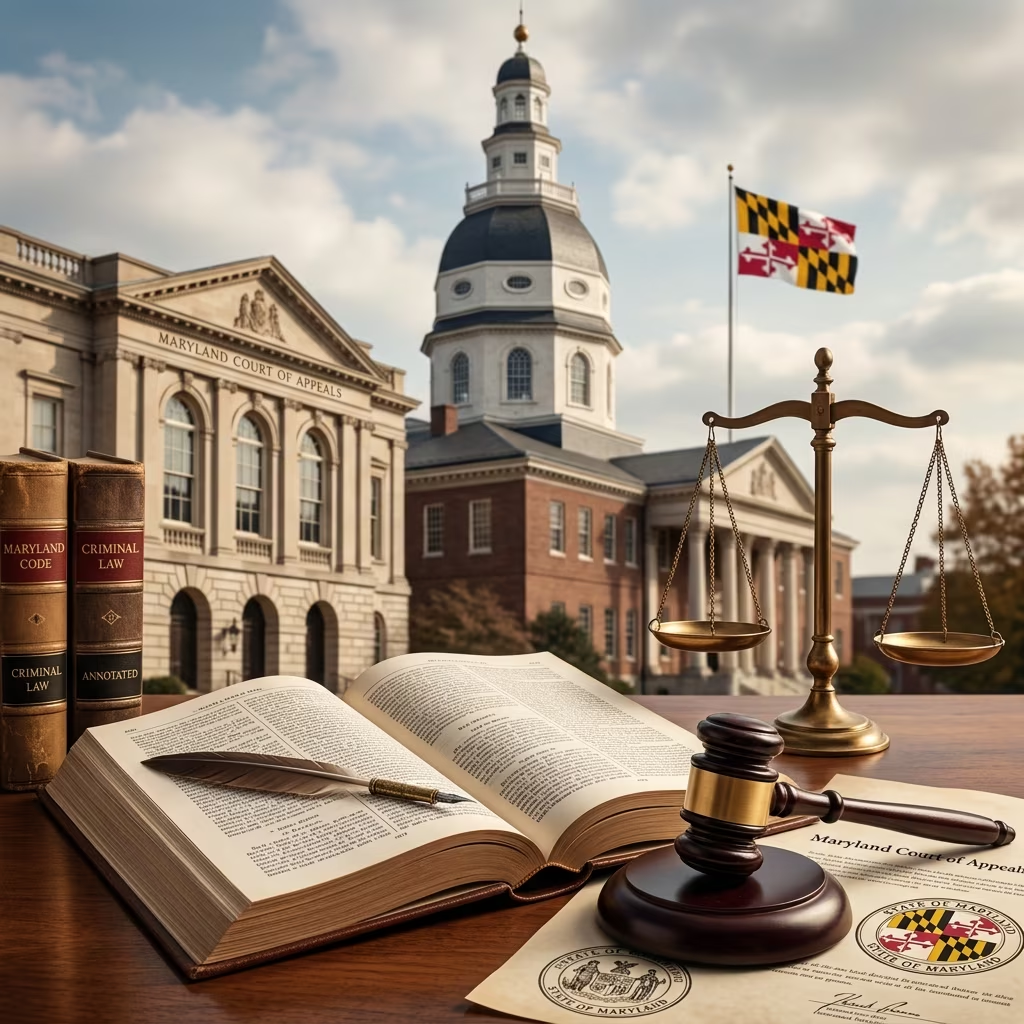
Maryland’s criminal laws are organized in a comprehensive statutory framework that defines crimes, lays out penalties, and sets procedures for how cases move through the justice system. This guide explains the major features of Maryland criminal law in clear, practical terms so that residents, visitors, and business owners can better understand their rights and responsibilities when dealing with criminal issues.
How Maryland Organizes Its Criminal Code
Maryland compiles its criminal statutes in the Criminal Law Article of the Maryland Code, which is arranged by topic into multiple titles. Each title addresses a particular group of offenses, making it easier to locate relevant rules.
Some of the key titles in the Criminal Law Article include:
- Title 1 – General Provisions: Definitions, application of the article, and basic concepts used throughout the criminal code.
- Title 2 – Homicide: Laws governing murder, manslaughter, and related offenses.
- Title 3 – Other Crimes Against the Person: Assault, reckless endangerment, sexual crimes, robbery, and kidnapping.
- Title 4 – Weapon Crimes: Offenses related to firearms, dangerous weapons, and weapon possession or use.
- Title 5 – Controlled Dangerous Substances: Drug possession, distribution, manufacturing, and related conduct.
The Maryland Judiciary and other official sources provide access to these statutes online, making it possible for the public to review the law directly.
Felonies vs. Misdemeanors in Maryland
Like most states, Maryland divides crimes into two broad categories: felonies and misdemeanors. The distinction matters because it affects potential penalties, collateral consequences, and how cases are handled in court.
Felonies
Felonies are considered the more serious category of criminal offenses. They generally involve significant harm or risk to people, property, or public safety.
- Typically punishable by more than one year in prison, up to life imprisonment in some cases.
- Often include crimes such as homicide, certain sexual offenses, serious drug trafficking, and major theft or fraud schemes.
- May carry long-term consequences for voting rights, firearm possession, professional licenses, and immigration status.
Misdemeanors
Misdemeanors are generally less severe than felonies but can still result in jail time and substantial fines.
- Typically punishable by less than one year of incarceration, often in a local detention facility.
- Common examples include certain assault charges, low-level theft, disorderly conduct, and some driving offenses.
- May still lead to criminal records, probation, and other conditions imposed by the court.
| Feature | Felony | Misdemeanor |
|---|---|---|
| Typical maximum incarceration | Over 1 year, up to life imprisonment | Less than 1 year |
| Severity of conduct | Generally more serious (e.g., homicide, serious drug crimes) | Less serious but still criminal (e.g., minor assault, petty theft) |
| Collateral consequences | More extensive, including possible loss of civil rights | Consequences may be significant but typically more limited |
Major Categories of Crimes Under Maryland Law
Within the felony and misdemeanor framework, Maryland law groups specific offenses into subject-matter categories, each with its own rules and definitions.
Crimes Against the Person
Crimes against the person involve harm or the threat of harm to an individual.
- Assault and Reckless Endangerment: Cover physical attacks, attempted attacks, and conduct that places others at serious risk of injury.
- Sexual Crimes: Include various forms of sexual assault and offenses involving non-consensual sexual activity.
- Robbery: Involves taking property from a person by force or threat of force.
- Kidnapping: Concerned with unlawfully confining, abducting, or carrying away a person.
Homicide Offenses
Maryland’s homicide laws, found in Title 2, address offenses where a person’s death is caused by another’s actions.
- Murder: The most serious homicide offense, which may carry long-term or life imprisonment sentences.
- Manslaughter: Includes unlawful killings that are generally considered less culpable than murder, though still severely punished.
- Vehicular Homicide: Covers deaths resulting from traffic-related conduct, often linked to impaired or reckless driving.
Maryland has abolished the death penalty, so even the most serious homicide offenses cannot result in capital punishment. The maximum available penalty for capital-level offenses is life imprisonment without the possibility of parole.
Weapon and Firearm Crimes
Under Title 4, Maryland sets rules for possession, transfer, and use of weapons, including firearms. These laws aim to balance lawful ownership and use with public safety concerns.
- Restrictions on carrying concealed weapons without proper authorization.
- Penalties for using a weapon in the commission of another crime.
- Limitations related to firearm ownership for certain individuals, such as those with particular prior convictions.
Drug and Controlled Substance Offenses
Maryland’s drug laws regulate controlled dangerous substances, including possession, manufacturing, and distribution.
- Simple possession of controlled substances can result in criminal charges, with varying penalties depending on the substance and quantity.
- Distribution or trafficking often carries more severe penalties and may be classified as felony conduct.
- Certain drug-related crimes can intersect with other offenses, such as impaired driving or weapons charges.
Driving Under the Influence and Impaired Driving
Maryland takes impaired driving seriously, enforcing strict standards for alcohol and other substances that affect the ability to operate a vehicle safely.
Legal Intoxication Threshold
Like every U.S. state, Maryland sets a per se legal limit for blood-alcohol concentration (BAC) at 0.08% for drivers. A chemical test at or above this level can lead to a driving under the influence (DUI) charge.
Scope of Impairment Laws
Impaired driving laws are not limited to alcohol consumption.
- Medications that cause drowsiness or slow reaction times, such as some cough syrups, may contribute to impairment.
- Illegal drugs like marijuana or cocaine can lead to criminal driving charges when they affect vehicle control.
- Other substances or combinations of substances can also create impairment that violates Maryland law.
Traffic Stops and Enforcement
Law enforcement officers may stop a driver who appears visibly impaired or is violating traffic rules. If officers observe signs of intoxication or drug influence, they may conduct field sobriety tests and request chemical testing.
Penalties for DUI can include:
- Fines, such as up to $1,000 for a first offense in some circumstances.
- Potential jail time, which may reach up to one year for a first conviction.
- License suspension or other administrative actions, depending on the case.
Statutes of Limitations for Criminal Prosecution
A statute of limitations is the time limit within which the state must bring criminal charges. Once the deadline passes, prosecution usually cannot proceed. Each offense type may have a different limitation period under Maryland law.
No-Limit Crimes
Some Maryland offenses are so serious that they have no statute of limitations, meaning charges can be filed at any time.
- Murder has no time limit for prosecution.
- Misdemeanors punishable by imprisonment also have no time limit, allowing charges to be filed whenever sufficient evidence is available.
Time-Limited Crimes
Other offenses must be charged within set periods:
- Manslaughter or vehicular homicide: Generally must be prosecuted within three years.
- Assault, libel, or slander: Typically subject to a one-year limitation period.
- Most misdemeanors that are not punishable by imprisonment: Often have a one-year statute of limitations.
- Crimes involving unlawful use of a driver’s license or fraud tied to license applications: Commonly limited to two years.
- Certain minor offenses, such as drunkenness or specific historical Sabbath-related offenses: May have very short time limits, for example around 30 days in older provisions.
Because statutes of limitations can change and may include exceptions, it is important to consult current Maryland law or legal counsel for definitive information.
Penalties and Sentencing Considerations
When a person is convicted of a crime in Maryland, the court imposes a sentence based on statutes, prior record, and case-specific factors.
Types of Penalties
- Incarceration: Time served in jail or prison, with maximums determined by the statute for each offense.
- Fines: Monetary penalties that may be imposed alone or alongside incarceration.
- Probation: Supervised release with conditions such as treatment, employment requirements, or community service.
- Restitution: Court-ordered payments to victims to compensate for financial losses.
Death Penalty Abolition
Maryland abolished the death penalty in 2013 after legislative efforts and debate spanning more than a decade. As a result, the most severe criminal punishment now available is life imprisonment without parole for certain serious felonies.
Accessing and Understanding Maryland Criminal Law
For individuals who want to study the law directly, Maryland provides several official resources.
- The Maryland Code is available through the Maryland General Assembly and other legal databases, and it is organized by subject area, including the Criminal Law Article.
- The Digest of Criminal Laws, used primarily by law enforcement, offers an abridged summary of selected criminal statutes for quick reference.
- Online resources from the Maryland Judiciary and law libraries explain how to search statutes, rules, and case law.
Because the criminal code contains numerous titles and hundreds of statutes, many people rely on attorneys or legal information services to interpret how specific provisions apply in real-world situations.
Frequently Asked Questions About Maryland Criminal Laws
1. Are all serious crimes in Maryland classified as felonies?
Not every serious offense is automatically labeled a felony, but many crimes that involve significant harm to people or property are classified that way. Some misdemeanors can still carry substantial consequences, including jail time and permanent records, so the seriousness of an offense is not determined by its label alone.
2. Can Maryland still impose the death penalty for murder?
No. Maryland repealed its death penalty statutes in 2013, and capital punishment is no longer available under state law. For the most serious homicide offenses, the maximum sentence is life imprisonment without parole.
3. How long can the state wait before bringing criminal charges?
The deadline depends on the type of offense and whether the law sets a specific statute of limitations. Some crimes, such as murder and certain imprisonable misdemeanors, have no time limit, while manslaughter, assault, and various other offenses must generally be charged within one to three years. For precise time frames, consult current statutes or an attorney.
4. Does Maryland’s DUI law apply only to alcohol?
No. Maryland’s impaired driving laws also apply to drugs, medications, and any substance that diminishes a driver’s ability to operate a vehicle safely. A BAC of 0.08% or higher is sufficient for an alcohol-based DUI charge, but drivers can also face charges when non-alcohol substances cause impairment.
5. Where can I read Maryland criminal statutes online?
You can access the Criminal Law Article of the Maryland Code through official state websites and recognized legal publishers. The Maryland Judiciary and state law libraries also provide guidance and links to online collections of statutes and rules.
References
- Maryland Criminal Law and Legal Issues Overview — LawInfo. 2023-05-01. https://www.lawinfo.com/resources/criminal-defense/maryland/
- Maryland Criminal Law Code — Justia. 2025-01-01. https://law.justia.com/codes/maryland/criminal-law/
- Maryland Criminal Law Code Title 3 — Justia. 2025-01-01. https://law.justia.com/codes/maryland/criminal-law/title-3/
- Criminal — Maryland People’s Law Library. 2024-03-15. https://www.peoples-law.org/cat/criminal
- Maryland Code, Criminal Law — FindLaw. 2024-02-10. https://codes.findlaw.com/md/criminal-law/
- Maryland Code and Rules Sources — Maryland Judiciary Law Library. 2023-09-01. http://www.mdcourts.gov/lawlib/research/gateway-to-md-law/code-rules-laws-sources
- Digest of Criminal Laws — Maryland Police and Correctional Training Commissions. 2022-01-01. https://mpctc.dpscs.maryland.gov/digest.htm