
Understanding Lien Stripping in Chapter 13 Bankruptcy
A practical guide to how lien stripping works, who qualifies, and what homeowners should know before using it in Chapter 13 bankruptcy.
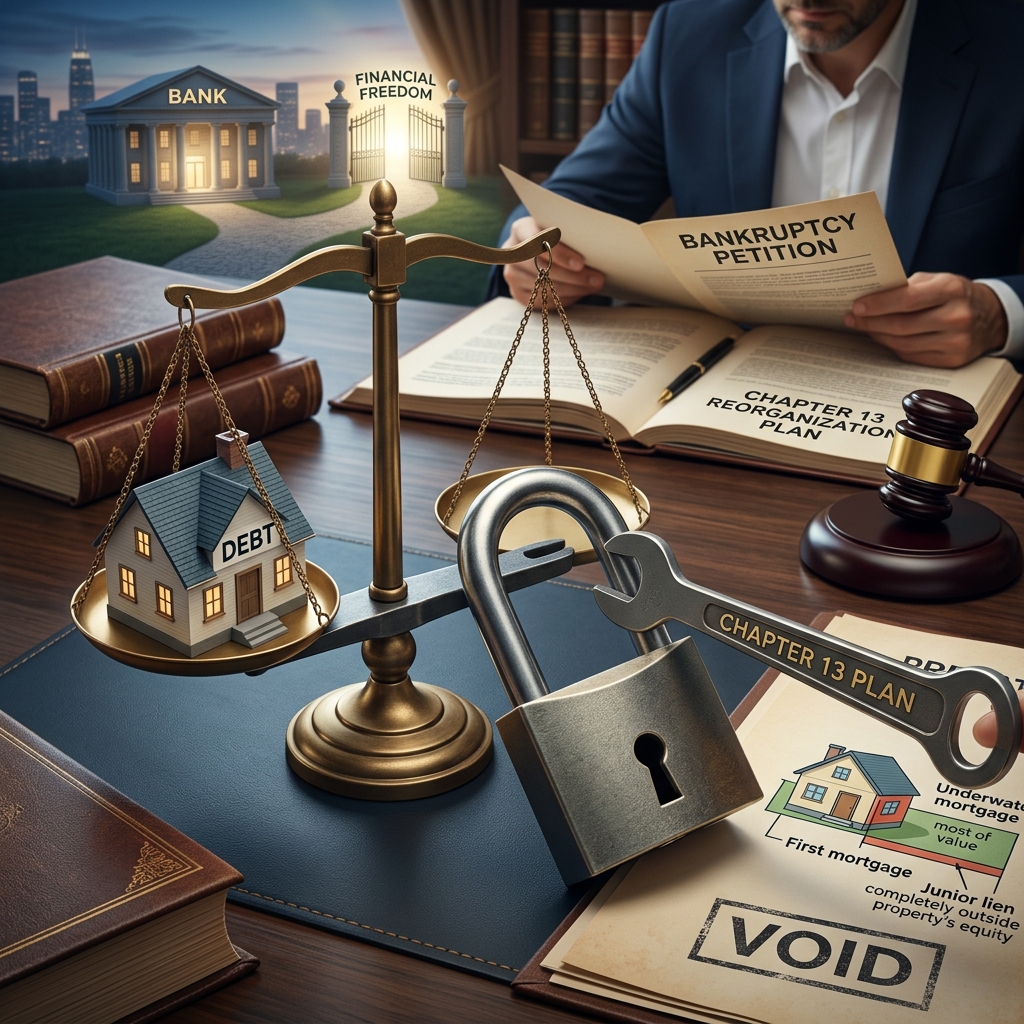
For financially strapped homeowners,
lien stripping
can be a powerful tool to reduce mortgage debt during aChapter 13 bankruptcy
case. It allows certain junior liens that are wholly unsecured to be treated as unsecured debt and, if all plan payments are completed, removed from the property. This article explains what lien stripping is, when it can be used, how the process works, and key risks to consider.What Is a Lien and Why It Matters in Bankruptcy?
A lien is a legal claim or security interest that a creditor holds in a debtor’s property to secure repayment of a debt. When a lien is attached to real estate, the creditor may have the right to foreclose if the debt is not paid. In bankruptcy, liens are generally treated differently than unsecured debts, because they are backed by collateral and can survive the bankruptcy unless specific rules allow them to be removed.
Common types of liens on homes include:
- First mortgages – primary loans used to purchase or refinance the home.
- Junior mortgages – second mortgages, home equity lines of credit (HELOCs), or other subordinate liens.
- Judgment liens – liens created when a creditor wins a money judgment and records it against the property.
- Tax liens – liens recorded by government entities for unpaid taxes.
In most situations, liens “pass through” bankruptcy and remain attached to property unless there is a specific statutory basis to avoid, strip, or modify them.
Basic Concept of Lien Stripping
Lien stripping is the process of eliminating certain junior liens by reclassifying them as unsecured debts during a Chapter 13 reorganization. If the lien is stripped, the creditor loses its secured interest in the property, and the debt is treated like other non-priority unsecured obligations such as credit card or medical bills.
However, lien stripping is only available when strict legal conditions are met. The central requirement is that the lien must be
wholly unsecured
, meaning the property’s value is less than or equal to the amount owed on senior liens, with no remaining equity to support the junior lien.Chapter 13 vs. Chapter 7: Where Lien Stripping Is Allowed
Under U.S. bankruptcy law and Supreme Court interpretation,
lien stripping is generally permitted in Chapter 13
(and some other reorganization chapters) but not inChapter 7 liquidation cases
. Courts have held that in Chapter 7, liens typically cannot be reduced to the value of collateral under the lien stripping theory because such reductions would undermine secured creditors’ rights to future appreciation in property value.The reorganization chapters, especially Chapter 13, include provisions specifically allowing modification of secured claims through a repayment plan. Section 1322(b) of the Bankruptcy Code authorizes debtors to modify the rights of certain secured creditors in their Chapter 13 plan, and courts have interpreted this to permit lien stripping of wholly unsecured junior liens on a debtor’s residence in appropriate cases.
| Feature | Chapter 7 Bankruptcy | Chapter 13 Bankruptcy |
|---|---|---|
| Primary purpose | Liquidation of non-exempt assets | Reorganization through repayment plan |
| Lien stripping of junior mortgages | Generally not allowed | Commonly allowed for wholly unsecured junior liens |
| Treatment of secured claims | Liens usually survive; debtor may surrender property or reaffirm debt | Secured claims can be modified through the Chapter 13 plan |
| Effect of incomplete case | Case closed; liens generally remain | If plan not completed, stripped liens are reinstated |
When Is Lien Stripping Available?
Most lien stripping claims arise when a homeowner is “upside down” on their property—that is, when the mortgage debt exceeds the home’s fair market value. The typical scenario involves a first mortgage and one or more junior mortgages where the property value has dropped.
To qualify for lien stripping in a typical Chapter 13 case, the following conditions generally must be met:
- The case is filed under Chapter 13, not Chapter 7, except for limited situations involving specific statutory lien avoidance provisions.
- The lien relates to
real property
, most often the debtor’s principal residence. - The property value is determined and documented, usually through an independent appraisal.
- The total amount owed on senior liens (such as the first mortgage) is
greater than or equal to the home’s value
, leaving no equity to support the junior lien. - The junior lien is therefore
wholly unsecured
for bankruptcy purposes.
Even a small amount of positive equity above the first mortgage can disqualify the junior lien from being stripped, because the lien would then be partially secured.
Types of Liens That May Be Stripped
The most common application of lien stripping is to
junior mortgages
on a personal residence, but other types of liens may sometimes be avoided or reduced under different sections of the Bankruptcy Code.Junior Mortgages on a Home
Second mortgages, HELOCs, and other subordinate consensual liens on a home are prime candidates for lien stripping if they are wholly unsecured. In Chapter 13, the junior mortgage can be reclassified as unsecured, substantially reducing what the homeowner must pay on that debt through the plan.
Judgment Liens
Judgment liens can sometimes be avoided or stripped when they impair an exemption the debtor is allowed to claim in the property under federal or state law. Section 522(f) of the Bankruptcy Code permits avoidance of certain judicial liens to the extent they interfere with exempt property, and this can apply in Chapter 7, Chapter 13, and Chapter 11 cases.
Tax Liens and Other Special Cases
Tax liens and other statutory liens are subject to specialized rules and may be treated differently than consensual mortgage liens. The ability to strip or modify such liens depends on the nature of the lien, applicable federal and state law, and the chapter under which the bankruptcy is filed. Debtors facing tax liens should typically seek advice from both bankruptcy counsel and tax authorities.
Step-by-Step Overview of the Lien Stripping Process
Although the exact procedures vary by jurisdiction, lien stripping in Chapter 13 generally involves several key steps:
- Determine property value
The debtor obtains an independent appraisal or other acceptable evidence of the home’s fair market value. This valuation is central to proving that the junior lien is wholly unsecured.
- Calculate secured status
The total amount owed on senior liens (such as the first mortgage) is subtracted from the property’s value. If the result is zero or negative, the junior lien is deemed wholly unsecured.
- File Chapter 13 and propose a plan
The debtor files a Chapter 13 petition and submits a
Plan of Reorganization
proposing how secured and unsecured debts will be treated and repaid over three to five years. - Request lien stripping in the plan or by motion
The debtor’s attorney typically includes lien stripping terms in the Chapter 13 plan and may also file a separate motion asking the bankruptcy court to reclassify the junior lien as unsecured and strip it upon plan completion.
- Court review and determination
The court examines the evidence of property value, senior lien balances, and the legal basis for lien stripping. If the judge concludes the junior lien is wholly unsecured and all statutory requirements are met, the plan may be confirmed with lien stripping provisions.
- Plan completion and discharge
Only after the debtor successfully completes all required plan payments does the stripped lien lose its secured status permanently. The underlying debt is treated as unsecured, and remaining balances are discharged.
Benefits of Lien Stripping for Homeowners
When available, lien stripping can significantly improve a homeowner’s financial outlook in Chapter 13 bankruptcy:
- Reduced secured debt burden – Removing junior liens from the property can lower monthly obligations and make it more feasible to keep the home.
- Treatment as unsecured debt – Stripped liens are paid as unsecured claims, often at a much lower effective rate through the plan.
- Potential long-term savings – Upon successful completion of the plan, remaining balances on stripped debts are discharged, potentially saving tens of thousands of dollars.
- Improved ability to avoid foreclosure – By restructuring mortgage debt and removing wholly unsecured junior liens, the debtor may be better positioned to maintain payments on the first mortgage.
Important Risks and Limitations
Despite its advantages, lien stripping is not without risk, and it is subject to significant limitations:
- Requirement of full plan completion – If the debtor fails to complete the Chapter 13 plan or the case converts to Chapter 7, stripped liens are typically reinstated in full.
- Wholly unsecured standard – The junior lien must be entirely unsupported by property value. Any positive equity can prevent lien stripping.
- Limited to certain chapters and properties – Lien stripping is mainly available in Chapter 13 reorganization and is often restricted to liens on the debtor’s personal residence.
- Valuation disputes – Creditors may challenge the appraised value of the property, leading to litigation over whether the lien is wholly unsecured.
- Complex interaction with state law – State homestead exemptions, mortgage recording rules, and lien priority laws can influence eligibility and outcomes.
Special Considerations for Ohio Homeowners
While lien stripping rules are primarily set by federal bankruptcy law, they operate against the backdrop of
state-specific exemptions and property rules
. In Ohio, homestead exemptions and other protections shape how equity is calculated and how judgment liens may be avoided. Ohio law also includes specific provisions regarding the validity and enforceability of mortgages, which can affect whether a lien is treated as secured or can be challenged.Homeowners in Ohio dealing with judicial liens, second mortgages, or tax liens often need to consider:
- How Ohio’s homestead exemption impacts available equity and lien avoidance.
- Whether a judgment lien impairs an exempt interest and can be avoided under federal and state law.
- The role of the Ohio Attorney General and tax authorities in cases involving tax liens.
- Technical defects in mortgage execution or recording that may affect lien validity.
Working With a Bankruptcy Attorney
Because lien stripping involves careful analysis of property value, lien priority, exemption law, and federal bankruptcy statutes, professional legal guidance is strongly recommended. An experienced bankruptcy attorney can:
- Evaluate whether lien stripping is legally available and financially beneficial.
- Coordinate property appraisals and gather documentation to support the case.
- Draft and file the Chapter 13 plan and any necessary motions to strip liens.
- Represent the debtor in hearings and negotiations with creditors and the trustee.
- Help ensure compliance with plan requirements to secure discharge and permanent lien removal.
Frequently Asked Questions About Lien Stripping
Can I strip a second mortgage in Chapter 7 bankruptcy?
In most situations,
no
. After key Supreme Court decisions, lien stripping of junior mortgages is generally not allowed in Chapter 7 cases, and liens typically pass through Chapter 7 unaffected absent specific statutory authority. Lien stripping of wholly unsecured junior liens is primarily aChapter 13
remedy.Do I still have to pay something on a stripped lien?
Yes. When a junior lien is stripped, the debt becomes an
unsecured claim
in the Chapter 13 case. The debtor pays unsecured creditors according to the confirmed plan, typically a fraction of the total balance. Remaining unsecured debt, including stripped liens, is discharged after successful plan completion.What happens if I cannot finish my Chapter 13 plan?
If the debtor does not complete the Chapter 13 plan, or the case is dismissed or converted to Chapter 7, the benefits of lien stripping may be lost. Courts have held that debtors cannot claim the full advantages of lien stripping when they have not complied with their plan obligations, and stripped liens may be reinstated.
Can I strip a lien if my home has some equity above the first mortgage?
Generally,
no
for that particular junior lien. To be eligible for lien stripping in Chapter 13, the junior lien must bewholly unsecured
, which means the home’s value is fully consumed by senior liens with no equity left for the junior lien. Partial equity usually means the lien is partially secured and cannot be stripped under the typical Chapter 13 framework.Is lien stripping available for investment properties or vacation homes?
Much of the case law and statutory interpretation focuses on liens attached to the debtor’s
principal residence
. Different rules may apply to investment properties or non-residential real estate, and some protections for home mortgages do not extend to other types of property. Debtors should seek individualized legal advice to determine what is possible in such cases.References
- Avoiding Mortgages Judicial Liens Through Bankruptcy in Ohio — Barr, Jones & Associates LLP. 2023-03-01. https://barrjoneslegal.com/practices/bankruptcy-law/avoiding-mortgages-judicial-liens-bankruptcy-ohio/
- What Is Lien Stripping? — Super Lawyers. 2022-08-15. https://www.superlawyers.com/resources/bankruptcy/ohio/what-is-lien-stripping/
- Avoiding Judgment Liens in Ohio and Kentucky Bankruptcy Filings — Steiden Law Firm. 2021-07-20. https://www.steidenlaw.com/bankruptcy-process/avoiding-judgment-liens/
- Resources for Taxpayers in Bankruptcy — Ohio Department of Taxation. 2023-10-01. https://tax.ohio.gov/help-center/bankruptcy
- Lien Stripping Under Chapter 13 Bankruptcy Law — Justia. 2023-04-10. https://www.justia.com/bankruptcy/lien-stripping/
- ‘Lien Stripping’ Applies Only in Chapter 13 Cases — Tax Notes / Court Opinion Digest. 2016-05-02. https://www.taxnotes.com/research/federal/court-documents/court-opinions-and-orders/lien-stripping-applies-only-in-chapter-13-cases-irs-lien/1kwlw
- Lien Stripping on a Second Mortgage — Minnillo Law Group. 2022-09-15. https://www.minnillolawgroup.com/blog/2022/09/lien-stripping-on-second-mortgage/
Similar Articles








Read full bio of medha deb




