
Understanding Libel and Slander: Key Elements of Defamation Claims
Learn how defamation works, what separates libel from slander, and what must be proven to win a reputation-based lawsuit.
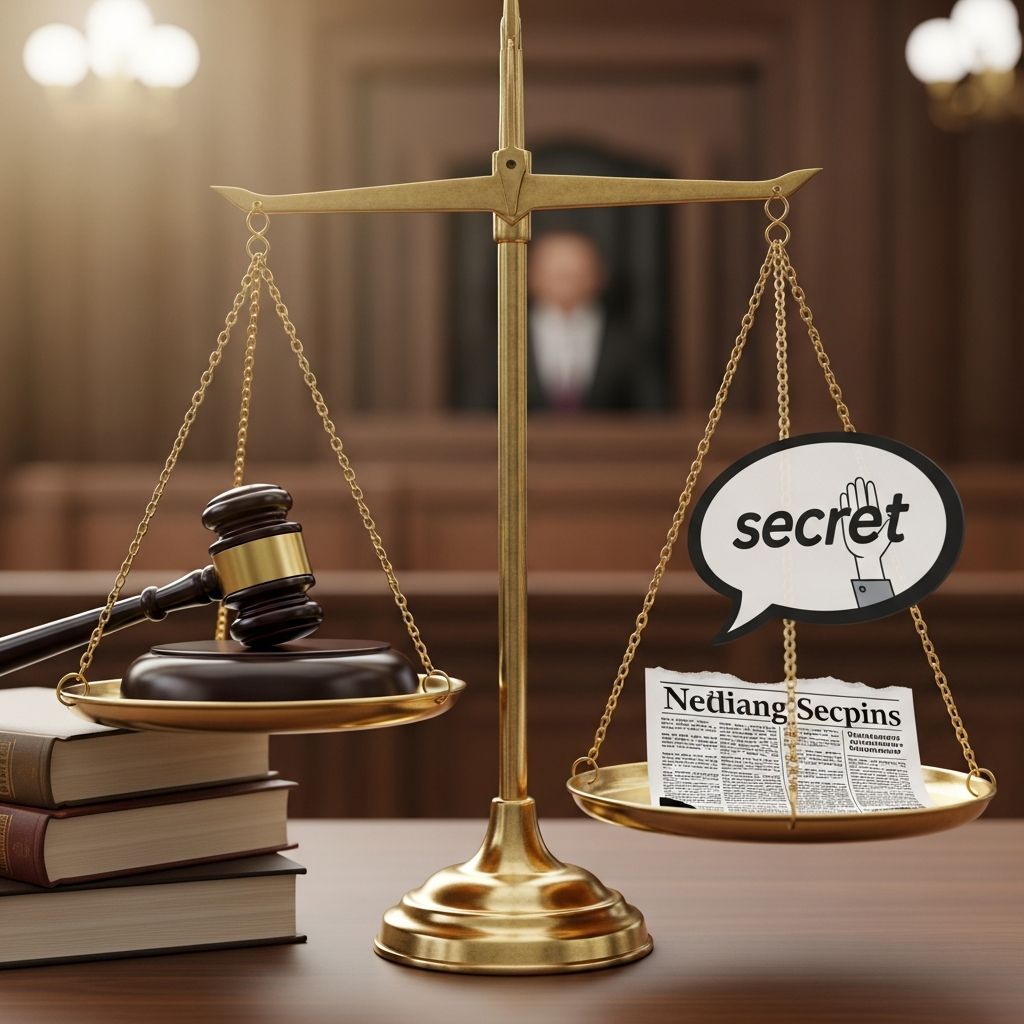
False statements that damage a person’s standing in the community can give rise to a civil claim known as defamation, which includes both libel and slander. In everyday life, this might involve a damaging rumor at work, a social media post, or a misleading news story that unfairly portrays someone in a negative light. This article explains how defamation works, the differences between libel and slander, and what must be proven in court.
Defamation, Libel, and Slander: Core Definitions
Defamation law is designed to protect reputation without unduly restricting free speech, especially on matters of public concern. To understand the basics, it helps to distinguish three related terms.
| Term | Meaning | Typical Examples |
|---|---|---|
| Defamation | Any false statement of fact that harms another person’s reputation. | False allegation of fraud that causes business clients to leave. |
| Libel | Defamation in a written or fixed form, such as print or online posts. | Blog articles, emails, online reviews, printed flyers. |
| Slander | Defamation communicated in a spoken or transient form. | Rumors at a staff meeting, statements in a speech, phone calls. |
Many jurisdictions apply the same basic legal test to both libel and slander, though the type of proof required—especially for damages—can differ based on the nature of the statement and applicable state law.
Foundational Requirements of a Defamation Claim
Although specific language varies from state to state, courts in the United States typically require a plaintiff to establish several core elements to prevail in a defamation lawsuit. These elements ensure that only harmful, false factual claims—not mere insults or opinions—are actionable.
1. A Statement of Fact, Not Pure Opinion
Defamation must be based on an assertion that can be proven true or false. Pure opinions, rhetorical hyperbole, or jokes are usually not actionable.
- Actionable: “She stole money from the company.” (concrete factual allegation)
- Likely not actionable: “I think she is a terrible manager.” (value judgment or opinion)
Courts look at the context of the words to decide whether a reasonable listener or reader would understand them as factual claims or as opinions.
2. Publication to Someone Other Than the Plaintiff
The statement must be communicated to at least one third person. This requirement, often called publication, is satisfied whenever someone other than the speaker and the subject hears, reads, or otherwise receives the statement.
- Sending an email about a coworker to another employee can be publication.
- Posting a comment on a public social media platform is publication.
- Telling the false statement directly and only to the person defamed, with no one else hearing, is usually not publication.
3. Identification: The Statement Is “Of and Concerning” the Plaintiff
The person bringing the lawsuit must show that the statement would reasonably be understood as referring to them.
- Using the individual’s name or a clear description usually satisfies this requirement.
- A small group statement may allow each member to claim they were personally targeted, depending on the size and clarity of the group.
- Very large or vague group references (e.g., “lawyers in this city are crooks”) usually do not identify a specific person.
4. Defamatory Meaning: Harm to Reputation
The statement must be capable of harming the plaintiff’s reputation in the eyes of reasonable members of the community. Courts often look at whether the words:
- Expose the person to hatred, contempt, or ridicule.
- Cause others to avoid or shun the person.
- Injure the person in their profession, trade, or business.
Minor insults or hurt feelings alone are not enough; the focus is on damage to standing in the community.
5. Falsity of the Statement
Except in a narrow category of historical exceptions, modern U.S. law treats truth as a complete defense to a defamation claim. The plaintiff typically bears the burden of proving that the statement was false or at least materially misleading.
- A statement does not have to be perfectly accurate; small inaccuracies that do not change the overall “gist” are usually not defamatory.
- Half-truths can be defamatory if omitted facts make the overall impression false or deceptive.
6. Fault: Negligence, Recklessness, or Actual Malice
Defamation law distinguishes between private individuals and public figures. The level of fault the plaintiff must prove depends on their status and the subject of the statement.
- Private individuals: Often need to show at least negligence—that the speaker failed to exercise reasonable care in verifying the truth of the statement.
- Public officials and public figures: Must generally prove actual malice, meaning the statement was made with knowledge of its falsity or with reckless disregard for whether it was true or false.
This higher standard for public figures reflects strong First Amendment protections for discussion of public affairs.
7. Damage: Proving Harm
A plaintiff normally must show that the defamation caused actual harm, such as economic loss, loss of business opportunities, or serious emotional distress. However, in some types of cases the law presumes harm, as discussed below.
- Lost employment or contracts.
- Diminished business revenue.
- Serious embarrassment, humiliation, or anxiety.
Libel vs. Slander: Why the Medium Matters
Historically, courts treated libel (written defamation) as more serious than slander (spoken defamation) because written statements tend to be permanent and can reach a wider audience. Modern practice often applies unified principles, but the distinction still matters in certain situations.
Defining Libel
Libel involves defamatory content in a fixed medium that can be revisited or reproduced.
- Newspaper and magazine articles.
- Books, flyers, and posters.
- Websites, social media posts, and online reviews.
- Television or radio broadcasts that are recorded or transcribed.
Because libel is often preserved and widely circulated, some jurisdictions are more willing to assume harm without extensive proof of specific financial losses.
Defining Slander
Slander refers to defamatory statements that are spoken or otherwise transient.
- Face-to-face conversations.
- Phone or video calls that are not recorded.
- Public speeches or off-the-cuff remarks.
In many states, plaintiffs alleging slander must show special damages—actual financial loss—unless the statement falls into a special category known as slander per se.
Defamation Per Se vs. Defamation Per Quod
Not all defamatory statements are treated equally. Many jurisdictions distinguish between statements that are obviously harmful on their face and those whose harmful nature is only apparent with additional context.
Defamation Per Se
Defamation per se refers to statements so inherently damaging that the law presumes they caused harm. When a statement qualifies as per se, the plaintiff may not need to provide detailed proof of economic loss.
Common categories of defamation per se include statements that:
- Accuse someone of committing a serious crime.
- Allege the person has a loathsome, contagious disease.
- Assert that the person is unfit or lacks integrity in their profession or business.
- Impute serious sexual misconduct or unchastity, often in the context of older statutes.
These categories reflect historic concerns that such accusations are particularly destructive to social and professional reputation.
Defamation Per Quod
Defamation per quod covers statements that are not obviously defamatory on their face but become so when combined with additional facts or context.
- Listeners must know extra background information before the statement appears harmful.
- The plaintiff typically must show special damages—specific, quantifiable losses such as lost income or business.
Because per quod claims are less self-evidently harmful, courts require a clearer showing of exactly how the plaintiff was damaged.
Common Defenses to Libel and Slander Claims
Even if a statement meets the basic elements of defamation, a defendant may avoid liability by proving a recognized legal defense. These defenses balance protection of reputation with the constitutional commitment to free expression.
Truth
Substantial truth is one of the most powerful defenses. If the underlying statement is essentially accurate, minor factual errors do not usually give rise to liability.
Opinion and Fair Comment
Statements that cannot be proven true or false, or that clearly express a subjective view, are generally protected as opinion, particularly regarding public issues.
- “In my view, this is the worst restaurant in town” is likely protected.
- “This restaurant routinely poisons its customers” suggests a verifiable fact and may be actionable.
Privilege
Certain communications are protected by privilege, meaning they cannot form the basis of a defamation lawsuit even if they are false or harmful.
- Absolute privilege: Statements made during legislative debates, judicial proceedings, or some official communications are often fully protected.
- Qualified privilege: Some employer references or reports of suspected misconduct may be protected if made in good faith to a person with a legitimate interest in the information.
Consent
If the plaintiff agreed to publication of the statement—for example, by approving a quoted passage—this consent can bar a later defamation claim.
Statute of Limitations
Defamation claims must be filed within a specific time period set by state law, often one to three years from the date of publication. Waiting too long can result in dismissal even if the claim is otherwise valid.
Defamation in the Digital Age
The rise of email, messaging apps, and social media has expanded the number of ways defamatory content can be created and shared. Many online statements are treated legally as libel because they exist in a fixed, retrievable form.
- Negative online reviews that falsely allege criminal conduct or serious professional incompetence.
- Viral posts or memes conveying false accusations.
- Anonymous posts on forums that can still be traced back through legal procedures in some cases.
Courts apply traditional defamation principles to these disputes, but questions about anonymity, jurisdiction, and rapid republication can make online cases more complex.
Practical Steps if You Believe You Have Been Defamed
Anyone who believes they have been harmed by libel or slander should act promptly and strategically. While this article does not provide legal advice, the following practical steps are commonly recommended:
- Preserve evidence: Save screenshots, recordings, emails, and witness contact information.
- Avoid retaliation: Responding with your own false or inflammatory statements can create additional legal exposure.
- Consider informal resolution: In some situations, a retraction, correction, or private apology can prevent further harm.
- Consult a qualified attorney: A lawyer can evaluate whether the statements meet the legal elements of defamation under your state’s law and advise on deadlines and options.
Frequently Asked Questions (FAQs)
Is every hurtful or rude comment considered defamation?
No. Defamation law focuses on false statements of fact that damage reputation. Rude insults, name-calling, and general opinions are usually not actionable unless they imply specific false facts.
Do I have a defamation claim if the statement was made only once?
Possibly. A single communication to even one other person can satisfy the publication requirement if the other elements of defamation—falsity, fault, identification, and harm—are met.
Are social media posts treated as libel or slander?
Most courts treat written digital content—such as posts, comments, and messages—as libel because it is in a fixed form that can be retrieved later.
What if the person quickly deletes the statement?
Deleting a post does not erase the fact that publication occurred. However, prompt removal and correction might reduce damages or affect the practical value of pursuing a claim.
Can an employer be liable for defamation by an employee?
In some circumstances, yes. An employer may be responsible for defamatory statements made by employees acting within the scope of their employment or official duties, but this is highly fact-specific and depends on state law.
References
- Defamation — Legal Information Institute, Cornell Law School. 2024. https://www.law.cornell.edu/wex/defamation
- Defamation and the First Amendment — Foundation for Individual Rights and Expression (FIRE). 2023-03-01. https://www.thefire.org/research-learn/defamation-and-first-amendment
- California Defamation (Libel & Slander) Law — Shouse Law Group. 2024-01-15. https://www.shouselaw.com/ca/personal-injury/harm-to-reputation/defamation/
- Differences Between Defamation, Slander, and Libel — LegalZoom. 2022-08-10. https://www.legalzoom.com/articles/differences-between-defamation-slander-and-libel
- Libel vs. Slander vs. Defamation – What are the Differences? — The Business Litigators. 2023-05-12. https://www.thebusinesslitigators.com/business-commercial-litigation/defamation-libel-slander-and-cyber-smear/libel-vs-slander-vs-defamation-what-are-the-differences/
- Libel and Slander on Social Media: When Posting Becomes Defamation — Purdue Global Law School. 2023-09-07. https://www.purduegloballawschool.edu/blog/news/social-media-libel-defamation
Similar Articles








Read full bio of Sneha Tete


