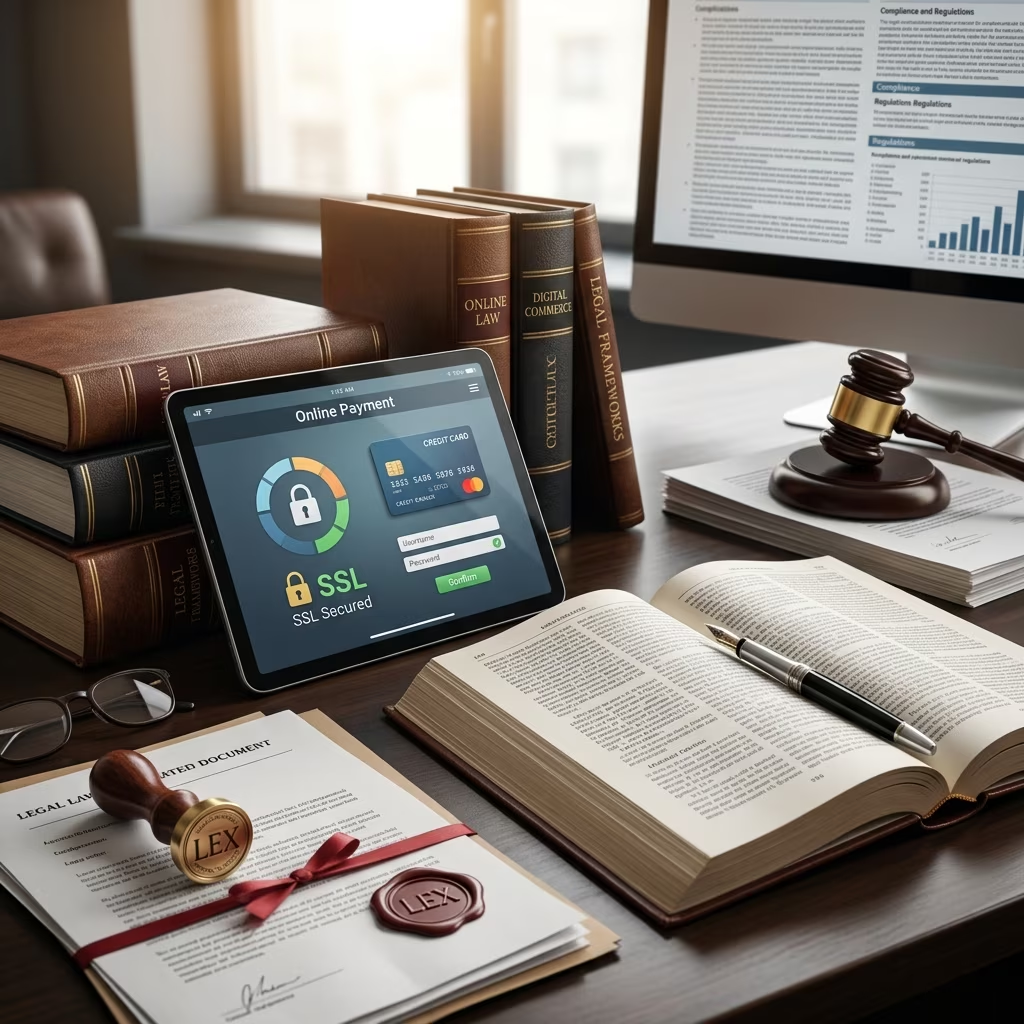
Online payment platforms such as PayPal, Square, Stripe, Cash App, and others have become central to how people shop, get paid, and run small businesses. These services make payments fast and convenient, but they also introduce legal questions around security, liability, and consumer protection.
This article explains how online payment services operate from a legal perspective, what rights and responsibilities users have, and how different laws apply when something goes wrong. It is written for everyday consumers and small business owners who rely on these platforms to send, receive, or manage money.
1. What Are Online Payment Services?
Online payment services are technology-based platforms that allow users to send, receive, and store money electronically without directly using traditional bank transfers or cash. They may act as:
- Digital wallets that hold stored value for future payments.
- Payment processors that route card or bank transactions between a buyer, seller, banks, and card networks.
- Money transmitters that move funds from one party to another.
These services typically sit between the consumer, the merchant, and the banking system. They use APIs and payment rails provided by banks, card networks, and clearing systems to complete transactions. Because they handle consumer funds and sensitive data, they are subject to multiple layers of regulation and contractual obligations.
1.1 Common Uses for Online Payment Platforms
- Paying for goods and services on e-commerce websites.
- Sending money to friends and family domestically or abroad.
- Accepting payments as a freelancer, gig worker, or small merchant.
- Processing subscriptions, in-app purchases, and digital content payments.
- Using mobile devices for in-person sales via card readers or QR codes.
Each use case can trigger different legal rules, such as consumer protection, anti-money laundering, data privacy, and contractual obligations between the user and the provider.
2. The Legal Framework Behind Digital Payments
Unlike a single, unified law, online payment services are governed by a patchwork of statutes, regulations, and industry rules. These differ across countries and sometimes across states or regions.
2.1 Key Laws in the United States
In the United States, payment regulation is fragmented among several agencies and laws.
| Law / Regulation | Main Focus | Relevance to Online Payments |
|---|---|---|
| Electronic Fund Transfer Act (EFTA) | Consumer rights in electronic transfers | Defines liability, error resolution, and disclosure duties for electronic payments. |
| Regulation E | Implementation of EFTA | Specifies timelines and procedures for handling unauthorized transactions and disputes. |
| Bank Secrecy Act (BSA) | Anti-money laundering (AML) | Requires monitoring, reporting of suspicious activity, and Know Your Customer (KYC) controls. |
| Gramm-Leach-Bliley Act (GLBA) | Financial data privacy | Requires safeguarding customer information and limiting data sharing. |
| Dodd-Frank Act | Consumer financial protection | Created the CFPB and strengthened oversight of consumer financial products. |
On top of these federal laws, many states impose money transmitter licensing and other compliance requirements on payment providers.
2.2 International and Comparative Perspectives
Globally, different jurisdictions use varying legal frameworks to regulate payment services.
- The European Union relies heavily on directives such as PSD2, which harmonize payment rules across member states and encourage competition and innovation.
- Countries such as France, the Netherlands, and the UK embed payment rules in their financial codes or specific regulations, and require authorization by financial regulators like the FCA.
- Several jurisdictions, including China, layer e-payment rules with broader laws on cybersecurity, data security, and consumer protection.
Despite local differences, common themes include licensing of payment providers, consumer protection standards, security obligations, and oversight of systemic risks in payment infrastructures.
2.3 Core Regulatory Objectives
Across systems, regulators tend to pursue similar objectives:
- Protect consumers from fraud, unauthorized charges, and unfair contract terms.
- Maintain financial stability by overseeing major payment systems and clearing networks.
- Prevent financial crime through AML and counter-terrorist financing rules.
- Safeguard data via privacy and cybersecurity requirements.
3. How Online Payment Platforms Structure Their Agreements
When you use a service like PayPal or Square, you agree to a complex set of legal documents, typically including:
- User agreements or terms of service.
- Privacy notices and data processing policies.
- Acceptable use policies (for what you may and may not sell or pay for).
- Seller or merchant agreements for businesses accepting payments.
These contracts allocate risks and responsibilities between the platform and its users. They operate alongside statutory rights in consumer protection and payment laws.
3.1 Common Clauses Users Should Notice
- Limitation of liability: Caps the platform’s responsibility for losses.
- Dispute resolution mechanisms: Defines how complaints, chargebacks, and investigations are handled, often with specific timelines.
- Account suspension or closure: Gives the provider power to freeze or terminate accounts for suspected fraud, violations, or regulatory reasons.
- Fee structures: Outlines charges for receiving payments, currency conversion, chargebacks, or withdrawals.
- Choice of law and jurisdiction: States which country or state’s law governs the agreement and where disputes must be resolved.
Because these are typically standard-form contracts, users have limited ability to negotiate. Understanding the terms can help avoid surprises when transactions are reversed or accounts restricted.
4. Consumer Protection and Error Resolution
Many users worry about what happens if a payment goes wrong—whether due to fraud, technical errors, or a dispute with a seller. Consumer protection laws and platform policies offer several layers of protection.
4.1 Unauthorized Transactions and Fraud
Under laws like EFTA and Regulation E in the U.S., consumers using certain types of electronic payments are entitled to limited liability for unauthorized transactions, provided they report problems promptly.
- If a card or account is used without authorization, liability can be limited if the consumer reports the issue within specified periods.
- Providers must investigate errors, provide provisional credits in some cases, and communicate their findings within regulatory timelines.
- Platforms also use tools like Address Verification Service (AVS), Card Verification Values (CVV), and fraud monitoring to reduce unauthorized use.[10]
Online payment services often layer additional guarantees or buyer protection programs on top of statutory rights, though these may be subject to conditions and exclusions described in their user agreements.
4.2 Chargebacks and Disputes Between Buyers and Sellers
Chargebacks occur when a cardholder or issuing bank reverses a payment, usually because of fraud, non-delivery of goods, or disputed quality. In an online payment context:
- The platform may mediate between buyer and seller, request evidence, and temporarily hold funds.
- Merchants can face fees and penalties if chargebacks are frequent, and could risk account termination.[10]
- Consumer protection laws and card network rules typically govern when a chargeback is permitted, how it is processed, and what rights each party has.[10]
Understanding how your platform handles chargebacks is essential—especially for small businesses that rely heavily on these services for revenue.
5. Data Privacy and Security in Payment Services
Handling financial data comes with significant legal obligations. Payment platforms must implement robust security controls and comply with privacy rules.
5.1 Legal Duties to Protect Customer Data
- Privacy notices: Laws like GLBA require clear explanations of what data is collected, how it is used, and with whom it is shared.
- Safeguards: Institutions must implement administrative, technical, and physical measures to protect data from unauthorized access or misuse.
- Limited sharing: Certain categories of personal information may be shared only under specific conditions or with consumer consent.
In addition, industry standards such as PCI DSS govern how card data is handled, stored, and transmitted, requiring encryption and strict controls.[10]
5.2 Cybersecurity and Incident Response
Online payment services must prepare for data breaches or system attacks. Regulatory expectations typically include:
- Risk assessments and continuous monitoring of systems.
- Incident response plans and notifications to regulators and users after serious breaches.
- Coordination with banks, card networks, and law enforcement when fraud or cybercrime is detected.
For users, best practices include using strong passwords, enabling two-factor authentication, monitoring account activity, and promptly reporting suspected fraud.
6. Duties and Risks for Merchants and Small Businesses
Businesses that accept online payments face unique legal and operational challenges. They must comply not only with consumer protection rules but also with contract terms imposed by platforms and card networks.[10]
6.1 Compliance Obligations
- Know Your Customer (KYC): Merchants may need to provide identity documentation and business information so the platform can comply with AML rules.[10]
- Data security: Merchants processing card data must follow PCI DSS and other security standards to avoid fines and reputational damage.[10]
- Transparency with customers: Clear terms, refund policies, and contact information help satisfy consumer protection expectations and reduce disputes.[10]
6.2 Managing Chargeback and Fraud Risk
High levels of fraud or chargebacks can lead to higher fees, reserve requirements, or account termination by payment platforms. Merchants can reduce risk by:
- Using AVS, CVV, and fraud detection tools for card-not-present transactions.[10]
- Keeping detailed records of orders, shipping, and customer communications.
- Communicating clear refund, return, and cancellation policies.
- Promptly responding to platform inquiries during dispute investigations.
7. Cross-Border Payments and Jurisdiction Issues
Online payment platforms often operate globally, enabling cross-border transactions. This raises questions about which laws apply and which authorities oversee a particular transaction.
7.1 Multiple Legal Systems in One Transaction
A single cross-border payment might involve:
- The consumer’s home country laws on consumer protection and data privacy.
- The merchant’s country regulations on e-payments and financial services licensing.
- Rules of international card networks and clearing systems.
Platforms typically address this complexity by choosing a specific governing law in their user agreements, but regulators may still assert jurisdiction based on the location of users or services.
7.2 Practical Considerations for Users
- Check whether your platform offers protections for cross-border purchases.
- Understand that refund or dispute processes may take longer when multiple jurisdictions are involved.
- Be aware of currency conversion fees and exchange rate policies.
8. Practical Tips for Safer Use of Online Payment Services
While legal frameworks and platform policies offer substantial protections, users and merchants can further reduce risks by following practical steps.
8.1 Tips for Consumers
- Read key sections of the user agreement, especially around liability, buyer protection, and dispute resolution.
- Use strong authentication methods and avoid sharing account credentials.
- Monitor statements and transaction histories regularly.
- Report unauthorized transactions as soon as possible to maximize legal protections.
- Keep records (emails, receipts, screenshots) related to disputed purchases.
8.2 Tips for Merchants
- Maintain up-to-date compliance with PCI DSS and any applicable licensing requirements.[10]
- Use fraud prevention tools and verify suspicious orders before shipping.[10]
- Publish clear return and complaint procedures.
- Train staff on recognizing phishing and account takeover attempts.
9. FAQs About Online Payment Services and the Law
FAQ 1: Are online payment platforms considered banks?
Most online payment providers are not banks, although they may partner with banks or be licensed as money transmitters or payment institutions. They typically do not take deposits in the traditional sense or offer full banking services, but they are subject to specific payment, AML, and data protection regulations.
FAQ 2: What happens if my online payment account is frozen?
Platforms can freeze accounts when they suspect fraud, policy violations, or regulatory issues. The user agreement usually explains when this can occur and what steps the platform and user must take to resolve it. You may need to provide documents, explanations, or wait for an internal investigation to conclude.
FAQ 3: Do consumer protection laws apply if I pay through a digital wallet?
Yes. In many jurisdictions, consumer protection rules apply to electronic payments, including digital wallets, although the specific rights and coverage may vary depending on applicable statutes and the type of transaction.
FAQ 4: How are my card details protected when I pay online?
Payment providers and merchants must follow industry standards like PCI DSS and legal requirements under data protection laws to secure card data. This usually involves encryption, restricted access, and ongoing security monitoring.[10]
FAQ 5: Can I rely on platform buyer protection instead of legal rights?
Buyer protection programs can be helpful, but they are contractual and subject to platform rules. Legal rights under consumer and payment laws exist independently and may provide additional avenues for redress if platform policies do not fully resolve a problem.
References
- Who Regulates Payments in the US? Definition and Full Process — Papaya Global. 2023-05-10. https://www.papayaglobal.com/blog/regulates-payments-in-the-us-definition-full-process/
- An Overview of Payment Regulation in the USA — Clearly Payments. 2023-03-01. https://www.clearlypayments.com/blog/an-overview-of-payment-regulation-in-the-usa/
- Global E-Payments Guide Series, Part I: Regulations on E-Payments and E-Payment Services — Aliant Law. 2021-04-15. https://aliantlaw.com/global-e-payments-guide-series-part-i-regulations-on-e-payments-and-e-payments-services/
- Electronic Payments: Guide on Legal and Regulatory Reforms and Measures — World Bank / Osgoode Hall Law School. 2014-01-01. https://digitalcommons.osgoode.yorku.ca/scholarly_works/2795
- The Rules and Regulations of Online Payments — Alacriti. 2022-06-20. https://www.alacriti.com/knowledge-hub/blog/the-rules-and-regulations-of-online-payments/