
Understanding Legal Liability for Construction Defects
A practical legal guide for homeowners and builders on responsibility, claims, and remedies for construction defects.
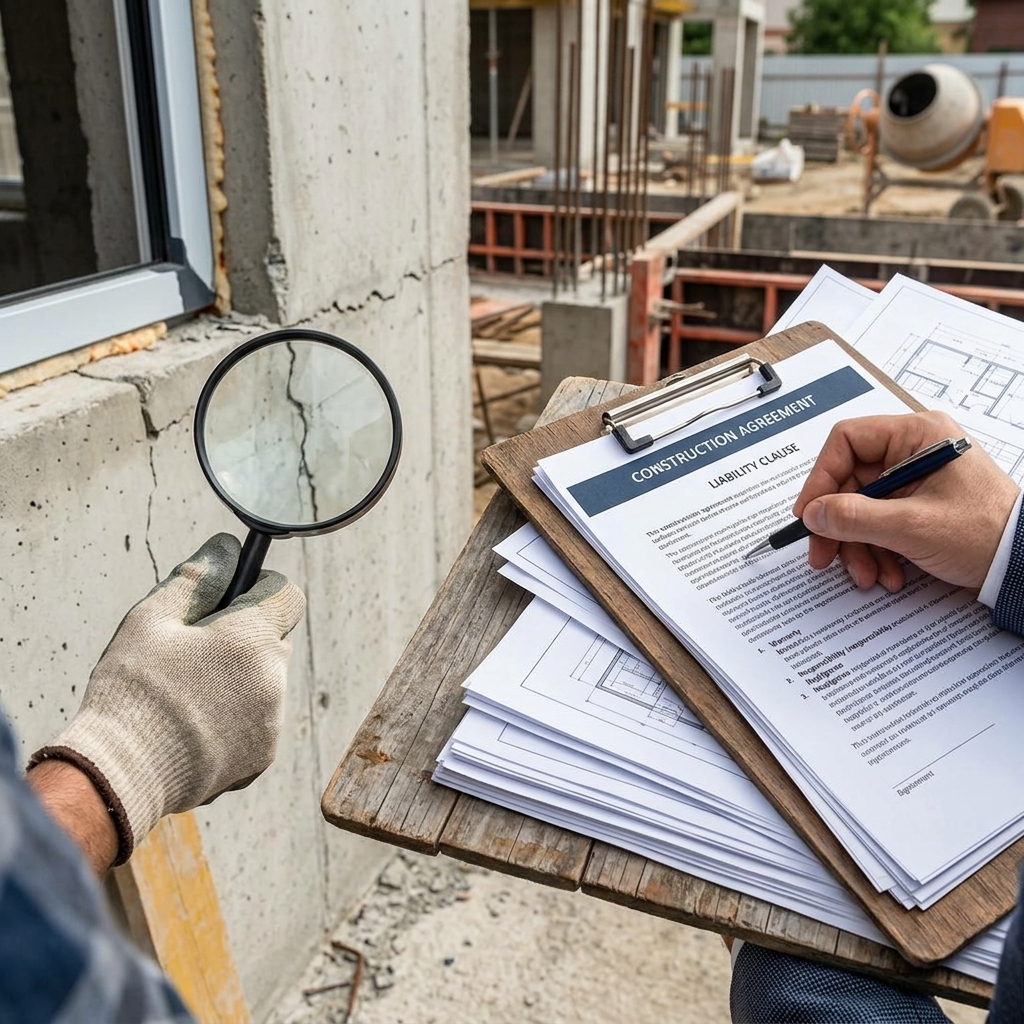
Construction projects do not always go as planned. When a new home or renovation reveals serious problems, the key legal question becomes: who is responsible for the construction defect and what remedies are available to the property owner? This guide explains how liability is allocated among contractors, designers, developers, and manufacturers, and outlines the main legal claims homeowners may use to obtain compensation or repairs.
What Counts as a Construction Defect?
A construction defect is generally any flaw in the design, materials, or workmanship of a building that causes it to fail to perform as reasonably expected or as required by contract or applicable standards. Defects can undermine the safety, functionality, or value of the property and often lead to additional damage or expensive remedial work.
Courts and industry guidelines commonly view a defect as present when completed work does not conform to:
- Applicable building codes or safety regulations
- Contract plans, specifications, or performance requirements
- Accepted professional standards for construction in the community
Importantly, a defect may exist even if the structure appears to function, if there is a material deviation from the plans or standards that creates a risk of future failure or damage.
Types of Construction Defects and Typical Causes
Defects are often grouped by the stage or element of the project where things went wrong. Understanding the category helps courts and experts pinpoint which party is likely at fault[10].
Common Categories of Defects
- Design-related defects: Errors in architectural or engineering plans, such as inadequate structural support or improper drainage design.
- Workmanship defects: Poor quality work by contractors or subcontractors, including improper installation, failure to follow plans, or careless construction practices.
- Material or product defects: Faulty building products such as defective roofing materials, windows, or mechanical systems that fail under normal use.
- Code and compliance defects: Work that violates building codes, zoning rules, or other regulatory requirements, leading to unsafe or non-compliant structures.
- Maintenance-related defects: Failures that arise because the owner did not properly maintain the property, which can shift or reduce liability for others.
Illustrative Table of Defects and Potentially Responsible Parties
| Type of Problem | Likely Source | Typical Party Examined for Liability |
|---|---|---|
| Foundation cracking due to inadequate structural design | Design miscalculation | Engineer or architect |
| Leaking roof on a new home | Poor installation or faulty materials | Contractor/subcontractor or manufacturer |
| Mold from improper flashing and waterproofing | Workmanship defect | General contractor or subcontractor |
| Electrical system not meeting code | Code non-compliance | Electrical subcontractor and possibly inspector |
| Structural damage from neglected maintenance | Owner’s failure to maintain | Owner may bear responsibility |
Key Players and How Liability Is Determined
Construction defect disputes rarely involve only one party. Courts typically evaluate the role and legal duties of several participants, then apportion responsibility based on evidence and expert testimony.
General Contractors and Builders
The general contractor or builder is often the primary focus in defect cases. Their responsibilities are defined by the construction contract and by legal standards of care in the industry.
- They must perform work as specified in the plans and specifications, and in accordance with building codes and customary practices.
- Any significant deviation from the contract documents can constitute a defect, even if the building appears functional.
- In some jurisdictions, contractors who know or should know that the plans are defective have a duty to warn the owner before proceeding.
Subcontractors
Subcontractors who perform specialized portions of the work, such as plumbing, electrical, or roofing, may be directly liable when defects stem from their workmanship or failure to comply with standards.
Architects and Engineers
Design professionals can be held liable when defects are traceable to flawed designs, miscalculations, or failure to meet the professional standard of care. For example, engineers may face claims for negligence or breach of contract if an unsafe or unsound design contributes to structural failure.
Developers and Mass Home Builders
Developers overseeing large residential projects may be subject to broader theories of liability. In some strict liability regimes, owners of mass-produced housing can be responsible for defects without proof of negligence, provided certain conditions are met.
Manufacturers of Building Products
When a defect results from a faulty product that causes property damage or personal injury, manufacturers may face tort claims and warranty actions. Product liability principles can apply if a defective building component causes harm beyond mere economic loss.
Property Owners
Owners are not always plaintiffs; they may also bear some responsibility. For instance:
- Owners who supply inaccurate site information can be liable if the misinformation contributes to a building failure.
- Owners have an ongoing duty to reasonably maintain the property; neglected maintenance that exacerbates damage can reduce or shift liability.
Legal Theories Used to Establish Liability
After identifying the defect and responsible parties, homeowners and their lawyers choose specific legal theories (causes of action) to pursue compensation or repairs. Several major categories recur in construction defect litigation.
Negligence
Negligence claims assert that a party failed to exercise reasonable care in performing their duties and that this failure caused the defect and resulting damage.
- The plaintiff must show a duty of care, a breach of that duty, causation, and actual damages.
- Professionals such as engineers are evaluated against the “standard of care” of a reasonably competent practitioner under similar circumstances.
- Evidence often includes expert testimony, inspection reports, and technical analysis.
Breach of Contract
A breach of contract claim focuses on whether the contractor or other party failed to perform as required by the written or oral construction agreement.
- Non-compliance with plans, specifications, schedules, or quality standards can support a breach claim.
- Remedies may include cost of repair, replacement, delay damages, and other economic losses as defined by the contract.
Breach of Warranty
Warranties may be expressly stated in the contract or implied by law. For example, many jurisdictions recognize implied warranties that new homes are constructed in a workmanlike manner and are fit for habitation.
- Express warranties: Specific promises about performance or quality of the work or materials.
- Implied warranties: Legal assumptions that the builder’s work will meet basic standards of sound construction and habitability.
- Under commercial codes, owners may claim economic damages from manufacturers for breach of product warranties when defective materials fail to function as intended.
Strict Liability (in Certain Cases)
In some states, strict liability rules allow property owners to recover for construction defects from certain developers or mass home builders without needing to prove negligence. Instead, the focus is on the existence of a defect, the involvement of the defendant in producing housing on a large scale, and the damage caused.
Fraud and Misrepresentation
In more severe cases, owners may allege that builders or sellers concealed known defects or made false statements about the condition of the property. Such claims generally require proof of intentional or negligent misrepresentation and reliance by the buyer.
Procedural Steps and Deadlines in Defect Disputes
Legal rights in construction defect cases are heavily influenced by procedural requirements and time limits. These rules vary by jurisdiction, but several themes recur.
Notice and Opportunity to Repair
Many states require homeowners to give contractors written notice of the alleged defect and an opportunity to inspect and offer repairs before filing suit. For example, Texas law mandates a detailed demand letter at least 60 days before initiating litigation.
- The notice typically must describe the defects with reasonable detail and include relevant evidence such as photographs or expert reports.
- Contractors may respond with a proposed repair plan or settlement offer, which the owner can accept or reject.
Statutes of Limitation and Repose
Claims must be filed within legally prescribed timeframes. A statute of limitation sets a period—often beginning when the defect is or should have been discovered—during which a lawsuit must be brought. A statute of repose places an absolute outer limit on claims, measured from substantial completion of the project, regardless of when a defect comes to light.
Proof and Remedies
To prevail, the homeowner typically must prove the existence of a defect, causation, and damages. Some statutes, like the Texas Residential Construction Liability Act, list recoverable categories such as cost of repair, loss of value, relocation expenses, and professional fees.
Insurance and Financial Protection for Defects
Construction defects can trigger complex insurance issues. Different policies may cover different aspects of the loss, depending on the nature of the defect and resulting damage.
Common Insurance Coverages
- Commercial general liability (CGL): May cover property damage or bodily injury caused by defective work, subject to jurisdiction-specific interpretations and policy exclusions.
- Builder’s risk insurance: Protects the project during construction and can sometimes apply to damage arising from defects discovered while work is ongoing.
- Professional liability insurance: Provides coverage for design professionals against claims stemming from professional negligence, such as design errors.
Courts in several states have drawn distinctions between defective workmanship itself and resulting damage to other property when interpreting whether there is an insurable “occurrence” under CGL policies. These decisions can significantly affect whether insurers must defend and indemnify contractors in defect lawsuits.
Practical Tips for Homeowners Facing Construction Defects
Homeowners dealing with defects should take prompt, organized steps to protect their rights and facilitate a strong claim.
- Document thoroughly: Take photos, videos, and detailed notes about the defect, when it was discovered, and how it has changed over time.
- Gather contracts and communications: Preserve all agreements, change orders, emails, and texts with the builder or design professionals.
- Obtain expert evaluations: Independent inspectors or engineers can help identify causes and estimate repair costs, which are crucial for proving the case.
- Review insurance policies: Consult your homeowner’s insurance and any builder-provided coverage to understand potential benefits.
- Comply with notice requirements: Before suing, follow any statutory demand or notice procedures in your state, as failing to do so may limit your remedies.
- Consult a construction lawyer: An attorney experienced in construction law can assess claims, manage deadlines, and coordinate with experts and insurers.
Strategies for Builders and Contractors to Reduce Liability
Construction professionals can significantly lower their exposure to defect claims by focusing on quality control, documentation, and risk management.
- Adhere strictly to plans and codes: Ensure work conforms to contract specifications and applicable regulations.
- Raise concerns about flawed designs: If plans appear unsafe or impractical, notify the owner or designer in writing before proceeding.
- Use reputable materials: Select products with strong performance histories and clear warranty support, and document their use.
- Maintain detailed records: Keep site logs, inspection reports, and change orders to support defenses if disputes arise.
- Maintain appropriate insurance: Work with brokers and legal counsel to secure coverage tailored to construction risks, including CGL and professional liability where appropriate.
- Implement routine inspections: Internal quality checks can catch problems early, reducing the likelihood of major failures after completion.
Frequently Asked Questions (FAQs)
1. Do I always need to prove negligence to win a construction defect case?
Not always. While negligence is a common theory, homeowners may also rely on breach of contract or breach of warranty, which focus on failure to meet contractual promises or implied standards rather than carelessness. In some jurisdictions, strict liability may apply to certain developers or mass home builders, reducing the need to prove fault.
2. Can a design professional be held liable even if the contractor made mistakes?
Yes. Courts typically analyze each party’s role separately. If the defect stems partly from design errors and partly from poor workmanship, both the design professional and the contractor may share liability based on their respective contributions.
3. What if the defect only causes economic loss and no physical damage?
When a defect leads solely to economic losses—such as reduced property value or lost revenue—recovery may focus on contract and warranty claims rather than tort. In product-related defects, owners may seek economic damages from manufacturers under commercial law provisions that govern breach of warranties.
4. How long do I have to bring a construction defect claim?
Time limits vary by state and by type of claim. Statutes of limitation often begin when the defect is discovered or reasonably should have been discovered, while statutes of repose set a firm deadline measured from completion of the project. Consulting a local construction law attorney is important to avoid missing these deadlines.
5. Does my homeowner’s insurance automatically cover construction defects?
Not necessarily. Standard homeowner policies may cover certain resulting damage, but many issues fall under the builder’s coverage or specific construction-related policies. Coverage often depends on whether the defect caused property damage or bodily injury and on how courts interpret policy language about occurrences and exclusions.
References
- Construction Defects: Who Is Responsible for What? — Greenberg Traurig LLP. 2015-03-15. https://www.gtlaw.com/-/media/files/insights/alerts/alerts-prior-to-march-27-2017/031503_gt-advisory_construction-defects–who-is-responsible-for-what.pdf
- Legal Liability for Construction Defects — FindLaw. 2022-08-01 (approx.). https://www.findlaw.com/realestate/construction-defects/legal-liability-for-construction-defects.html
- Construction Defects – Consumer Protection Guide — Texas State Law Library. 2023-06-01 (approx.). https://guides.sll.texas.gov/consumer-protection/construction-defects
- How Do Courts Determine Construction Defect Liability? — Hanley Law. 2023-05-10. https://www.hanley-law.com/blog/how-do-courts-determine-construction-defect-liability/
- Construction Defects — Reinsurance Association of America. 2014-01-01. https://www.reinsurance.org/RAA/RAA/Legal-Tools/Insurance-Risks-Database/Archived/Construction-Defects.aspx
- Insurance Coverage for Construction Defects: A Comprehensive Guide — Orland Law Group. 2024-02-01. https://www.orlandlawgroup.com/blog/2024/02/insurance-coverage-for-construction-defects-a-comprehensive-guide/
- Can Engineers Be Held Accountable for Construction Defects? — Ansbacher Law. 2023-09-01 (approx.). https://www.ansbacher.net/blog/can-engineers-be-held-accountable-for-construction-defects/
Similar Articles








Read full bio of Sneha Tete


