
Kentucky Traffic Laws: Key Rules Drivers Should Know In 2025
A practical, driver-friendly guide to Kentucky traffic rules, penalties, and safety requirements on the road.
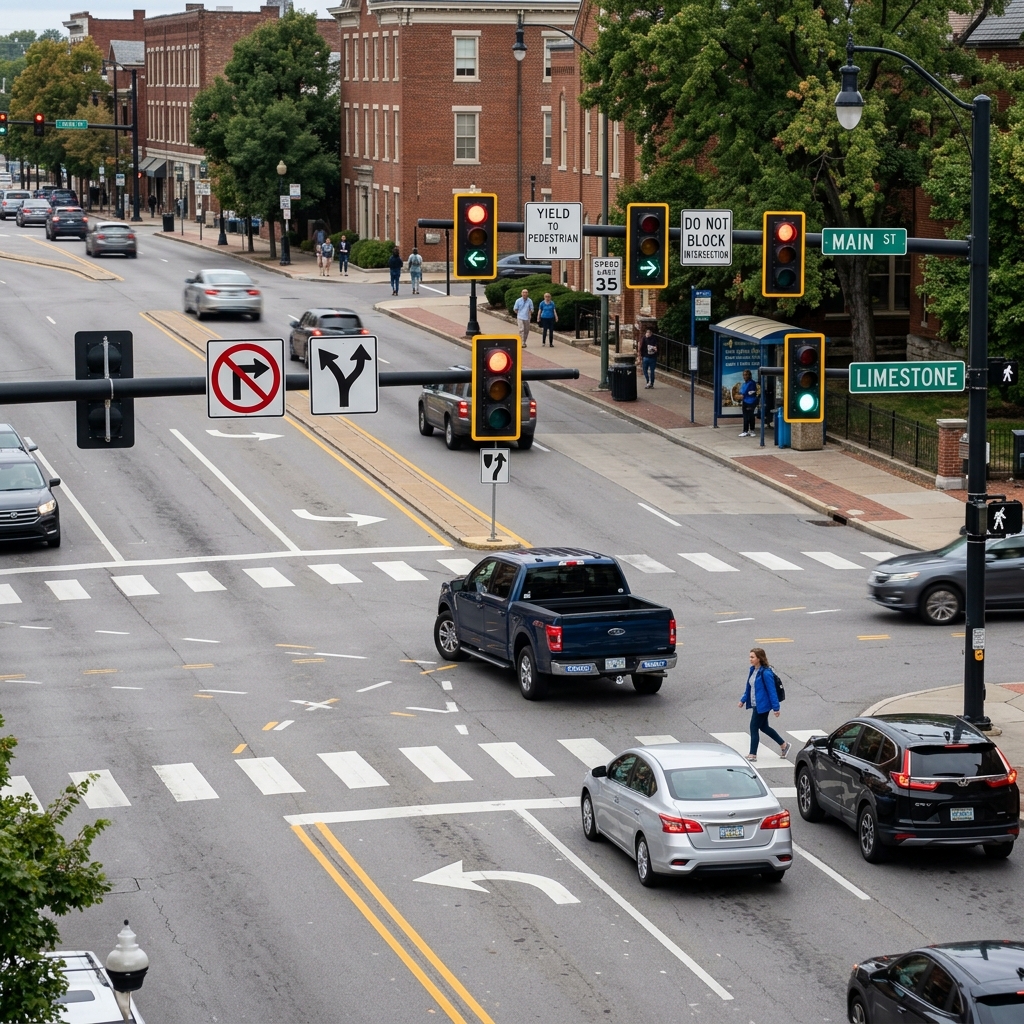
Kentucky traffic laws establish how drivers, pedestrians, and other road users must behave to keep the highways and local streets safe. These rules govern everything from speed limits and right-of-way to drunk driving, seat belt use, and distracted driving. Knowing these laws is essential to avoid tickets, protect your driving record, and reduce your risk of serious crashes.
This guide explains the most important traffic rules in Kentucky in plain language, with practical examples for everyday driving. It is informational only and does not replace statutory language or legal advice.
Overview: How Kentucky Regulates Drivers
Traffic rules in Kentucky are primarily found in the Kentucky Revised Statutes (KRS), Chapter 189, which covers motor vehicle operation, equipment, and safety requirements. The Kentucky Office of Highway Safety also publishes current information on key safety laws and recent changes. Local governments may add ordinances that apply in specific cities or counties, but they cannot conflict with state law.
- Statewide rules: Apply to all drivers on public roads, including interstates, parkways, and local streets.
- Local ordinances: Can regulate lane use, parking, or speed limits where authorized, such as lane restrictions in certain cities.
- Enforcement: Violations can result in fines, points on your license, possible suspension, and, for serious offenses, jail time.
Speed Limits and Kentucky’s Absolute Speed Rule
Kentucky uses an absolute speed limit system: if you exceed the posted limit, even by a small amount, you may receive a ticket. At the same time, the law requires drivers to travel at a speed that is reasonable and prudent for current road and traffic conditions, even if that means going slower than the posted limit.
General State Speed Limits
Under KRS 189.390, default limits apply on many highways unless a different limit is posted or conditions require a lower speed. These limits are:
| Road Type / Area | Typical Limit | Notes |
|---|---|---|
| Interstate highways and parkways | 65 mph | May vary where posted or for safety reasons. |
| Other state highways | 55 mph | Applies unless a different limit is set. |
| Business districts | 35 mph | Commercial, downtown, or shopping areas. |
| Residential districts | 35 mph | Neighborhood streets with homes nearby. |
| Public parking lots | 15 mph | Off-street parking open to the public. |
These limits can be changed by the Transportation Cabinet or local authorities where safety or traffic conditions require it, so always follow posted signs.
Reasonable and Prudent Speed
Even within these limits, Kentucky law prohibits driving faster than is safe for the current situation. That means you may need to slow down for:
- Heavy traffic or congestion.
- Poor visibility due to fog, heavy rain, or snow.
- Road work zones or damaged pavement.
- Areas with high pedestrian activity, such as school zones.
If driving at the posted limit would be unsafe, you must reduce your speed to avoid endangering yourself or others.
Right-of-Way Rules at Intersections and Driveways
Right-of-way laws determine who must yield in common situations, especially at intersections. Kentucky regulates these rules in KRS 189.330 and related statutes. Failing to yield can lead to crashes and citations.
Basic Intersection Right-of-Way
When approaching intersections, Kentucky law and safety guidance emphasize these principles:
- First to arrive goes first: At a stop-controlled intersection, the vehicle that stops first generally has the right-of-way.
- Driver on the right: If two vehicles arrive at nearly the same time, the driver on the right has the right-of-way.
- Vehicles already in the intersection: Drivers approaching an uncontrolled intersection must yield to vehicles already inside the intersection.
- Obey signals and signs: All traffic lights, stop signs, yield signs, and police officer instructions must be obeyed.
Turning Movements and U-Turns
Kentucky specifies how right and left turns must be made at intersections:
- Right turns: Approach and turn as close as practicable to the right-hand curb or edge of the roadway.
- Left turns: Use the extreme left-hand lane available for your direction of travel, pass to the left of the center of the intersection, and leave in the right-hand lane of the road you enter where practicable.
- U-turns: You may not turn to proceed in the opposite direction unless it can be done safely and without interfering with other traffic.
Entering From Driveways, Alleys, and Minor Roads
Special yielding rules apply when entering a roadway from places other than another road:
- Drivers leaving a driveway, alley, or private road must yield to vehicles on the main roadway that are close enough to be an immediate hazard.
- Vehicles on minor roads intending to enter a main road must yield to traffic already on the main road.
- Drivers entering a roundabout must yield to vehicles already circulating in the roundabout.
Center Left-Turn Lanes
On multi-lane roads with a center lane reserved for left turns:
- Left turns are not permitted from any other lane.
- Drivers may use the center lane only when preparing to turn left off the highway or merging after completing a left turn from a side road or entrance.
Lane Use and Passing Rules
Proper lane use is critical for safety, especially on high-speed roads. Kentucky and local ordinances set rules for staying in your lane, changing lanes, and using the left lane on multi-lane highways.
Staying in a Single Lane
Drivers must keep their vehicle “as nearly as may be practical entirely within a single lane” and may not move from that lane until they confirm it is safe to do so. This means:
- Signal before changing lanes.
- Check mirrors and blind spots for other vehicles.
- Do not weave between lanes or make sudden lane changes.
Left Lane Restrictions on High-Speed Highways
On limited-access highways with four or more lanes and a posted speed limit of at least 65 mph, some jurisdictions in Kentucky restrict continuous travel in the far left lane. Typically, the leftmost lane is reserved for:
- Overtaking slower vehicles.
- Yielding to vehicles entering the highway.
- Situations where traffic or road conditions make the right or center lanes unsafe.
Unnecessary driving in the far left lane can lead to enforcement actions and can increase congestion and risk, particularly on busy interstates.
Pedestrians, Crosswalks, and Emergency Vehicles
Drivers share the road not only with other vehicles but also with pedestrians, cyclists, and emergency responders. Kentucky right-of-way rules reflect this.
Pedestrians’ Right-of-Way
Drivers must exercise care to avoid hitting pedestrians and, in specific situations, must yield the right-of-way:
- Pedestrians in a crosswalk or intersection without a traffic signal have the right-of-way.
- Pedestrians crossing with a traffic light while a driver is turning must be allowed to cross safely.
- Pedestrians crossing legally in marked crosswalks generally have priority over turning vehicles.
Emergency and Roadside Assistance Vehicles
Emergency vehicles—such as police, fire, and ambulances—always have the right-of-way when using lights and sirens. Additionally, Kentucky has expanded “Slow Down, Move Over” requirements:
- Drivers must slow down or move over for all stationary vehicles with flashing lights, including disabled vehicles, tow trucks, and highway crews.
- On roads with four or more lanes, change to a lane farther away if safe to do so. On narrower roads, slow down and pass with caution.
Seat Belts and Child Restraint Requirements
Seat belt and child restraint laws are central to Kentucky’s efforts to reduce injuries and fatalities in crashes. These rules are actively promoted by the Kentucky Office of Highway Safety.
Adult Seat Belt Use
Kentucky law requires most vehicle occupants to wear seat belts. Failing to do so can result in fines and contributes to more severe injuries in collisions. All drivers and front-seat passengers should be properly restrained; many vehicles also require rear-seat occupants to buckle up depending on configuration and vehicle type.
Child Safety Seats and Booster Seats
State law and safety guidance specify how children must be restrained based on age and height:
- Children less than 40 inches tall must be secured in an appropriate child car seat properly installed in the vehicle.
- Children younger than 8 years old and between 40 and 57 inches tall must use a booster seat.
- Children younger than 8 but taller than 57 inches are not required to ride in a booster, but must still be properly restrained with a seat belt.
Parents and caregivers should follow manufacturer instructions for car seats and boosters and ensure they are properly anchored and adjusted for the child’s size.
DUI and Impaired Driving Laws
Driving under the influence of alcohol or drugs is heavily regulated in Kentucky. Blood alcohol concentration (BAC) limits and related rules are set by statute and reinforced in public safety information.
Legal BAC Limits
According to the Kentucky Office of Highway Safety:
- Drivers age 21 or older are legally impaired at a BAC of 0.08% or higher.
- Drivers under age 21 are subject to a stricter limit and may not drive with a BAC of 0.02% or higher.
- Commercial drivers may face enforcement at even lower thresholds, consistent with federal and state rules.
In addition to alcohol, driving after consuming controlled substances or impairing drugs can lead to DUI charges, even if your BAC is below the numerical limit.
Consequences of DUI
DUI penalties can include:
- Fines and court costs.
- License suspension or revocation.
- Possible jail time, particularly for repeat offenses or crashes causing injuries.
- Mandatory education or treatment programs.
DUI convictions also typically lead to higher insurance premiums and long-term consequences for your driving record.
Distracted Driving and Texting Bans
Distracted driving has become a major safety concern nationwide. Kentucky has specific rules on the use of mobile devices while driving, particularly texting.
Text Messaging Restrictions
Under House Bill 415, Kentucky bans text messaging for drivers of all ages while a vehicle is in motion. Key points include:
- Texting while driving is prohibited and enforceable as a primary offense, meaning officers can stop drivers solely for this violation.
- School bus drivers are banned from using cell phones while driving, reflecting higher safety expectations for transporting children.
Use of Mobile Devices by Age
The law treats adult and minor drivers differently:
- Drivers 18 and over may use GPS devices and may read, select, or enter a phone number or name for the purpose of making a call. However, they still may not text while the vehicle is moving.
- Drivers under 18 are generally prohibited from using personal communication devices while the vehicle is in motion. They may use a GPS, but any manual entry must be done while the vehicle is stopped.
Even where device use is technically allowed, drivers remain responsible for maintaining control of the vehicle and paying attention to the road.
Traffic Violations, Points, and Penalties
Kentucky classifies many behaviors as moving offenses, including speeding, failing to yield, improper lane use, and DUI. Each type of offense can carry different fines, points, and potential license suspensions.
- Minor violations (such as modest speeding over the limit) may result mainly in fines and points.
- Serious violations (such as high-speed reckless driving, DUI, or causing crashes) can lead to higher fines, license suspension, or jail time.
- Multiple violations in a short period can trigger enhanced penalties or administrative actions against your license.
Consulting Kentucky’s driver licensing information or an attorney can help clarify how specific violations affect your record and driving privileges.
Crash and Disabled Vehicle Practices
What you do after a crash or breakdown can affect both safety and legal outcomes. The Kentucky Office of Highway Safety provides guidance that supports safe handling of crashes and disabled vehicles.
- If involved in a crash with no visible injuries, move your vehicle to the shoulder or off the roadway if possible, then call police and exchange information.
- If your vehicle is disabled, move it off the roadway if you can safely do so and stay inside the vehicle, using hazard lights or other signals to request assistance.
- If the vehicle cannot be moved, stand away from traffic and the vehicle while waiting for help.
Frequently Asked Questions About Kentucky Traffic Laws
Do I have to follow the posted speed limit even when roads are empty?
Yes. Kentucky’s absolute speed limit system allows enforcement for any speed above the posted limit, regardless of traffic volume. You must also drive at a speed that is reasonable for current conditions, which may mean going slower than the posted limit in poor weather.
Who has the right-of-way at a four-way stop?
Generally, the driver who reaches the intersection first has the right-of-way. If two vehicles arrive at the same time, the driver on the right goes first. All drivers must stop completely and proceed only when it is safe.
Can I make a U-turn anywhere in Kentucky?
No. You may not turn to proceed in the opposite direction unless the maneuver can be made safely and without interfering with other traffic. Local signs or ordinances may also prohibit U-turns at specific locations.
When do children need to be in a booster seat?
Children younger than 8 years old and between 40 and 57 inches tall must ride in a booster seat under Kentucky law. Children shorter than 40 inches must be in a properly installed car seat.
Is texting while driving always illegal in Kentucky?
Yes. Text messaging while a vehicle is in motion is banned for drivers of all ages in Kentucky. The rules for other device uses depend on the driver’s age, but texting is consistently prohibited.
What should I do when I see a vehicle with flashing lights on the roadside?
Under Kentucky’s expanded “Slow Down, Move Over” law, you must safely move to a lane farther from the stationary vehicle or slow down significantly if you cannot change lanes, and proceed with caution. This applies to emergency vehicles, tow trucks, highway crews, and disabled vehicles with flashing lights.
References
- Kentucky Revised Statutes Title XVI, Motor Vehicles, § 189.390 — Kentucky Legislature / FindLaw. 2023-01-01. https://codes.findlaw.com/ky/title-xvi-motor-vehicles/ky-rev-st-sect-189-390/
- Kentucky Revised Statutes Chapter 189 — Kentucky Legislature. 2023-01-01. https://apps.legislature.ky.gov/law/statutes/chapter.aspx?id=38038
- 189.330 Turning and right-of-way at intersections (PDF) — Kentucky Legislature. 2023-01-01. https://apps.legislature.ky.gov/law/statutes/statute.aspx?id=6370
- Laws — Kentucky Office of Highway Safety, Kentucky Transportation Cabinet. 2024-07-01. https://kentuckyhighwaysafety.com/laws/
- Kentucky Traffic Laws Decoded: What Every Driver Needs to Know — GSAS Law. 2022-06-01. https://gsaslaw.com/blog/kentucky-traffic-laws/
- § 71.11 Traffic Lanes — American Legal Publishing / City of St. Matthews, KY Code. 2021-01-01. https://codelibrary.amlegal.com/codes/stmatthews/latest/stmatt_ky/0-0-0-734
- Kentucky Laws Related to Traffic Safety — Karl Truman Law Office. 2020-05-01. https://trumanlaw.com/blog/kentucky-laws-related-to-traffic-safety/
Similar Articles








Read full bio of Sneha Tete


