
Kansas Wills: Essential Guide To Valid Wills And Probate Basics
A practical guide to who can make a will in Kansas, legal requirements, witnesses, special will types, and how Kansas courts treat out-of-state wills.
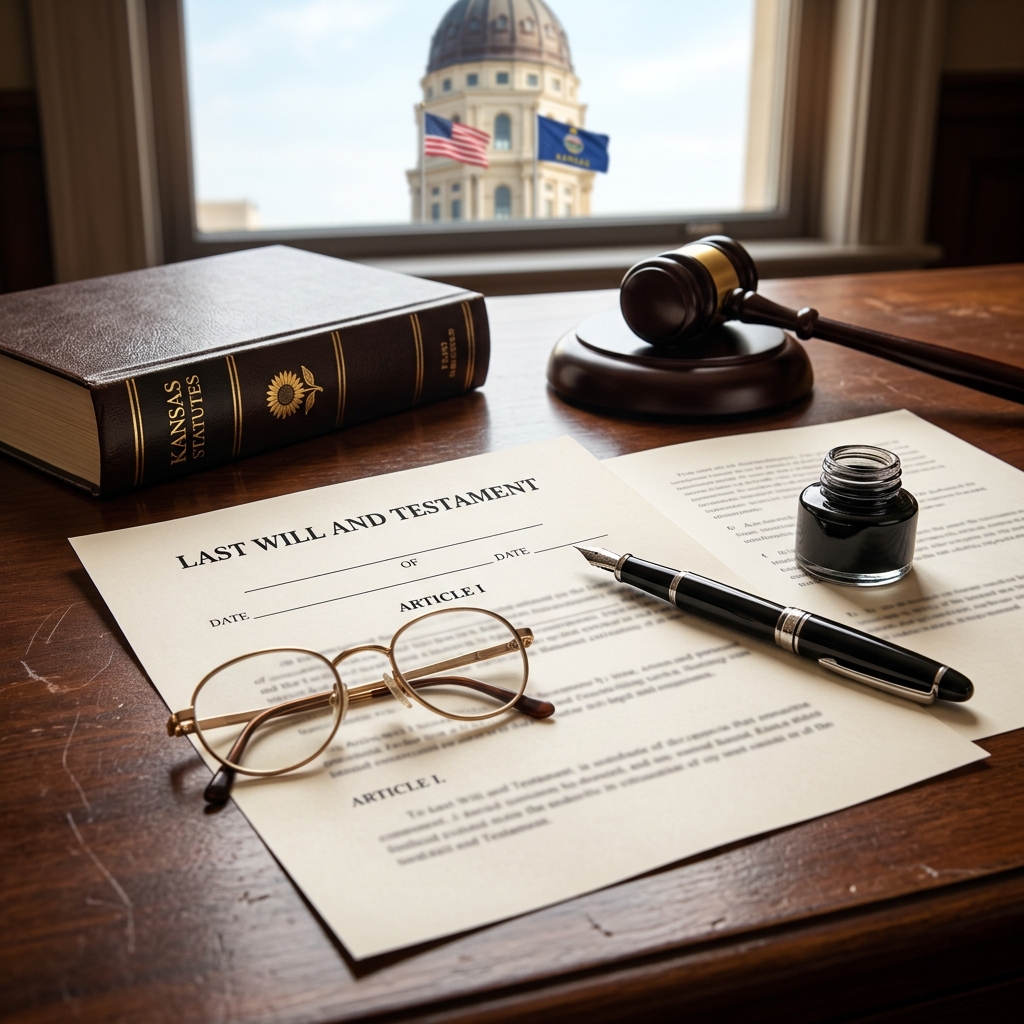
Creating a last will and testament is one of the most important steps in planning your estate. Kansas law sets out specific rules that determine who can make a will, how it must be signed and witnessed, and when special forms of wills (such as oral wills) are valid.
This guide explains the core legal requirements for wills in Kansas in plain language, so you can better understand what makes a will valid, how witnesses should be involved, and how Kansas treats wills created in other states. While this information is based on Kansas statutes and reliable legal resources, it is not a substitute for personalized legal advice.
1. Basic Eligibility to Make a Will in Kansas
Kansas law focuses on two main questions when determining whether someone can make a valid will:
- Age or legal status
- Mental capacity
In general, a person must be at least 18 years old or otherwise legally emancipated and must be of sound mind to create a valid will in Kansas.
1.1 Age and Emancipation Requirements
Under Kansas law, the right to make a will is tied to adulthood or emancipation. A will can be made by:
- Anyone who is 18 years of age or older, or
- A person who has been emancipated by marriage, a court order, or another legally recognized method.
Emancipation means that, although not yet 18, the individual is treated as an adult for many legal purposes, including making a will.
1.2 Sound Mind and Testamentary Capacity
In addition to age or emancipation, the person making the will, called the testator, must be of sound mind at the time the will is executed.
Being of sound mind generally means the testator:
- Understands that they are making a will and what a will does.
- Knows the nature and extent of their property.
- Recognizes the people who would ordinarily be considered their heirs (such as spouse and children).
- Can form a rational plan for distributing their assets.
Questions about capacity can arise when someone has cognitive impairments, serious mental health conditions, or is under undue influence. If capacity is disputed, the probate court may review evidence about the person’s mental state at the time the will was signed.
2. Formal Requirements for a Valid Written Will
Most wills in Kansas are written documents. For a written will to be valid, it must meet specific formal requirements related to writing, signing, and witnessing.
2.1 Writing and Signature
Kansas requires that a standard will be in written form and signed by the testator (the person whose will it is).
- The writing can be typed or printed. A purely oral statement, with limited exceptions discussed later, is not enough.
- The testator typically signs at the end of the document, but Kansas statutes focus more on the fact of signing rather than the exact placement.
If the testator is physically unable to sign, Kansas law allows another person to sign on the testator’s behalf, but this must be done at the testator’s direction and in the testator’s presence to avoid challenges later.
2.2 Witness Requirements
Kansas law requires at least two witnesses to the will, and they must be legally competent at the time of signing.
| Requirement | Explanation |
|---|---|
| Number of witnesses | Minimum of two witnesses present when the testator signs or acknowledges the will. |
| Competence | Witnesses must be legally competent (generally adults capable of understanding the act of witnessing a will). |
| Role of witnesses | Witnesses attest that the testator signed willingly and appeared to be of sound mind. |
Witnesses should ideally be disinterested—meaning they do not receive anything under the will—because Kansas places limits on gifts to signing witnesses. These rules are discussed in more detail in Section 3.
2.3 Self-Proved Wills in Kansas
Kansas allows a will to be made self-proved. A self-proved will includes additional notarized statements by the testator and witnesses. This can simplify probate because the court can accept these affidavits as evidence without requiring the witnesses to testify in person.
To make a will self-proved, typically:
- The testator and the witnesses sign a separate affidavit under oath.
- The affidavit is notarized, confirming that all formalities were properly followed.
While a will can be valid without being self-proved, adding a self-proving affidavit often saves time and effort in probate proceedings.
3. Gifts to Witnesses and Interested Parties
Kansas law seeks to prevent conflicts of interest by limiting the ability of signing witnesses to receive gifts under the will.
3.1 Void Gifts to Witnesses
If a person signs the will as a witness and is also named to receive a gift or bequest, Kansas law generally treats that particular gift as void unless certain conditions are met.
A gift to a witness may be preserved if:
- There are two other competent witnesses to the will, and
- Those additional witnesses are not beneficiaries under the will.
3.2 Heirs Without a Will (Intestate Heirs)
Kansas recognizes that someone may be both a witness and a person who would legally inherit if there were no will (an intestate heir). In this situation, the witness cannot receive more from the will than they would have received under intestate succession.
Intestate succession refers to the distribution of property when a person dies without a valid will. Kansas law sets default rules for how property passes to surviving spouses, children, and other relatives.
4. Special Types of Wills Recognized in Kansas
In addition to traditional written wills, some states recognize oral or handwritten wills. Kansas has its own approach to these special formats.
4.1 Oral (Nuncupative) Wills
Kansas law recognizes oral or nuncupative wills under very limited and specific circumstances.
An oral will is only valid in Kansas if:
- It is made during the testator’s last sickness—essentially when the person is near death.
- It disposes only of personal property (not real estate such as land or a house).
- The oral directions are reduced to writing within 30 days after they are spoken.
- The written version is signed by two competent, disinterested witnesses, meaning they are not receiving anything under the will.
Because of these strict conditions, oral wills are rare and often more vulnerable to disputes. Most people are encouraged to use a written will instead.
4.2 Handwritten (Holographic) Wills
Some states permit holographic wills—documents wholly written and signed by the testator without witnesses. Kansas does not recognize holographic wills as valid.
A handwritten will can be valid in Kansas only if it meets the standard requirements for a written will, including proper witnessing. In contrast, neighboring states such as Oklahoma and Nebraska do allow holographic wills under certain conditions, so it is important not to assume that a handwritten will will be honored in Kansas simply because it is recognized elsewhere.
5. Recognition of Out-of-State Wills
Many people move to Kansas after creating a will in another state. Kansas law provides guidance on when those out-of-state wills are valid here.
5.1 When Kansas Honors a Will from Another State
A will that was valid under the law of the state where the testator lived either when the will was created or at the time of death is generally considered valid in Kansas, as long as it is in writing and signed by the testator.
This rule helps avoid the need to rewrite a will immediately upon moving to Kansas. However, differences in state law may affect how certain provisions are interpreted, so many new residents consult a Kansas attorney to review their existing estate plan.
5.2 Filing an Out-of-State Will for Probate
Once the testator dies, any person who has possession of the will may file it in the district court in the Kansas county of the testator’s last residence.
Kansas law allows either the original will or a qualifying copy to be filed, and the probate process then proceeds under Kansas’s probate code.
6. Wills and the Kansas Probate Process
A will does not transfer property automatically at death. In most cases, the will must go through probate, the court-supervised process of proving the will, paying debts, and distributing assets.
6.1 Role of the Probate Court
Under the Kansas probate code, the district court oversees:
- Determining whether the will is valid.
- Appointing an executor (also called a personal representative) to manage the estate.
- Ensuring that debts, taxes, and expenses are paid before distributions are made.
- Approving the final settlement of the estate and closing the case.
6.2 Timing for Filing a Will
Kansas law encourages prompt filing of the will so that the estate can be administered efficiently. The person holding the will should submit it to the appropriate district court as soon as reasonably possible after the testator’s death.
7. Practical Tips for Creating a Kansas-Compliant Will
While many people can create a basic will on their own, it is important to follow Kansas requirements carefully to avoid future disputes.
- Confirm eligibility: Ensure the testator is at least 18 or legally emancipated and clearly of sound mind.
- Use written form: Prepare a typed or clearly printed document that identifies the testator, beneficiaries, and property.
- Arrange proper witnessing: Have at least two competent witnesses present at signing, and consider choosing disinterested witnesses to avoid gift limitations.
- Consider a self-proving affidavit: Make the will self-proved through notarized statements to streamline probate.
- Review out-of-state wills: If you moved to Kansas with an existing will, have it reviewed for consistency with Kansas law.
8. Frequently Asked Questions About Kansas Wills
8.1 Do I need a lawyer to make a valid will in Kansas?
Kansas law does not require you to use a lawyer to create a will. However, because errors in drafting or execution can lead to disputes or invalidation, many people seek legal advice, especially when they have complex estates or blended families.
8.2 Can I use an online form for my Kansas will?
Online forms can provide a starting point, but they must be adapted to meet Kansas-specific requirements for signing and witnessing. The most important step is ensuring that the final document is properly executed under Kansas law, including having two competent witnesses.
8.3 Are handwritten notes about my wishes enforceable?
Handwritten notes might help your family understand your intentions, but they are unlikely to qualify as a valid holographic will in Kansas because the state does not recognize unwitnessed handwritten wills. To be enforceable, a handwritten document must still satisfy Kansas rules for written, witnessed wills.
8.4 What happens if I die without a will in Kansas?
If you die without a valid will, your property is distributed according to Kansas intestate succession laws. These laws control who inherits, such as your spouse, children, or other relatives, regardless of your informal wishes.
8.5 Does a living will replace a traditional will?
No. A living will in Kansas addresses end-of-life medical decisions, not property distribution. It takes effect when you are diagnosed with a terminal condition and cannot communicate decisions yourself, and it must follow Kansas requirements for witnesses or notarization. A traditional last will and testament is still needed to direct how your assets are handled at death.
References
- Kansas Wills Laws — FindLaw. 2023-05-01. https://www.findlaw.com/state/kansas-law/kansas-wills-laws.html
- Chapter 59 — Probate Code — Kansas Office of Revisor of Statutes. 2024-01-15. https://ksrevisor.gov/statutes/ksa_ch59.html
- Wills: Kansas — Practical Law, Thomson Reuters. 2022-09-30. https://content.next.westlaw.com/practical-law/document/Ic98f68bfa52311ec9f24ec7b211d8087/Wills-Kansas?viewType=FullText
- 2026 Kansas Statutes, 59-618a — Kansas Legislature. 2026-01-10. https://www.kslegislature.gov/b2025_26/laws/059_000_0000_chapter/059_006_0000_article/059_006_0018a_section/059_006_0018a_k/
- Probate & Elder Law Self-Help — Kansas Judicial Branch. 2023-03-01. https://self-help.kscourts.gov/ProbateAndElderLaw
- Living Wills in Kansas (MF2817) — K-State Research and Extension, Sedgwick County. 2017-06-01. https://www.sedgwick.k-state.edu/aging-medicare/documents/Living%20Wills%20in%20KS%20MF2817.pdf
- Do I Need a Will? — Kansas Legal Services. 2021-11-01. https://www.kansaslegalservices.org/node/362/do-i-need-will
Similar Articles








Read full bio of Sneha Tete


