
Kansas Adoption Law: 5 Types, Consent Rules, And Finalization
A practical, plain‑language guide to eligibility, procedures and legal rights in Kansas adoption law for prospective parents and families.
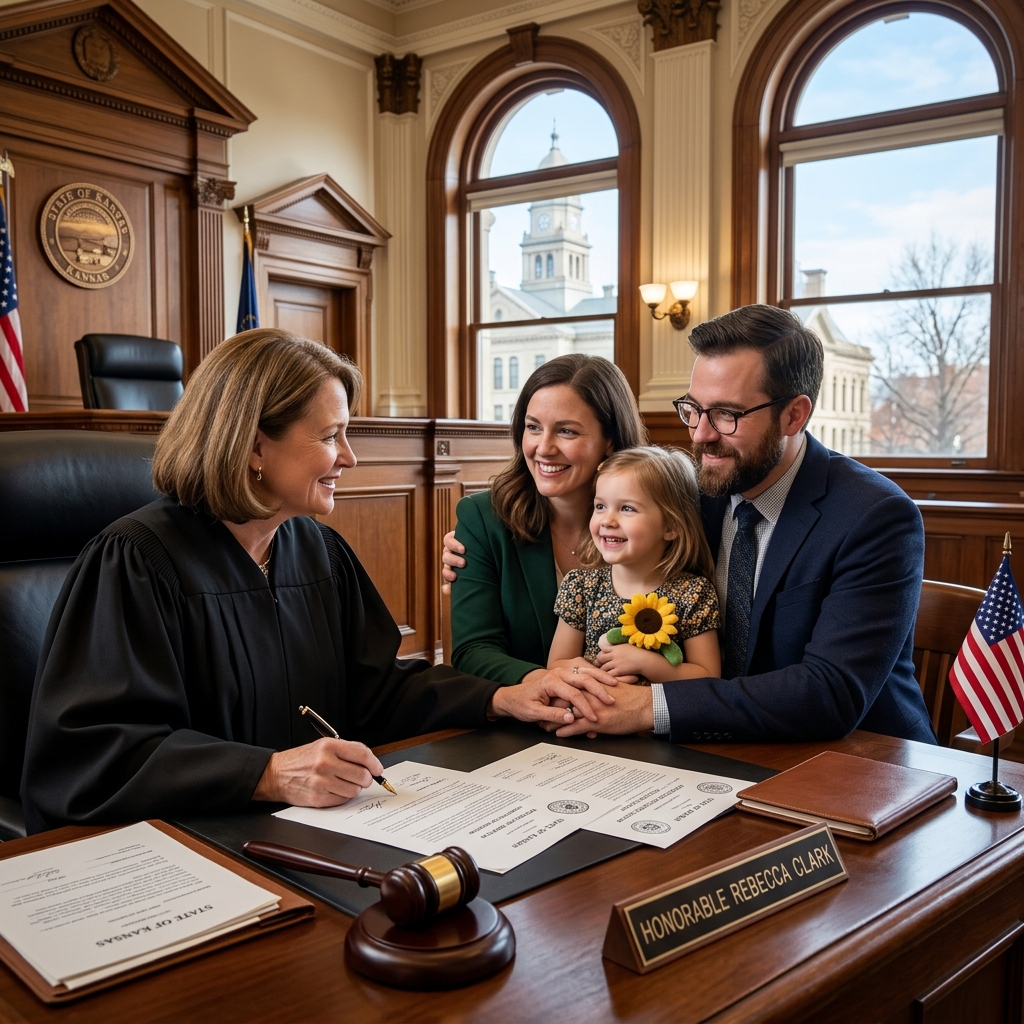
Kansas adoption law creates the legal framework for forming permanent families through adoption, from who is eligible to adopt, to the consent rules for birth parents, to the rights of children after an adoption is finalized. This guide explains the major elements of Kansas adoption law in clear language so prospective parents and relatives can better understand the process.
Core Legal Framework for Adoption in Kansas
In Kansas, adoption of minors is primarily governed by the Adoption and Relinquishment Act, codified at Kansas Statutes Annotated (KSA) 59-2111 through 59-2144. These statutes regulate:
- Termination of parental rights to the child.
- Transfer of legal custody to the adoptive parents.
- Creation of a new legal parent–child relationship with the adoptive family.
- Contents and filing requirements for adoption petitions.
- Consent standards and hearing procedures.
Additional statutory provisions address the legal consequences of adoption, such as the child’s name, inheritance rights, and the adoptive parents’ obligations.
Who May Adopt Under Kansas Law?
Kansas law is relatively broad in who it allows to adopt, focusing mainly on adulthood, marital consent, and suitability rather than specific demographic criteria.
Basic eligibility to adopt
- Adults may adopt: Any adult may petition to adopt in Kansas.
- Married couples may adopt jointly: Married partners typically adopt together, and one spouse cannot adopt without the consent of the other.
- Single adults may adopt: Single individuals are allowed to adopt on their own.
While Kansas statutes do not set a universal minimum age for adoptive parents, practice materials often note that the adoptive parent usually must be significantly older than the child, and specific programs (such as foster care adoptions) can impose additional age thresholds.
Additional practical requirements
Beyond the statute, agencies and courts may require evidence that a prospective parent can provide a safe and stable home. That assessment usually occurs through the home study and background check process described below.
Who May Be Adopted in Kansas?
Kansas permits adoption of both minors and adults, provided certain conditions are met.
Adoption of minors
- Any minor may be adopted once the parental rights of existing legal parents have been terminated or relinquished according to Kansas law.
- Children 14 years of age or older who are of sound intellect generally must consent to their own adoption.
Adult adoption
Adults may also be adopted under Kansas law, but the adult adoptee must consent. If the adult adoptee is married, the spouse’s consent is also required to move forward.
Recognized Types of Adoption in Kansas
Kansas law recognizes multiple forms of adoption, each with slightly different consent and procedural requirements.
Common adoption categories
- Agency adoptions: A licensed child‑placing agency or the state’s Department for Children and Families places the child with adoptive parents.
- Private or independent adoptions: Birth parents and adoptive parents work directly with legal counsel to arrange an adoption without an agency placing the child.
- Stepparent adoptions: A stepparent adopts the child of their spouse, typically when a non‑custodial parent’s rights are terminated or consent is given.
- Relative adoptions: Close relatives—such as grandparents, aunts, uncles or adult siblings—adopt a child in their extended family.
- Adult adoptions: An adult is adopted to formalize an existing parent‑like relationship or for other personal and legal reasons.
Key distinctions among types
| Adoption Type | Primary Involvement | Consent Pattern |
|---|---|---|
| Agency adoption | Licensed agency or Department for Children and Families | Agency representative and child (14+) must consent after parents relinquish rights. |
| Independent adoption | Birth parents, adoptive parents, and their attorneys | Birth parents and child (14+) consent directly to adoptive parents. |
| Stepparent adoption | Stepparent and custodial parent | Non‑custodial parent’s consent or court termination, plus child consent if 14+. |
| Relative adoption | Relative caregivers | Similar to independent or agency adoptions; some assessments may be waived. |
| Adult adoption | Adoptive adult and adult adoptee | Adult adoptee and spouse (if married) must consent. |
Consent Requirements and Timing
Consent is one of the most important issues in Kansas adoption law. The statutes carefully regulate who must consent, how consent must be documented, and when it may be given.
Who must consent?
- Birth parents: In independent adoptions, consent from the child’s legal mother and, where applicable, legal father or presumed father is required.
- Agency representatives: In agency adoptions, once birth parents relinquish their rights to the agency, a representative of the agency must consent to the adoption.
- Children aged 14 or older: A child who is at least 14 and of sound intellect must consent to their own adoption.
- Adult adoptees: Adults being adopted must consent, and if married, their spouse must also consent.
Form and acknowledgment of consent
Kansas law requires that consent be in writing and acknowledged before a judge or another authorized officer such as a notary. When consent is acknowledged before a judge, the judge must explain the legal consequences of the consent to the person giving it.
Timing of parental consent for newborns
To protect birth parents from pressure immediately following childbirth, Kansas law sets minimum waiting periods:
- The birth mother cannot give consent to adoption until at least 12 hours after the child is born.
- Practice materials indicate the birth father may consent within a six‑month window prior to birth, but the formal consent must still comply with statutory requirements and be in writing.
Home Study and Background Assessment
Except in limited circumstances, Kansas courts require an assessment of the prospective adoptive home to determine whether the adoption is advisable. This assessment is commonly referred to as a home study, although it may encompass more than just home visits.
Who conducts the assessment?
Under Kansas law, the court must approve the professional conducting the assessment. Eligible professionals include:
- Licensed social workers.
- Marriage and family therapists.
- Professional counselors.
- Psychologists or psychotherapists.
- Licensed child‑placing agencies.
The assessor must either have at least two years of experience in adoption services or be supervised by someone who meets this requirement.
What the home study typically covers
During the assessment, the investigator is authorized to undertake several tasks to evaluate the suitability of the adoptive home.
- Observe the child in the petitioners’ home, if the child has already been placed.
- Verify the financial information of the prospective parents.
- Check the petitioners against Kansas’s child abuse and neglect registry and, when relevant, similar registries in other jurisdictions.
- Review the genetic and medical history information filed with the adoption petition.
- Conduct face‑to‑face interviews with each household member to assess motivation, emotional stability, attitudes toward adoption, and family dynamics.
The final written assessment must be completed no more than one year before the petition for adoption is filed.
Waiver of the assessment
Kansas courts may waive the assessment requirement for relatives adopting a child. To obtain a waiver, a relative typically files a petition asking the court to waive the home study based on their relationship to the child.
Overview of the Court Process
Adoption in Kansas is completed through the district court. While procedures can vary by county and type of adoption, Kansas statutes provide a general structure for the court process.
Filing the petition
The process formally begins when the prospective adoptive parents file a petition for adoption. Kansas law requires specific documents to accompany this petition.
- Written consents to the adoption.
- Background information about the child’s biological parents.
- An accounting of all payments and financial disbursements connected with the adoption.
- Any required affidavit regarding venue (location of the case).
Scheduling of hearings and notice requirements
After the petition is filed, the court must set an adoption hearing within 60 days. For independent and stepparent adoptions, Kansas law also requires notice of the hearing to be given to certain individuals at least ten calendar days in advance.
- Parents or possible parents, unless their rights have been terminated or they have waived notice.
- Any person who has physical custody of the child, unless notice is waived.
Advisability and best‑interest determination
At the hearing, the court considers the assessment report, consents, and other evidence to decide whether the adoption is in the child’s best interests. If the court determines the placement is appropriate and all statutory requirements are met, it may approve the adoption and move the case toward finalization.
Finalization and decree of adoption
When the court finalizes the adoption, it issues a decree of adoption. This decree has several important legal effects:
- The child generally assumes the surname of the adoptive parent or parents, unless the court allows a different surname upon request.
- The court may, at the petitioners’ request, change the child’s given name.
- The adoptive parent gains all the rights and responsibilities of a birth parent.
- The adopted person gains the same personal and property rights as a birth child of the adoptive parent.
Legal Consequences of Adoption
Once finalized, adoption has long‑lasting legal consequences for both the child and the adoptive and birth parents.
Rights of the adopted child
- The adopted child is treated in law as a birth child of the adoptive parent for all personal and property rights.
- This includes inheritance rights from or through the adoptive parent.
- Adoption does not terminate the child’s right to inherit from or through a birth parent, except where specific rules apply to the spouse of the adoptive parent.
Rights and obligations of adoptive parents
Adoptive parents assume all the rights and obligations that accompany a biological parent–child relationship. That includes the duty to support the child, responsibility for decision‑making about education and health care, and entitlement to make legal choices on the child’s behalf.
Effect on birth parents
Adoption typically terminates the rights of birth parents to the adopted child, including their right to inherit from or through the child. One exception exists for a birth parent who is the spouse of the adoptive parent, such as in some stepparent adoptions.
Financial and Regulatory Considerations
Kansas, like all U.S. states, prohibits payments in exchange for the placement of a child. However, certain adoption‑related expenses may be permitted and must be fully disclosed to the court.
Prohibited payments
Direct compensation for consenting to adoption or for the transfer of custody is illegal. This prohibition is intended to prevent exploitation and trafficking in connection with adoption.
Permitted expenses
Adoptive parents may be responsible for legitimate expenses related to the adoption, which must be accounted for in the petition’s financial disclosure. Examples can include:
- Medical expenses associated with prenatal care, childbirth, and postnatal care for the child.
- Legal fees for attorneys representing birth and adoptive parents.
- Costs of home studies and assessments.
Frequently Asked Questions About Kansas Adoption Laws
Do I have to live in Kansas to adopt a child here?
No. Nonresidents may adopt a child in Kansas, but the required home study and assessment must be completed in their state of residence by a person authorized there to conduct such assessments.
Is a residency period required before the adoption is finalized?
Kansas statutes do not require a specific home residency period before finalization, though courts and agencies may consider the length and stability of placement as part of their best‑interest analysis.
Can the home study be skipped for grandparent or relative adoptions?
In some relative adoptions, the court may waive the assessment requirement if a relative files a petition requesting waiver and the judge finds the waiver appropriate.
When can a birth mother legally consent to adoption of a newborn in Kansas?
A birth mother cannot give consent until at least 12 hours after the child’s birth. Consent must be in writing and properly acknowledged under Kansas law.
Do children have a say in their own adoption?
Yes. A child who is 14 years of age or older and of sound intellect must consent to their own adoption for it to proceed.
What rights does an adopted child have after finalization?
After adoption is finalized, the adopted child has the same personal and property rights as a birth child of the adoptive parent, including inheritance rights.
References
- Kansas Adoption Laws – FindLaw — FindLaw. 2023-05-01. https://www.findlaw.com/state/kansas-law/kansas-adoption-laws.html
- Adoption of Minors: Statutory Overview — Kansas Legislative Research Department. 2020-12-01. https://klrd.gov/publications/briefing-book-2021/adoption-of-minors-statutory-overview/
- 59-2118: Legal consequences of adoption — Kansas Office of Revisor of Statutes. 2019-07-01. https://ksrevisor.gov/statutes/chapters/ch59/059_021_0018.html
- Home Study Requirements for Prospective Parents in Domestic Adoption: Kansas — Child Welfare Information Gateway, U.S. Department of Health and Human Services. 2021-09-01. https://www.childwelfare.gov/resources/home-study-requirements-prospective-parents-domestic-adoption-kansas/
- Adoption — Kansas Judicial Branch Self-Help Center. 2022-04-15. https://self-help.kscourts.gov/Adoption
- 4 Types of Kansas Adoption Laws Every Parent Should Know — American Adoptions. 2022-03-10. https://www.americanadoptions.com/kansas-adoption/kansas-adoption-laws
Similar Articles








Read full bio of medha deb


