
Understanding the Juvenile Justice System
A clear, practical guide to how the juvenile justice system works, from first police contact through court outcomes and rehabilitation.
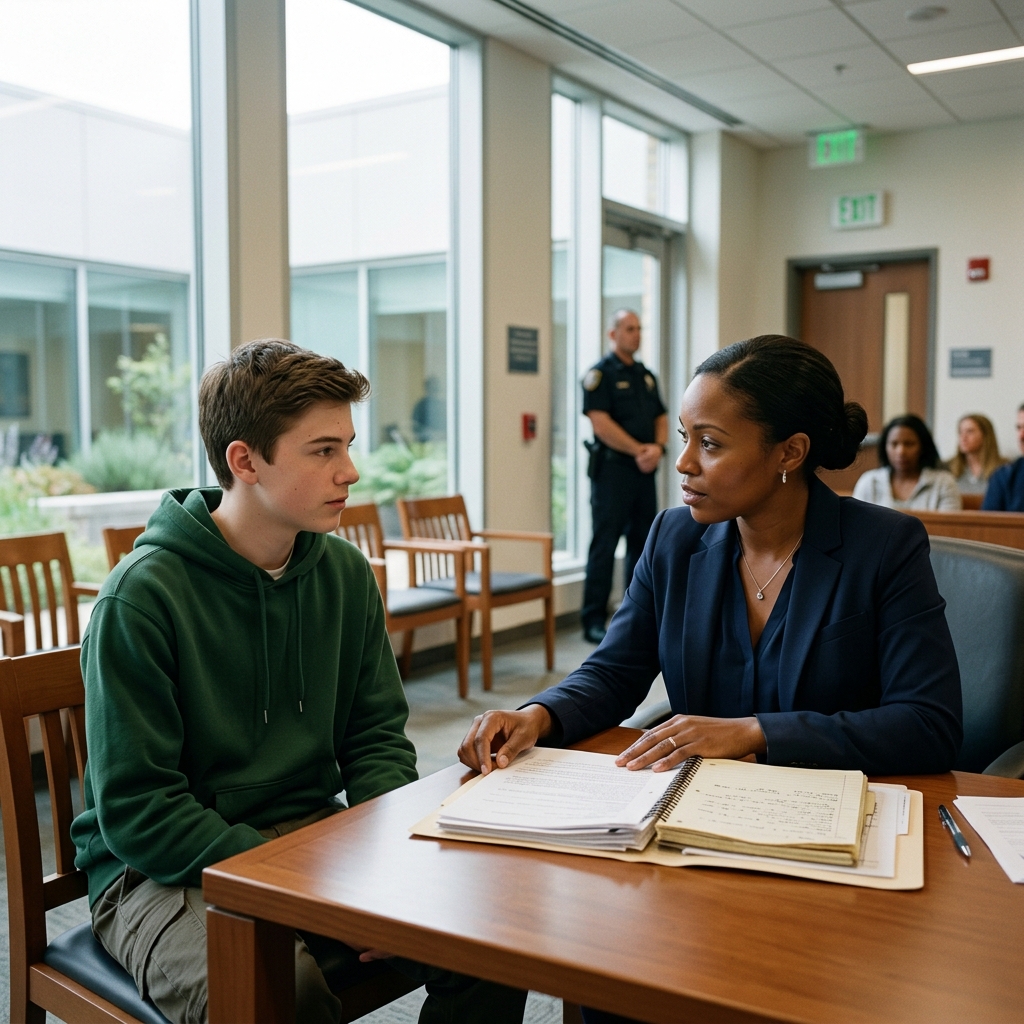
The juvenile justice system is a distinct part of the law that deals with children and teenagers accused of breaking the law. Rather than focusing mainly on punishment, it emphasizes guidance, rehabilitation, and long-term public safety by helping young people change their behavior.
This article explains how juvenile justice works in the United States, how it differs from the adult criminal system, what usually happens at each stage of a case, and what families should know if a young person is involved.
Why Juvenile Justice Is Separate From Adult Criminal Courts
Juvenile justice developed as a separate system over a century ago to respond to the unique needs of children and adolescents. Lawmakers and courts recognize that young people:
- Are still developing emotionally, socially, and neurologically.
- Make decisions differently than adults and may be more impulsive.
- Have a greater capacity to change their behavior over time.
- Often benefit more from treatment and structure than from harsh punishment.
Because of these differences, most states maintain separate juvenile courts, procedures, and correctional programs. The goal is not to excuse harmful behavior, but to hold youth accountable in ways that reduce future offending and promote healthy development.
Core Goals and Values of the Juvenile Justice System
Although specific rules vary by state, juvenile justice systems across the country share several common goals.
- Public safety: Protecting the community from harmful behavior by young people.
- Accountability: Ensuring youth understand the impact of their actions and take responsibility, often through restitution, community service, or apologies.
- Rehabilitation and treatment: Providing services that address underlying issues such as trauma, family conflict, substance use, or mental health concerns.
- Competency development: Helping youth build skills, including education, job readiness, conflict resolution, and decision-making, so they can become productive adults.
- Fairness and legal protections: Applying due process and specific safeguards designed for minors.
Many states explicitly adopt balanced and restorative
Key Differences Between Juvenile and Adult Systems
While juvenile courts use many of the same laws as adult criminal courts, they operate differently in important ways.
| Aspect | Juvenile Justice System | Adult Criminal System |
|---|---|---|
| Primary aim | Rehabilitation, behavior change, and future success. | Punishment, deterrence, and protection of society. |
| Terminology | Youth are adjudicated delinquent, and courts make dispositions. | Defendants are convicted and receive sentences. |
| Court structure | Separate courts, often with specialized judges, prosecutors, and defense attorneys. | General criminal courts handling adult cases. |
| Use of juries | Many juvenile courts do not use juries; judges decide the facts. | Defendants typically have a right to a jury trial. |
| Confinement | Placement in juvenile facilities designed to be protective and treatment oriented. | Incarceration in adult jails or prisons focused on custody and punishment. |
| Contact with adults in custody | Federal law restricts holding youth with adult inmates and limits use of adult jails for juveniles. | No comparable protections for adults. |
Importantly, only about 1% of youth in the justice system are sent to adult court; the vast majority remain in juvenile proceedings.
What Counts as a Juvenile Case?
Juvenile courts typically handle three broad types of matters:
- Delinquency offenses: Acts that would be crimes if committed by an adult (such as theft, assault, or vandalism).
- Status offenses: Behaviors that are only unlawful because of the youth’s age, like truancy, running away, or violating curfew.
- Non-offender cases: Some systems also handle matters involving child welfare, neglect, or dependency, though these follow different procedures.
States set age boundaries for juvenile jurisdiction, often including youth under 18, with some variation for serious offenses or very young children.
Major Stages of a Typical Juvenile Case
Although no two cases are identical, most juvenile matters move through a series of steps.
1. Initial Referral or Complaint
A case usually begins when a young person:
- Is arrested by law enforcement.
- Is the subject of a complaint by a school, private citizen, or agency.
- Is referred by a community program or social service provider.
The complaint or police report is sent to an intake office or juvenile probation department for review.
2. Intake Screening and Early Decisions
At intake, an officer or caseworker evaluates the situation to decide what should happen next. They consider factors such as:
- Age and prior history of the youth.
- Seriousness and circumstances of the alleged act.
- Family situation, school performance, and any known health or behavioral issues.
- Risks to public safety and the youth themselves.
Depending on this assessment, officials may:
- Issue a warning and release the youth to a parent or guardian.
- Refer the youth to a community-based program, counseling, or mediation instead of court.
- Offer formal diversion, such as a youth services agency, in exchange for completing certain conditions.
- Proceed with filing a petition in juvenile court.
Early diversion is a critical part of juvenile justice, aiming to resolve lower-level cases quickly and constructively.
3. Detention and Pre-court Placement
In more serious cases, a youth may be held temporarily in a juvenile detention facility before court. Detention is usually reserved for situations where:
- There is a significant risk of harm to others or the youth.
- The youth is unlikely to appear in court if released.
- No safe alternative placement is available.
Federal law, particularly the Juvenile Justice and Delinquency Prevention Act (JJDPA), places strict limits on detaining youth in adult jails or holding them where they have contact with adult inmates. These protections aim to reduce the risk of harm and trauma.
4. Adjudication: The Court Hearing
The main fact-finding hearing in juvenile court is called an adjudication, not a trial. The court examines evidence to decide whether the youth committed the alleged delinquent act.
Important features of adjudication include:
- The youth’s rights to notice of charges, to counsel, and to challenge evidence.
- Use of different evidentiary standards and procedures than adult criminal trials, depending on the state.
- In many jurisdictions, the judge—rather than a jury—determines the facts.
If the court finds the allegations are not supported, the case can be dismissed. If the behavior is proven, the youth is adjudicated delinquent rather than convicted.
5. Disposition: Deciding What Happens Next
After adjudication, the court holds a disposition hearing to determine the appropriate response. Dispositions are tailored to the young person’s needs and circumstances and may include:
- Warning or dismissal with no further court intervention.
- Probation, with conditions such as school attendance, curfew, counseling, or community service.
- Referral to treatment programs for mental health, substance use, or behavioral issues.
- Restitution or fines, requiring the youth to repay victims or perform work.
- Placement in a residential or group home designed for structured support.
- Commitment to a state juvenile corrections agency, possibly in a secure facility, for more serious cases.
Many juvenile systems build a supervision plan that combines conditions (such as obeying laws and school rules) with services (like counseling or skills training) to address the youth’s specific risks and strengths.
6. Aftercare and Reentry
When a youth leaves a residential or correctional program, there is often a period of aftercare. This may include:
- Continued probation or supervision.
- Support with returning to school or work.
- Ongoing therapy, mentoring, or family services.
- Monitoring to reduce the chance of new offenses.
Effective aftercare is essential because many youth struggle with reentry and may face family, school, or community challenges.
Common Responses and Programs for Youth
Juvenile justice agencies use a range of tools to respond to delinquent behavior. These often blend supervision with supports.
Probation and Community Supervision
Juvenile probation is one of the most frequently used dispositions. It allows youth to remain in the community under conditions set by the court.
Conditions might include:
- Regular meetings with a probation officer.
- Attending school and avoiding truancy.
- Following curfew and avoiding certain locations or peers.
- Participating in counseling, substance use treatment, or skill-building programs.
- Performing community service or making restitution.
Probation officers develop individualized supervision plans, often informed by assessments of risk and needs.
Treatment, Counseling, and Specialized Services
Because many youth in the system have experienced trauma, mental health issues, or difficult family environments, treatment is a central component of juvenile justice.
Services can include:
- Individual or group counseling.
- Family therapy to improve communication and support.
- Day reporting centers with education, life skills, recreation, and drug treatment.
- Specialized programs for girls, youth who have been abused, or those with specific behavioral concerns.
- Short-term residential services focused on stabilization and assessment.
Residential and Correctional Facilities
For serious or repeated offenses, courts may order placement in a residential treatment center or secure juvenile facility.
These environments typically emphasize:
- Continued education, often with on-site schools.
- Structured daily routines and behavioral expectations.
- Intensive counseling and skill-building services.
- Preparation for returning home or to a less restrictive setting.
Some states use blended or determinate sentencing for the most serious offenses, allowing a youth to start in the juvenile system and later be transferred to the adult system to complete a long sentence. This approach is controversial and usually reserved for violent or high-risk cases.
Legal Protections for Youth in the System
Because minors are vulnerable and often lack experience with courts, juvenile justice includes specific protections.
- Due process rights: Youth have rights to notice, counsel, and fair procedures, especially at adjudication.
- Separate facilities and limited contact with adults: The JJDPA sets national standards requiring separation of youth from adult inmates and restricting use of adult jails for juveniles.
- Developmentally informed policies: Modern reforms increasingly rely on research about adolescent development, recognizing that youths are different from adults and need tailored responses.
- Oversight and reauthorization: Federal youth justice legislation has been updated multiple times (1974, 1980, 1988, 1992, 2002, 2018) to improve protections and support for states.
Practical Tips for Families Facing Juvenile Court
Families play a central role in helping a young person navigate the juvenile justice process. While each case is unique, some general steps are helpful.
- Seek legal advice early: A lawyer familiar with juvenile court can explain rights, options, and likely outcomes.
- Stay involved: Attend hearings, communicate with probation or caseworkers, and support the youth in meeting court requirements.
- Ask about diversion and services: Inquire whether community-based programs or treatment alternatives are available and appropriate.
- Support school and positive activities: Encouraging education, sports, arts, or work can build protective factors that reduce reoffending.
- Focus on long-term change: Court involvement is stressful, but it can also be an opportunity to address deeper issues and connect with resources.
Frequently Asked Questions (FAQs)
Does juvenile court mean my child has a criminal record?
Juvenile cases are handled in a separate system, and youth are adjudicated delinquent rather than convicted. However, records of juvenile proceedings may still exist and can affect future opportunities, depending on state law and whether records are sealed or expunged. It is important to ask a lawyer about local rules.
Can a juvenile be tried as an adult?
In rare cases, usually involving serious violent offenses, a youth may be transferred or waived into adult criminal court. Overall, only a small percentage—around 1%—of youth in the justice system are sent to adult court. Most young people remain in juvenile proceedings.
What is a status offense, and how is it treated?
Status offenses are behaviors that are only illegal because of the youth’s age, such as truancy, underage drinking, or running away. Many jurisdictions emphasize diverting these cases from formal court and addressing them through services, family support, or school-based interventions rather than detention.
Is juvenile detention the same as jail?
No. Juvenile detention facilities are separate from adult jails and are meant to be more protective, with access to schooling and treatment. Federal law strongly discourages holding juveniles in adult jails or anywhere they have contact with adult inmates.
What happens after a juvenile leaves a residential program?
After release, youth often enter an aftercare period that may include probation, counseling, and support with school or work. Successful reentry depends on coordinated efforts among the youth, family, schools, and community agencies.
References
- Juvenile Justice System — Connecticut Office of Policy and Management. 2023-06-01. https://portal.ct.gov/opm/criminal-justice-planning/cjppd-main-file/cj-jjyd/main-navigation/juvenile-justice-system
- Juvenile System & Juvenile Courts — Maryland People’s Law Library. 2022-05-10. https://www.peoples-law.org/juvenile-system-juvenile-courts
- Juvenile Justice System Structure & Process — Office of Juvenile Justice and Delinquency Prevention (OJJDP). 2021-09-15. https://ojjdp.ojp.gov/statistical-briefing-book/structure_process
- What Is Juvenile Justice? — Annie E. Casey Foundation. 2020-11-18. https://www.aecf.org/blog/what-is-juvenile-justice
- Chapter: The Juvenile Justice System — National Academies Press. 2001-01-01. https://www.nationalacademies.org/read/9747/chapter/7
- Juvenile Justice 101: Facts About Youth Crime — Office of Juvenile Justice and Delinquency Prevention (OJJDP). 2019-12-20. https://ojjdp.ojp.gov/juvenile-justice-101
- The Juvenile Justice System in Texas — Texas Juvenile Justice Department. 2023-04-07. https://www.tjjd.texas.gov/about-the-tjjd/the-juvenile-justice-system-in-texas/
Similar Articles








Read full bio of Sneha Tete




