
Understanding Jury Nullification in Criminal Trials
Explore how and why juries sometimes refuse to apply the law, even when they believe a defendant is technically guilty.
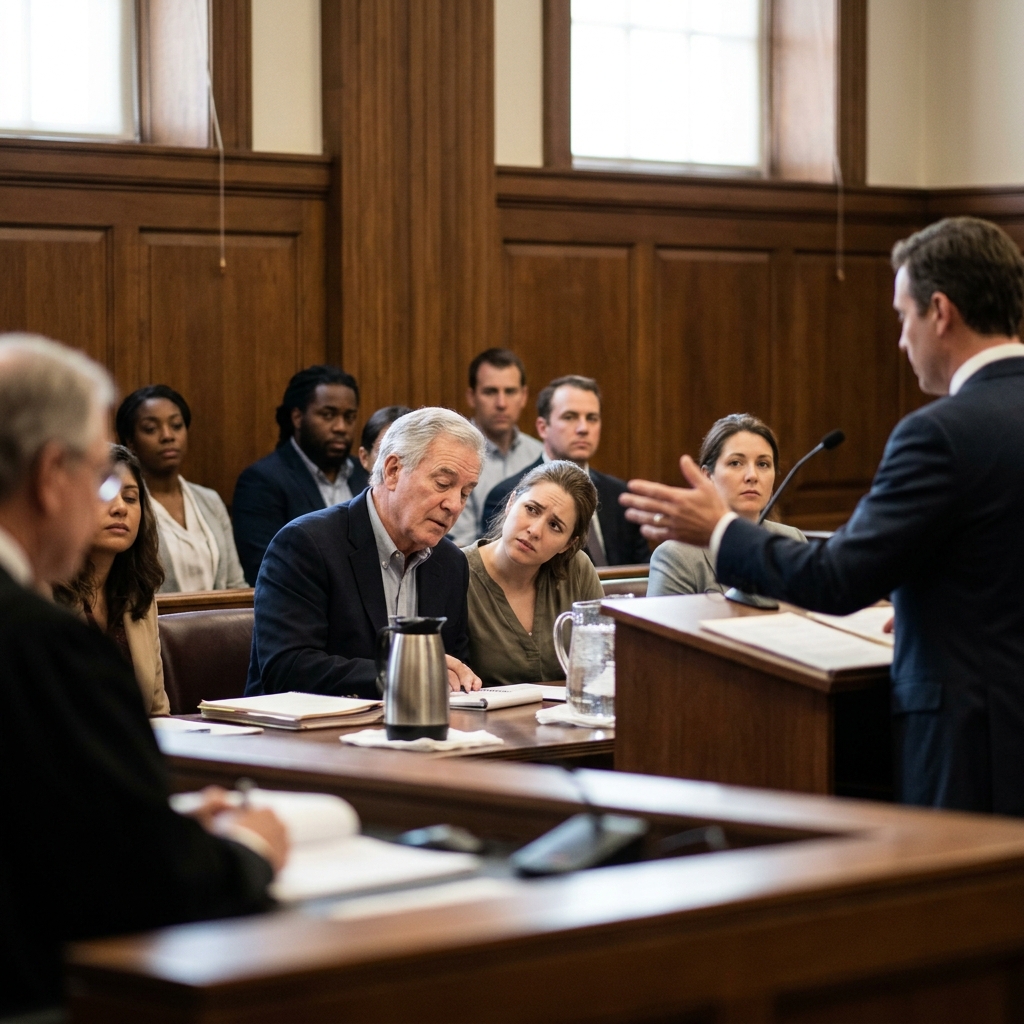
Jury nullification is one of the most powerful and least discussed features of the criminal justice system. It occurs when a jury returns a not guilty verdict even though jurors believe, beyond a reasonable doubt, that the defendant violated the law as written. In these rare situations, the jury consciously chooses not to apply the law because doing so would conflict with its sense of justice, fairness, or morality.
Although judges instruct jurors to follow the law, juries are ultimately free to acquit for almost any reason, and a not guilty verdict cannot be overturned or appealed. This combination of independence and finality gives juries a quiet but significant ability to act as a check on government power and on laws they view as unjust.
What Is Jury Nullification?
At its core, jury nullification is a deliberate decision by jurors to disregard either the law, the evidence, or both, in order to reach a verdict that they believe is morally right, even if it is legally inconsistent. It is important to distinguish this from an honest mistake or confusion about jury instructions. For nullification, jurors must knowingly refuse to apply the law as given.
- Deliberate refusal: Jurors understand the law and the evidence but intentionally choose not to convict.
- Not guilty outcome: The classic form of nullification is a verdict of not guilty, despite belief in the defendant’s legal guilt.
- Protected jurors: Jurors cannot be punished for their verdict, and an acquittal cannot be retried due to constitutional double jeopardy protections.
Some commentators also describe a “soft” form of nullification, such as when one or more jurors hang the jury by refusing to vote guilty, even while accepting that the law was broken. The result may be a mistrial rather than a final acquittal, but the underlying idea is similar: jurors are declining to enforce the law as written.
Why Would a Jury Refuse to Apply the Law?
Jurors typically swear an oath to follow the law and the judge’s instructions. Nullification occurs when that duty conflicts sharply with their deeper sense of right and wrong. Legal scholars identify several common reasons why juries might nullify:
| Reason for Nullification | Typical Juror Concern |
|---|---|
| Law viewed as unjust | Jurors believe the law itself is morally wrong or discriminatory. |
| Punishment seen as excessive | Jurors feel the mandatory sentence is far harsher than the defendant deserves. |
| Unfair application of law | Jurors think the law is being applied in a way that is disproportionate or targeted at this particular defendant. |
| Government misconduct | Jurors want to respond to serious investigative or prosecutorial misconduct. |
| Bias or sympathy | Jurors feel strong empathy for the defendant or distrust the authorities involved. |
Historically, juries have nullified in cases involving unpopular or controversial laws, such as those regulating speech, religion, or certain moral behaviors. In modern practice, nullification is thought to occur most often in cases where the law is seen as overbroad or the consequences of conviction would be unduly harsh, even for a technical violation.
How Jury Nullification Fits Within the Legal System
Jury nullification occupies a paradoxical space: it is a real power that juries possess, but it is not an officially sanctioned right. Courts generally describe nullification as inconsistent with jurors’ duty to apply the law to the facts. Judges and lawyers are not allowed to explicitly encourage jurors to nullify.
At the same time, several structural features of the criminal justice system make nullification possible and effectively protect it:
- Jurors cannot be punished or legally questioned for the reasons behind their verdict.
- An acquittal cannot be overturned on appeal, even if it appears to conflict with the evidence.
- Deliberations are secret, and jurors do not have to explain how they reached their conclusion.
Some legal scholars argue that this arrangement reflects a deliberate design: juries are meant to serve not only as finders of fact but also, in extreme cases, as a community safeguard against oppressive laws or government overreach. Others counter that such a power undermines legal predictability and can enable bias and inconsistent application of the law.
Types of Jury Nullification in Criminal Cases
Although every instance of nullification is fact-specific, researchers have identified several recurring patterns in how juries use this power. Understanding these categories can help observers distinguish principled objections to the law from problematic misuse.
1. Objections to the Law Itself
In some cases, jurors view the underlying statute as unjust or outdated. They may believe that criminalizing the conduct at issue is morally wrong, discriminatory, or inconsistent with modern community values.
Key features of this category include:
- Jurors generally accept the factual evidence but reject the legitimacy of the law.
- The verdict sends a symbolic message that the community does not support enforcement of this particular rule.
- Repeated nullification in similar cases can indicate a broader mismatch between legislative policy and public attitudes.
2. Concern Over Excessive Punishment
Another common scenario arises when the law carries mandatory penalties that jurors find disproportionately severe. Even if they believe the defendant technically violated the statute, they may refuse to convict because the consequences appear too harsh.
This form of nullification often involves:
- Mandatory minimum sentences that remove judicial discretion.
- Penalties that seem out of proportion to the harm caused.
- Jurors focusing on the human impact of a conviction rather than the legal details.
3. Objection to the Specific Application of Law
Sometimes jurors do not object to the law in general, but believe that applying it to a particular defendant would be unfair. They may see the case as an edge scenario or a technical violation that does not match the law’s intended purpose.
- Jurors view the defendant as outside the core conduct the statute meant to address.
- They believe enforcement in this instance is selective or overzealous.
- Nullification sends a message about prosecutorial discretion rather than the law itself.
4. Reaction to Government Misconduct
Juries may also nullify in response to serious governmental wrongdoing during investigation or trial, such as egregious violations of rights or procedural fairness. Even where legal remedies exist, jurors sometimes choose acquittal as a direct response to their disapproval of official conduct.
Indicators of this type include:
- Evidence obtained through apparent abuse of authority.
- Perceived unfairness or partiality in prosecution.
- Jurors using their verdict to signal boundaries on acceptable government behavior.
Is Jury Nullification Legal?
Most courts and legal commentators describe jury nullification as a power, not a right. Jurors have the ability to nullify because of how the system is structured, but they are not officially authorized or encouraged to do so.
Several important points clarify this status:
- No explicit right: Jurors are expected to apply the law as instructed; nullification conflicts with that duty.
- No punishment: Jurors cannot be sanctioned for an acquittal, even if it clearly disregards the evidence.
- No official instruction: Judges do not inform juries about nullification and may prohibit lawyers from discussing it explicitly.
From a practical perspective, this means nullification is neither formally endorsed nor realistically preventable. Once jurors enter the deliberation room, their decision-making is largely beyond outside control.
Why Lawyers Rarely Talk About Nullification
Defense attorneys may be aware that juries hold the power to nullify, but professional rules and case law limit how directly they can invoke this idea in court. Many courts forbid counsel from urging jurors to disregard the law, viewing such arguments as inconsistent with the juror’s oath and potentially as jury tampering.
In practice, this leads to several consequences:
- Lawyers focus arguments on reasonable doubt, credibility, and legal defenses rather than moral objections alone.
- Defense strategies may highlight mitigating facts or human context, inviting juror empathy without explicitly requesting nullification.
- Any direct appeal to “ignore the law” risks judicial reprimand or mistrial.
Despite these constraints, jurors retain their independent authority to reach a verdict based on their conscience once deliberations begin, and no one can force them to explain their reasoning.
Pros and Cons of Jury Nullification
Jury nullification sparks intense debate among legal scholars, judges, and advocates. It is praised by some as a democratic safeguard and criticized by others as a threat to equal justice under law.
Potential Advantages
- Community check on unjust laws: Jurors can refuse to enforce statutes that conflict with widely held moral values.
- Protection against overreach: Nullification can restrain aggressive prosecutions or disproportionate penalties.
- Flexibility in hard cases: Jurors can respond to unique circumstances that rigid legal rules may not fully account for.
Potential Risks
- Inconsistent justice: Different juries may treat similar cases differently, undermining predictability and equal treatment.
- Bias and prejudice: Nullification can be misused to acquit favored defendants or ignore harm to unpopular victims.
- Weakening rule of law: Regular reliance on nullification could erode respect for legal standards and process.
For these reasons, many courts treat nullification as something that exists but should remain exceptional. Jurors are generally encouraged to base their decisions on evidence and law, and to reserve conscience-based departures for truly extraordinary situations.
What Defendants and Jurors Should Know
For defendants, jury nullification represents both a potential source of protection and a deeply uncertain variable. It cannot be demanded, guaranteed, or openly argued for, yet it may play a quiet role in some acquittals. For jurors, understanding the concept raises ethical questions about how to balance their oath to follow the law with their personal sense of justice.
Key Takeaways for Defendants
- A jury has the power to acquit even when legal guilt appears clear, but this outcome is rare and unpredictable.
- Defense counsel cannot explicitly ask for nullification but may emphasize fairness, proportionality, and context.
- Legal strategies still focus primarily on evidence, procedure, and recognized defenses.
Key Takeaways for Jurors
- Jurors are instructed to follow the law, but they cannot be punished for a not guilty verdict.
- Nullification involves a conscious decision that the legally correct result would be morally wrong.
- Using this power carries serious responsibility, as it can both protect individuals and, if misused, undermine fairness.
Frequently Asked Questions About Jury Nullification
Is jury nullification the same as ignoring the evidence?
Not exactly. Nullification usually involves jurors who accept the evidence and the law, but still choose not to convict because the outcome would conflict with their sense of justice or fairness. In contrast, simply disregarding evidence out of confusion or error is not considered nullification.
Can a judge overturn a verdict based on nullification?
In criminal cases, a judge cannot overturn a not guilty verdict, even if it appears to be a clear case of nullification. Once acquitted, the defendant cannot be retried for the same offense due to constitutional double jeopardy protections.
Are jurors ever told about jury nullification during trial?
Generally, no. Courts do not instruct jurors that they have the power to nullify, and many decisions hold that lawyers may not directly argue for nullification. The concept tends to be discussed in academic literature and public discourse, not in courtroom instructions.
Is jury nullification considered part of jurors’ official duties?
Most courts say it is not. Jurors’ official duty is to apply the law to the facts as instructed. Nullification is better described as an inherent power that arises from the structure of the system, rather than a formal function of the jury.
Does jury nullification only happen in criminal cases?
While nullification is most commonly discussed in criminal trials, similar issues can arise in civil cases. However, in civil matters, judges have more tools to respond to verdicts that appear clearly unsupported by the evidence, such as ordering a new trial or entering judgment notwithstanding the verdict.
References
- What Is Jury Nullification? — Fully Informed Jury Association. 2024-01-01. https://fija.org/library-and-resources/library/jury-nullification-faq/what-is-jury-nullification.html
- Jury Nullification — Legal Information Institute, Cornell Law School. 2023-05-10. https://www.law.cornell.edu/wex/jury_nullification
- Jury Nullification — Famous Trials, Douglas O. Linder. 2019-06-01. https://www.famous-trials.com/zenger/99-nullification
- What Is Jury Nullification in Criminal Law? — The Law Offices of David S. Chesley. 2024-11-15. https://www.lacriminaldefenseattorney.com/blog/2024/november/what-is-jury-nullification-in-criminal-law-/
- The Semantics of Jury Nullification: How Terminology Shapes (and Misshapes) the Jury’s Role — Harvard Law Review, Vol. 139. 2016-04-01. https://harvardlawreview.org/print/vol-139/the-semantics-of-jury-nullification-how-terminology-shapes-and-misshapes-the-jurys-role/
- Considering Jury Nullification: When May and Should a Jury Reject the Law? — Office of Justice Programs, National Criminal Justice Reference Service Abstract. 2000-01-01. https://www.ojp.gov/ncjrs/virtual-library/abstracts/considering-jury-nullification-when-may-and-should-jury-reject-law
Similar Articles








Read full bio of Sneha Tete




