
Understanding Interstate Stalking Under U.S. Federal Law
A practical guide to interstate stalking, federal protections, safety planning, and victim assistance resources in the United States.
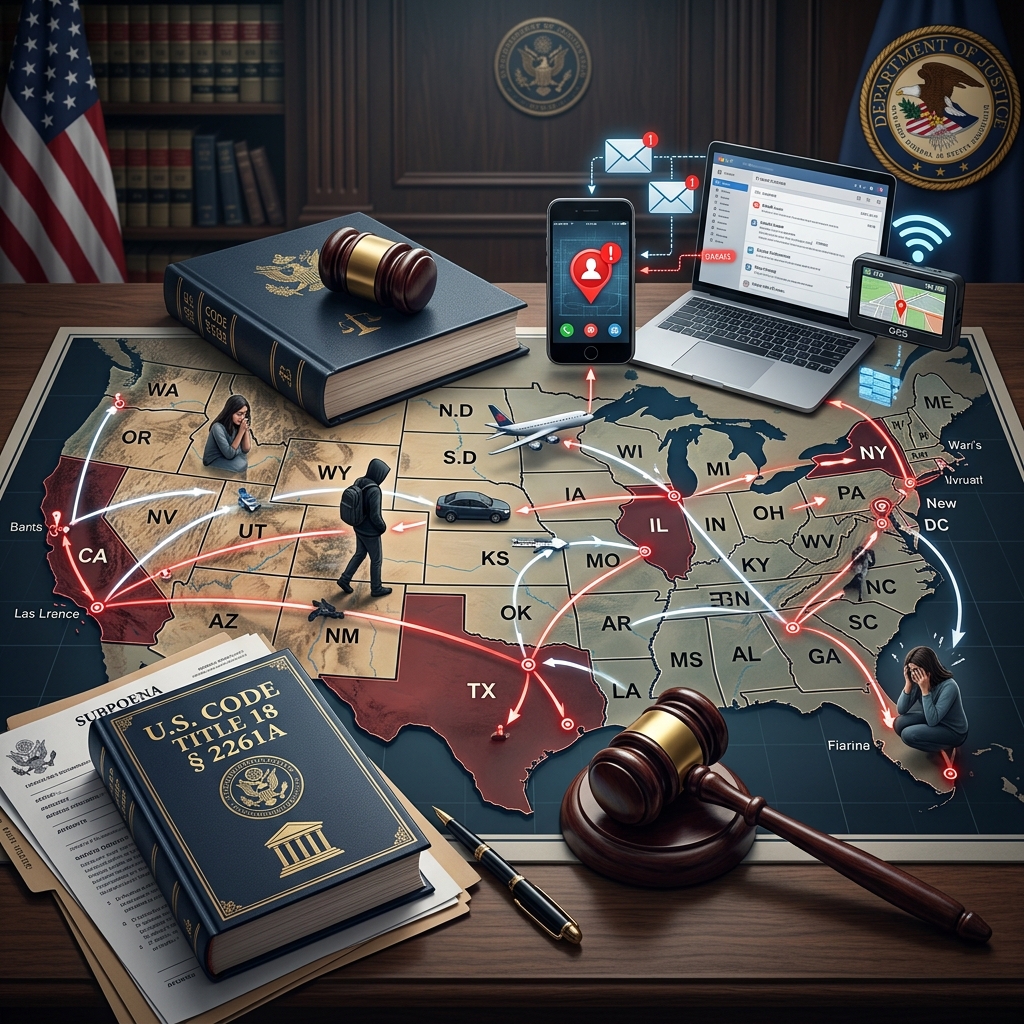
Interstate stalking is more than persistent unwanted attention—it is a serious federal crime that can involve travel across state lines or the use of technology to threaten, harass, or terrorize another person. It often leaves victims feeling unsafe not only in their homes and workplaces, but also in digital spaces where contact can be constant and invasive.
This guide explains how interstate stalking is defined under federal law, what protections exist for victims, practical steps to enhance safety, and where to find reliable help and support. It is designed for victims, their supporters, and professionals seeking a clear, practical overview.
What Is Interstate Stalking?
Under U.S. federal law, interstate stalking generally occurs when someone uses interstate travel or interstate communication systems to carry out a pattern of threatening or harassing conduct that causes fear of serious harm or substantial emotional distress.
Key elements typically include:
- Intent: The person acts with the intent to kill, injure, harass, intimidate, or place the victim under surveillance for those purposes.
- Interstate connection: The stalker either travels across state lines, enters or leaves tribal lands, is present on federal property, or uses interstate facilities such as mail, phone networks, or internet services.
- Course of conduct: The behavior is not a one-time incident; it involves repeated actions that form a pattern, such as repeated calls, messages, or physical approaches.
- Impact on the victim: The conduct places the victim or close family in reasonable fear of death or serious bodily injury, or causes substantial emotional distress.
Federal law applies in addition to state and local stalking statutes. A case may be investigated and prosecuted at the federal level when there is a strong interstate or federal property connection, or when the behavior meets specific criteria outlined in federal statutes.
Federal Legal Framework for Interstate Stalking
The primary federal law addressing interstate stalking is 18 U.S.C. § 2261A, often referred to simply as the federal stalking statute.
Core Provisions of 18 U.S.C. § 2261A
| Type of Conduct | Interstate Element | Required Intent & Impact |
|---|---|---|
| Physical travel and presence | Travel in interstate or foreign commerce, presence on federal property, or entering/leaving Indian country. | Intent to kill, injure, harass, intimidate, or surveil, and conduct that causes reasonable fear of death or serious bodily injury, or substantial emotional distress. |
| Use of interstate communications | Use of mail, interactive computer services, electronic communication systems, or other interstate facilities. | Same intent as above, combined with a course of conduct causing fear of serious harm or substantial emotional distress. |
Federal law recognizes stalking that causes not only physical danger but also severe psychological harm. Emotional impacts such as intense anxiety, depression, or ongoing fear may fall within the concept of “substantial emotional distress” described in the statute.
Penalties and Sentencing Factors
Interstate stalking is classified as a felony. The level of punishment can increase when the crime results in severe outcomes or involves aggravating factors. For example, where a victim suffers permanent disfigurement, life-threatening injury, or death, federal sentencing guidelines allow for significantly enhanced penalties, including long terms of imprisonment.
Common factors that influence sentencing include:
- Use of a weapon: Use of a dangerous weapon may lead to higher penalties.
- Serious bodily injury: More severe physical harm can increase the maximum sentence.
- Violation of court orders: Committing stalking in violation of restraining or protective orders can trigger additional penalties.
- Death of the victim: Where the victim dies as a result of the conduct, penalties can reach up to life imprisonment.
Even when physical injury does not occur, interstate stalking can still carry substantial prison time and fines. The federal system treats patterns of harassment and intimidation that cause serious fear or distress as meaningful harm in their own right.
Recognizing Warning Signs of Stalking
Stalking behavior can escalate over time. Recognizing early warning signs helps victims document what is happening and seek protection before the situation becomes more dangerous.
Common examples of stalking behaviors include:
- Repeated, unwanted phone calls, texts, emails, or social media messages
- Uninvited appearances at home, work, school, or social activities
- Monitoring online activity, using spyware, or repeatedly checking profiles
- Following the victim in public or driving past their home or workplace
- Sending unwanted gifts, notes, or letters
- Threatening the victim, family members, pets, or close friends
- Damaging property, such as vehicles or homes
- Using others to obtain information about the victim or deliver messages
Any pattern of behavior that makes a person feel unsafe, watched, or unable to go about daily life without fear should be taken seriously, especially when it involves crossing state lines or repeated use of electronic communications.
Practical Safety Planning for Victims
While the law provides important protections, victims often need concrete, day-to-day strategies to stay safer. Safety planning can be developed with the help of victim advocates, law enforcement, or domestic violence counselors, but individuals can begin on their own by considering a few core areas.
Documenting the Stalking Behavior
Accurate documentation can be critical for police investigations, court proceedings, and victim assistance applications. Federal victim resources often emphasize careful record keeping.
Useful steps include:
- Maintain a detailed log: Record dates, times, locations, and descriptions of each contact, including what was said or done.
- Save communications: Keep voicemails, texts, emails, social media messages, and letters, including envelopes with postmarks.
- Capture screenshots: Take screenshots of threatening or harassing posts or messages before they can be deleted.
- Document threats: Write down exact language used in any threat and note witnesses who heard or saw it.
- Preserve physical evidence: Photograph damaged property, injuries, or locations where incidents occurred.
Whenever possible, store copies of documentation in a secure location that the stalker cannot access, such as a password-protected cloud account or with a trusted friend.
Enhancing Home and Personal Security
Basic safety measures can make it harder for a stalker to approach without detection and can provide victims with clearer options if danger escalates.
- Improve locks and entries: Use sturdy locks; consider deadbolts and secure windows.
- Screen phone calls: Use voicemail or answering machines to document harassing calls and reduce direct contact.
- Maintain privacy of contact information: Consider unlisting phone numbers and being cautious about sharing addresses.
- Vary routines: Change travel routes, schedule, or places frequented to reduce predictability.
- Protect children and pets: Keep them supervised and avoid unsupervised outdoor time when risk is high.
Some victims also explore technological safety measures, such as two-factor authentication for accounts, regularly changing passwords, and reviewing privacy settings on social media platforms.
Building a Support and Alert Network
Victims do not need to manage stalking alone. Informing trusted individuals helps create a network of eyes and ears.
- Tell friends and family: Share a recent photo or description of the stalker and their vehicle if known.
- Notify neighbors or landlords: Ask them to call police if they see the stalker on or near the property.
- Inform your employer: Provide a picture or description and develop a plan if the stalker appears at your workplace.
- Establish code words: Create simple phrases to signal to trusted contacts that you need help immediately.
Coordinating with supportive people can reduce isolation and help ensure that incidents are noticed and reported quickly.
Reporting Interstate Stalking and Seeking Legal Protection
Victims of interstate stalking may interact with several systems: local law enforcement, state courts, federal agencies, and victim assistance programs.
Contacting Law Enforcement
If you believe you are in immediate danger, the priority is to contact local police or sheriff’s departments by calling 911. Local officers can respond quickly, document incidents, and help connect victims with protective orders and other safeguards.
In situations with clear interstate elements or severe threats, cases may also be referred to federal agencies such as the Federal Bureau of Investigation (FBI), which investigates federal crimes including interstate stalking.
Protective Orders and Restraining Orders
Many victims seek civil protection in the form of restraining or protective orders through local courts. These orders can:
- Prohibit the stalker from contacting or approaching the victim
- Restrict telephone, electronic, or written communications
- Set boundaries around home, workplace, or schools
- Address custody and visitation exchanges, where applicable
Federal law takes violations of protective orders seriously. Stalking that occurs in violation of such orders can be subject to enhanced penalties under federal statutes.
Victim Assistance and Compensation
Victims may be eligible for assistance programs that provide counseling, emergency shelter, legal advocacy, and in some cases financial compensation for certain crime-related expenses. State-level victim compensation programs are often administered by criminal justice or victims’ services agencies.
In addition, U.S. Attorney’s Offices maintain Victim Witness Assistance Programs to guide federal crime victims through the justice process, explain rights, and help coordinate services.
National and Local Help Resources
Specialized hotlines and advocacy centers can provide guidance, emotional support, and information about local options. National organizations often maintain 24-hour phone lines staffed by trained advocates.
Examples of widely recognized resources include:
- National Domestic Violence Hotline: Provides confidential support, safety planning, and connections to local services across the country.
- National Center for Victims of Crime: Offers information on crime victims’ rights, resources, and referral services.
- National Organization for Victim Assistance: Supports crime victims with advocacy and assistance referrals.
Many states also operate domestic violence hotlines, crisis centers, and coalitions that can help victims of stalking understand local laws, file for protective orders, and secure emergency housing or counseling.
Interstate Stalking and Technology
Modern technology plays a major role in many interstate stalking cases. Federal law explicitly covers the use of interactive computer services and electronic communication systems as part of a stalking course of conduct.
Common digital behaviors associated with stalking include:
- Excessive text and messaging across multiple platforms
- Use of GPS tracking devices or invasive phone apps
- Monitoring social media check-ins, photos, or friend lists
- Hacking email or social media accounts
- Impersonating the victim online to cause harm
Victims can reduce risk by tightening privacy settings, limiting location-sharing, and regularly reviewing what information is publicly available online. Legal professionals and advocates can help victims understand when online activity crosses the threshold into criminal interstate stalking.
Frequently Asked Questions (FAQs)
1. When does stalking become a federal offense?
Stalking may become a federal offense when the stalker’s conduct involves interstate travel, use of interstate communication systems like the internet or phone networks, presence on federal property, or entering or leaving tribal lands, and when the behavior is intended to kill, injure, harass, intimidate, or surveil the victim and causes serious fear or substantial emotional distress.
2. Do I have to be physically harmed for interstate stalking laws to apply?
No. Federal law recognizes both physical harm and serious psychological or emotional harm. A course of conduct that causes reasonable fear of serious bodily injury or death, or substantial emotional distress, can fall under the interstate stalking statute even if physical injury has not yet occurred.
3. Can online harassment alone qualify as interstate stalking?
Yes, in some circumstances. If a stalker uses electronic communication services or other interstate facilities to repeatedly harass, threaten, or intimidate a victim across state lines, and the conduct meets the legal standards of intent and impact, it may qualify as interstate stalking under federal law.
4. Should I contact local police or federal authorities first?
If you are in immediate danger, contact local law enforcement by calling 911. Local police can respond quickly and begin documentation. In cases with clear interstate elements or severe threats, local authorities may coordinate with federal agencies such as the FBI to investigate potential federal crimes.
5. What should I bring when I meet with law enforcement or a victim advocate?
Bring any documentation you have collected: a log of incidents, copies of threatening messages, screenshots of social media posts, photos of injuries or property damage, and any existing protective orders. This information helps professionals understand the scope of the problem and determine whether federal or state laws may apply.
References
- Interstate Stalking — U.S. Department of Justice, U.S. Attorney’s Office (NDGA). n.d. https://www.justice.gov/usao-ndga/victim-witness-assistance/interstate-stalking
- 18 U.S.C. § 2261A – Stalking — Legal Information Institute, Cornell Law School. n.d. https://www.law.cornell.edu/uscode/text/18/2261A
- 18 U.S.C. § 2261A: Interstate stalking — U.S. Code (Office of the Law Revision Counsel). 2000-10-06. https://uscode.house.gov/view.xhtml?req=granuleid:USC-2000-title18-section2261A
- The Interstate Anti-Stalking Punishment and Prevention Act of 1996 — Office for Victims of Crime, U.S. Department of Justice. 1996. https://ovc.ojp.gov/sites/g/files/xyckuh226/files/pubs/OVC_Archives/nvaa/supp/t-ch21-2.htm
- Interstate Stalking — U.S. Department of Justice, U.S. Attorney’s Office (CDCA). n.d. https://www.justice.gov/usao-cdca/interstate-stalking
- Federal Stalking Laws — Federal Resource Information Services. n.d. https://fris.org/laws/federal-stalking-laws/
- New York Federal Interstate Stalking Lawyer — Jeffrey Lichtman Law Firm. n.d. https://jeffreylichtman.com/new-york-federal-crimes-lawyer/kidnapping/interstate-stalking/
Similar Articles








Read full bio of Sneha Tete




