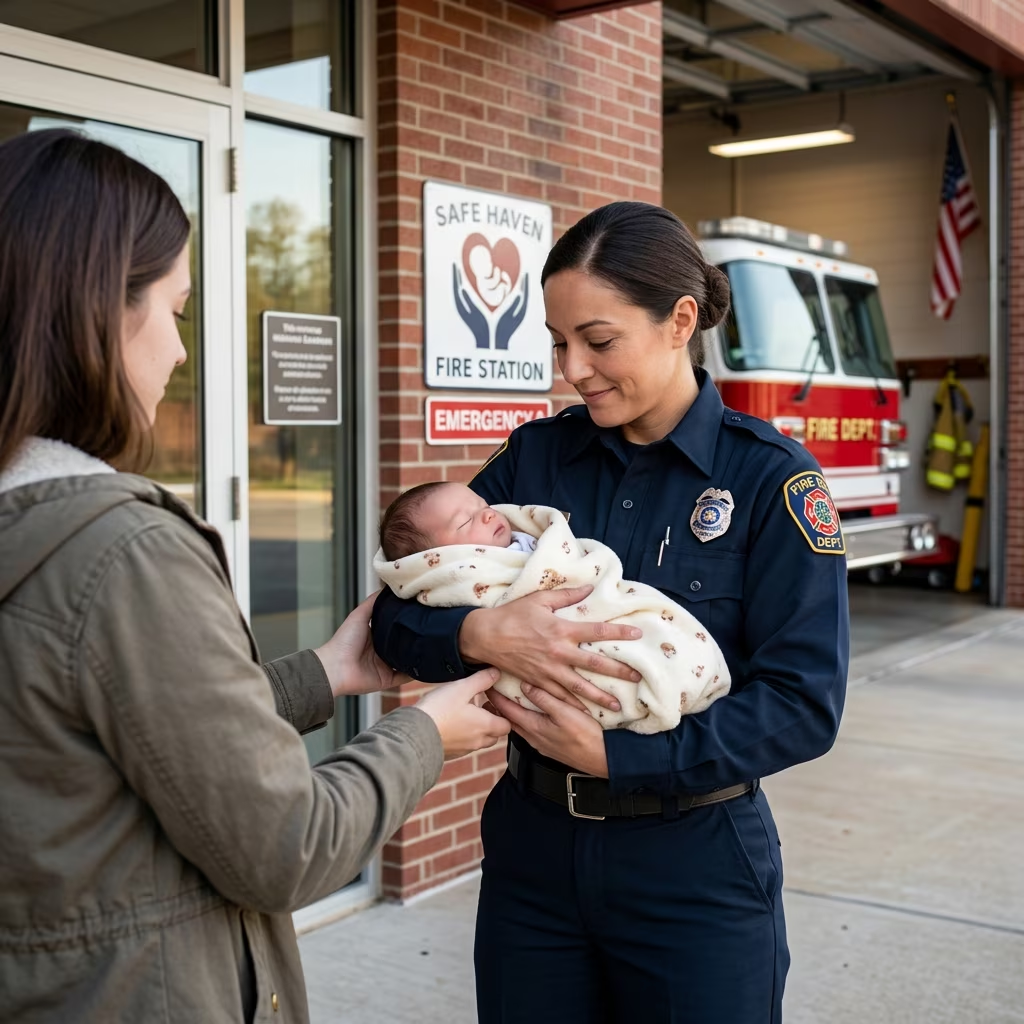
Across the United States, Safe Haven laws provide a critical safety net for newborns and for parents who feel unable to care for a baby. These laws make it possible to legally, safely, and often anonymously relinquish an unharmed infant at certain locations, ensuring the child is protected and can be placed into appropriate care and, in many cases, adoption.
Every state has its own version of a Safe Haven statute, which means the details vary. However, the central goal is the same: prevent dangerous abandonment of infants and provide a humane, legal alternative.
What Are Safe Haven Laws?
Safe Haven laws are state statutes that decriminalize the act of leaving an unharmed infant with approved individuals or facilities, so long as specific conditions—such as the baby’s age and surrender location—are met. When a parent or other legally authorized person complies with these rules, they generally avoid criminal charges for abandonment or neglect, and the baby becomes a ward of the state or is quickly routed into the child welfare and adoption system.
- Primary purpose: Prevent infants from being abandoned in unsafe places where they might be harmed or killed.
- Core mechanism: Allow surrender at designated Safe Haven locations, often without identifying the parent to authorities.
- Legal protection: Provide immunity from prosecution for abandonment or related offenses when the law’s conditions are met.
While these laws are sometimes referred to as “Baby Moses” laws in popular discussion, most statutes use terms like “Safe Haven,” “Safe Surrender,” or “Infant Safe Haven.”
Why Safe Haven Laws Were Created
Safe Haven laws emerged in response to highly publicized cases of infants being left in dangerous locations—dumpsters, public restrooms, alleys, or remote areas—where many died or were seriously injured. Lawmakers and child welfare advocates sought a legal approach to reduce these tragedies.
Key policy goals include:
- Reducing infant deaths caused by unsafe abandonment.
- Offering parents in crisis a practical alternative when they feel they cannot care for a newborn.
- Protecting medical confidentiality by allowing anonymous surrender while still encouraging voluntary health information sharing.
- Streamlining placement into foster or adoptive care so infants receive stable environments as early as possible.
In addition, some policymakers view Safe Haven laws as one option among several for parents experiencing a crisis pregnancy, alongside parenting, adoption, and other social support programs.
Basic Features Common to Most States
Although each state’s statute is unique, several core elements are broadly shared across the United States.
| Common Feature | Typical Approach |
|---|---|
| Who may surrender | Usually a parent; some laws allow another adult with lawful custody. |
| Infant age limit | Ranges from about 72 hours to several weeks or months, depending on the state. |
| Safe Haven locations | Hospitals, staffed fire stations, police stations, and sometimes churches or health clinics. |
| Anonymity | Many laws permit surrender without giving a name; a tracking bracelet or code may link parent and child. |
| Legal protection | Immunity from criminal charges for abandonment when conditions are satisfied. |
| Post-surrender options | Short window in some states to reclaim the child; child welfare assumes custody if the child is not reclaimed. |
Who Can Use a Safe Haven?
Most statutes specify that the parent may surrender the infant. Some extend this right to another adult who has lawful physical custody, such as a guardian.
Depending on the state, the law may provide that:
- Only a parent can legally surrender the infant.
- A parent’s designee or another person with legal custody may also surrender the baby.
- The surrendering individual generally must have the authority to make decisions about the child.
Safe Haven laws do not typically require proof of parentage at the moment of surrender. The focus is on the infant’s safety, not on verifying identity.
Age Limits for Infant Surrender
Time limits are a crucial part of Safe Haven laws. The law applies only if the infant is under a certain age; beyond that, parents must use other legal avenues such as formal adoption or voluntary placement through child welfare agencies.
Examples of age limits include:
- Approximately 72 hours (three days) in some states.
- Up to 21 days or similar short windows in others.
- As long as one month or more in jurisdictions with broader coverage.
Because these limits vary significantly, anyone considering Safe Haven surrender should verify the current law in their state.
Where Can a Newborn Be Safely Relinquished?
Safe Haven laws specify designated surrender locations—places where staff are trained and able to receive an infant safely and immediately connect the child with medical and social services.
Typical Safe Haven sites include:
- Hospitals (particularly emergency departments).
- Staffed fire stations, often those operating 24/7.
- Police stations or sheriff’s offices with personnel on duty.
- In some states, churches, health clinics, or adoption agencies designated by law.
In practice, the parent or caregiver must hand the infant directly to an on-duty employee, not leave the baby outside or unattended. For example, one county program instructs parents to go into any hospital or fire station, give the baby to an employee, and obtain documentation of the surrender.
How the Safe Haven Surrender Process Typically Works
While specific procedures vary by state and locality, the general process often follows a similar pattern.
- Arrival at a Safe Haven location: The parent or surrendering adult goes to a designated site such as a hospital or fire station during any time that staff are available.
- Direct handoff to staff: The infant is given directly to an employee—commonly in the emergency room or front desk area.
- Immediate medical assessment: Staff ensure the baby is safe and provide any necessary medical evaluation or care.
- Offer of a medical history form: The parent is often invited—but not required—to complete an anonymous medical questionnaire to help future caregivers and doctors.
- Identification bracelet or code: In some programs, matching ID bracelets or codes are issued to the infant and surrendering adult, allowing possible reclaim within a limited period.
- Notification of child welfare authorities: The facility contacts the appropriate child welfare agency so that custody, placement, and court procedures can begin.
Throughout this process, many states emphasize confidentiality and nonjudgmental treatment of the surrendering parent.
Anonymity and Confidentiality
One of the defining features of many Safe Haven laws is the option for anonymous surrender. Parents are often not required to provide a name, Social Security number, or other identifying information.
Common confidentiality practices include:
- Issuing a numbered bracelet or code as the only link between the parent and infant in court records.
- Collecting medical information via anonymous forms rather than by name.
- Restricting how information about the surrender can be shared and who may access records.
Despite the emphasis on anonymity, parents who later wish to reclaim the child may need to contact child welfare agencies and use the provided identification bracelet or code within the specified timeframe.
Legal Protections and Limits
Safe Haven laws are carefully structured to balance protection for the infant with limited legal immunity for the surrendering adult. Understanding the scope of these protections is crucial.
Protections for the Surrendering Parent
- Immunity from abandonment charges: When the law’s conditions are met, parents are generally shielded from criminal liability for child abandonment or neglect related to the surrender.
- No fees for surrender: Programs commonly state that there is no cost to surrender an infant under Safe Haven laws.
- Access to reclaim procedures: Some laws provide a defined period in which a parent may seek to regain custody, often using identification documentation provided at surrender.
Important Limits
- The infant must be unharmed. Safe Haven laws do not shield a parent from prosecution for abuse or injury inflicted before surrender.
- The surrender must occur at a designated Safe Haven location. Leaving a child in an unsafe or unauthorized place does not qualify.
- The child must be within the statutory age limit for Safe Haven protection.
- Some states have specific rules about parental rights, including how and when they are terminated after surrender.
For parents or guardians, consulting state statutes or speaking confidentially with a legal professional or crisis counselor can help clarify these boundaries.
State Variations: Age Limits and Locations
Because Safe Haven laws are enacted at the state level, details differ substantially, especially regarding age limits and authorized surrender locations.
Illustrative differences include:
- Age limits ranging from 72 hours to 45 days or more.
- Some states specifying only hospitals and fire stations; others adding police departments, churches, or health clinics.
- Different rules about who may surrender—strictly parents in some jurisdictions, parents or designees in others.
Authoritative resources, such as nationwide reviews by child welfare agencies and research organizations, provide detailed tables of each state’s rules, often updated periodically to reflect legislative changes.
What Happens to the Baby After Surrender?
After a Safe Haven surrender, the infant enters the child protection system for evaluation, custody, and potential placement.
Typical steps may include:
- Medical examination to assess health, growth, and any urgent needs.
- Temporary custody by a child welfare agency or state department.
- Placement in foster care or with a pre-approved caregiver, often with an eye toward eventual adoption if the child is not reclaimed within legal timeframes.
- Court proceedings to establish the child’s legal status and terminate or address parental rights according to state law.
Where possible, agencies use any available medical history or information provided at surrender to support the child’s health and well-being.
Ethical and Practical Considerations
Safe Haven laws are widely supported as a life-saving measure, but they also raise important ethical and practical questions for policymakers and advocates.
- Balancing anonymity and parental rights: Ensuring parents can confidentially surrender a child while still respecting due process and possibilities for reclamation.
- Public awareness: Laws are only effective if people know they exist and understand how to use them safely.
- Connection to other services: Encouraging parents in crisis to access counseling, health care, and social services as early as possible.
- Impact on adoption systems: Integrating Safe Haven surrenders into broader child welfare and adoption frameworks.
Advocacy organizations work alongside government agencies to increase public awareness and ensure that Safe Haven programs truly provide a compassionate option for parents and children.
Frequently Asked Questions (FAQ)
Is Safe Haven surrender the same as abandonment?
No. Safe Haven surrender is a legal, structured process that protects the infant and gives the parent immunity from abandonment charges when the law’s conditions are met. Illegal abandonment typically involves leaving a child in an unsafe, unauthorized location, which is still a crime.
Do I have to give my name when I surrender a baby?
Many states allow anonymous surrender, meaning you do not have to disclose your name or personal details. However, you may be asked to provide non-identifying medical information to help future caregivers.
Can I change my mind after surrendering my baby?
Some states give a parent a limited period to reclaim the child—often days or weeks—using a bracelet or code issued at surrender. After this window closes, parental rights may be terminated through court procedures.
Is there a fee to use a Safe Haven program?
No. Safe Haven programs are typically provided at no cost to the surrendering parent.
What if I’m not sure whether Safe Haven is right for me?
Parents in crisis can contact local hotlines, social service agencies, health providers, or legal aid organizations to discuss options confidentially. National and local alliances focused on Safe Haven laws also offer information and support.
References
- Infant Safe Haven Laws — Child Welfare Information Gateway, U.S. Department of Health and Human Services. 2021-03-01. https://www.childwelfare.gov/resources/infant-safe-haven-laws/
- Safe Haven Laws – A Safe Place to Leave a Newborn — Stimmel, Stimmel & Smith. 2017-06-01. http://stimmel-law.com/articles/safe-haven-laws-safe-place-leave-newborn
- Safe Haven Laws: A Primer — Charlotte Lozier Institute. 2015-08-11. https://lozierinstitute.org/safe-haven-laws-a-primer/
- Baby Safe Surrender Program — County of Los Angeles. 2023-05-10. https://lacounty.gov/residents/public-safety/baby-safe-surrender-program/
- National Safe Haven Alliance Overview — National Safe Haven Alliance. 2022-09-01. https://www.nationalsafehavenalliance.org/