
Adoption In Illinois: 2025 Guide To Eligibility, Process & Fees
A practical, plain‑language guide to how adoption works under Illinois law, from eligibility rules to court procedures and consent.
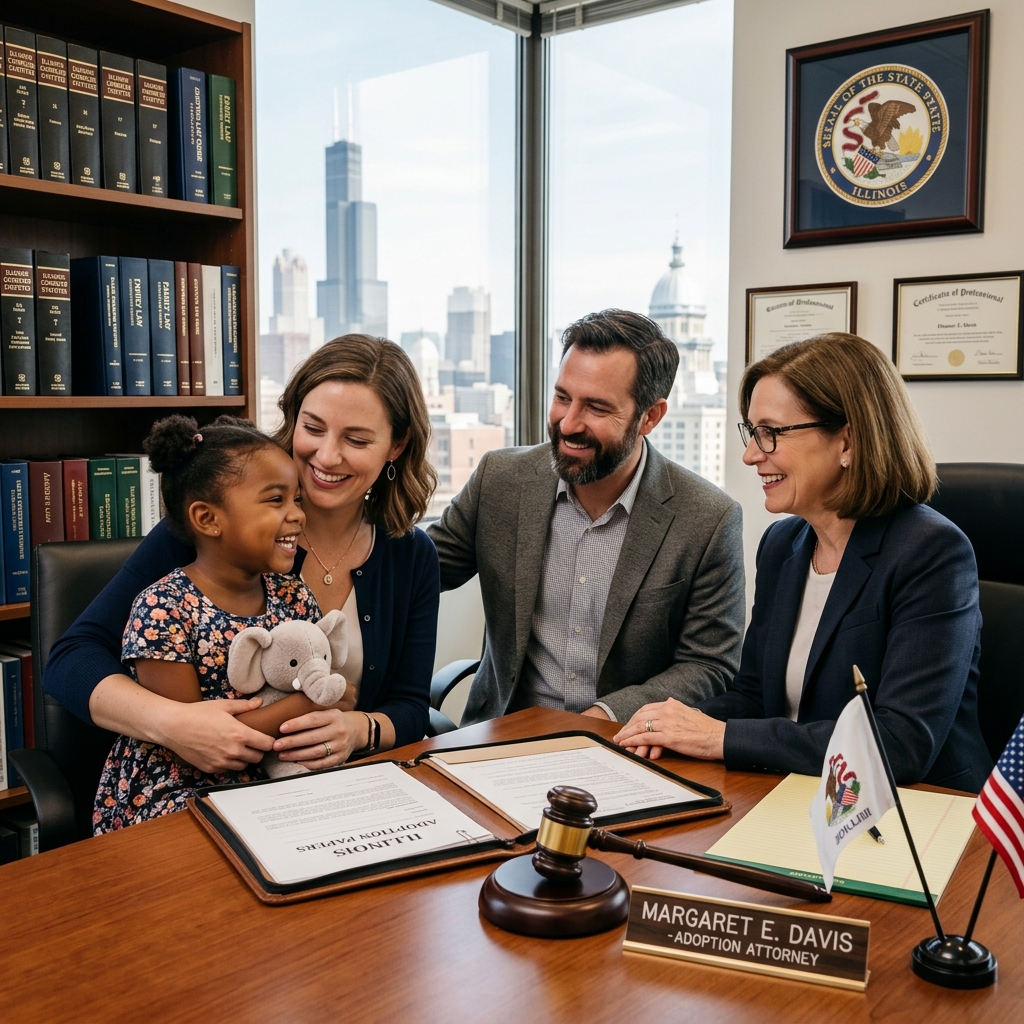
Adoption in Illinois is more than an emotional commitment; it is a formal legal process governed primarily by the Illinois Adoption Act and related state and federal laws. This guide explains how adoption works in Illinois, who is eligible to adopt, what kinds of adoptions exist, how consent operates, and what to expect from the court process.
1. Legal Foundations of Adoption in Illinois
Every adoption that takes place in an Illinois court must comply with specific statutes and rules. Understanding these foundations helps adoptive parents, birth parents, and relatives anticipate the requirements and protections involved.
- Illinois Adoption Act (750 ILCS 50) – The main state law that sets procedures, eligibility rules, and standards for all adoption proceedings in Illinois courts.
- Illinois court rules – Local rules, such as those of the Circuit Court of Cook County, control the use of forms, filing practices, and hearing procedures in adoption cases.
- Federal law for Native American children – The Indian Child Welfare Act (ICWA) applies when the child is a member or eligible member of a federally recognized tribe, adding specific protections and notice requirements.
- DCFS regulations – When a child is in foster care or an agency is involved, Illinois Department of Children and Family Services (DCFS) licensing and policy rules also apply.
In all cases, the court must ensure that the adoption terminates the legal rights of the birth parents and creates new legal parentage in a way that serves the child’s best interests.
2. Who Can Adopt a Child in Illinois?
Illinois law sets basic eligibility requirements for anyone who wants to adopt. These rules are designed to ensure that adoptive homes are safe, stable, and legally appropriate.
2.1 Core Eligibility Standards
According to Illinois legal guidance, a person may generally adopt a child if they meet the following criteria.
- Minimum age: At least 18 years old, although the court may waive this age requirement for good cause in certain situations.
- No legal disability: The prospective parent must not be under a legal disability (for example, a court-ordered guardianship over their own affairs). Blindness is explicitly excluded from being treated as a legal disability for adoption purposes.
- Residency: Typically must have lived in Illinois for at least six months, or 90 days if the person is a member of the Armed Forces stationed in the state.
- Good reputation: The person must have a good reputation, which the court evaluates using background information, references, and reports.
Illinois courts can waive certain residency rules for kinship adoptions, allowing relatives who live outside the state to adopt under specific conditions.
2.2 Married, Single, and Unmarried Partners
Illinois adoption law is generally inclusive of different family structures, but it has particular rules for married couples.
- Married couples: Usually must adopt jointly; a spouse is expected to participate in the adoption unless the couple has been separated and living apart for more than one year.
- Single individuals: May adopt on their own if they meet the same legal requirements as married applicants.
- Unmarried couples: Can adopt jointly, but courts look for a long-term and stable relationship.
- Civil union partners and other partnerships: Illinois law allows civil union partners and unmarried partners to petition jointly for adoption, subject to the same standards.
Illinois case law has confirmed that LGBTQ+ individuals and couples are allowed to adopt as long as they comply with the same requirements and the adoption is in the child’s best interests.
3. Types of Adoptions Recognized in Illinois
The Illinois Adoption Act and court practice recognize several distinct types of adoption, each with its own procedures and documentation. Knowing which category applies helps families understand the steps and timelines involved.
- Related (kinship) adoption – Adoption by a relative, such as a grandparent, aunt, uncle, sibling, stepparent, or cousin. Residency rules and some home study requirements are more flexible for these cases.
- Stepparent adoption – A non-biological spouse adopts their partner’s child, often with simplified procedures if one birth parent remains involved and parental rights of the other have been addressed.
- Agency adoption – A licensed child welfare or private adoption agency places the child with adoptive parents, following DCFS licensing rules and agency protocols.
- Private or independent adoption – The adoptive family and birth parents arrange the placement directly, often with the help of attorneys, subject to strict legal and ethical requirements.
- Foster care (DCFS) adoption – A child in the state’s foster care system is adopted, usually by a foster parent or relative, once parental rights have been terminated and permanency planning is complete.
- Adult adoption – Adoption of a person over 18, limited to specific relationships or living arrangements under Illinois law.
3.1 Comparison of Common Adoption Types
| Adoption Type | Typical Home Study Requirement | Common Use Case |
|---|---|---|
| Related / Kinship | Often waived or modified for close relatives. | Grandparent, aunt, uncle, or stepparent adopts child already in family network. |
| Agency Adoption | Required and conducted by a licensed agency or DCFS. | Infant or child placement through a licensed adoption agency. |
| Private / Independent | Generally required for unrelated placements; investigator or agency evaluates home. | Identified placement arranged directly with birth parent, often with attorneys. |
| Foster Care Adoption | Home study, licensing, and training under DCFS protocols. | Foster parent adopts child after parental rights are terminated. |
| Adult Adoption | Usually simpler; no DCFS involvement; limited statutory conditions. | Formalize long‑standing parent‑like relationship with an adult child. |
4. Consent, Termination of Rights, and the Child’s Voice
Adoption cannot move forward unless the legal rights of the birth parents are voluntarily surrendered or terminated by a court, and the necessary consents are obtained.
4.1 Birth Parent Consent
In Illinois, a prospective birth mother must give formal legal consent before a baby can be placed for adoption.
- Consent must be given after the child’s birth; pre‑birth consents are not valid under Illinois law.
- Illinois law specifies that consent cannot be executed less than 72 hours after birth, ensuring time for recovery and reflection.
- Once properly given, consent is generally irrevocable under Illinois adoption law, subject to limited exceptions such as fraud or duress.
In foster care or neglect cases, parental rights are often terminated through separate juvenile court proceedings before an adoption petition is filed, rather than by voluntary consent.
4.2 Child’s Consent and Best Interests
Illinois law gives older children a direct voice in the adoption process.
- If the person to be adopted is 14 years or older when the judge approves the adoption, the child must consent to the adoption.
- For younger children, the court considers their wishes along with other factors, but formal written consent is not required by statute.
- The judge must find that the adoption is in the best interests of the child, taking into account safety, stability, emotional bonds, and the child’s long‑term welfare.
This emphasis on best interests guides decisions in contested adoptions, termination of rights, and placement choices.
5. The Illinois Adoption Process: Step by Step
Although procedures vary by case type, most Illinois adoptions follow a similar outline from initial evaluation to final judgment.
5.1 Preparation and Home Study
For many adoptions involving unrelated children or interstate placements, a home study is required.
- A home study is conducted by a licensed Illinois child welfare agency or DCFS, depending on the case.
- The study reviews the family’s background, home safety, finances, relationships, and readiness to parent.
- Adults in the household must typically undergo criminal background checks, fingerprinting, and checks of child abuse or neglect registries.
Related or intrastate private adoptions where the birth parent is known to the family may have modified or waived home study requirements, but the court must still be satisfied that the placement is safe.
5.2 Training and Licensing for Foster Care Adoptions
Prospective parents adopting from foster care must meet additional DCFS licensing and training requirements.
- Agencies perform background checks and fingerprinting for all adults in the home.
- A physical exam is required to ensure parents can meet basic caregiving responsibilities, though perfect health is not expected.
- Illinois guidelines typically require around 39 hours of training for foster and adoptive parents, and spouses must attend if married.
- The licensing process usually takes three to six months to complete, depending on documentation and scheduling.
5.3 Filing the Adoption Petition and Court Review
Once eligibility, home study, and consent issues are addressed, the adoptive parents file a petition for adoption.
- The adoption petition is filed in the Circuit Court for the county where the adoptive parents reside or as allowed by statute.
- The petition identifies the child, the adoptive parents, the type of adoption, and the status of birth parents’ rights.
- In many cases, the court orders investigation and post‑placement supervision to confirm the child is adjusting well and the home is appropriate.
- The judge reviews all reports, consents, and legal notices before scheduling a final hearing.
5.4 Final Judgment of Adoption
The process culminates with entry of a final judgment of adoption.
- At the final hearing, the judge confirms that all legal requirements have been met and that the adoption serves the child’s best interests.
- If satisfied, the court issues a judgment creating the adoptive parent–child relationship and terminating any remaining birth parent rights.
- After adoption, DCFS is no longer legally responsible for the child if the case involved foster care; the adoptive parents assume all rights and duties, including consent for medical treatment, education, and major life decisions.
In some DCFS cases where a child has been in foster care for years and the family is well prepared, the judgment may be obtained within weeks of filing; other cases take longer due to supervision or documentation requirements.
6. Role of Licensed Agencies and DCFS
Illinois closely regulates adoption agencies to protect children, birth parents, and adoptive families.
- All agencies that provide adoption services in Illinois must be licensed by DCFS.
- Out‑of‑state and foreign agencies must be licensed, registered, or otherwise approved by DCFS before providing services in Illinois.
- Families can contact DCFS adoption support lines to verify agency licenses and seek guidance.
These licensing requirements aim to ensure ethical practices, accurate information, and proper screening of adoptive homes.
7. Costs, Financial Considerations, and Assistance
The cost of adoption in Illinois varies depending on the type of case.
- Foster care adoptions from Illinois DCFS: Adoption of a child from Illinois foster care is generally free; families may pay no agency fees.
- Out‑of‑state foster care: Adoptions from another state’s foster system may involve attorney’s fees, court costs, and other nonrecurring expenses, which may be reimbursable through state or federal programs.
- Private or agency adoptions: Costs can include agency fees, legal fees, home studies, and travel; amounts vary widely by agency and circumstances.
Prospective parents should discuss fees and potential subsidies with agencies, DCFS, and legal counsel before beginning the process.
8. Special Issues: Adult Adoption and Kinship Exceptions
8.1 Adult Adoption
Illinois allows adoption of adults, but there are specific statutory limits.
- To adopt someone over 18, the adopter must either be related to the adult or have lived with the adult for two consecutive years at some point before the adoption.
- The court still examines best interests and voluntariness, but DCFS is usually not involved.
8.2 Kinship Adoption Residency Flexibility
Illinois recognizes that relatives may be best placed to care for a child even if they live outside the state.
- Residency requirements can be waived for kinship adoptions, enabling grandparents, aunts, uncles, and other relatives to adopt without strictly meeting the usual residency period.
- Courts still require proof of suitability and may rely on home studies or investigations in the relative’s home state.
9. Frequently Asked Questions About Illinois Adoption Law
FAQ 1: Can single people adopt in Illinois?
Yes. Single adults can adopt in Illinois provided they meet age, residency, and suitability requirements and the adoption is in the child’s best interests.
FAQ 2: Do both spouses always have to join the adoption?
Generally, married spouses must adopt jointly. An exception applies if the spouses have been separated and living apart for more than a year; in that case, one spouse may adopt without the other’s participation, subject to court approval.
FAQ 3: Are LGBTQ+ individuals and couples allowed to adopt?
Yes. Illinois courts have interpreted the Adoption Act to permit LGBTQ+ individuals and couples, married or unmarried, to adopt as long as they satisfy all legal requirements and the adoption is in the child’s best interests.
FAQ 4: When does a child’s consent matter?
If the person being adopted is 14 or older at the time the judge approves the adoption, they must provide consent. For younger children, the judge considers their interests but formal consent is not required.
FAQ 5: Is adoption from Illinois foster care expensive?
No. Adopting a child directly from Illinois foster care is typically free, although there may be minimal court or legal costs. Adopting from another state’s foster system can involve fees that may be reimbursed for certain nonrecurring expenses.
FAQ 6: Do I need an attorney to adopt in Illinois?
Illinois law does not strictly require an attorney in every adoption, but legal counsel is highly recommended because the process involves complex statutes, consent rules, and court procedures.
References
- Adoptions — Circuit Court of Cook County. 2024-01-01. https://www.cookcountycourtil.gov/case-type/adoptions
- Adoption of a Child: Common Questions — Illinois Legal Aid Online. 2023-11-10. https://www.illinoislegalaid.org/legal-information/adoption-child-common-questions
- Adoption and Guardianship — Illinois Department of Children and Family Services (DCFS). 2025-02-05. https://dcfs.illinois.gov/loving-homes/adoption.html
- Illinois Licensed Adoption Agencies — Illinois DCFS. 2025-01-15. https://dcfs.illinois.gov/loving-homes/adoption/a-adoption-la.html
- Illinois Foster Care and Adoption Guidelines — AdoptUSKids. 2024-06-01. https://adoptuskids.org/adoption-and-foster-care/how-to-adopt-and-foster/state-information/illinois
- Illinois Adoption Laws — Genie Gillespie. 2022-09-20. https://illinoisadoptionlawyer.com/resources/illinois-adoption-laws/
- How to Adopt a Child in Illinois — Parker & Parker Attorneys. 2023-08-15. https://www.parkerandparkerattorneys.com/blog/how-to-adopt-a-child-in-illinois/
Similar Articles








Read full bio of Sneha Tete


