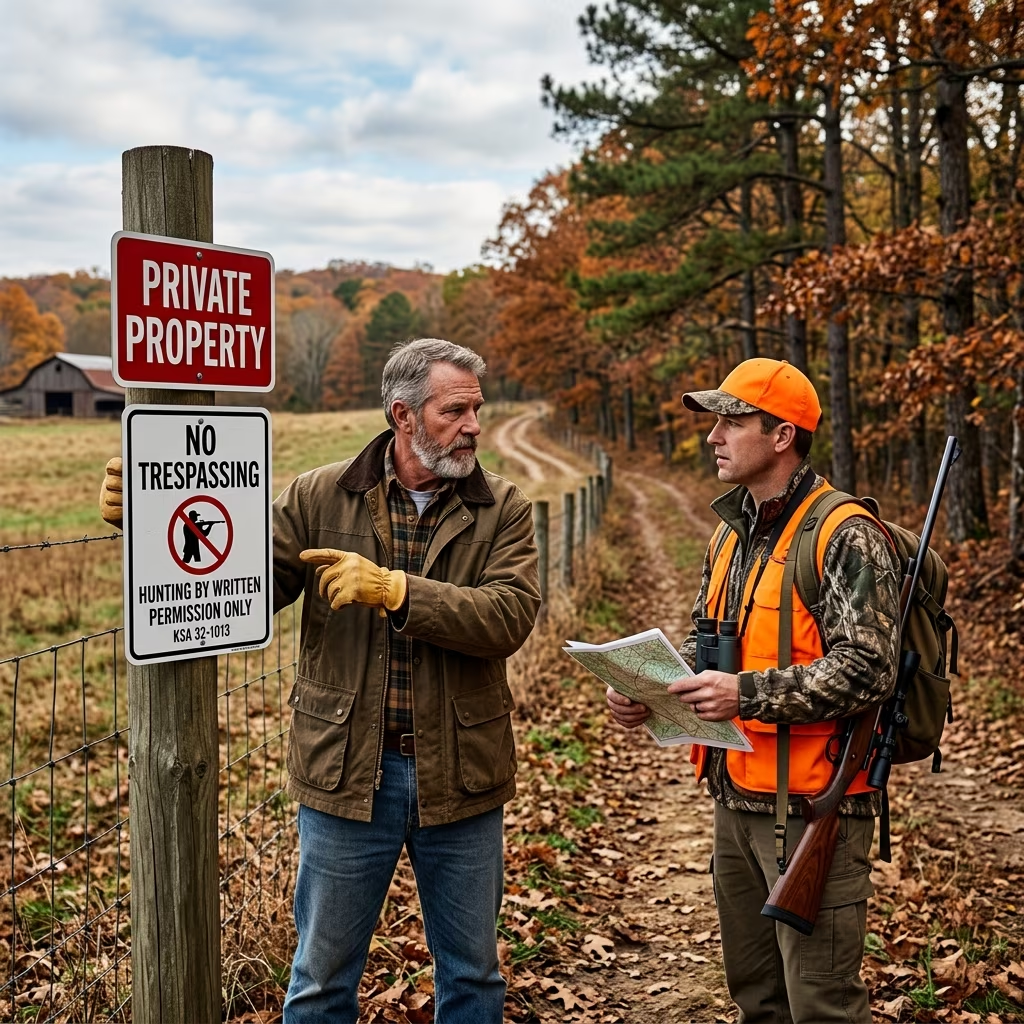
Across the United States, hunters and landowners must navigate a complex patchwork of laws that govern when, where, and how people may enter private property to hunt, fish, or trap. These hunting trespass rules differ significantly from one state to another, but they share a central focus: protecting private property rights while allowing lawful, regulated access to wildlife resources.
Why Hunting Trespass Laws Matter
Hunting trespass laws sit at the intersection of property rights, public safety, and wildlife management. Understanding them is critical for both hunters and landowners because violations can lead to criminal charges, civil liability, or loss of hunting privileges.
Most states treat unauthorized entry onto private land for hunting as a distinct offense, often more serious than general trespassing. In some jurisdictions, trespassing while carrying a firearm or other dangerous weapon can even be classified as a felony.
- For hunters: Knowing local trespass rules helps avoid fines, forfeiture of equipment, and possible jail time.
- For landowners: Properly posting and communicating restrictions makes enforcement easier and clarifies who may use the property.
- For neighbors and communities: Clear rules reduce disputes, property damage, and safety risks around homes, farms, and public roads.
Core Principles Shared Across Many States
Although the details vary widely, most state laws reflect a few common principles related to hunting on private land.
Permission is Usually Required
In the majority of states, hunters must obtain the landowner’s consent before entering private property to pursue wildlife. This requirement applies whether the land is posted or unposted, fenced or unfenced, and whether the property appears “unused” or actively managed.
- Some states, like Alabama, broadly require landowner permission for any hunting activity on private land, regardless of posting.
- Other states allow entry onto unposted, unimproved land in limited circumstances, but still restrict hunting once notice against trespass is given.
- Many regulations emphasize that a hunting license alone does not authorize entry onto private land.
Notice and Posting Rules
How landowners must notify others that entry is forbidden is highly state-specific. Typically, notice can be given either verbally, in writing, or through posted signs and markings.
- States commonly recognize signs stating “No Hunting” or “No Trespassing” as valid notice.
- Some jurisdictions accept paint markings (such as purple paint) on trees or posts as equivalent to signage.
- Certain states require signs at specific intervals along property lines or at all entrances and corners for posting to be legally effective.
Civil and Criminal Liability
Unauthorized hunting on private property can trigger criminal trespass charges and, in some cases, civil liability to the landowner for damage or injury. Penalties range from fines and short jail terms to long-term loss of hunting privileges.
- Criminal trespass statutes often define trespass as entering or remaining on property after receiving notice that entry is forbidden.
- Game and wildlife codes may add enhanced penalties for hunting without permission, including license suspension and forfeiture of equipment.
- Landowners may pursue civil claims for property damage, livestock injury, or other losses caused by unlawful hunting.
How States Differ on Hunting Trespass Rules
The FindLaw chart of selected state laws illustrates how diverse hunting trespass regulations can be, even when they share common goals. Below is a high-level overview of major differences that frequently arise.
Posted vs. Unposted Land
| Type of Land | Typical Requirement for Hunters | Common Landowner Obligation |
|---|---|---|
| Posted property | Must not enter to hunt without explicit permission; written permission often required. | Post signs, paint marks, or other legally recognized notice at prescribed locations. |
| Unposted property | In many states, permission still required to hunt; some allow entry to unimproved, unfenced land until personally notified. | May have fewer posting obligations, but verbal notice or written communication still effective. |
| Fenced or enclosed land | Typically treated as clearly private; entering to hunt without consent is trespass. | No special posting required in some states owing to visible enclosure. |
Examples of State-Specific Approaches
Different states embody these principles in distinct ways. While the precise statutory language varies, these examples show how regulations are tailored to local conditions.
- Alabama: All hunting on private property requires landowner permission, and there may be no specific requirement that the land be posted for trespass rules to apply.
- Arizona: Hunters may enter land unless it is lawfully posted. Posting rules specify minimum sign dimensions, explicit wording (such as “No Hunting” or “No Fishing”), and letter size to ensure legibility.
- New York: Entry onto unimproved, apparently unused, unfenced land may be allowed until the owner personally communicates notice against trespass. Once notice is given, remaining on the property becomes unlawful.
- Oklahoma: Posting requirements can be detailed, such as placing signs at all entrances, corners, and at set intervals along property boundaries to make restrictions clear.
- South Carolina: Laws broadly prohibit entering another’s land to hunt, fish, gather plants or timber, or cut vegetation without consent, treating violations as misdemeanors and not limiting trespass to hunting alone.
- Virginia: State wildlife regulations make it unlawful to hunt without written landowner permission, with penalties that may include fines and up to 12 months in jail. Hunters must also secure permission to track or retrieve wounded game across property lines.
- Illinois: Criminal trespass statutes define trespass as entering or remaining on land after receiving notice (either verbal or by sign) that entry is forbidden. Game laws further prohibit taking wildlife or allowing dogs to hunt on another’s land without permission.
How Hunters Can Stay Within the Law
Responsible hunters treat trespass rules as a core part of their preparation, not an afterthought. Taking a few extra steps before heading into the field can prevent serious legal consequences.
Obtain Clear Permission
Before hunting on private property, obtain the landowner’s consent in the form required by your state and keep proof of that permission with you.
- Ask the landowner for written permission if state law requires it for posted or fenced land.
- Where written consent is not mandated, at least get oral permission and note who granted it, when, and under what conditions.
- Many agencies provide permission cards or forms that landowners and hunters can fill out together.
- Clarify any limits on your access, such as specific areas of the property, allowed weapons, or times of day.
Verify Property Boundaries
Misjudging a property line can quickly turn a lawful hunt into trespass. Hunters should take reasonable steps to confirm where private boundaries begin and end.
- Consult up-to-date maps, GPS applications, or local plat records to identify boundaries.
- Look for fences, posted signs, or paint markings along property lines and respect them even if they seem irregular.
- If you are unsure whether land is privately owned or who controls it, contact the landowner or local authorities before entering.
Respect No-Trespass Signs and Markings
Regardless of whether you agree with the landowner’s choice, you must respect any lawful notice prohibiting entry.
- Do not attempt to interpret signs narrowly; if a property is marked “No Trespassing,” assume hunting is included, unless clearly permitted otherwise.
- Learn how your state’s laws treat paint markings and other non-sign indicators of private boundaries.
- Remember that some states require signs to meet specific size, placement, or wording criteria for enforcement; however, as a hunter you should err on the side of caution and treat all clear notices as binding.
Handling Wounded Game that Crosses Property Lines
One of the most common scenarios leading to trespass claims involves wounded animals leaving the property where they were shot and crossing onto another parcel.
- Many states require hunters to obtain the landowner’s permission before entering private land to track or recover wounded game.
- Wildlife agencies often advise, and sometimes require, hunters to leave their weapon behind when entering another’s property solely to retrieve a dog or a carcass if they lack permission to hunt there.
- Contact the neighboring landowner, explain the situation, and request access; document the consent if possible.
Landowner Tools to Manage Hunting Access
Landowners have a variety of options under state law to control whether and how hunters use their property. These tools can be combined to fit local conditions and personal preferences.
Posting Property Effectively
Proper posting not only informs would-be hunters but also strengthens the landowner’s position if enforcement becomes necessary.
- Signs: Use clearly visible, durable signs at entrances, gates, and prominent access points. Some states specify minimum sign size, wording, letter height, and spacing.
- Paint marks: In jurisdictions that recognize colored paint (such as purple or aluminum) as legal posting, apply marks to trees or posts at the required height and intervals.
- Contact information: Certain laws require posted notices to include the landowner’s name and address.
Granting Conditional Permission
Landowners are not limited to either full access or total prohibition; they may grant controlled permission under defined conditions.
- Require hunters to sign a written agreement specifying allowed dates, areas, species, and equipment.
- Limit access to certain individuals or groups, such as family members, local clubs, or youth hunting programs.
- Include rules for vehicle use, gates, and livestock safety.
Liability Protection for Landowners
Many states have recreational use statutes or specific provisions in their wildlife codes that reduce landowner liability when they allow hunters or other recreationists onto their property.
- These laws may state that landowners who permit hunting without charging a fee are not automatically liable for injuries that occur, except in cases of gross negligence or willful misconduct.
- Liability protections encourage cooperation between landowners and hunters while preserving property rights.
Consequences of Violating Hunting Trespass Laws
States impose a range of penalties for hunting-related trespass, often more severe than for simple unauthorized entry alone.
Criminal Penalties
- Unauthorized hunting on posted land is frequently a misdemeanor, with potential jail terms and fines that can reach several thousand dollars.
- In some jurisdictions, trespassing while carrying a firearm or other dangerous weapon may be treated as a felony, especially when combined with other violations.
- Repeated offenses or violations committed while under suspension can lead to enhanced penalties.
Loss of Hunting Privileges
- Wildlife agencies often have authority to suspend or revoke hunting licenses for serious or repeated trespass violations.
- Suspension periods can range from one year to several years depending on the severity of the conduct and local law.
Civil Responsibility
- Hunters may be liable for damage to crops, fences, livestock, or structures caused by unlawful entry.
- Civil claims can arise from personal injuries or property damage related to firearms or vehicles used while trespassing.
Best Practices for Hunters and Landowners
Given the complexity and variation of state laws, both hunters and landowners benefit from following practical best practices that go beyond the minimum legal requirements.
Best Practices for Hunters
- Research state-specific hunting regulations and trespass statutes before planning a trip.
- Carry written permission from the landowner whenever possible, even if not strictly required.
- Use updated maps or GPS tools to avoid crossing boundaries inadvertently.
- Communicate clearly with landowners about your plans and abide by all agreed conditions.
- Respect neighboring properties and avoid shooting near homes, roads, or livestock.
Best Practices for Landowners
- Post property clearly using signs or paint marks in accordance with state law.
- Maintain a written record of who has permission to hunt and under what conditions.
- Consider adopting a standard permission form or card provided by state wildlife agencies.
- Communicate restrictions and expectations in advance, including any safety rules.
Frequently Asked Questions (FAQs)
Do I always need permission to hunt on private land?
In most states, yes. A hunting license does not by itself allow you to enter private property. You generally must obtain the landowner’s consent, and some states require written permission for posted or fenced land.
Is it trespassing if I walk across private land without a weapon but during hunting season?
It may be, depending on state law and the landowner’s posted notice or verbal instructions. Trespass statutes usually focus on unauthorized entry, not just hunting activity. If entry is forbidden, simply crossing the land can still be trespass.
What if I shoot a deer legally and it runs onto someone else’s property?
You typically must obtain the neighboring landowner’s permission before entering to track or recover the animal. Some states specifically require permission to retrieve wounded game on private property, and may restrict carrying weapons when doing so without hunting rights there.
Do purple paint marks count as “No Trespassing” signs?
In certain states, including those that have adopted a “purple paint” or similar statute, properly placed paint markings are treated as legal notice against trespass. You should learn your state’s rules on the color, placement, and height of these marks.
Can landowners be sued if they allow hunters on their property?
Liability rules differ by state, but many jurisdictions provide some protection for landowners who allow recreational use (including hunting) without charging a fee. These statutes do not eliminate all liability, but they can reduce exposure for ordinary accidents.
References
- Select State Laws on Hunting and Trespassing — FindLaw. 2023-05-01. https://www.findlaw.com/realestate/land-use-laws/select-state-laws-on-hunting-and-trespassing.html
- Virginia Hunting Laws Explained — Medvin Law. 2022-08-15. https://medvinlaw.com/virginia-hunting-laws-explained-by-criminal-defense-lawyer/
- Hunting Regulations: General Information — Florida Fish and Wildlife Conservation Commission (FWC). 2024-01-10. https://myfwc.com/hunting/regulations/general-information/
- General Information & Hunting Regulations — Virginia Department of Wildlife Resources. 2023-09-01. https://dwr.virginia.gov/hunting/regulations/general/
- Hunting Without Permission — Outdoor Illinois Journal, Illinois Department of Natural Resources. 2017-11-01. https://outdoor.wildlifeillinois.org/articles/hunting-without-permission
- Hunting Locations: Private Property — Hunter Ed, Virginia. 2022-05-20. https://www.hunter-ed.com/virginia/studyGuide/Hunting-Locations-Private-Property/20104702_61938/
- Understanding Trespassing and Private Land Hunting Laws — HuntWise Field Guide. 2023-03-05. https://huntwise.com/field-guide/hunting-tips/trespassing-and-private-land-hunting-laws