
Types Of Home Ownership: 8 Options For Homebuyers To Know Now
Learn how different ways of holding title affect control, taxes, inheritance, and risk when you buy a home.
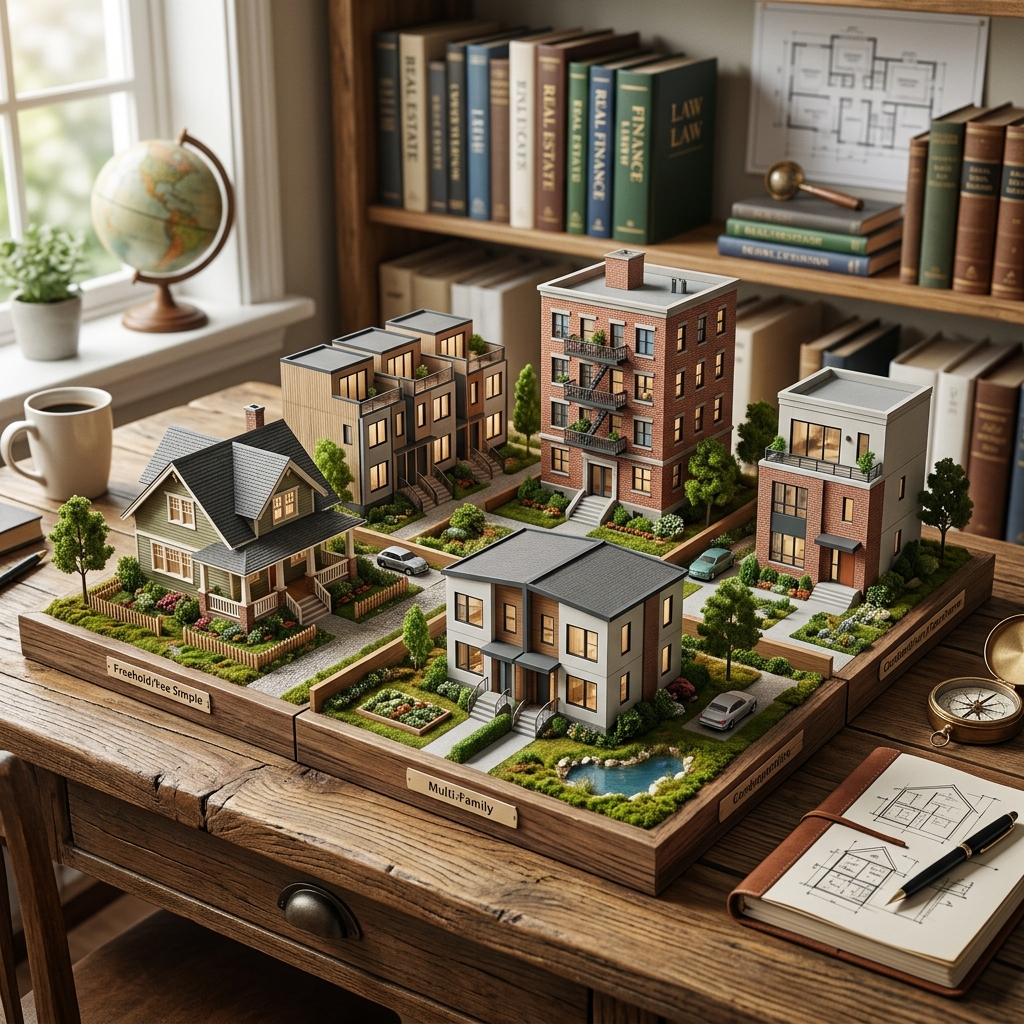
Buying a home is not only about choosing a neighborhood and signing a mortgage. It is also about deciding how you will legally own that property. The form of ownership, often called the way you hold title, affects your control over the home, what happens when an owner dies, how creditors can reach the property, and sometimes how taxes are calculated.
This guide explains the main types of home ownership you are likely to encounter in the United States, with a focus on their practical implications for everyday buyers. It is for informational purposes only and is not a substitute for legal advice.
Why the Form of Ownership Matters
The deed you sign at closing does more than identify the property and purchase price. It typically states the form of ownership you have chosen. That choice can influence:
- Who has day-to-day control over decisions to sell, refinance, or lease the property.
- Whether your share passes automatically to another owner at death or goes through probate to your heirs.
- How divorce or separation might affect ownership rights in some states.
- Which owners’ creditors can put liens on the home.
- What interests lenders will require before approving your loan.
In many states, if you do not affirmatively choose a particular structure, the law will assign a default form of co-ownership, often some version of tenants in common. Understanding the options before closing helps you avoid unpleasant surprises later.
Overview of Common Ownership Structures
Although names and fine details can vary by state, most residential properties are owned in one of the following ways:
- Sole ownership – one person holds complete title.
- Joint tenancy – two or more people own together with a right of survivorship.
- Tenancy in common – co-ownership without survivorship rights.
- Tenancy by the entirety – a special form for married couples in some states.
- Community property – available in certain states for married couples.
- Condominium ownership – owning a unit plus shared common areas.
- Cooperative ownership – owning shares in a corporation that owns the building.
- Trust or entity ownership – property held by a trust, company, or partnership.
Below, you will find a closer look at each form, along with a comparison table and answers to frequently asked questions.
Sole Ownership: One Name on the Title
With sole ownership, a single person is listed as the legal owner on the title, even if others live in the home or help pay expenses. This is common for:
- Single buyers.
- Married couples who choose to keep one spouse off the title.
- Investors purchasing property for rental income.
Key Features of Sole Ownership
- Full control: The owner alone decides when to sell, refinance, or transfer the property.
- Full responsibility: The sole owner is responsible for property taxes, loans, and maintenance.
- Probate risk: When the owner dies, the property generally passes through probate under the owner’s will or state intestacy laws unless it is held in a trust or subject to another planning tool.
Because probate can be time‑consuming and expensive, some sole owners later transfer their home into a revocable living trust or change the form of ownership to include a spouse or partner as a co‑owner.
Joint Tenancy: Shared Ownership with Survivorship
Joint tenancy is a common way for two or more people to own a home together while ensuring that the property passes directly to the surviving owner(s) if one dies.
Defining Characteristics
- Equal shares: Each joint tenant normally owns an equal interest in the property.
- Right of survivorship: When one owner dies, that person’s interest automatically transfers to the surviving joint tenant(s), outside of probate.
- Unified ownership: All joint tenants have the same rights to use and possess the entire property, not just a physical portion.
For example, if two siblings own a home as joint tenants and one dies, the surviving sibling automatically owns 100% of the property, regardless of what the deceased sibling’s will says.
Pros and Cons of Joint Tenancy
- Advantages
- Provides a built‑in estate planning mechanism through survivorship.
- Allows relatively easy transfer to the survivor without probate delays.
- Can be used by couples, relatives, or friends buying together.
- Disadvantages
- Each owner’s creditors may be able to place liens on the property.
- All joint tenants must agree to sell or refinance.
- May conflict with a more complex estate plan, because the survivorship rule overrides will provisions.
Some states require specific language on the deed to create a joint tenancy; otherwise, the law may default to a tenants‑in‑common arrangement.
Tenants in Common: Flexible Shares Without Survivorship
Tenants in common (often abbreviated TIC) is another form of co‑ownership that allows two or more people to hold the same property at the same time, but without automatic survivorship rights.
How Tenancy in Common Works
- Separate shares: Each owner has a distinct, transferable share, which may be equal or unequal (for example, 60/40 or 70/20/10).
- No survivorship: If one owner dies, that person’s share passes according to their will or state law, not automatically to the other co‑owners.
- Shared possession: Every tenant in common has a right to use and enjoy the entire property, not just a specific room or floor.
This structure is commonly used by unrelated buyers, multiple investors, or relatives who wish to leave their share to their own heirs.
Pros and Cons of Tenancy in Common
- Advantages
- Allows customized ownership percentages reflecting each person’s contribution.
- Each owner can sell or transfer their share, subject to any agreements between co‑owners.
- Can align well with individual estate planning goals.
- Disadvantages
- No automatic transfer to surviving co‑owners; shares may pass to someone the other owners did not choose.
- Disagreements can lead to complex negotiations or court‑ordered partition.
- All owners share responsibility for major decisions, which can slow action.
In many jurisdictions, if a deed names multiple owners but does not specify another form, the law presumes they hold as tenants in common.
Tenancy by the Entirety: A Special Option for Married Couples
Tenancy by the entirety is a form of joint ownership available only to married couples (and, in some places, certain registered partners). It treats the spouses as a single legal unit for property ownership.
Core Features
- Exclusive to spouses: Both spouses are considered to own the whole property together.
- Right of survivorship: If one spouse dies, the surviving spouse automatically owns the property outright, without probate.
- Creditor protection in some states: In certain jurisdictions, creditors of only one spouse cannot force the sale of property held by the entirety to satisfy that spouse’s individual debts.
Tenancy by the entirety can provide both estate planning benefits and asset protection in states that recognize it. However, it usually ends if the couple divorces, at which point the ownership typically converts to tenants in common.
Community Property: Shared Marital Ownership in Certain States
In nine U.S. states and a few territories, most property acquired by spouses during the marriage is presumed to be community property, owned equally by both, regardless of whose name appears on the title.
Community Property Basics
- Equal ownership: Each spouse is considered to own a one‑half interest in most assets acquired during the marriage, including homes, with some exceptions for gifts and inheritances.
- Impact on divorce: Community property rules greatly influence how assets are divided if the couple separates.
- Estate planning effects: Community property may receive certain tax benefits at death, such as a step‑up in basis on both halves in some circumstances.
Some community property states also offer a form called community property with right of survivorship, which combines equal ownership with an automatic transfer of the deceased spouse’s share to the survivor.
Condominiums and Cooperatives: Special Ownership Structures
In multi‑unit buildings, you may encounter ownership systems that differ from traditional single‑family homes. The two most common are condominium ownership and cooperative ownership.
Condominium Ownership
With a condominium (often called a “condo”), you typically own:
- A separate, individually owned unit (for example, a specific apartment).
- A shared interest in the building’s common areas, such as hallways, lobbies, and recreational facilities.
The condominium association manages the common elements and collects periodic assessments from unit owners. You can generally sell or mortgage your unit independently, subject to association rules.
Cooperative Ownership
In a cooperative (co‑op), the building is owned by a corporation or similar entity. Instead of owning your unit directly, you purchase shares in the corporation and receive a proprietary lease that gives you the right to occupy a particular unit.
- Shares, not real estate: Your ownership interest is shares plus a lease, not a deed to a specific unit.
- Board approval: Co‑op boards often have significant authority to approve or deny buyers and may regulate leasing.
- Collective responsibility: All shareholders share responsibility for the building’s underlying mortgage and expenses.
Both condos and co‑ops may use any of the individual or co‑ownership forms discussed above (such as sole ownership or joint tenancy) for the underlying ownership interests.
Trusts and Entity Ownership: Beyond Personal Title
In some cases, a home is owned not by individuals directly, but by a trust, a corporation, or a partnership. This structure is more common with investment properties, larger estates, or advanced asset‑protection planning.
Trust Ownership
When a home is titled in the name of a trust, a trustee holds legal title for the benefit of one or more beneficiaries. Revocable living trusts are often used in estate planning to allow property to pass at death without probate, while irrevocable trusts may offer additional asset protection benefits.
Corporate or Partnership Ownership
- Corporations and LLCs: An entity may hold the title to rental or investment property, potentially providing liability protection to the individual owners.
- Partnerships: Co‑investors sometimes form partnerships to purchase property, with their rights defined in a partnership agreement.
Lenders may apply different underwriting standards, and tax treatment can be more complex when property is held through a trust or entity, so professional advice is especially important in these cases.
Comparing Major Home Ownership Types
| Ownership Type | Who Can Use It? | Survivorship? | Typical Use Case |
|---|---|---|---|
| Sole ownership | Any individual | No, property usually passes via will or state law | Single buyer or spouse keeping title separate |
| Joint tenancy | Two or more people | Yes, ownership passes automatically to survivors | Couples, relatives, or friends wanting simple survivorship |
| Tenancy in common | Two or more people | No, each share passes according to owner’s estate plan | Unrelated co‑buyers or investors with flexible shares |
| Tenancy by the entirety | Married couples (in certain states) | Yes, survivor becomes sole owner | Spouses seeking survivorship and possible creditor protections |
| Community property | Married couples in community property states | Varies; may be combined with survivorship in some states | Spouses in community property jurisdictions |
How to Choose the Right Ownership Type
There is no single “best” way to hold title. The right choice depends on your relationships, state law, and long‑term plans. Consider the following questions when deciding:
- Do you want your co‑owner to automatically receive the property at your death?
- If yes, joint tenancy, tenancy by the entirety, or community property with survivorship may be appropriate.
- If no, tenancy in common often offers more control over where your share goes.
- Are you married, and where do you live?
- In some states, community property rules will apply regardless of how title is written.
- Other states provide tenancy by the entirety as an option for married couples.
- Do you have children from a prior relationship?
- You may prefer a structure that allows you to leave your share directly to your children, such as tenancy in common or trust ownership.
- Is asset protection a concern?
- In some jurisdictions, tenancy by the entirety, trusts, or entity ownership can offer additional protections, but the rules are complex.
Because the legal and tax consequences can be significant, it is wise to discuss your options with a qualified real estate or estate planning attorney, particularly if you are buying with others, own businesses, or have a blended family.
Frequently Asked Questions About Home Ownership Types
Does the way I hold title affect my mortgage approval?
Lenders primarily care about your credit, income, and the value of the property, but they also need to know who will be on the title. If multiple owners will be responsible for the loan, the lender may require each of them to sign the note or related documents. Some loan programs have specific rules regarding entity or trust ownership, so discuss your plans with your lender early in the process.
Can I change my form of ownership after closing?
In many cases, yes. You can often execute a new deed transferring the property from one structure to another, such as from sole ownership to joint tenancy, or from individual ownership to a living trust. However, there may be recording fees, possible tax consequences, and lender consent requirements if there is an existing mortgage. Always check with your attorney and, if applicable, your lender.
Is joint tenancy always better for couples than tenants in common?
Not necessarily. Joint tenancy’s survivorship feature is convenient, but it also means you cannot leave your share to anyone else. Couples with children from prior relationships, or those with more complex estate plans, might prefer tenants in common combined with trusts or detailed wills. The best option depends on your goals and the advice of your legal and tax professionals.
How does ownership work in a condominium or co‑op when there are multiple owners?
In a condominium, you can often choose among the same personal ownership structures—such as sole ownership, joint tenancy, or tenants in common—just as with a single‑family home. In a cooperative, the building’s governing documents may dictate how shares can be held and transferred, and board approval is frequently required for any change. Review the condo declaration or co‑op bylaws before purchasing.
Do community property rules apply even if my spouse’s name is not on the deed?
In community property states, it is possible for both spouses to have community rights in property acquired during the marriage even if only one is listed on the deed. How this works in practice depends on state law and the specific facts of your situation. If you live in a community property jurisdiction, consult an attorney before assuming that title alone determines ownership.
Where can I get help understanding my options before I buy?
In addition to consulting a real estate or estate planning attorney in your state, you can speak with a HUD‑approved housing counseling agency. These agencies provide education and guidance for homebuyers, including information about the purchase process and your rights.
References
- Understanding Forms of Property Ownership in Florida Real Estate — Gould Cooksey Fennell. 2023-04-10. https://gouldcooksey.com/blog/understanding-forms-of-property-ownership-in-florida-real-estate/
- Ownership and Titles: Chain of Title in Property Law — University of Pittsburgh School of Law. 2022-08-15. https://online.law.pitt.edu/blog/understanding-ownership-and-title-in-property-law
- Four Types of Property Ownership and the Transfer of Title — West Coast Escrow. 2021-06-01. https://www.westcoastescrow.com/blog/four-types-of-property-ownership-and-the-transfer-of-title/
- 5 Ways to Own Your Home: Understanding Different Types of Property Ownership — SSB LLC. 2022-11-05. https://ssbllc.com/5-ways-to-own-your-home-understanding-different-types-of-property-ownership/
- The 7 Types of Property Ownership — AlphaMap. 2023-03-20. https://www.alphamap.com/blog/the-6-types-of-property-ownership
- Buying a Home — U.S. Department of Housing and Urban Development (HUD). 2024-01-12. https://www.hud.gov/helping-americans/buying-a-home
Similar Articles








Read full bio of Sneha Tete


