
Understanding Hawaii Traffic Laws: A Practical Guide
A clear, practical overview of Hawaii’s key traffic rules, from licensing and speed limits to parking, safety seats, and DUI penalties.
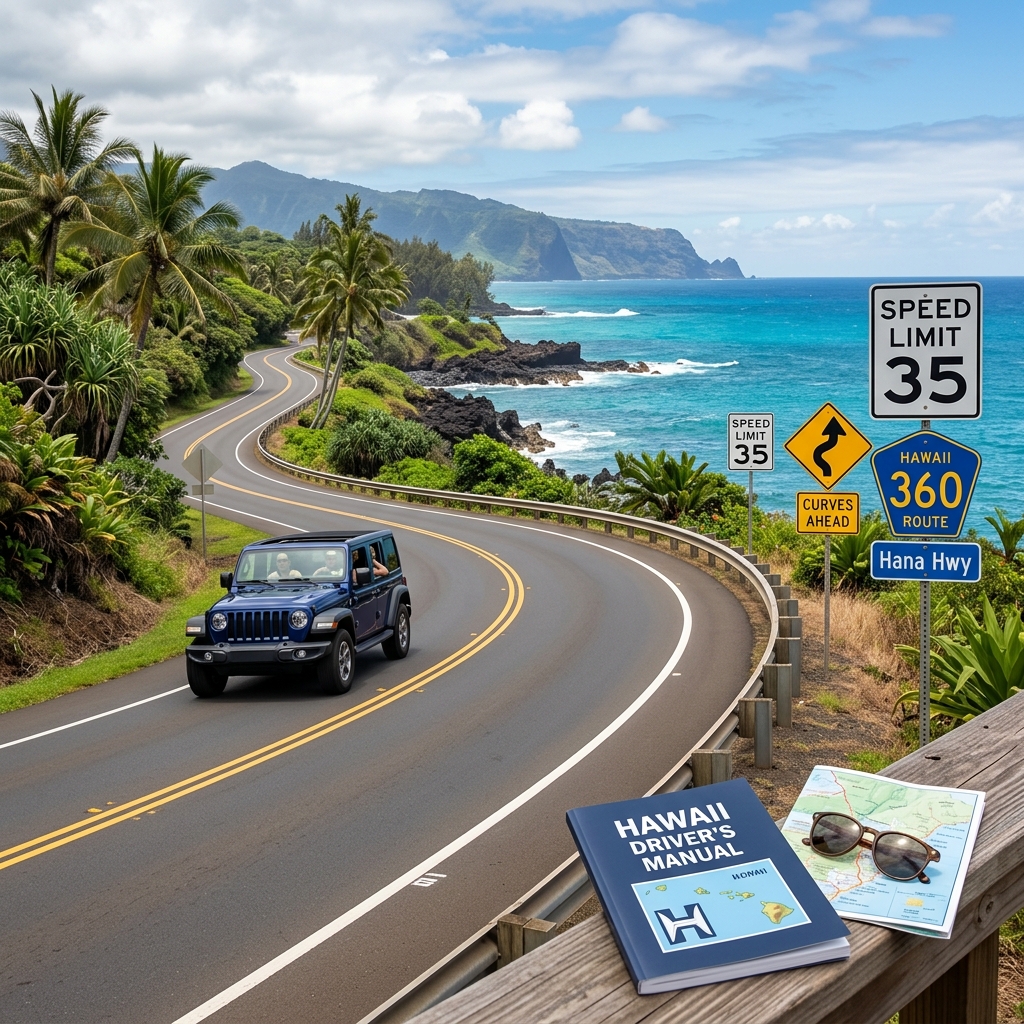
Hawaii’s roads range from busy urban freeways in Honolulu to narrow coastal routes and scenic rural highways. To drive safely and legally in the islands, it is essential to understand the state’s traffic laws and how they are enforced. Hawaii uses a statewide traffic code that sets rules for licensing, roadway behavior, collisions, parking, and penalties. These rules apply to residents and visitors alike and are largely codified in the Hawaii Revised Statutes, especially the Statewide Traffic Code under Title 17, Chapter 291C.
This guide explains the key areas of Hawaii traffic law in clear, practical terms. It is designed to help you avoid violations, protect yourself and others, and understand what happens if you receive a traffic ticket. While not a substitute for legal advice, it provides a useful overview for everyday driving.
1. Overview of Hawaii’s Statewide Traffic Code
Hawaii organizes most traffic rules in the Statewide Traffic Code, primarily Chapter 291C of the Hawaii Revised Statutes. This chapter is divided into parts that cover general provisions, collisions and collision reports, rules of the road, and obedience to traffic devices, among other topics.
- General provisions: Definitions, scope of the code, and how traffic laws apply statewide.
- Rules of the road: Requirements for lane usage, right-of-way, signaling, turning, and speed regulation.
- Collisions and reports: Duties after an accident and when reports must be filed.
- Traffic devices: Legal effect of signs, signals, and markings, and the obligation to obey them.
Counties (such as Honolulu, Maui, Hawaii, and Kauai) also adopt local traffic codes and ordinances, particularly for parking and detailed roadway regulations. However, these must be consistent with statewide law and cannot conflict with the Statewide Traffic Code.
2. Driver Licensing and Legal Eligibility
To operate a motor vehicle on public roads in Hawaii, you must have a valid driver’s license with you and present it upon request to law enforcement. This requirement comes from both statewide statute and the official Hawaii Driver’s Manual issued by the Hawaii Department of Transportation.
2.1 Minimum Age and License Types
Hawaii sets a minimum age requirement for drivers. To hold a full driver’s license, a person must generally be at least 17 years old. A graduated licensing system covers learners and provisional license holders before full licensing, with additional restrictions for younger drivers.
- Learner’s permits: Issued to younger drivers with conditions, such as supervision by a licensed adult.
- Provisional licenses: Step between a learner’s permit and a full license, with limits on night driving and passengers.
- Full licenses: Available at or after age 17, subject to completion of requirements.
Visitors may drive in Hawaii using a valid U.S. or international driver’s license as long as it is current and recognized under state law.
2.2 Duty to Carry and Present License
Under Hawaii law, drivers must carry their license at all times while operating a vehicle and show it upon demand to a police officer. Failure to produce a license can result in a citation and may complicate traffic enforcement or accident investigations.
3. Core Rules of the Road
The Statewide Traffic Code sets the basic rules for how drivers must behave on Hawaii roadways. These rules aim to reduce collisions, ensure predictable traffic flow, and protect pedestrians and other road users.
3.1 Speed Limits and the “Basic Speed” Rule
Hawaii uses posted speed limits along with a general obligation to drive at a speed that is reasonable and prudent for current conditions. Many roads in Hawaii have relatively low maximum speed limits compared to other states, partly because of narrow roadways and challenging geography.
| Road Type | Typical Speed Limit |
|---|---|
| Urban freeways | Up to about 60 mph |
| Rural freeways | Around 50 mph |
| Regular roads | Often near 45 mph |
| Residential areas | Generally 25 mph |
| School zones | 25 mph unless signs specify otherwise |
According to Hawaii law, driving above the posted limit or at a speed not safe for conditions can result in a speeding violation. Under HRS §291C-105, penalties for speeding can reach up to about $200 for a first offense, with higher penalties for more serious violations.
3.2 Signaling, Turning, and Right-of-Way
Drivers in Hawaii must signal before turning, changing lanes, or stopping. Guidance for visitors and rental drivers emphasizes using the turn signal at least 100 feet before the maneuver. Many traffic signals use arrows, and drivers must follow the direction indicated, such as a protected left-turn arrow.
- Right turn on red: Generally allowed after a complete stop unless signs prohibit it, but pedestrians have strong right-of-way protections.
- U-turns: Often legal when visibility is good and traffic is not obstructed, though local jurisdictions may ban U-turns in specific locations.
- Yielding right-of-way: Drivers must yield when entering main roads, at many intersections, and must avoid exercising right-of-way in a manner that would cause an accident.
Hawaii law strongly protects pedestrians. Drivers must yield to pedestrians in crosswalks and often at intersections, and are expected to stop in time to avoid collisions.
4. Seat Belts and Child Passenger Safety
Hawaii requires the use of seat belts and proper child restraints in moving vehicles. These rules apply to drivers and passengers in all seating positions.
4.1 Adult Seat Belt Requirements
Both drivers and passengers must wear seat belts whenever the vehicle is in motion. Failure to use a seat belt can lead to fines and may increase injury risk in a collision. Enforcement of seat belt laws is supported by statewide traffic regulations and safety campaigns.
4.2 Child Safety Seats and Booster Use
Hawaii’s child passenger safety laws specify how children of different ages must be restrained. Under these laws:
- Children under age 4 must be secured in an appropriate child safety seat.
- Infants under age 2 should be properly restrained in a rear-facing car seat with a harness.
- Young children beyond age 4 may need booster seats until they reach size and age thresholds permitted by law.
Some guidance also notes that children below a certain weight (often cited as less than about 50 pounds) should use safety or booster seats sized for their weight. Leaving children under age 9 unattended in a vehicle is prohibited, emphasizing child safety and preventing heat-related or other harms.
5. Cell Phone Use, Texting, and Distracted Driving
To limit distracted driving, Hawaii restricts how drivers may use cell phones and other electronic devices behind the wheel. Laws and guidance emphasize hands-free operation and prohibit texting.
- Handheld phone calls: Drivers must use a hands-free device when talking on a cell phone while driving.
- Text messaging: Texting while operating a vehicle is not allowed.
- Navigation devices: GPS and mapping services are generally permitted when used safely and without manual interaction that distracts from driving.
Violating these rules may result in fines and can contribute to fault if an accident occurs. The policies reflect a statewide focus on reducing collisions and injuries caused by distracted drivers.
6. Parking Rules and Restrictions
Parking regulations in Hawaii are shaped by statewide law and local ordinances. Urban areas, especially Honolulu, can have limited parking and strict enforcement. Vehicles parked illegally are frequently ticketed and may be towed quickly.
6.1 General Parking Rules
Common statewide and local rules include prohibitions on blocking traffic, sidewalks, and driveways.
- No parking on sidewalks or in a way that blocks any driveway.
- No double parking beside a vehicle stopped at the curb.
- Distance from curb: Typically no more than about 12 inches between the vehicle and the curb when parallel parked.
- Color-coded curbs often indicate restrictions, such as red for no parking and yellow or white for loading zones (subject to posted signs).
In some city areas, parking is prohibited in particular zones or beneath certain structures. Parking may be banned under bridges, in highway tunnels, on traffic islands, or on the medial strip of divided highways. These detailed limitations are often found in county traffic codes and ordinances, such as Honolulu’s Chapter 15 Traffic Code.
6.2 Specific Distance-Based Restrictions
Certain minimum distances must be maintained when parking near key features.
- At least 4 feet from either side of a public or private driveway.
- At least 10 feet from a fire hydrant.
- At least 20 feet from a crosswalk at an intersection or midblock crosswalk.
Local codes may also restrict parking near traffic signals, stop signs, and turnaround areas on dead-end streets. These rules help maintain visibility and access for emergency vehicles and pedestrians.
7. DUI and Impaired Driving Laws
Hawaii takes impaired driving seriously. State law sets a legal blood alcohol concentration (BAC) limit and uses an implied consent framework for chemical testing.
7.1 Legal Alcohol Limit and Implied Consent
The legal limit for drivers is typically 0.08% BAC, meaning a blood alcohol concentration of 0.08 grams of alcohol per deciliter of blood. Drivers who operate a vehicle with a BAC at or above this level can be charged with driving under the influence (DUI), and lower levels may still be actionable when combined with evidence of impairment.
Under Hawaii’s implied consent law, anyone who drives in the state is deemed to have consented to breath, blood, or urine tests for alcohol or drugs when lawfully requested by an officer. Refusing such tests can lead to additional penalties, including possible license suspension.
7.2 Penalties and Consequences
DUI convictions in Hawaii may result in fines, license suspension, mandatory education or treatment programs, and possible jail time, depending on the severity and whether the driver has prior offenses. For visitors, a Hawaii DUI can also affect driving privileges in other states due to interstate enforcement agreements.
8. Civil Traffic Proceedings and Enforcement
Hawaii uses a civil traffic system for many traffic infractions. The Hawaii Civil Traffic Rules, administered by the state judiciary, outline procedures for handling traffic violations, default judgments, and defendant rights.
- Traffic citations are typically handled as civil matters, though some offenses may carry criminal elements.
- Defendants can respond to citations, request hearings, or pay fines according to court rules.
- The state offers access to case information through systems such as eCourt Kokua for viewing traffic violation records.
Local enforcement agencies, including county police departments and state highway patrol units, apply these laws and issue citations. Courts then process cases under the Hawaii Civil Traffic Rules.
9. Practical Tips for Safe and Legal Driving in Hawaii
Beyond the letter of the law, a few practical points can make driving in Hawaii safer and more pleasant:
- Respect local speed limits, especially in residential areas and school zones, where 25 mph is common.
- Yield to pedestrians at crosswalks and intersections; Hawaii places strong emphasis on pedestrian safety.
- Use signals early, generally at least 100 feet before turning or stopping.
- Plan parking in urban centers ahead of time and obey color-coded curb markings and signs to avoid towing.
- Keep children safe with appropriate car seats or booster seats and never leave them unattended in vehicles.
- Stay sober and alert; do not drive after drinking or using impairing drugs, and avoid distracted driving by using hands-free technology only when necessary.
10. Frequently Asked Questions about Hawaii Traffic Laws
Is my out-of-state or international driver’s license valid in Hawaii?
Yes, visitors may generally drive in Hawaii with a valid U.S. or international driver’s license, as long as it is current and recognized under state law. You must carry the license while driving and show it to law enforcement if asked.
Can I turn right on a red light in Hawaii?
In many locations, you may turn right on red after a complete stop, unless signs prohibit the maneuver. However, you must yield to pedestrians and other vehicles and ensure the way is clear before proceeding.
What are typical speed limits on Hawaii roads?
Urban freeways often have limits up to about 60 mph, rural freeways around 50 mph, regular roads near 45 mph, and residential and school zones usually at 25 mph. Always follow posted signs and adjust speed for weather, traffic, and road conditions.
Are seat belts mandatory for everyone in the vehicle?
Yes. Drivers and all passengers must wear seat belts whenever the vehicle is in motion. Children must be secured in appropriate safety seats or boosters according to age and size, with children under age 4 required to be in child safety seats.
Is it legal to use a cell phone while driving in Hawaii?
Drivers may use cell phones only with hands-free devices. Handheld calls and texting while driving are not allowed. GPS and navigation systems may be used when they do not distract from safe operation.
What happens if I am caught driving under the influence?
If you drive with a BAC at or above 0.08% or are impaired by alcohol or drugs, you may be charged with DUI. Penalties can include fines, license suspension, and other sanctions, and refusing chemical tests under implied consent rules can also carry penalties.
References
- Hawaii Revised Statutes, Chapter 291C: Statewide Traffic Code — Hawaii Legislature / Justia Law. 2023-01-01. https://law.justia.com/codes/hawaii/title-17/chapter-291c/
- Hawaii Driving – Rules and Regulations — Discount Hawaii Car Rental. 2022-06-01. https://www.discounthawaiicarrental.com/travel-tips/hawaii-driving-rules-regulations/
- Chapter 15, Traffic Code — City and County of Honolulu, Revised Ordinances. 2024-04-01. https://www.honolulu.gov/dts/wp-content/uploads/sites/45/2024/04/TPD-Chapter_15.pdf
- Driving Tips for Hawaii — SIXT Rent a Car Magazine. 2023-05-01. https://www.sixt.com/magazine/tips/driving-tips-hawaii/
- Essential Hawaii Driving Laws: Safety Tips for Locals & Tourists — Recovery Law Center. 2023-08-01. https://recoverylawcenterhawaii.com/hawaii-driving-laws/
- Hawaii Driver’s Manual — Hawaii Department of Transportation. 2020-03-01. https://hidot.hawaii.gov/highways/files/2021/03/2020-Hawaii-Drivers-Manual_5.375×8.375_Revised-FInal_WEB.pdf
- Hawaii Civil Traffic Rules — Hawaii State Judiciary. 2024-09-01. https://www.courts.state.hi.us/wp-content/uploads/2024/09/hctr_ada.pdf
Similar Articles








Read full bio of Sneha Tete


