
Understanding FSA and HSA Cards for Everyday Healthcare Spending
Learn how FSA and HSA debit cards work, where you can use them, and how to avoid costly mistakes when paying for medical expenses.
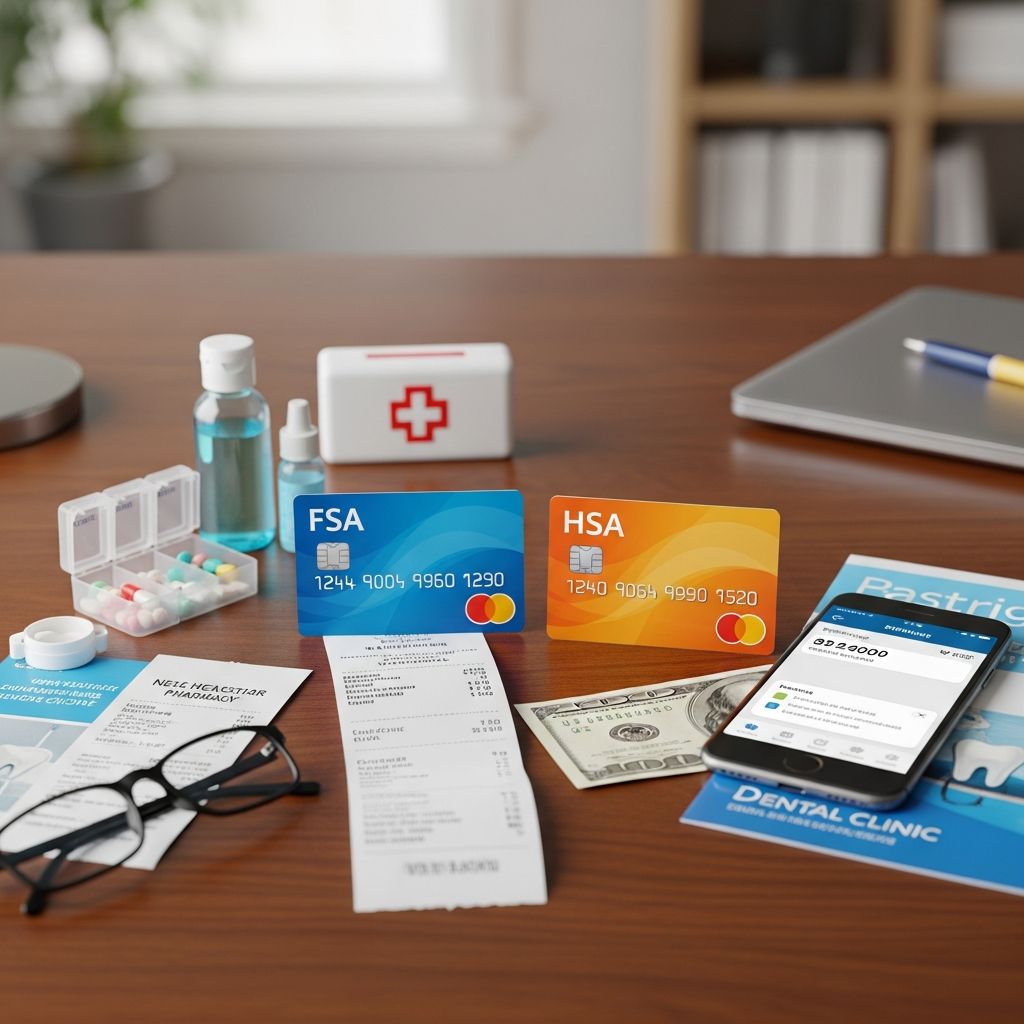
Flexible Spending Accounts (FSAs) and Health Savings Accounts (HSAs) are tax-advantaged accounts that help you pay for eligible medical expenses using pre-tax dollars. These accounts often come with a debit-style card you can use at checkout, but the rules for where and how you can use the card can be confusing. Understanding those rules is essential if you want to avoid declined transactions, accidental misuse, and possible tax problems.
This guide explains how FSA and HSA cards work, where they are typically accepted, how eligibility for purchases is checked, and what to do if you make a mistake or a transaction is denied.
1. The Basics of FSA and HSA Cards
Both FSAs and HSAs are designed to help you pay for qualified health expenses with money that is not subject to federal income tax, Social Security tax, or Medicare tax in most situations. Instead of submitting paper claims for every expense, many plans issue a card that draws directly from your account.
1.1 What is an FSA card?
An FSA card is a payment card linked to a Flexible Spending Account provided through your employer. FSAs are employer-sponsored benefit plans that allow you to set aside pre-tax money to pay for qualified medical, dental, or vision expenses, and in some cases dependent care costs, depending on the type of FSA your employer offers.
- The account is funded through payroll deductions on a pre-tax basis.
- Your employer owns the account; you generally lose unused healthcare FSA funds at the end of the plan year, subject to any grace period or rollover your plan may offer.
- The card lets you pay eligible providers and merchants directly instead of paying out of pocket and requesting reimbursement later.
1.2 What is an HSA card?
An HSA card is a payment card linked to a Health Savings Account. HSAs are individually owned, tax-advantaged accounts available only if you are enrolled in a qualifying high-deductible health plan under IRS rules.
- You, your employer, or both can contribute up to annual limits set by federal law.
- The funds roll over from year to year and remain yours even if you change jobs or health plans.
- The card allows you to pay for IRS-qualified medical expenses directly from the account, often with the option to reimburse yourself later for eligible costs you paid out of pocket.
1.3 Shared goals, different rules
| Feature | FSA Card | HSA Card |
|---|---|---|
| Who owns the account? | Employer-sponsored benefit plan | Individually owned savings account |
| Funding source | Mainly employee pre-tax payroll deductions; employer may add funds | Employee and/or employer contributions subject to annual limits |
| Do funds roll over? | Usually no, though many plans allow a limited rollover or short grace period | Yes, unused funds roll over indefinitely |
| Eligibility requirement | Must be offered by your employer | Must be enrolled in a qualifying high-deductible health plan |
| Tax treatment | Contributions are generally pre-tax; withdrawals for qualified medical expenses are tax-free | Contributions can be tax-deductible or pre-tax via payroll; qualified withdrawals are tax-free |
2. Where FSA and HSA Cards Are Typically Accepted
FSA and HSA cards use special merchant and product coding to help keep purchases limited to legitimate health-related expenses approved under federal law and your plan’s rules. That means they may not work everywhere, even if you are buying something medical.
2.1 Common places where cards are accepted
Your card is most likely to work at businesses that are clearly engaged in healthcare or that use systems designed to screen for eligible healthcare items. Typical examples include:
- Doctors, hospitals, and clinics for copayments, deductibles, and other eligible charges.
- Pharmacies and drugstores that use approved inventory systems to distinguish eligible over-the-counter and prescription items from non-medical products.
- Dental, vision, and mental health providers for covered out-of-pocket costs such as exams, fillings, glasses, or therapy sessions.
- Some online or mail-order pharmacies that meet payment system standards for health-related merchants.
2.2 Why your card may be declined at some retailers
Even if you are purchasing an eligible health product, your card can be declined for several reasons:
- The store is not coded as a healthcare merchant under the payment network.
- The store does not use an approved inventory control system to separate eligible and ineligible items.
- Your purchase includes both eligible and ineligible items, and the system cannot separate them.
- You have insufficient funds available in your FSA or HSA for the requested amount.
In these situations, you can usually complete the purchase with another form of payment and later submit a claim to your plan administrator for reimbursement if the item qualifies under your plan rules.
3. What Counts as an Eligible Expense?
Both FSAs and HSAs are governed by federal tax law that defines what is considered a qualified medical expense for tax-free reimbursement. Many plans follow the IRS definition used for the federal medical expense deduction, with additional plan-level restrictions.
3.1 Typical eligible healthcare expenses
Although specific rules differ by plan, common eligible expenses include:
- Deductibles, copayments, and coinsurance for medical, dental, and vision care.
- Prescription medications and many prescribed over-the-counter drugs.
- Certain medical supplies such as bandages, blood glucose test strips, or diagnostic devices.
- Dental treatments like cleanings, fillings, and root canals (cosmetic procedures are often excluded).
- Vision care such as exams, eyeglasses, contact lenses, and sometimes LASIK if allowed by your plan.
Some plans also cover other medically necessary services or products recommended by a healthcare professional, as long as they meet tax rules. Always check your plan’s eligible expense list or talk with your administrator if you are unsure.
3.2 Common ineligible purchases
Certain purchases are usually not eligible, even if they are sold in a pharmacy or medical office:
- Cosmetic or elective procedures performed only for appearance.
- General wellness items that are not primarily for treating or preventing a medical condition, unless your plan specifically allows them.
- Non-medical products such as cosmetics, toiletries, or household items.
- Health club dues and most gym memberships, except in rare cases where specific medical documentation is accepted by the plan.
Because ineligible expenses can cause tax issues if paid from an FSA or HSA, many card systems are designed to reject obvious non-medical purchases at the point of sale.
4. How Merchants and Payment Systems Check Eligibility
FSA and HSA cards typically use a combination of merchant codes and product-level filters to limit spending to approved items. This system is not perfect, but it reduces the need for employers and administrators to manually review every single transaction.
4.1 Merchant Category Codes (MCCs)
Every card-accepting business is assigned a Merchant Category Code by the payment network, such as “pharmacy” or “medical services.” FSAs and HSAs often restrict card use to certain categories that are strongly associated with healthcare spending. For example, your card may automatically work at:
- Physicians, surgeons, and other medical professionals.
- Hospitals and outpatient clinics.
- Dental and vision offices.
- Pharmacies and drugstores that use required systems to separate eligible items.
If a business is coded as a general retailer, restaurant, or non-medical service provider, the card transaction will usually be denied even if that store sells some medical items.
4.2 Inventory Information Approval Systems (IIAS)
Many pharmacies, supermarkets, and large retailers that sell a mix of products use an Inventory Information Approval System (IIAS) or a similar solution. These systems flag products known to qualify as medical expenses and allow the payment card to approve only those specific items. The rest of your purchase must be paid with a different form of payment.
This approach benefits both consumers and employers because it:
- Reduces the need to submit receipts for every small purchase.
- Helps prevent ineligible purchases from being paid with tax-advantaged funds.
- Makes checkout faster and more predictable for cardholders.
5. Documentation, Receipts, and Substantiation
Even when your card works, your employer or plan administrator is generally required to confirm that the payment was for an eligible expense under tax rules. This process is often called “substantiation.”
5.1 When you may need to provide receipts
Your plan may ask you to submit documentation for:
- Services at providers where the total cost does not clearly match your copayment schedule.
- Transactions at merchants that do not provide detailed product-level data.
- Large or unusual charges that fall outside normal patterns.
Typical documentation includes an itemized bill or receipt that shows:
- The name of the provider or merchant.
- The date of service or purchase.
- A clear description of the service or item.
- The amount you paid.
5.2 What happens if you cannot document a purchase
If you cannot provide adequate documentation for a card transaction, your plan administrator may:
- Ask you to repay the plan for the undocumented amount.
- Offset the amount against future eligible claims.
- Flag the expense as potentially taxable income, which can lead to additional tax issues if not corrected.
To avoid problems, keep receipts for medical purchases made with your FSA or HSA card, even if the card works at checkout and no documentation is requested immediately.
6. Correcting Mistakes and Handling Denied Transactions
Because the rules are technical, it is easy to make honest mistakes when using an FSA or HSA card. Plans typically provide ways to fix errors, especially if you act quickly and keep good records.
6.1 If your card is declined
If your card is denied, you can usually:
- Ask the cashier to split the transaction so that only eligible items are paid with your FSA or HSA card, and non-eligible items are paid with another method.
- Use another form of payment and later submit a claim for reimbursement if the expense qualifies.
- Contact your plan administrator or card issuer to see whether there is a problem with your account balance or card status.
6.2 If you accidentally use your card for an ineligible purchase
Accidentally using your FSA or HSA card for a non-qualified expense can have tax consequences if it is not corrected. Most plan documents describe a process for fixing these errors. Typical steps include:
- Notify your plan administrator promptly.
- Repay the ineligible amount to the FSA or HSA, or have it offset against future eligible reimbursements.
- Keep written records of the correction in case of questions later.
For HSAs, the IRS may treat uncorrected ineligible distributions as taxable income and apply an additional penalty if you are under a certain age. Correcting mistakes early can help you avoid these costs.
7. Best Practices for Using Your FSA or HSA Card
Thoughtful use of your card can help you avoid surprises and get the full benefit of your tax-advantaged account.
7.1 Plan your contributions and spending
- Review your typical annual out-of-pocket medical costs, including routine visits, prescriptions, and ongoing treatments.
- For FSAs, remember that many plans limit how much you can roll over or use after the plan year, so conservative estimates can help you avoid forfeiting funds.
- For HSAs, consider both your immediate medical needs and long-term savings goals, since unused funds carry forward indefinitely.
7.2 Confirm eligibility before swiping
- Check your plan’s list of eligible expenses and merchant types.
- Ask providers how they are coded with the card networks if your card is repeatedly declined.
- When shopping at mixed retailers, be prepared to pay for non-eligible items with a second form of payment.
7.3 Maintain records for tax and plan compliance
- Save itemized receipts and provider statements for all FSA and HSA card transactions.
- Store digital copies in a secure place to make it easier to respond to documentation requests.
- Review statements from your FSA or HSA administrator regularly to confirm that transactions are accurate and properly categorized.
Frequently Asked Questions (FAQs)
Q1: Can I use my FSA or HSA card at any pharmacy or supermarket?
Not always. Your card generally works only at merchants that meet specific coding and inventory requirements for healthcare purchases. Some pharmacies and supermarkets participate in programs that separate eligible and ineligible items at checkout; others do not, in which case your card may be declined even for eligible products.
Q2: What happens if I use my card for a non-medical purchase by mistake?
You should contact your FSA or HSA administrator as soon as possible. Most plans require you to repay the ineligible amount or have it offset against future eligible claims. For HSAs, uncorrected ineligible distributions may be treated as taxable income and could be subject to additional penalties under IRS rules.
Q3: Do I need to keep receipts if the card system already checks eligibility?
Yes. Even if the card is approved at checkout, your plan may later request itemized receipts to substantiate that the expense was eligible. Keeping receipts protects you if the plan or the IRS questions a transaction.
Q4: Can I pay medical bills for my spouse or dependents with my card?
In many cases, yes. Most FSA and HSA plans allow you to use funds for eligible medical expenses incurred by your spouse and qualifying dependents, as defined by tax rules and your plan documents. Review your specific plan to confirm which family members are covered.
Q5: What should I do if my card keeps getting declined at a doctor’s office?
First, confirm that you have sufficient funds in your account. If you do, ask the provider whether their billing system is set up to accept FSA or HSA cards and how their Merchant Category Code is classified. You can always pay with another method and submit a claim to your plan administrator using an itemized bill if the service is eligible.
References
- Flexible Spending Accounts — U.S. Office of Personnel Management. 2024-01-01. https://www.opm.gov/healthcare-insurance/flexible-spending-accounts/
- Flexible Spending Accounts (FSA) — State Employee Health Plan, Kansas. 2024-01-01. https://sehp.healthbenefitsprogram.ks.gov/benefits/tax-advantaged-accounts/fsa
- Flexible Spending Accounts (FSA) — County of Sonoma. 2023-06-01. https://sonomacounty.gov/flexible-spending-account
- What Is an FSA and How Do I Use It? — MetLife. 2023-10-10. https://www.metlife.com/stories/benefits/flexible-spending-account/
- About the Flex Spending Account (FSA) — NYS Office of Employee Relations. 2023-07-01. https://oer.ny.gov/about-flex-spending-account-fsa
- What is an Flexible Spending Account? — FSA Store. 2024-01-01. https://fsastore.com/what-is-an-fsa.html
Similar Articles








Read full bio of Sneha Tete


