
Understanding FLSA Rules for Domestic Service Employees
A practical guide to Fair Labor Standards Act wage and hour rules for household and home care workers and their employers.
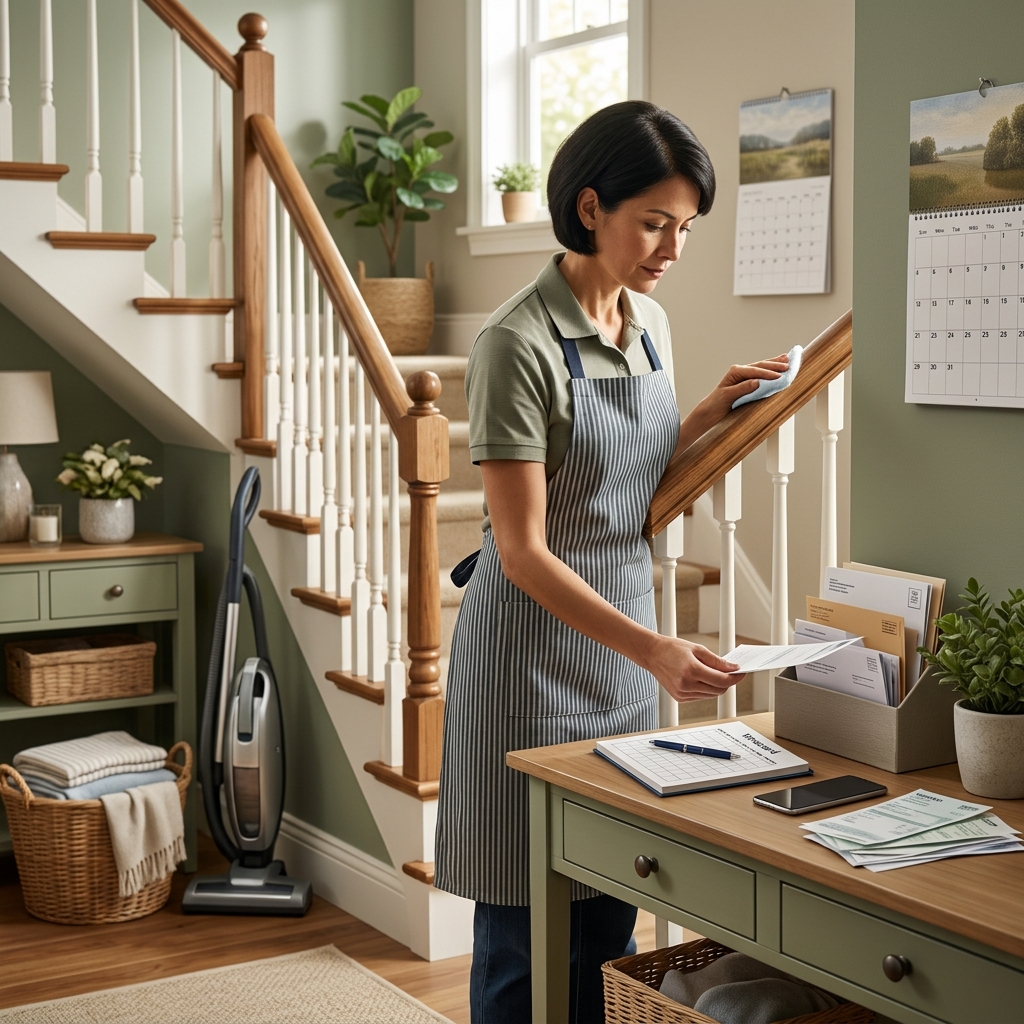
Domestic service employees play a crucial role in supporting families, older adults, and people with disabilities in private homes. At the same time, these workers are covered by important federal wage and hour protections under the Fair Labor Standards Act (FLSA), as well as specific exemptions that can significantly affect pay, overtime, and scheduling. The goal of this guide is to explain, in practical terms, how the FLSA applies to domestic service work, what has changed under recent rulemaking, and what household employers and home care agencies must do to remain compliant.
Who Counts as a Domestic Service Employee?
Under the FLSA, domestic service generally refers to work performed in or around a private home, such as housekeeping, childcare, and hands-on assistance to older adults or individuals with illnesses or disabilities. These workers may be directly employed by an individual or family, or by a third-party agency that assigns them to clients.
Common examples of domestic service employees include:
- Housekeepers, cleaners, and cooks working in private residences.
- Nannies, full-time babysitters, and au pairs performing childcare.
- Home health aides, personal care attendants, and companions who assist with daily living.
- Live-in caregivers who reside in the household where they provide services.
Importantly, most domestic service employees are non-exempt, meaning they are entitled to at least the federal minimum wage and overtime pay unless a specific exemption applies.
Core FLSA Protections: Minimum Wage and Overtime
The FLSA sets baseline protections that apply to the vast majority of workers in the United States, including domestic service employees. These rules cover both individual household employers and third-party agencies that place workers in private homes.
Minimum Wage Requirements
Federal law requires covered employers to pay at least the federal minimum wage for each hour an employee works. This rate is currently $7.25 per hour at the federal level. States and cities may impose higher minimum wage standards, and employers must follow whichever rate is more protective of workers.
Domestic service employees who are not exempt—such as most housekeepers, nannies, and many home care workers—must receive at least this hourly minimum for all hours worked.
Overtime Pay
Non-exempt domestic workers are generally entitled to overtime pay of at least 1.5 times their regular rate of pay for all hours worked over 40 in a workweek. Overtime protections apply regardless of whether the worker is paid hourly, daily, or on a weekly basis, as long as the effective hourly compensation and overtime premium meet FLSA requirements.
| Rule | Standard | Applies To |
|---|---|---|
| Minimum wage | $7.25 per hour (federal floor) | Most domestic service employees, including live-in workers |
| Overtime | 1.5x regular rate after 40 hours in a week | Non-exempt domestic workers, subject to exemptions |
| Recordkeeping | Accurate time and pay records required | Household employers and third-party agencies |
Live-In Domestic Workers: Special Rules and Exemptions
Domestic employees who live in the employer’s home are treated somewhat differently under the FLSA. A live-in worker is someone who resides on the premises on a permanent basis or for extended periods of time, not merely for occasional overnight shifts.
Minimum Wage for Live-In Workers
Employers must pay live-in domestic service workers at least the federal minimum wage for all hours worked, regardless of any overtime exemption. This means that even if overtime is not required, a live-in worker’s total weekly pay divided by all hours considered work time must equal or exceed the minimum wage.
Overtime Exemption for Certain Live-In Employees
Congress created a specific overtime exemption for live-in domestic service workers in private homes. If a worker resides in the household and is employed solely by an individual, family, or household—not by a third-party agency—they may be exempt from overtime, although minimum wage still applies.
However, when a live-in domestic worker is jointly or solely employed by a third-party, such as a home care agency, that third-party employer must pay both minimum wage and overtime for all hours worked over 40 in a workweek.
Counting Hours Worked for Live-In Staff
Determining what constitutes “hours worked” can be more complex for live-in employees. The FLSA allows certain sleep, off-duty, and meal periods to be excluded from hours worked under specific conditions, but employers must carefully document agreements and schedules and remain consistent in practice. Some states may require that more of the worker’s time, including overnight hours, be treated as compensable work, which can affect total pay owed.
Companionship Services and Casual Babysitting Exemptions
The FLSA contains narrow exemptions for casual babysitters and workers providing companionship services to older adults or people with illnesses, injuries, or disabilities. These exemptions can affect both minimum wage and overtime requirements.
Companionship Services Exemption
Companionship services are defined as providing fellowship, protection, and certain types of care to individuals who cannot care for themselves. Historically, this exemption allowed some companions to be excluded from minimum wage and overtime protections. However, a 2013 FLSA rule significantly narrowed this exemption, particularly where third-party agencies employed home care workers and where workers spent substantial time on hands-on care activities.
That 2013 rule limited companionship services to employees who spent no more than 20 percent of their workweek on “care” tasks, such as help with dressing, bathing, feeding, and other activities of daily living. If a worker exceeded that threshold, they were entitled to minimum wage and overtime.
Casual Babysitting
Casual babysitters—people who provide babysitting on an irregular, sporadic basis—are also exempt from both minimum wage and overtime under the FLSA. This exemption is intended for occasional arrangements rather than full-time, regularly scheduled childcare.
Recent Regulatory Changes and Enforcement Shifts
In the years after the 2013 rule, many domestic workers employed by home care agencies gained access to federal minimum wage and overtime protections. However, recent rulemaking and enforcement decisions have begun to shift this landscape again.
Rollback of the 2013 Domestic Service Final Rule
In mid-2025, the U.S. Department of Labor’s Wage and Hour Division issued a proposed rule that would roll back key portions of the 2013 regulations governing companionship services and live-in domestic service employees. This proposal would restore broader exemptions, particularly for home health workers employed by third-party agencies.
Under the proposed rule, home health and companionship workers providing services through agencies could once again fall outside federal minimum wage and overtime coverage, depending on the nature of their duties and whether they qualify for the companionship or live-in exemptions.
Interim Enforcement Guidance
While rulemaking is underway, the Wage and Hour Division has issued enforcement guidance instructing its staff to pause enforcement of the 2013 final rule in certain circumstances. Field staff have been directed to discontinue enforcement actions based on the narrow 2013 definitions of companionship services and live-in domestic work, closing open cases and refraining from new enforcement targeting those limitations.
During this interim period, WHD has indicated that:
- Third-party employers, such as home care agencies, may claim FLSA exemptions for qualifying companionship services and live-in domestic workers without being subject to the 20 percent limitation on care activities.
- Companionship services now encompass both activities of daily living—for example, dressing, grooming, bathing, toileting, feeding, and transferring—and instrumental activities such as meal preparation, light housekeeping, and arranging medical care.
- This enforcement posture will remain in effect until a new final rule is issued following the 2025 notice of proposed rulemaking.
Employers should be aware that these shifts affect how WHD investigates and enforces cases, but they do not eliminate the underlying statutory protections of the FLSA. Courts may still interpret the law differently, and state wage and hour rules may be more protective than federal enforcement policies.
Domestic Service Workers Employed by Third-Party Agencies
Domestic service employees are often placed in private homes by home health agencies, staffing firms, or similar third-party employers. These entities typically qualify as employers under the FLSA and are responsible for compliance with federal wage and hour rules.
Historical Limits on Agency Use of Exemptions
Under the 2013 final rule, third-party employers could not claim the companionship services exemption or the live-in domestic service overtime exemption. As a result, agency-employed home care workers generally had to be paid both minimum wage and overtime for all hours worked.
Current Proposed Approach
The 2025 proposed rule and related enforcement guidance seek to undo those limits, allowing agencies to claim FLSA exemptions where workers meet the statutory definitions of companionship services or live-in domestic service. This may reduce wage and overtime protections for certain categories of home care workers employed through third parties.
Because these changes are subject to notice-and-comment rulemaking and potential legal challenges, both employers and workers should monitor developments closely and consult legal counsel when structuring compensation models.
Practical Compliance Steps for Household Employers
Even amid regulatory change, individual household employers can take practical steps to comply with the FLSA and applicable state law. Compliance not only reduces legal risk but also promotes fair and sustainable employment relationships.
Key Actions for Families and Individuals
- Identify the worker’s classification. Determine whether the worker is a live-in domestic employee, a come-and-go employee, a casual babysitter, or a companion providing mainly fellowship and protection.
- Confirm applicable minimum wage. Check both federal and state or local minimum wage rates and pay the higher applicable rate.
- Apply overtime rules correctly. For non-exempt workers, pay 1.5 times the regular rate for all hours worked over 40 in a workweek, unless a valid live-in overtime exemption applies.
- Keep accurate records. Track hours worked, rates of pay, and total compensation, even if the worker is paid a salary or stipend. Good records are critical for demonstrating compliance.
- Review state law requirements. Some states require additional protections, such as daily rest periods, higher minimum wages, or different overtime thresholds for residential workers.
- Document agreements. Written work agreements that describe duties, schedules, sleep time arrangements, and compensation help prevent misunderstandings and support compliance.
Common Pitfalls and How to Avoid Them
Both household employers and agencies frequently run into problems because domestic service arrangements evolve over time. A worker who starts as a casual babysitter may become a full-time nanny, or a companion may take on more hands-on care tasks.
To avoid compliance mistakes, employers should watch for these common issues:
- Assuming a flat salary covers all hours. Paying a domestic worker a fixed salary without calculating an effective hourly rate and overtime can violate both minimum wage and overtime rules.
- Mischaracterizing full-time care as “companionship.” When employees spend substantial time on hands-on care and daily living assistance, they may no longer qualify for a companionship exemption under statutory definitions.
- Failing to update classification when duties change. If a worker’s tasks or schedule expand, employers should reassess whether exemptions still apply.
- Ignoring state law. State domestic worker bills of rights and wage laws may impose more protective standards than federal law, and failure to comply can result in significant penalties.
Frequently Asked Questions (FAQs)
Are all domestic service workers covered by the FLSA?
Most domestic service workers in private homes are covered by the FLSA’s minimum wage and overtime provisions, unless a specific statutory exemption applies for casual babysitters, qualifying companions, or certain live-in employees.
Do live-in caregivers always receive overtime pay?
Not always. Live-in domestic service workers employed solely by an individual or family are exempt from overtime under the FLSA, but they must still be paid at least the federal minimum wage for all hours worked. Live-in workers employed by third-party agencies generally have been entitled to overtime, though current rulemaking may change how exemptions apply to agency-employed staff.
How is a “companion” different from a home health aide?
A companion primarily provides fellowship and protection, while a home health aide often delivers more extensive hands-on care and medical-related support. When a worker spends more of their time providing care activities and daily living assistance, they may no longer qualify for the companionship exemption and instead be entitled to minimum wage and overtime.
What should household employers do during the current enforcement pause?
Household employers should continue to follow the statutory requirements of the FLSA and any stricter state rules, recognizing that federal enforcement priorities may shift over time. Consulting an employment law professional can help interpret how proposed rules and enforcement bulletins affect specific situations.
Can state law provide more protection than the FLSA?
Yes. States may establish higher minimum wages, different overtime triggers, and specific domestic worker protections that go beyond federal law. When state and federal standards conflict, employers must follow the rule that provides greater benefits to the worker.
References
- Application of the Fair Labor Standards Act to Domestic Service — U.S. Department of Labor, Federal Register. 2025-07-02. https://www.federalregister.gov/documents/2025/07/02/2025-12316/application-of-the-fair-labor-standards-act-to-domestic-service
- Fact Sheet #79B: Live-in Domestic Service Workers Under the FLSA — U.S. Department of Labor, Wage and Hour Division. 2015-07-01 (historical guidance remains relevant to live-in rules). https://www.dol.gov/agencies/whd/fact-sheets/79b-flsa-live-in-domestic-workers
- Domestic Service Final Rule FAQs — U.S. Department of Labor, Wage and Hour Division. 2015-10-01. https://www.dol.gov/agencies/whd/direct-care/faq
- Fact Sheet: Application of the FLSA to Domestic Service — U.S. Department of Labor. 2013-10-01. https://www.seyfarth.com/a/web/7671/DOLfactsheet.pdf
- A Quick Wage-Hour Tip on Compensating Domestic Workers in New York — Wage & Hour Blog (Epstein Becker Green). 2021-04-12. https://www.wagehourblog.com/time-is-money-a-quick-wage-hour-tip-on-compensating-domestic-workers-in-new-york
- Proposed Rule and Enforcement Shift for Home Health Workers — Baker Donelson. 2025-07-15. https://www.bakerdonelson.com/proposed-rule-and-enforcement-shift-for-home-health-workers-and-federal-wage-and-hour-law
- New Guidance and Proposed Rule for Home Care Providers — Gill Ragon Owen, P.A. 2025-07-25. https://gill-law.com/new-guidance-and-proposed-rule-for-home-care-providers/
Similar Articles








Read full bio of medha deb




