
Understanding Florida’s GPS Tracking Restrictions
A practical guide to Florida’s GPS tracking laws, penalties, and exceptions for families, businesses, and everyday device users.
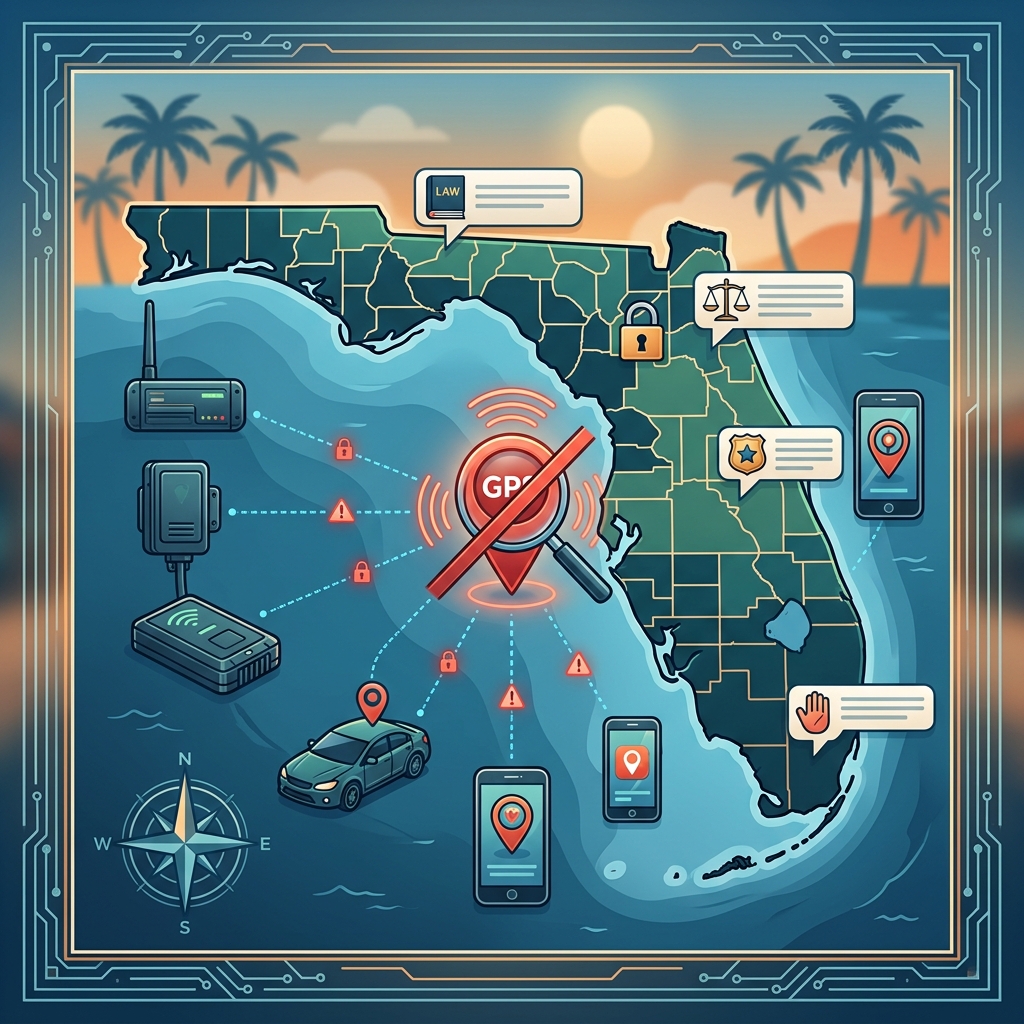
Florida has adopted specific laws governing the use of GPS trackers and other electronic tools that can pinpoint someone’s location. These rules are designed to protect individuals from stalking, harassment, and serious invasions of privacy while still allowing law enforcement, families, and businesses to use tracking technologies in limited, legitimate ways.
This article explains how Florida’s tracking laws work, when GPS use crosses the line into a crime, what penalties apply, and which situations are expressly permitted under state law. It is an informational guide, not legal advice, and anyone facing real-world issues should consult a qualified Florida criminal defense attorney.
Why Florida Regulates GPS Tracking
Tracking devices have become inexpensive and widely available. Small GPS units, phone-based tracking apps, and smart tags can be attached to vehicles, slipped into bags, or installed on phones, making it easy to follow someone without being physically present. Lawmakers in Florida were concerned that these tools could be misused for:
- Stalking and harassment – repeatedly tracking a person’s movements without consent to intimidate or control them.
- Domestic abuse and coercive control – monitoring a partner’s location to restrict freedom or threaten violence.
- Serious crimes – using trackers to prepare robberies, assaults, or other dangerous offenses.
- Invasions of privacy – learning where someone lives, works, or spends time without any legitimate reason.
To address these risks, Florida enacted statutes that specifically target the installation and use of tracking devices without consent, sometimes referred to as electronic stalking.
Core Legal Rule: Tracking Without Consent Is Prohibited
The central rule in Florida’s tracking framework is straightforward: a person generally may not knowingly install, place, or use a tracking device or tracking application on another person’s property without that person’s consent. The law focuses on consent and knowledge.
| Key Element | What It Means |
|---|---|
| Knowingly | The person is aware that they are installing, placing, or using a tracking device or app, and that it can reveal location. |
| Tracking device or application | Any electronic device or software capable of determining and transmitting the location or movement of a person or property. |
| Another person’s property | A car, phone, bag, or other item that belongs to someone else or is legally under their control. |
| Without consent | The owner or person whose location is tracked has not agreed to the tracking in a meaningful, voluntary way. |
Both installation (putting a device on someone’s property) and use (accessing location information to track them) can be criminal if done without proper consent.
How Florida Defines Illegal Tracking and Electronic Stalking
Florida’s tracking rules intersect with its broader anti-stalking framework. Under Florida’s electronic stalking statute and related provisions, it is unlawful to install tracking technology on another person’s property as part of a pattern of harassment or unwanted contact.
Illegal tracking in Florida generally involves:
- Using a device or app to monitor a person’s movements without their knowledge or agreement.
- Placing a GPS tracker on a vehicle, bag, or other personal item belonging to someone else without permission.
- Integrating tracking into a broader course of stalking behavior, such as following, threatening, or surveilling a person.
Even when there is no explicit threat, the act of hidden tracking can be treated as a standalone offense because it undermines a person’s expectation of privacy and safety.
Penalties for Violating Florida’s GPS Tracking Laws
Florida’s penalties for tracking offenses have evolved. Originally, unauthorized installation of tracking devices was treated as a second-degree misdemeanor, carrying up to 60 days in jail and fines. More recent changes have significantly increased the consequences.
Standard Criminal Penalties
Under current law, a person who violates Florida’s tracking statute by installing or using a tracking device or application without consent may be charged with a felony of the third degree.
- Up to 5 years in prison.
- Fines that can reach $5,000 or more, depending on the specific offense and related statutes.
- Potential probation, mandatory counseling, and a criminal record that affects employment and housing.
Enhanced Penalties for Dangerous Crimes
Florida law provides even harsher penalties when tracking technology is used to commit or facilitate a dangerous crime (such as certain violent offenses). In those circumstances, a defendant can face a second-degree felony charge.
- Up to 15 years in prison.
- Higher fines, which can reach or exceed $10,000 in some proposed or enacted measures.
- Long-term supervised release and additional restrictions.
Courts may also consider whether electronic tracking was part of a pattern of stalking, domestic violence, or repeat offending, which can influence sentencing within the allowed range.
Who Is Exempt: Lawful Uses of Tracking Devices
Florida law carves out several important exceptions, recognizing that tracking can serve legitimate purposes in law enforcement, caregiving, and business operations. These exceptions are detailed in the statute and are narrowly defined.
Law Enforcement
Law enforcement officers and agencies may install or use tracking devices on a person’s property as part of a lawful criminal investigation. Their use must comply with constitutional requirements and any applicable warrant rules, but they are not subject to the tracking prohibition when acting within legal authority.
Parents and Legal Guardians of Minors
Florida allows certain parents and legal guardians to use tracking devices on the property of a minor child in specific situations.
Permitted uses can include:
- Installing a GPS device in a minor child’s vehicle or belongings to monitor travel to and from school.
- Using a phone-based tracking app to help ensure a child’s safety when away from home.
However, the statute outlines conditions, such as marital status and custody arrangements, that affect who can consent to the installation and when both parents must agree. This is meant to prevent one parent from misusing tracking in custody disputes.
Caregivers of Elderly Persons or Disabled Adults
For vulnerable adults, tracking can serve a protective function. Florida law permits a caregiver of an elderly person or disabled adult to install a tracking device if a treating physician certifies that tracking is necessary to ensure the person’s safety.
- Common scenarios include monitoring a person who has dementia or a cognitive impairment and may wander.
- The physician’s certification adds a layer of oversight to prevent misuse under the guise of caregiving.
Business-Related Tracking
Florida also recognizes legitimate business uses of tracking technology. A person acting in good faith on behalf of a business entity can use tracking devices for bona fide business purposes, such as fleet management, logistics, or asset protection.
Examples may include:
- Tracking delivery trucks to optimize routes and monitor performance.
- Locating rental vehicles or equipment to prevent loss or theft.
Notably, the statute makes clear that private investigators cannot simply rely on the business exception when working for private clients; their activities must fall within other statutory allowances or risk criminal liability.
Owners and Lessees of Motor Vehicles
The law gives special treatment to vehicle owners and lessees. An owner or lessee can generally install a tracking device on their own vehicle during the period of ownership or lease, as long as specific conditions are met.
- The tracking device must be removed before transfer of title or lease expiration.
- The installation and use must align with legitimate interests, such as monitoring company vehicles or protecting against theft.
These rules try to balance property rights with privacy concerns when multiple people use the same vehicle.
Consent: The Central Question in GPS Cases
Determining whether tracking is legal often turns on whether valid consent was given. Florida’s statute recognizes that consent can change or be revoked based on personal relationships and circumstances.
What Counts as Consent
In general, consent should be:
- Informed – the person knows that a device or app will track location.
- Voluntary – agreement is not coerced by threats or manipulation.
- Specific – the person understands what is being tracked and by whom.
Simply owning a phone or using a navigation system does not automatically mean a person has consented to hidden third-party tracking that they are unaware of.
When Consent Is Presumed Revoked
Florida law addresses situations where ongoing consent can no longer be assumed. For example, if spouses are lawfully married and one files for dissolution of the marriage, consent that existed between them for tracking may be legally presumed revoked.
In practice, that means continuing to track a former partner’s vehicle or property after a relationship breaks down can expose a person to criminal charges, even if the tracking began earlier with informal permission.
Common Real-World Scenarios
To see how these rules apply, consider some typical situations encountered in Florida:
- Hidden tracker on a partner’s car – Placing a GPS device on a spouse’s or partner’s vehicle without consent, especially during a separation or divorce, can violate Florida’s tracking statute and may be viewed as electronic stalking.
- Secretly tracking employees – While fleet tracking can be lawful in Florida, installing devices on employee-owned vehicles or personal phones without clear disclosure can raise legal and privacy concerns and may fall outside statutory exceptions.
- Following someone with an AirTag – Attaching a smart tag to another person’s bag or car to monitor their movements without permission may trigger felony penalties under updated tracking laws.
- Parent tracking a minor child – A parent who meets the statutory conditions may lawfully monitor a minor child’s property, but using tracking to interfere with another parent’s rights or to harass could still be problematic.
Defenses and Legal Issues in Tracking Prosecutions
Every case depends on its facts, but several issues often arise when someone is accused of unlawful tracking.
Disputes About Ownership and Property
Because the statute hinges on whether a device is installed on “another person’s property,” disputes can emerge over who actually owns or controls the item. Shared vehicles, jointly owned phones, and mixed business-personal use can complicate the analysis.
Arguments About Consent
Defendants may claim that the alleged victim agreed to tracking or knew about the device or app. Prosecutors, in turn, will look for evidence of explicit or implied consent, changes in relationship status, and whether the person tried to revoke permission.
Intent and Knowledge
Since the statute requires that a person act “knowingly,” situations where a device is installed by someone else, or where a person is unaware of tracking features on an app, may affect criminal liability. However, deliberate concealment of a tracking device strongly supports the inference of knowing conduct.
Practical Tips to Avoid Violating Florida’s Tracking Law
Anyone using GPS or similar technology in Florida should keep several practical tips in mind:
- Do not install devices on someone else’s property without explicit permission, unless a clear statutory exception applies.
- Put agreements in writing when using tracking in families or businesses, so consent is documented and expectations are clear.
- Review your apps and devices to understand what location data is collected and who can access it.
- Stop tracking immediately if a person withdraws consent or a relationship ends, particularly in domestic contexts.
- Seek legal advice before deploying tracking tools in complex situations, such as custody disputes or workplace monitoring.
FAQs About Florida’s GPS Tracking Law
Is it always illegal to use a GPS tracker in Florida?
No. GPS tracking is not inherently illegal. It becomes unlawful when a person knowingly installs or uses a tracking device or application on another person’s property without consent and outside the statutory exceptions for law enforcement, certain parents, caregivers, businesses, and vehicle owners.
Can I use a tracking app to follow my teenager’s phone?
Florida allows certain parents and legal guardians to install tracking technology on a minor child’s property under defined conditions. However, circumstances such as divorce, custody arrangements, and the child’s age can affect whether this is advisable or permissible. Parents should consider both the statute and any family court orders before using such tools.
What happens if someone puts a GPS device on my car without permission?
Installing a tracking device on another person’s vehicle without consent can constitute a criminal offense under Florida law and may also support related charges, such as electronic stalking. Affected individuals can contact law enforcement, preserve evidence, and potentially seek protective orders.
Are employers allowed to track company vehicles?
Yes, tracking company-owned vehicles for legitimate business purposes is generally permitted in Florida. Problems arise when employers secretly track employees’ personal vehicles or use tracking in ways that conflict with privacy rights or other employment laws.
Does removing the device later make the conduct legal?
No. The offense focuses on the installation and use of the tracking device without consent. Removing the device may limit future harm, but it does not erase past criminal exposure if the statute was violated.
References
- Chapter 934 Section 425 – Installation of tracking devices and applications — Florida Senate / Florida Statutes. 2019-01-01. https://www.flsenate.gov/Laws/Statutes/2019/934.425
- Section 934.425 – Tracking devices and tracking applications — Florida Legislature, Online Sunshine (2025 Florida Statutes). 2025-01-01. https://www.leg.state.fl.us/Statutes/index.cfm?App_mode=Display_Statute&URL=0900-0999/0934/Sections/0934.425.html
- Attorney for Installing Tracking Device Crimes in Tampa, FL — Sammis Law Firm, P.A. (Criminal defense resource explaining electronic stalking statute). 2020-06-01. https://criminaldefenseattorneytampa.com/violent-crimes/stalking-or-aggravated-stalking/electronic-stalking/
- Illegal Installation of Tracking Devices — Law Offices of Robert David Malove (Florida criminal defense blog). 2021-03-10. https://www.robertmalovelaw.com/blog/illegal-installation-of-tracking-devices/
- Use of Tracking Devices in Crimes — Fernandez & Hernandez, LLC. 2025-04-10. https://thefernandezlawgroup.com/2025/04/10/use-of-tracking-devices-in-crimes/
- GPS Tracking Laws By State — LandAirSea Systems (Overview of state tracking laws, including Florida). 2023-05-01. https://landairsea.com/blogs/consumers/gps-tracking-laws-by-state
Similar Articles








Read full bio of Sneha Tete




