
Understanding Federal vs. Private Student Loans
Learn how federal and private student loans differ so you can borrow strategically, protect your finances, and choose the right repayment path.
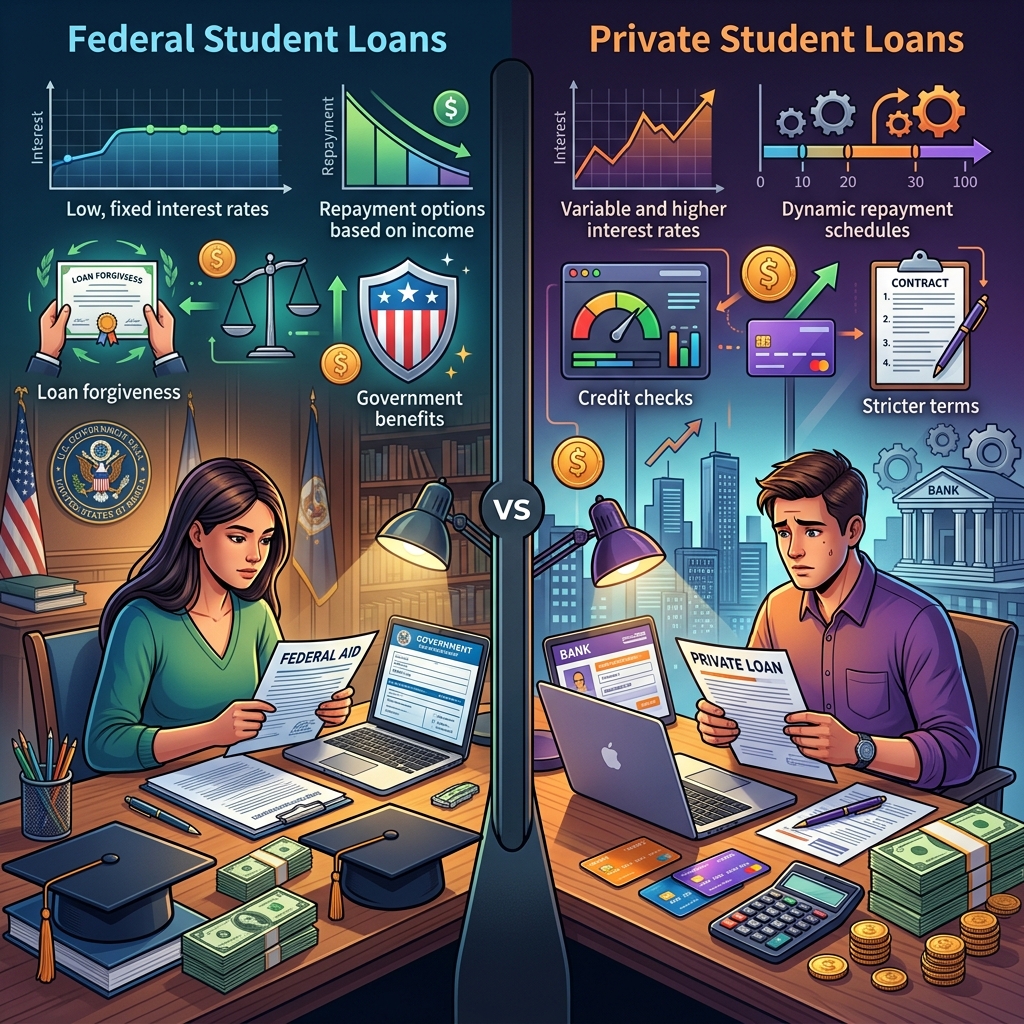
Student loans can open the door to higher education, but choosing the wrong type of loan can affect your finances for years after graduation. The two main options in the United States are federal student loans and private student loans. Each works differently, offers different protections, and carries its own risks and advantages. This guide explains those differences in detail so you can borrow strategically and manage repayment with confidence.
Why Loan Type Matters for Your Financial Future
At first glance, a student loan may look like any other debt: you borrow money now and pay it back later with interest. In reality, the type of loan you choose can influence:
- How much interest you pay over the life of the loan
- Whether your monthly payment can be adjusted when your income changes
- Your eligibility for forgiveness, cancellation, or discharge
- How easily you can pause payments during financial hardship
- Your ability to reach other financial goals, such as buying a home or saving for retirement
Federal loans are created and governed by law and come with a standard set of protections. Private loans are contracts between you and a lender, such as a bank, credit union, or online finance company. Because of these structural differences, experts consistently advise using federal loans first and only turning to private loans for remaining gaps in your college costs.
Core Differences: Federal vs. Private Student Loans
To understand how federal and private student loans compare, it helps to look at their key features side by side.
| Feature | Federal Student Loans | Private Student Loans |
|---|---|---|
| Provider | Funded by the U.S. Department of Education through federal programs | Issued by banks, credit unions, state agencies, or online lenders |
| Application | Applied for using the Free Application for Federal Student Aid (FAFSA) | Applied directly with the lender; often requires separate applications |
| Credit Check | No credit check for most loans; Parent PLUS and some graduate PLUS loans do check credit | Credit-based approval; often requires a co-signer for students with limited credit history |
| Interest Rates | Fixed rates set annually by Congress or federal formula; same for all borrowers in each category | Variable or fixed rates set by lenders; can differ widely based on credit and market conditions |
| Borrowing Limits | Annual and lifetime limits based on dependency status and academic level; may not cover all costs | Higher limits generally; often up to the school’s cost of attendance minus other aid |
| Repayment Flexibility | Multiple repayment plans, including income-driven options tied to earnings | Fixed repayment schedules; limited ability to adjust payments based on income |
| Forgiveness & Protections | Programs for forgiveness, cancellation, and discharge; legal borrower protections in statute | Generally no standard forgiveness; protections are governed by contract and state law |
This comparison shows why federal loans are often described as safer and more flexible, especially over long repayment periods.
Federal Student Loans: How They Work and Why They’re Preferred
Federal student loans are designed to make higher education more accessible and affordable. They follow standardized rules set by federal law, which means borrowers across the country receive similar protections.
Key Types of Federal Loans
Current federal loans are mainly offered through the Direct Loan Program. Common loan types include:
- Direct Subsidized Loans for eligible undergraduates with financial need. The government pays the interest while you’re in school at least half-time and during certain deferment periods.
- Direct Unsubsidized Loans for undergraduates and graduates, regardless of financial need. Interest starts accruing as soon as the loan is disbursed.
- Direct PLUS Loans for graduate/professional students and parents of dependent undergraduates; these require a credit check and carry higher interest rates.
Exact interest rates change annually, but they are always fixed for the life of each loan and determined by federal rules, not individual credit scores.
Borrower Protections and Flexible Repayment
One of the most important advantages of federal loans is the extensive set of protections available when your finances change. These protections are written into law, not merely promised by a lender’s marketing materials.
Examples include:
- Income-driven repayment (IDR) plans that tie your monthly payment to your income and family size, which can be as low as $0 if your income is very low.
- Deferment and forbearance options to temporarily pause or reduce payments during unemployment, economic hardship, or other qualifying situations.
- Loan forgiveness programs, such as Public Service Loan Forgiveness and long-term IDR forgiveness, that can erase remaining balances after specific service or payment requirements are met.
- School-related discharges if your school closes while you’re enrolled or soon after you withdraw, or if you were significantly misled or defrauded by your institution (borrower defense).
These options can substantially reduce the total you repay and help you stay current on your loans even if your income is unpredictable.
Private Student Loans: When They’re Used and Key Risks
Private student loans are offered by non-government lenders, and they typically come into play when federal loans, grants, scholarships, and savings do not cover the full cost of attendance. They can be useful tools in certain situations, but they tend to be less forgiving than federal loans if your financial situation becomes difficult.
How Private Student Loans Are Structured
Private lenders design their own loan products, so terms vary widely. However, several common features show up across many private loans:
- Credit-based underwriting: Approval and interest rates generally depend on your credit score, income, and willingness to have a co-signer.
- Variable or fixed interest: Some loans have fixed rates, but many offer variable rates that can increase over time, raising your monthly payment.
- Fewer standardized protections: Many private loans do not include income-driven repayment, statutory forgiveness, or standardized relief options.
- Higher borrowing limits: Lenders may allow borrowing up to the school’s cost of attendance, which can reduce immediate financial pressure but increase long-term debt.
Because private loans are governed by individual contracts and state law rather than a single federal framework, your rights and options can differ significantly from one lender to another.
Repayment Challenges with Private Loans
Most private loans follow a more rigid repayment pattern than federal loans. Common challenges include:
- Fixed monthly payments that do not adjust based on income, making it harder to manage during low-earning periods.
- Limited or discretionary options for hardship relief, such as temporary forbearance that may still allow interest to accumulate.
- Generally no access to federal forgiveness or cancellation programs.
- Greater risk that payments will crowd out other financial goals, like saving for a home or building an emergency fund.
For these reasons, consumer advocates and many financial aid offices recommend treating private loans as a last resort after you have exhausted federal loan options.
How to Decide: Using Federal and Private Loans Strategically
The decision is not always about choosing one type of loan and avoiding the other entirely. Many students use a combination of federal and private loans, but the order and amounts matter. A thoughtful borrowing strategy can reduce both risk and total repayment costs.
Step 1: Start with Free and Low-Cost Aid
Before taking on any loans, explore sources of funding that do not require repayment:
- Federal, state, and institutional grants
- Scholarships from schools, nonprofits, and community organizations
- Work-study programs and part-time work
Completing the FAFSA is a critical first step because it determines eligibility for federal grants, work-study, and federal loans.
Step 2: Maximize Federal Loans Within Safe Limits
Once you know your aid eligibility, consider how much you truly need to borrow. Federal loans should generally be used first because of their standardized protections.
Smart borrowing habits include:
- Borrowing only what you need to cover tuition, fees, and reasonable living costs
- Understanding annual and lifetime federal loan limits for your level of study
- Prioritizing subsidized loans where eligible, since they cost less in interest
- Reviewing how projected payments under different federal repayment plans might fit your expected income
Step 3: Evaluate Whether Private Loans Are Necessary
If federal loans and other aid still leave a gap, carefully evaluate whether private loans are the right solution. Consider:
- How much additional funding you need to complete your program
- Your credit profile and whether you would need a co-signer
- Interest rate options and how variable rates could change over time
- Available hardship and repayment options offered by the lender
- Your long-term earning prospects in your chosen field
Shopping around among reputable lenders and comparing offers can help you secure more favorable terms, but private loans will almost always carry less protection than federal loans.
Impact on Repayment and Long-Term Goals
How your loans interact with your long-term plans is just as important as interest rates or loan limits. The type of student debt you carry can shape your ability to build wealth and financial security.
Federal Loans and Budget Flexibility
Because federal loans offer income-driven repayment and various forms of relief, they can align more closely with periods of low income or career transitions.
Benefits include:
- Option to lower payments when starting out in a lower-paying field or during graduate school
- Protection against sudden income loss through deferment or forbearance
- Potential for eventual forgiveness, especially for public service or long-term IDR participation
Private Loans and Financial Pressure
Private loans can place more pressure on your monthly budget because payments are less flexible and relief options are fewer. This can influence major life decisions:
- Delaying homeownership or family milestones due to high fixed payments
- Needing to prioritize higher-paying jobs over roles that match your interests but pay less
- Increased vulnerability if interest rates rise on variable loans
Recognizing these potential trade-offs in advance can guide you toward a more sustainable borrowing mix.
Frequently Asked Questions (FAQs)
Are federal student loans always better than private loans?
Federal loans generally offer stronger protections, fixed interest rates, and access to forgiveness and income-driven repayment. However, private loans may offer lower introductory rates to highly qualified borrowers and can help cover remaining costs after federal limits are reached. The “better” choice depends on your situation, but using federal loans first is widely recommended.
Can I refinance federal loans into private loans to get a lower rate?
Refinancing federal loans with a private lender can potentially lower your interest rate if your credit profile is strong. But doing so permanently forfeits federal benefits like IDR plans, federal forgiveness programs, and standardized hardship options. This trade-off should be weighed very carefully before refinancing.
Do private student loans offer any forgiveness or cancellation?
Most private loan contracts do not include formal forgiveness programs comparable to federal programs like Public Service Loan Forgiveness or IDR forgiveness. Any relief is usually limited to lender-specific policies, such as some discharge in cases of death or permanent disability, and may vary widely.
What happens if I can’t afford my payments on a private loan?
If you are struggling with private loan payments, your options depend on your lender’s policies and any applicable state laws. Some lenders may offer temporary forbearance or modified repayment plans, but they are not required to provide income-based adjustments or forgiveness. Contacting the lender early and exploring budgeting or consolidation options can help, but protections are more limited than with federal loans.
Is it ever wise to skip the FAFSA and go straight to private loans?
Skipping the FAFSA can mean missing out on federal grants, work-study, and the most protective loan options available. Even if you expect to use private loans, filing the FAFSA typically provides more information and improves your ability to compare choices.
References
- Federal Loans vs. Private Loans — Student Loan Borrower Assistance. 2023-05-10. https://studentloanborrowerassistance.org/for-borrowers/basics-of-student-loans/federal-loans-vs-private-loans/
- Comparing Federal and Private Student Loans — University of Illinois Office of Student Financial Aid. 2022-09-01. https://www.osfa.illinois.edu/types-of-aid/loans/comparing-federal-and-private-student-loans/
- Comparing Private Student Loans — University of Illinois System. 2021-08-15. https://blogs.uofi.uillinois.edu/view/7550/54213092
- Federal vs. Private Student Loans: Compare Key Differences — NerdWallet. 2025-06-10. https://www.nerdwallet.com/student-loans/learn/student-loans-federal-vs-private-loans
- Student Loans – Federal vs. Private: What’s the Difference? — SESLOC Federal Credit Union. 2024-06-03. https://www.sesloc.org/student-loans-federal-vs-private-whats-the-difference/
- Federal and Private Student Loans: What’s the Difference? — Navy Federal Credit Union. 2023-04-20. https://www.navyfederal.org/makingcents/college-planning/federal-vs-private-student-loans.html
- Best Private Student Loans & Interest Rates in July 2026 — Credible. 2026-07-01. https://www.credible.com/student-loans
Similar Articles








Read full bio of medha deb




