
Understanding Federal Violations in Yellowstone and Grand Teton
A practical guide to federal violation notices, fines, and procedures in Yellowstone, Grand Teton, and other federal lands in Wyoming.
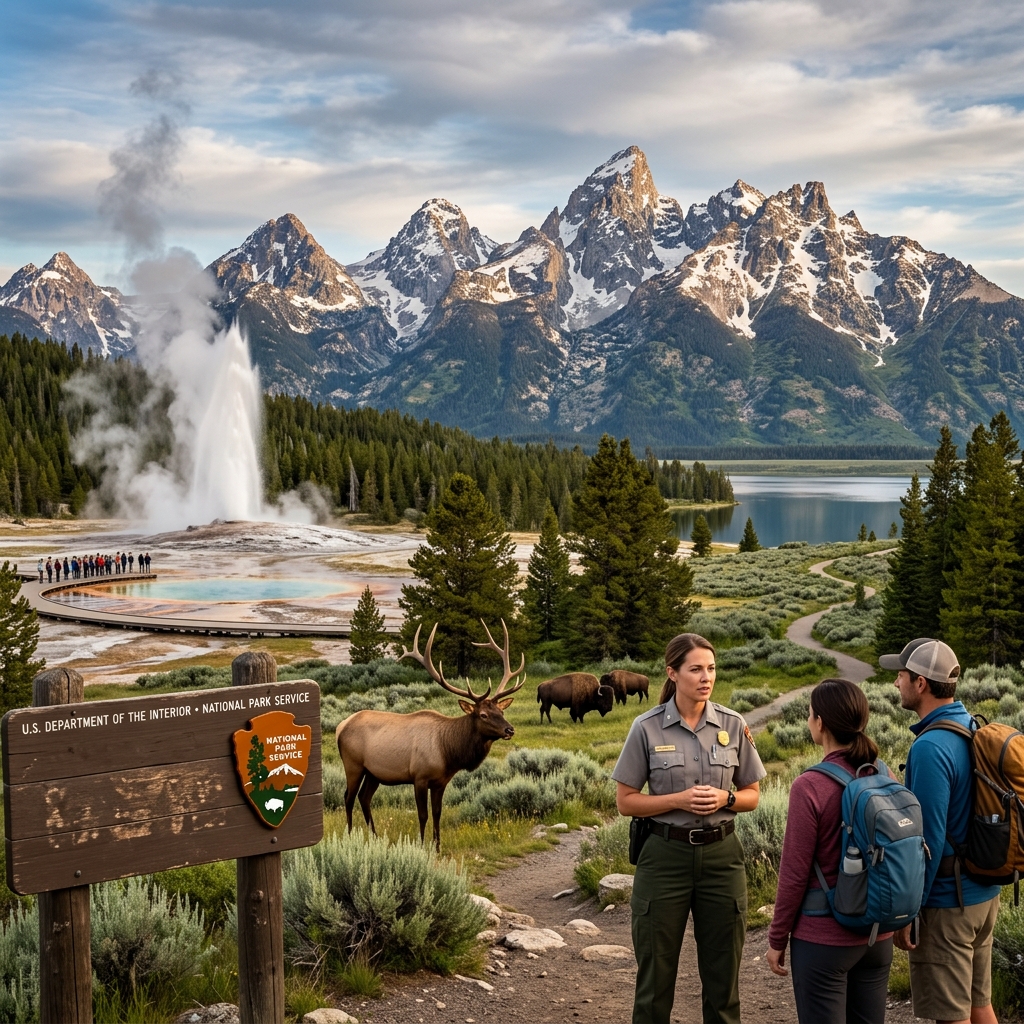
Millions of people visit Yellowstone National Park, Grand Teton National Park, and other nearby federal lands each year, often without realizing that these areas are governed by a combination of federal laws, regulations, and special rules unique to national parks and federal enclaves. When a visitor breaks these rules, they may receive a federal violation notice, sometimes called a ticket or citation. This guide explains what those notices are, how fines and court appearances work, and how to get help if you receive one.
1. What Is a Federal Violation Notice?
A federal violation notice is an official document issued by law enforcement officers on federal land to charge a person with violating federal law or regulations, including national park rules. These notices are commonly issued by rangers or other federal officers in places such as:
- Yellowstone National Park
- Grand Teton National Park
- National Elk Refuge
- Bridger-Teton National Forest
- Other federal lands and facilities in Wyoming, such as national forests, national monuments, recreation areas, veterans hospitals, and military bases
Unlike typical state or local tickets, federal violation notices are processed through the Central Violations Bureau (CVB), a national system that handles minor federal offenses across the United States.
1.1 Common Reasons for Receiving a Violation
Visitors may be cited for many different actions. Official and educational sources indicate that common violations in national parks include:
- Driving offenses (speeding, reckless driving, improper parking)
- Entering restricted or closed areas, such as thermal features or off-limits trails
- Getting too close to wildlife or disturbing animals
- Swimming or bathing in closed waters or thermal areas
- Possessing or using firearms where prohibited
- Violating camping rules or failing to store food properly in bear country
- Providing unauthorized commercial services, such as illegal guiding or tours
Some of these violations are handled through fines alone, while more serious cases may require a court appearance or result in additional penalties.
2. Fines, Mandatory Appearances, and Case Types
Not every violation is treated the same way. Federal authorities distinguish between minor regulatory offenses and more serious criminal matters. How your case is handled depends on what is written on your violation notice and the applicable federal law.
2.1 Violations That Can Be Resolved by Paying a Fine
Many minor offenses in Yellowstone, Grand Teton, and other federal enclaves can be resolved by paying a set fine without going to court.
- The violation notice lists a specific amount and instructions for payment.
- If you pay the fine on time, you normally do not need to appear in court.
- Payment is processed through the Central Violations Bureau, which records the disposition of the case.
Paying the fine generally counts as resolving the charge, similar to pleading guilty to a traffic ticket, and may have record or collateral consequences depending on the offense.
2.2 Violations Requiring a Court Appearance
Some offenses cannot be resolved simply by paying a fine. For those violations, the notice will typically state that a mandatory court appearance is required.
- You must appear in the designated federal court on the date and time listed.
- If you miss the court date, additional legal consequences may follow, including a possible warrant.
- In more serious cases, you may want or need representation by an attorney.
Examples that commonly require court appearances include more serious unsafe conduct, repeat offenses, or charges involving injury, property damage, or deliberate disregard of clear park rules.
2.3 Criminal vs. Regulatory Nature of Park Violations
Many park violations are classified as petty offenses or misdemeanors under federal law, but they are still criminal charges. This means:
- Convictions can appear on criminal history checks, even for minor violations.
- Some offenses can carry potential jail time (though it is uncommon for routine first-time violations).
- Serious or repeated violations may lead to more aggressive enforcement and higher penalties.
The exact classification depends on the statute or regulation cited, which is typically referenced on your violation notice.
3. Key Information on Your Violation Notice
If you receive a violation notice, the document itself is the most important source of information about your case. Federal guidance emphasizes having several key pieces of information available when you contact authorities.
3.1 Essential Details to Locate
Carefully read your violation notice and identify:
- Violation number – often a seven-digit number that uniquely identifies your case.
- Your name – exactly as it appears on the notice.
- CVB location code – a code indicating the park or federal area where the violation occurred.
- Charge description – the written explanation of what law or rule was allegedly violated.
- Fine amount or appearance instructions – whether you can pay a fine or must appear in court.
- Court location and date, if a mandatory appearance is required.
Having this information ready makes it much easier for the U.S. Attorney’s Office or Central Violations Bureau to answer questions about your case.
3.2 Why Accuracy Matters
Providing accurate information helps prevent delays and miscommunication. Federal offices often handle a large volume of violation notices, especially during peak visitation seasons in Yellowstone and Grand Teton.
- Mismatched names or incorrect violation numbers can make it harder to locate your record.
- Missing contact information may delay responses or follow-up.
- Summer surges in tourism can increase processing times for inquiries.
4. Where the Violation Occurred: Federal Enclaves in Wyoming
The handling of your violation depends in part on the location where it was issued. The U.S. Attorney’s Office in Wyoming organizes responsibility by region, tied to specific federal lands and facilities.
| Regional Office | Typical Areas Covered |
|---|---|
| Yellowstone Office | Yellowstone National Park, Grand Teton National Park, National Elk Refuge, Bridger-Teton National Forest |
| Lander Office | Shoshone National Forest |
| Casper Office | Devils Tower National Monument, Big Horn National Forest, Big Horn Canyon National Recreation Area, Sheridan Veterans Administration Hospital |
| Cheyenne Office | Medicine Bow–Routt National Forest, Cheyenne Veterans Administration Hospital, F.E. Warren Air Force Base, Bureau of Land Management areas, and other federal areas not otherwise listed |
4.1 Why Location Codes Matter
The CVB location code printed on your notice identifies which park or enclave issued the citation. This code helps:
- Route your case to the correct regional office.
- Determine which local rules or special regulations apply.
- Clarify jurisdiction for court proceedings.
5. Contacting Authorities About Your Violation
If you or your attorney need more information or have questions about your violation notice, you may contact the appropriate U.S. Attorney’s Office in Wyoming using the phone numbers provided in official guidance.
5.1 Information You Should Provide
When you call, be prepared to provide:
- Your full name (including any differences from the notice)
- Violation number and CVB location code
- A current phone number or email address
- The date and general circumstances of the incident
This allows staff to quickly locate your record and advise on next steps.
5.2 Limitations on What Staff Can Do
Staff in these offices handle a large volume of cases and cannot provide personalized legal advice. Their role is generally limited to:
- Explaining basic procedures and deadlines.
- Confirming whether a fine payment will resolve the case.
- Providing court dates or correcting administrative errors.
If you want legal advice on whether to contest a charge, negotiate a plea, or handle potential long-term consequences, you should consult a private attorney.
6. How to Respond After Receiving a Violation
The most important step after receiving a violation notice is to act promptly. Ignoring a federal citation can lead to additional legal trouble.
6.1 Immediate Steps to Take
- Read the notice thoroughly to understand the charge and instructions.
- Check whether a fine is due and note the payment deadline.
- Note any court date if an appearance is required.
- Keep copies of all documents for your records.
6.2 Deciding Whether to Pay or Contest
Depending on the nature of the violation, you may choose to:
- Pay the fine if you accept the charge and want to resolve it quickly.
- Appear in court and plead your case if you believe the charge is incorrect, unfair, or has serious consequences.
- Consult an attorney for guidance, particularly for non-routine or serious violations.
7. Preventing Violations: Practical Tips for Visitors
Understanding basic park rules can greatly reduce the risk of receiving a violation notice. National Park Service guidance and other educational materials emphasize several key principles for safe and lawful visitation.
7.1 Respect Closures and Posted Signs
- Stay on designated roads, boardwalks, and trails, especially around thermal features and fragile environments.
- Obey all closure signs for wildlife protection, safety hazards, or resource preservation.
- Follow limits on swimming, cliff jumping, and entering thermal waters.
7.2 Keep a Safe Distance from Wildlife
Park rules require minimum distances from animals to protect both visitors and wildlife.
- Stay at least 100 yards from bears and wolves.
- Stay at least 25 yards from all other wildlife, including bison, elk, and moose.
- Never approach, feed, or attempt to touch wild animals.
7.3 Follow Rules on Firearms and Hunting
- Do not discharge firearms in national parks; shooting wildlife is strictly prohibited.
- Hunting is generally not allowed in most national parks, including Yellowstone, except in special circumstances defined by law.
- Check current regulations if you plan to carry a firearm; federal and state rules both apply.
7.4 Be Honest About Commercial Activities
Guiding and other commercial services often require permits or authorization from park authorities.
- Do not offer paid tours or instruction without proper permits.
- Unauthorized guiding can result in multiple violations and more serious penalties.
8. Frequently Asked Questions (FAQs)
8.1 Does paying a fine mean it was a criminal offense?
Most violation notices in federal parks represent criminal petty offenses under federal law, even when handled by a fine. Paying the fine typically resolves the case as if you admitted guilt, which may result in a record depending on the statute.
8.2 Can I ignore a violation notice if I live in another state?
No. Federal violation notices are enforceable nationwide. Ignoring a required court appearance or failing to pay a fine can lead to additional charges or a warrant, regardless of where you live.
8.3 How do I know whether I need a lawyer?
You may want legal counsel if the violation involves a serious allegation, potential jail time, significant fines, or any facts you dispute. Federal staff can explain procedures but cannot give you legal advice.
8.4 What if the name or information on my notice is incorrect?
Contact the appropriate regional office and explain the error, providing the violation number and correct information. Administrative mistakes can often be clarified, but only a court can change the legal outcome of the case.
8.5 Will a minor park violation affect my ability to visit again?
Most minor violations that are resolved through fines do not bar future visits. However, repeated or serious violations could lead to stricter enforcement or, in extreme cases, additional legal measures. Following park rules is the best way to ensure your visits remain trouble-free.
References
- Violations In Yellowstone And Grand Teton National Parks And In Other Federal Enclaves — U.S. Attorney’s Office, District of Wyoming. 2024-01-10. https://www.justice.gov/usao-wy/criminal-division/violations-yellowstone-and-grand-teton-national-parks-and-other-federal-enclaves
- Unauthorized Yellowstone Park Guide Sentenced For Illegal Activities — National Park Service. 2021-07-19. https://www.nps.gov/yell/learn/news/210719.htm
- Grand Teton National Park, Wyoming — National Park Service. 2023-05-01 (last updated). https://www.nps.gov/grte/
- Visitors Who Violate Yellowstone National Park Rules — The Weather Network / National Park Service content. 2016-06-20. https://www.facebook.com/theweathernetworkCAN/posts/1079548334213454/
- Respecting Yellowstone and Grand Teton National Parks’ Rules — Yellowstone Insiders Hub. 2023-08-15. https://www.facebook.com/groups/YellowstoneInsidersHub/posts/1546167299447831/
Similar Articles








Read full bio of medha deb




