
Understanding Federal Employment Discrimination Appeals
How federal civil rights laws protect workers from discrimination based on race, national origin, sex, and religion, and how those protections are enforced on appeal.
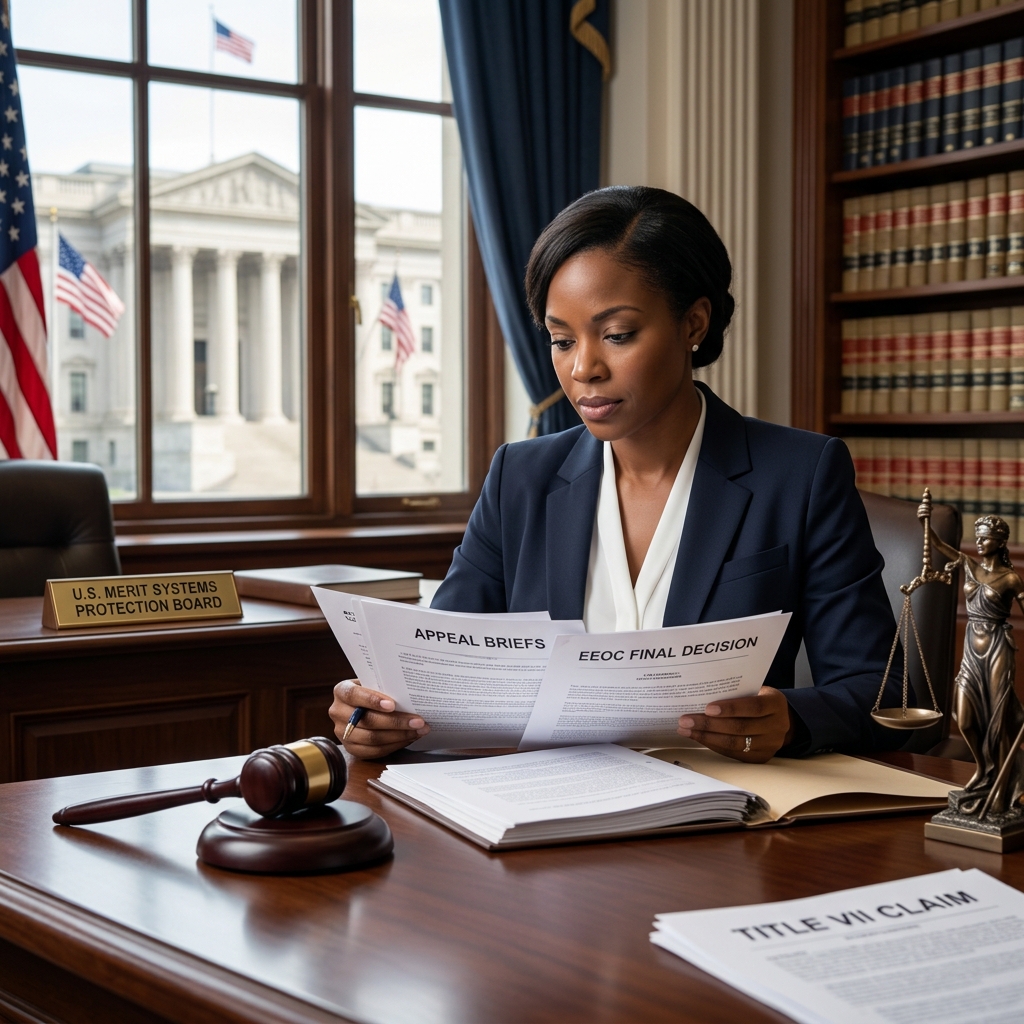
Federal employment discrimination law is a cornerstone of civil rights protection in the United States. It guards workers against unfair treatment based on characteristics such as race, national origin, sex, and religion, and it provides mechanisms for enforcing these rights in trial courts and on appeal. The U.S. Department of Justice (DOJ) Civil Rights Division and the Equal Employment Opportunity Commission (EEOC) play central roles in interpreting, enforcing, and defending these protections.
This article explains the legal framework governing employment discrimination, the protected categories covered by federal law, how enforcement and appeals work, and why appellate litigation is essential to shaping nationwide precedent.
Core Principles of Federal Employment Discrimination Law
Federal employment discrimination law is grounded in the idea that employment decisions should be made on merit rather than on protected personal characteristics. Congress has created a network of statutes that prohibit discriminatory practices and provide remedies when violations occur.
Key Statutes Protecting Workers
- Title VII of the Civil Rights Act of 1964: Prohibits discrimination in employment based on race, color, religion, sex, and national origin, covering most employers with 15 or more employees, labor organizations, and employment agencies.
- Americans with Disabilities Act (ADA): Bars discrimination on the basis of disability by private employers and state and local governments, among others.
- Uniformed Services Employment and Reemployment Rights Act (USERRA): Protects employees and applicants from discrimination related to military service.
- Lilly Ledbetter Fair Pay Act: Clarifies that each paycheck affected by discriminatory compensation can constitute a separate unlawful act for limitations purposes.
While this article focuses on race, national origin, sex, and religion, these statutes illustrate how federal law addresses discrimination across multiple protected dimensions.
What Counts as Employment Discrimination?
Employment discrimination refers to adverse or unequal treatment in the workplace because of a protected characteristic. Federal law covers a wide range of employment actions.
- Bias in hiring, promotion, job assignments, and training opportunities
- Unequal compensation, benefits, or access to advancement
- Harassment that creates a hostile work environment
- Retaliation against workers for asserting their rights or participating in investigations
- Unfair termination or discipline based on protected categories
Protected Categories: Race, National Origin, Sex, and Religion
Title VII and related statutes identify several categories that are shielded from discriminatory treatment by covered employers.
Race and Color
Race discrimination occurs when an employer treats an individual unfavorably because of their race or characteristics associated with race, including physical traits or cultural practices. Color discrimination focuses on unfair treatment because of skin tone or complexion, which may occur within or across racial groups.
Examples include:
- Refusing to hire applicants of a particular race for customer-facing roles
- Assigning less desirable tasks or schedules to workers based on race
- Allowing racial slurs or racially hostile environments to persist
National Origin
National origin discrimination involves adverse treatment because of a person’s birthplace, ancestry, ethnicity, or accent, or because they are perceived to belong to a particular national or ethnic group.
- Penalizing employees for having a foreign accent when it does not affect job performance
- Imposing stricter rules on workers from specific national backgrounds
- Harassing workers with derogatory comments about their country of origin
Sex, Including Pregnancy and Related Conditions
Sex discrimination under Title VII includes differential treatment based on sex, sexual stereotypes, pregnancy, childbirth, or related medical conditions.
- Denying promotions to women on the assumption they are less committed
- Adopting policies that penalize pregnancy or postpartum leave
- Excluding employees from opportunities based on gender roles or stereotypes
Religion
Religion discrimination occurs when employees are treated unfairly because of their religious beliefs, practices, or lack of belief. Employers generally must reasonably accommodate religious practices unless doing so would cause undue hardship.
- Refusing schedule adjustments for sincerely held religious observances
- Discouraging religious expression that does not disrupt work
- Favoring one religious group in hiring or promotion decisions
Enforcement Architecture: EEOC, DOJ, and the Civil Rights Division
Federal employment discrimination enforcement is shared between agencies, with the EEOC and the DOJ’s Civil Rights Division playing complementary roles.
The Role of the EEOC
The EEOC is the primary federal agency responsible for investigating discrimination charges and enforcing many of the core employment discrimination statutes.
- Receives and investigates complaints from workers and applicants
- Seeks voluntary resolution through conciliation where possible
- May file lawsuits in federal court on behalf of individuals or groups
- Issues regulations and guidance that interpret Title VII and related laws
The DOJ Civil Rights Division and Employment Litigation
The DOJ’s Civil Rights Division enforces federal civil rights laws across multiple domains, including employment, housing, education, and voting. Within this division, specialized sections focus on different aspects of civil rights enforcement.
The Employment Litigation Section addresses nondiscrimination in state and local government employment and defends the enforcement of federal antidiscrimination statutes. It litigates cases involving discriminatory employment practices by public employers and challenges to race-conscious or affirmative action programs.
The Appellate Section
The Appellate Section of the Civil Rights Division was created to handle appeals arising from civil rights litigation, including employment discrimination cases. It works closely with trial sections to defend favorable judgments, challenge adverse decisions, and present the federal government’s position in courts of appeals and, when appropriate, the Supreme Court.
| Entity | Primary Functions | Typical Cases |
|---|---|---|
| EEOC | Investigates charges, conciliates disputes, files lawsuits, issues guidance | Private and public sector Title VII, ADA, ADEA, and other claims |
| DOJ Civil Rights Division | Enforces federal civil rights laws; coordinates with other agencies | Systemic discrimination, state and local government cases, pattern or practice actions |
| Employment Litigation Section | Litigates employment discrimination involving state and local governments | Cases against public employers, defense of affirmative action and antidiscrimination enforcement |
| Appellate Section | Handles civil rights appeals, prepares briefs, presents oral argument | Appeals in federal courts involving Title VII and related statutes |
From Workplace Complaint to Appellate Decision
Understanding how a workplace complaint can evolve into an appellate case clarifies why the appellate process is critical for developing employment discrimination law.
Typical Path of a Discrimination Case
- Internal complaint or grievance: Many workers begin by using internal company procedures or contacting a union representative.
- Administrative charge: A charge is filed with the EEOC or a state or local fair employment agency. The EEOC investigates and may issue a determination.
- Right-to-sue and litigation: If the matter is not resolved, the EEOC may litigate, or the worker may file a suit in federal or state court.
- Trial court judgment: The court issues a decision after motions, trial, or settlement.
- Appeal: Either party may appeal a final decision to the appropriate federal court of appeals, and the DOJ Appellate Section may become involved if federal interests are implicated.
What the Appellate Courts Review
On appeal, courts generally do not re-try the case. Instead, they review whether the trial court correctly applied the law and whether its factual findings are supported by the record.
- Interpretation of statutes such as Title VII and the ADA
- Application of legal standards (e.g., burden-shifting frameworks, retaliation tests)
- Procedural rulings that may affect the fairness of the trial
- Constitutional questions arising from public employer conduct or affirmative action policies
The Appellate Section’s briefs often address complex questions of statutory interpretation and the relationship between civil rights statutes and constitutional principles.
Emerging Issues: DEI Initiatives and Discrimination Risks
In recent years, employers have adopted diversity, equity, and inclusion (DEI) programs to promote representation and fairness. Federal enforcement agencies have clarified that these initiatives must comply with Title VII and cannot involve adverse employment decisions motivated by protected characteristics, even when intended to remediate inequality.
When DEI Programs Turn into Discrimination
Guidance from federal agencies notes that DEI-related employment decisions may be unlawful when they use protected characteristics as a basis for treating individuals differently.
- Favoring or excluding candidates for hiring or promotion to meet diversity targets
- Limiting access to mentoring, training, or leadership development based on race or sex
- Separating employees into groups by protected characteristics for training or other privileges
Agencies stress that employers cannot justify discriminatory decisions by invoking a business need for diversity or the preferences of clients or customers.
Implications for Appellate Litigation
As trial courts issue decisions involving DEI-related claims, appeals will help clarify how Title VII and other statutes apply to modern workplace initiatives. Appellate opinions can set binding precedent within circuits, influencing how future DEI policies are designed and defended.
Why Appellate Employment Discrimination Cases Matter
Appellate decisions do more than resolve disagreements in individual cases. They shape the meaning of federal civil rights law across the country.
Establishing Legal Standards
- Clarifying burdens of proof: Appeals often refine how plaintiffs and defendants must prove or rebut discrimination claims.
- Defining protected conduct: Courts clarify what counts as protected activity for retaliation claims.
- Interpreting statutory language: Appellate decisions resolve ambiguities in terms like “reasonable accommodation” or “undue hardship.”
Ensuring Consistent Application of Civil Rights Laws
Different circuits may take varying approaches to similar issues. The Appellate Section helps present the federal government’s view, promoting consistent enforcement of civil rights statutes. When conflicts emerge among circuits, the Supreme Court may eventually step in to resolve them, further harmonizing the law nationwide.
Protecting Structural Civil Rights Interests
In addition to individual rights, appellate employment discrimination cases can affect systemic issues, such as:
- The legality of pattern-or-practice discrimination remedies
- The scope of valid affirmative action or race-conscious hiring programs
- The interaction between federal antidiscrimination statutes and state laws
Because of these broader implications, the DOJ’s Civil Rights Division and Appellate Section carefully select and litigate cases that have potential to shape national civil rights doctrine.
Frequently Asked Questions (FAQs)
1. Who is protected from employment discrimination under federal law?
Most employers with at least 15 employees may not discriminate based on race, color, religion, sex (including pregnancy and related conditions), or national origin under Title VII. Other statutes protect workers from discrimination based on disability, age, and military service status.
2. Does federal law apply to state and local government employers?
Yes. Title VII and other federal antidiscrimination statutes apply to many public employers. The DOJ’s Employment Litigation Section specifically focuses on enforcing nondiscrimination obligations in state and local government employment.
3. How does a case reach the DOJ Appellate Section?
When a civil rights case litigated or supported by the Civil Rights Division results in a judgment and one party appeals, the Appellate Section evaluates the matter, prepares appellate briefs, and may present oral argument in the court of appeals.
4. Are diversity and inclusion programs always lawful?
No. While DEI programs can be lawful and beneficial, they may violate Title VII if they involve employment decisions motivated by race, sex, or other protected characteristics, including exclusion from opportunities or benefits based on those characteristics.
5. What should an employee do if they believe they have been discriminated against?
Employees typically should document the incident, use internal complaint procedures if available, and file a charge with the EEOC or a state or local fair employment agency within the applicable time limits. They may then seek legal advice about pursuing a lawsuit if administrative remedies do not resolve the issue.
References
- Employment Discrimination (Race, National Origin, Sex, and Religion) — U.S. Department of Justice, Civil Rights Division, Appellate Section. 2024-01-01 (approximate, based on page context). https://www.justice.gov/crt/appellate-section-employment-discrimination-race-national-origin-sex-and-religion
- Employment Discrimination — Legal Information Institute, Cornell Law School. 2023-06-01 (last updated, approximate). https://www.law.cornell.edu/wex/employment_discrimination
- The Role and Responsibilities of the Employment Litigation Section — U.S. Commission on Civil Rights. 2002-09-01. https://www.usccr.gov/files/pubs/dojels/ch1.htm
- Civil Rights Division — U.S. Department of Justice. 2023-11-01 (approximate). https://www.justice.gov/crt
- Appellate Section – Civil Rights Division — U.S. Department of Justice. 2023-10-01 (approximate). https://www.justice.gov/crt/appellate-section
- EEOC and DOJ Release Guidance on DEI and Workplace Discrimination — Law and the Workplace (Epstein Becker & Green). 2025-03-21. https://www.lawandtheworkplace.com/2025/03/eeoc-and-doj-release-guidance-on-dei-and-workplace-discrimination/
Similar Articles








Read full bio of Sneha Tete




